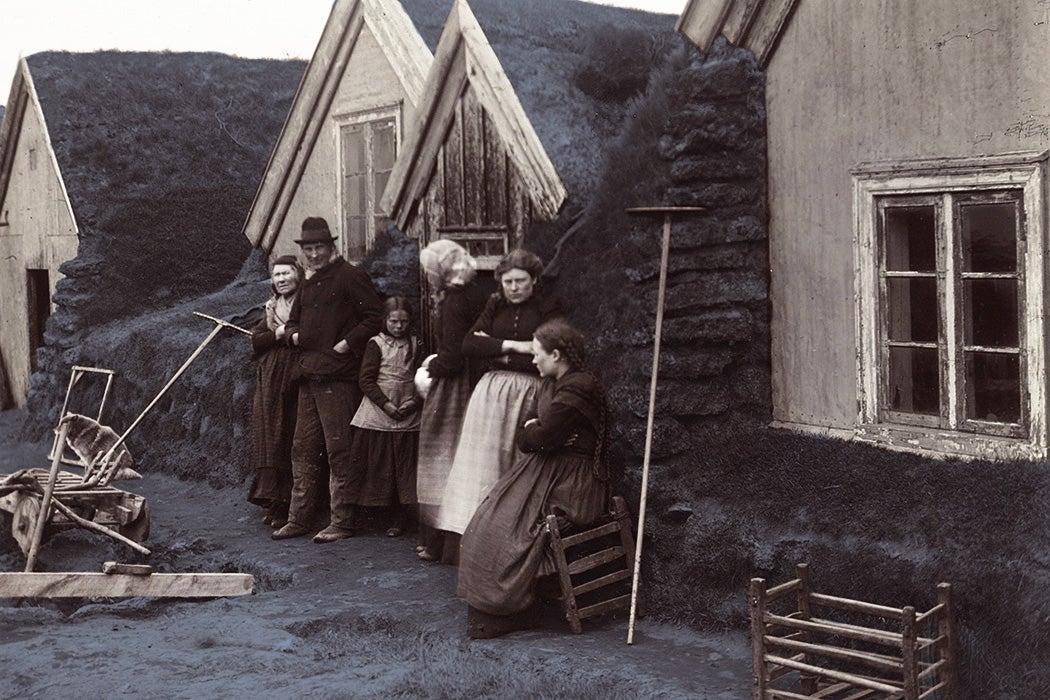
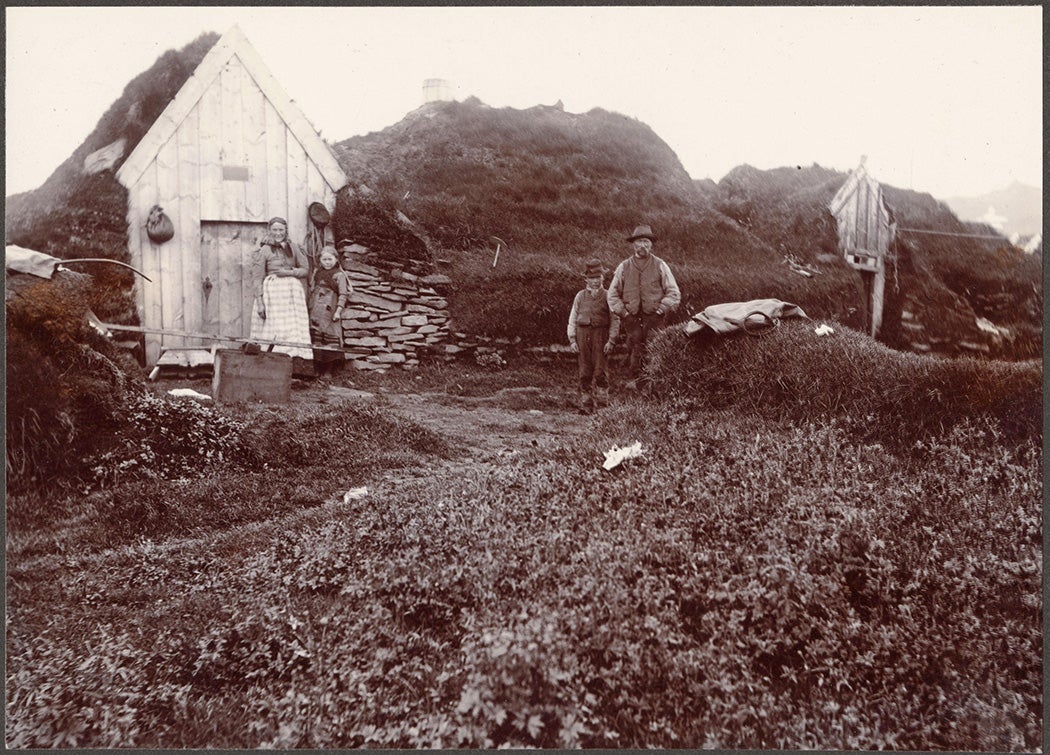
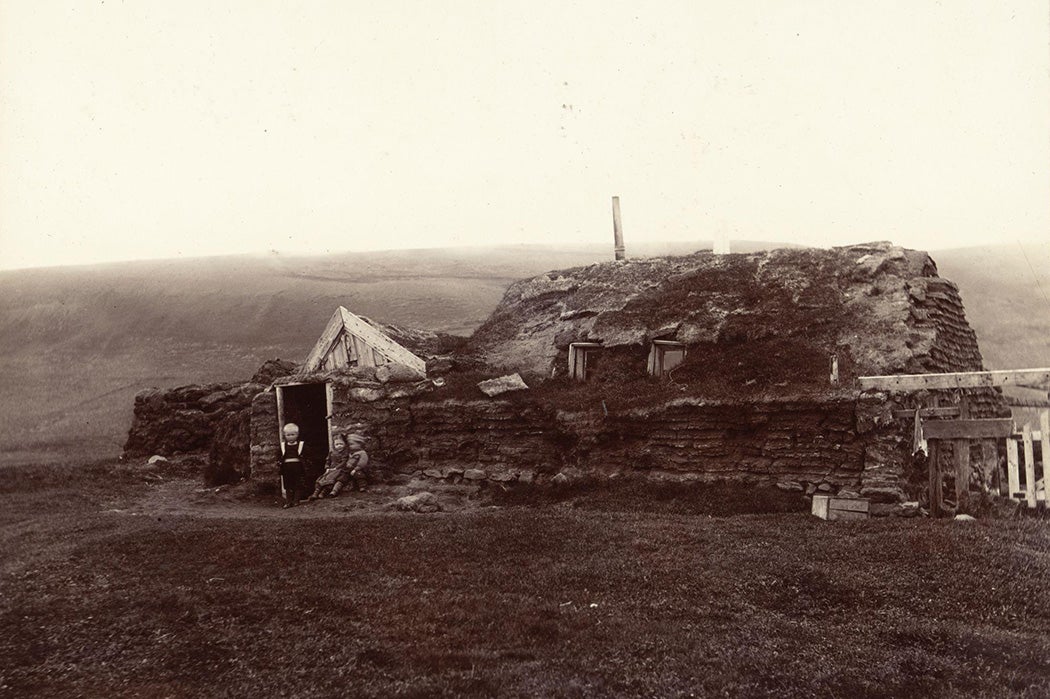
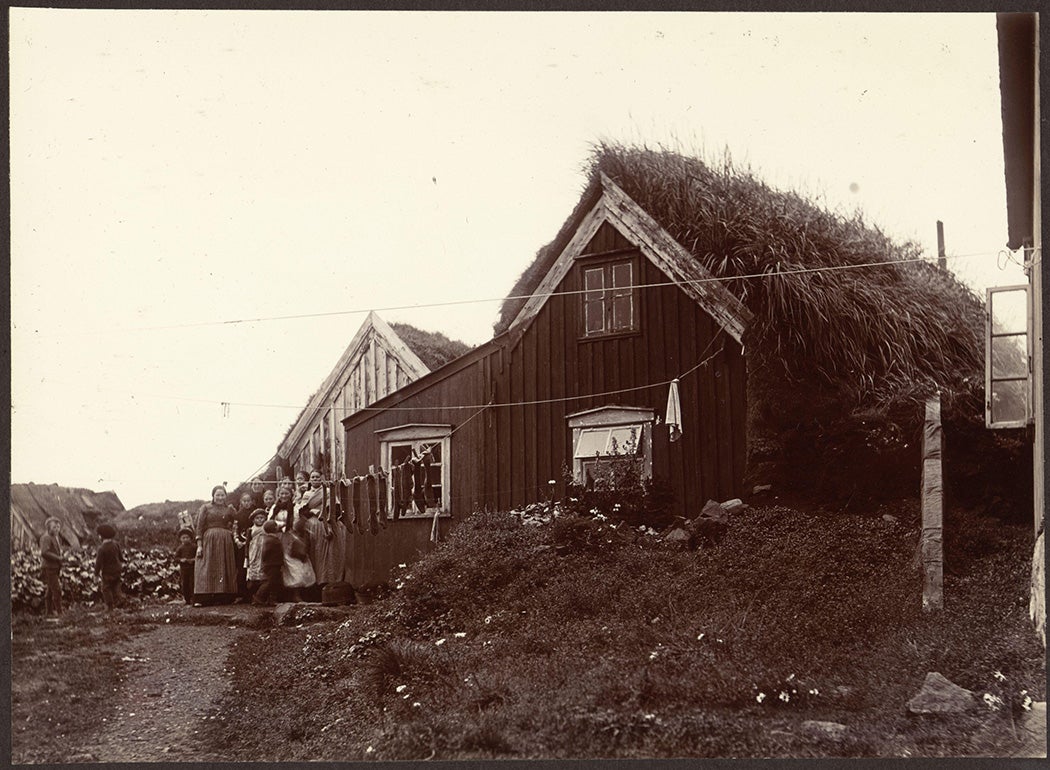
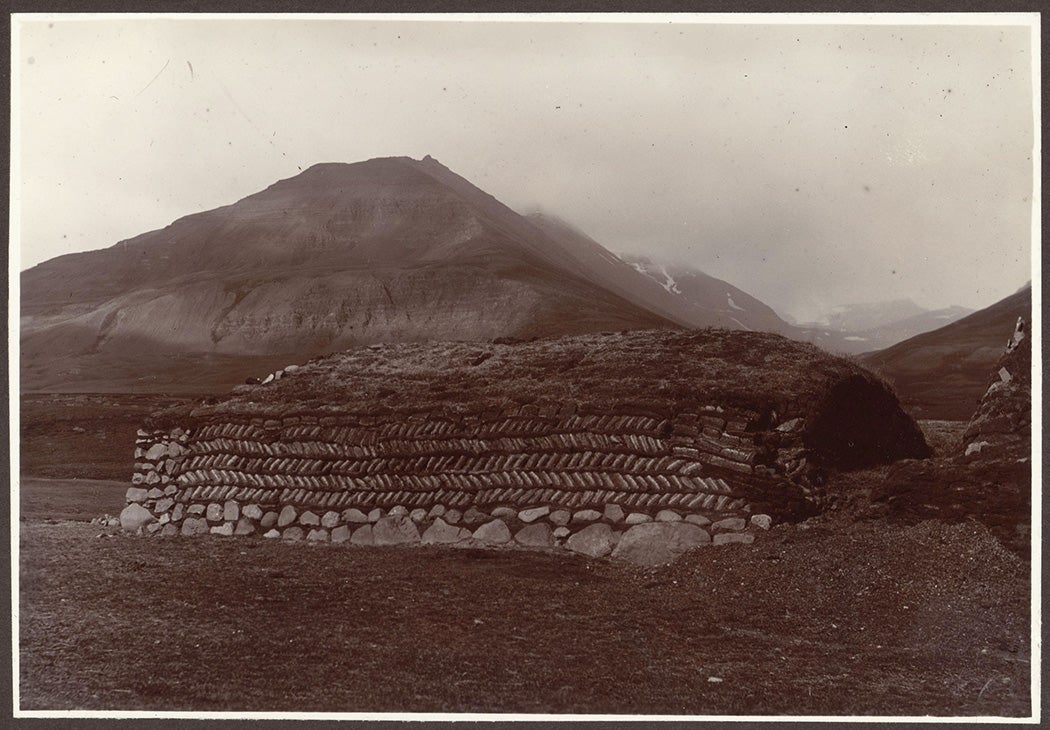
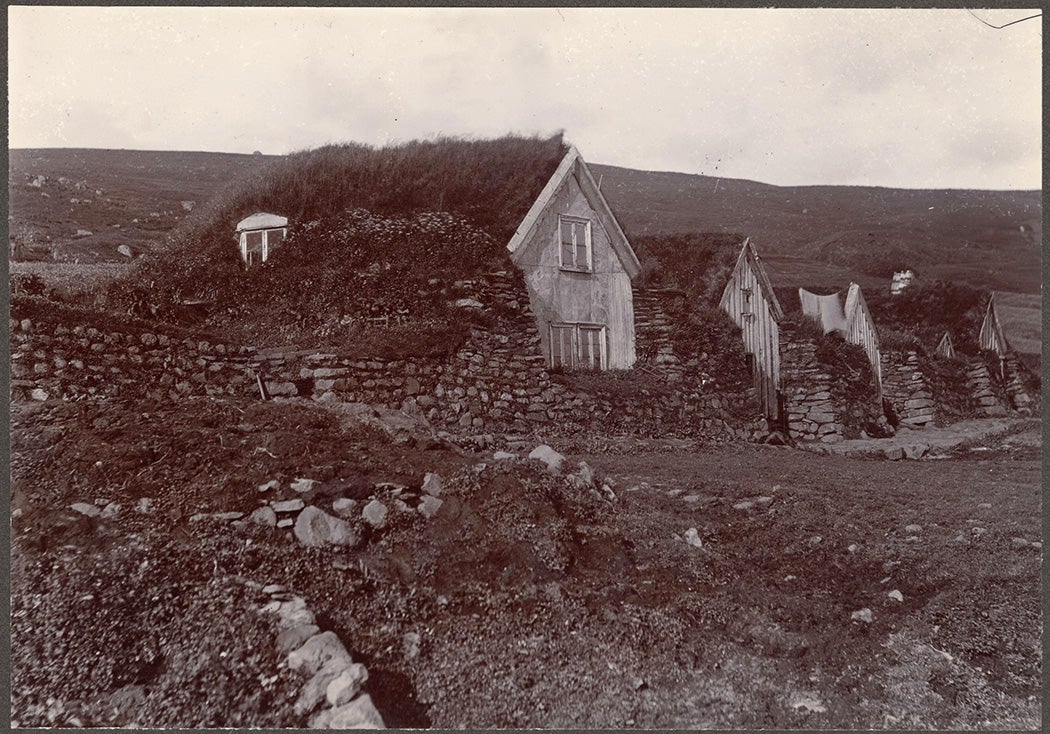
Let’s tour an Icelandic turf house. From the side, you could be forgiven for mistaking it for a hill; a thick carpet of grass grows up the walls and over the roof. But look closer and you can see a little windowpane peering out from behind the dandelions, and around the side there is a house-front and a door leading into a dark passageway.


Inside, a hallway paved with flat stones and packed earth opens on one side to the kitchen, with its stone hearth and huge iron pots; above, strings of fish hang to dry in the smoke. On the other side is the pantry, with butter churns and great tubs of skyr.
Up a steep little staircase you’ll find a long lofted room known as the baðstofa, where everyone except the master and mistress of the house crams together to sleep, two to a narrow bed. And by everyone, I mean everyone—not just the children, but also grandparents, servants, and local “paupers”—widows, orphans, or people with disabilities who were placed with the family as household help.
The baðstofa was the center of household life. Here, the household ate together, sitting on their beds, and whiled away the dark winter days by spinning, weaving, telling stories, reciting poems, and playing chess. During the bitterest cold, sheep might be brought in to the lower level of the house, so that their body heat would bring just a little more warmth to the home.
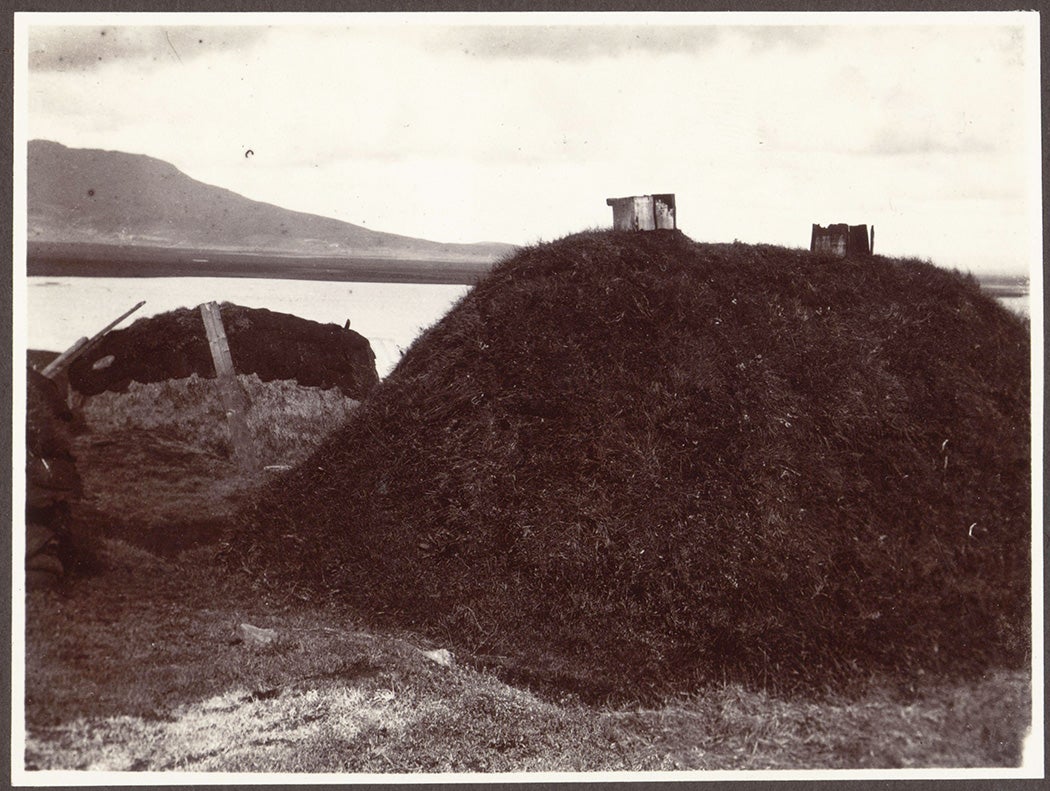
To be clear, this is a depiction of a relatively well-to-do turf house. A more humble dwelling is described by archaeologist Kristján Mímisson in Building Identities: The Architecture of the Persona. This house, built for a single hermit, had only one roof-post, and consequently only one room tall enough to stand in; the passageways were so narrow that Mímisson likens them to “squeezing through a cave fissure,” and the entrance to one room was so low that it could only be entered by crawling.
More to Explore
On the Anniversary of Iceland’s Independence
Turf houses were an ingenious response to scarcity. For centuries, the only wood suitable for building houses on the island was the driftwood that washed up from shipwrecks and distant forests. As a result, Icelandic house-plans had to use a minimum of wood—just a few posts and roof beams. The rest of the structure was made from stones (carefully stacked, with no mortar) and turf cut into chunks from the peat bogs. If done just right, the turf would grow together and form a cohesive, insulating layer.
What was it really like to live in a turf house? Visitors at the time did not mince words. This account comes from Sir George Steuart Mackenzie’s Travels in Iceland:
The thick turf walls, the earthen floors kept continually damp and filthy, the personal uncleanliness of the inhabitants, all unite in causing a smell insupportable to a stranger… There is no mode of ventilating any part of the house; and as twenty people sometimes eat and sleep in the same apartment, very pungent vapours are added in no small quantity, to the plentiful effluvia proceeding from fish, bags of oil, skins, &c. A farm house looks more like a village than a single habitation. Sometimes several families live enclosed within the same mass of turf.
Mackenzie writes with the characteristic judgmental sniff of an upper-crust tourist. Icelanders themselves, however, seem to have abandoned the turf house with enthusiasm, just as soon as there were alternatives. Before 1910, the majority of the country lived in turf houses. By the 1930s, stone and concrete had overtaken turf, and today, the few that remain have mostly been converted to museums.
Weekly Newsletter
"*" indicates required fields
But abandoning the turf house wasn’t just a matter of comfort and convenience. Until 1944, Iceland was under Danish rule. As the nationalist movement in Iceland gained momentum beginning in the 1700s, nationalist activists felt pressure to prove that Iceland was mature enough to rule itself.
In “Icelandic Putridity”: Colonial Thought and Icelandic Architectural Heritage, Sigurjón Baldur Hafsteinsson explores how this dynamic manifested itself in a rejection of turf houses. Hafsteinsson quotes the Icelandic nationalist Sigurður Guðmundsson, writing in 1860:
It is imperative that we liberate ourselves from the foreign perception which holds that we have always remained defenseless weaklings, lacking the means to survive, and we had nothing but mud-huts to crawl into like barbarians.
Even though, according to Guðmundsson, Danish architecture wasn’t really better—he described it as “houses mostly made from half-baked bricks, piled on top of one another in a makeshift way”—the turf house had become a symbol of “backwardness,” something to be left behind as Iceland modernized.
Today, when you look up “turf houses,” you’ll find article after article celebrating them as “green design,” “eco-friendly,” and “sustainable.” The Icelanders of the nationalist movement saw turf houses through the lens of their struggle for independence from Denmark; today, we see them through the lens of a different anxiety—our distance from nature and our impact on the environment. It’s striking how perspectives change.
* * *
For the Classroom
- A turf house can look charming today, but the sources in this article tell a more complicated story. How do the meanings of these homes change across time, and what drives those changes?
- The story draws on archaeologists, travelers, and Icelandic nationalists. How does each perspective shape your understanding of turf houses?
- Turf houses have been seen as symbols of poverty, national identity, and sustainability. What does this tell us about the way successive generations reinterpret the past?
- How does the story of the turf house complicate the idea that “progress” means leaving the past behind?