Our word “robot” comes from Karel Čapek’s 1921 play R.U.R. In it, historian of robots Dustin A. Abnet explains, Čapek repurposed the Czech word for “drudgery” or “servitude” to refer to the artificial workers produced by the play’s Rossumovi Univerzální Roboti (Rossum’s Universal Robots) company. Created from synthetic organic material, and thus more android than mechanical, these worker-roboti ultimately overthrow their human masters.


The play was a sensation in Europe, and then a year later, in America, though something was lost in translation. Čapek used robots to criticize soulless Fordism—the “standardization and regimentation” of American capitalism—and hence the US’s political and cultural power in Europe and around the world. (Other Europeans would conceive of the robot in the same way, notably director Fritz Lang and screenwriter Thea von Harbou in the 1927 German film Metropolis.)
But a funny thing happened to these robotic symbols of American capitalism by the mid-twentieth century. They were Americanized by American capitalism. Americans, as Abnet notes, “turned a figure that initially rebelled against the dehumanizing effects of Fordism into a tamed electro-mechanical slave holding aloft a global empire of consumerism.”
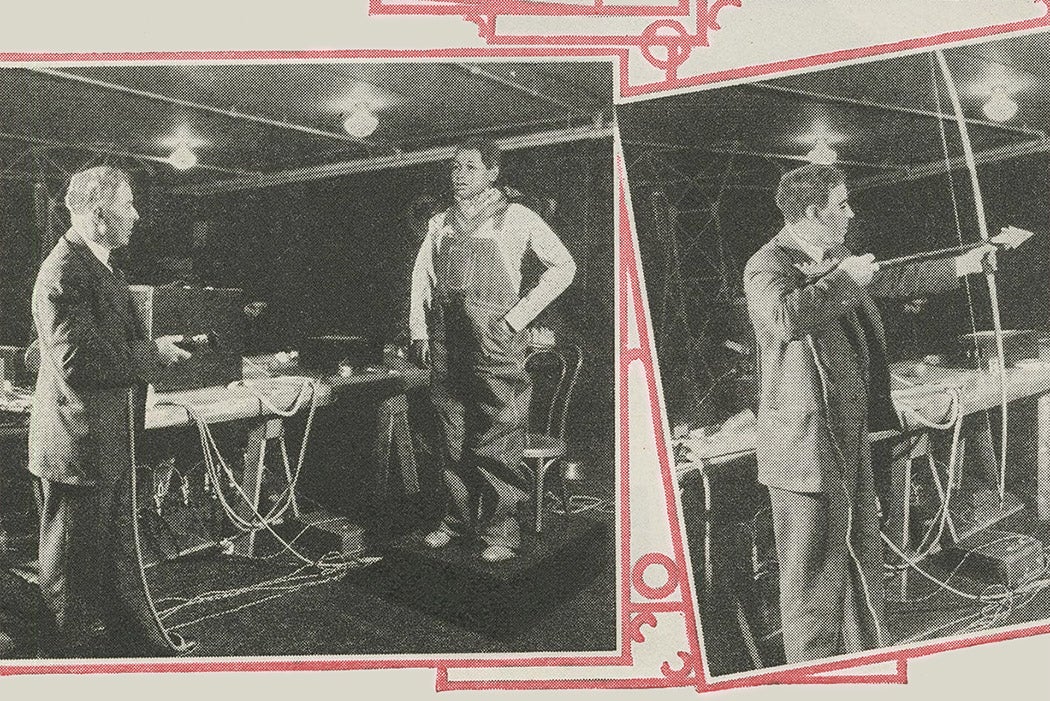
Nowhere was this more literal than in the Westinghouse Electric Company’s “simple remotely controlled mechanical men and women” used to advertise the company’s products from 1927 to 1940. “Technology did not have to run amok, Westinghouse’s robots suggested; it could instead become a tamed slave that empowered each individual consumer to become his or her own master.” In the American context, where the language of master and slave was rooted in racism, Westinghouse “connected robots to romanticized white myths about slavery.”
More to Explore
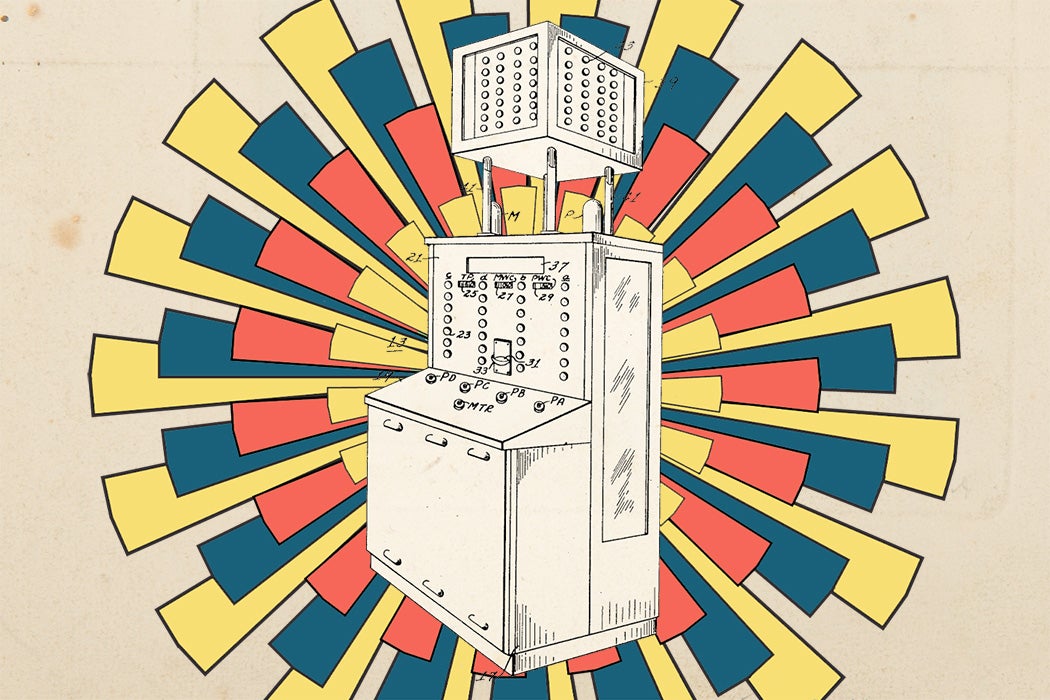
The Nimatron
“Americans had always racialized robot-like creations,” continues Abnet, citing the first American automaton (a caricature of a Native American) and the “grotesque minstrel-like caricatures of Black and Asian bodies” that made up automatons in the late nineteenth century.
Westinghouse’s creations, named Herbert Televox, Karina Van Televox, Telelux, Rastus, Willie Vocalite, and Elektro, were promoted as docile domestic workers. Abnet quotes the New York Times’ science and technology editor extolling the benefits of the first of these “mechanical slaves” in 1927: “it obeys without the usual human arguing, impudence or procrastination.”
Rastus, Westinghouse’s Great Depression-era robot, was the most overtly racialized of these corporate robot slaves. Rastus was modeled on a minstrel show character: “black rubber ‘skin,’ overalls, a white shirt, and a pail hat.” In addition, “the robot had a ‘rich, baritone voice’ that would have been read as unmistakably black.” While “all of Westinghouse’s other robots told jokes…Rastus and its blackness were themselves the joke.”
In 1930, Westinghouse’s President explicitly expressed the prevailing white romanticism of slavery. In the company’s Electric Journal, he argued that without the exploitation of the “muscles of others,” there could be “no art, literature, science, leisure, or comfort for anyone.” Rastus’s “tamed black body,” stresses Abnet, “underscored the larger rhetoric of slavery that shaped the fantasy the company offered white consumers.”
“Ultimately, Westinghouse’s robots were not just about more efficiently accomplishing work or ensuring greater leisure time; they were a symbol that deployed racialized slavery in ways that could reassure white Americans of their own freedom, their own mastery over both technology and the bodies of others.”
Weekly Newsletter
"*" indicates required fields
Čapek’s robots had successfully rebelled, killing all but one human. In America, that couldn’t happen, at least according to the corporations selling the robot idea. But fear of a robot rebellion, like the fear of slave rebellion before the Civil War, remained. Abnet notes that the “most common robot story in American science fiction during the 1920s and 1930s told a story of white men, using their cunning, strength, and willpower to restore their authority over the robots who should be their slaves.” Movies, especially science fiction serials, often told the same story.
A century after R.U.R. and forty years after The Terminator, the uneasiness engendered by robots (and their droid, cyborg, replicant, and AI cousins) persists, reflecting longstanding concerns about labor, autonomy, and power.