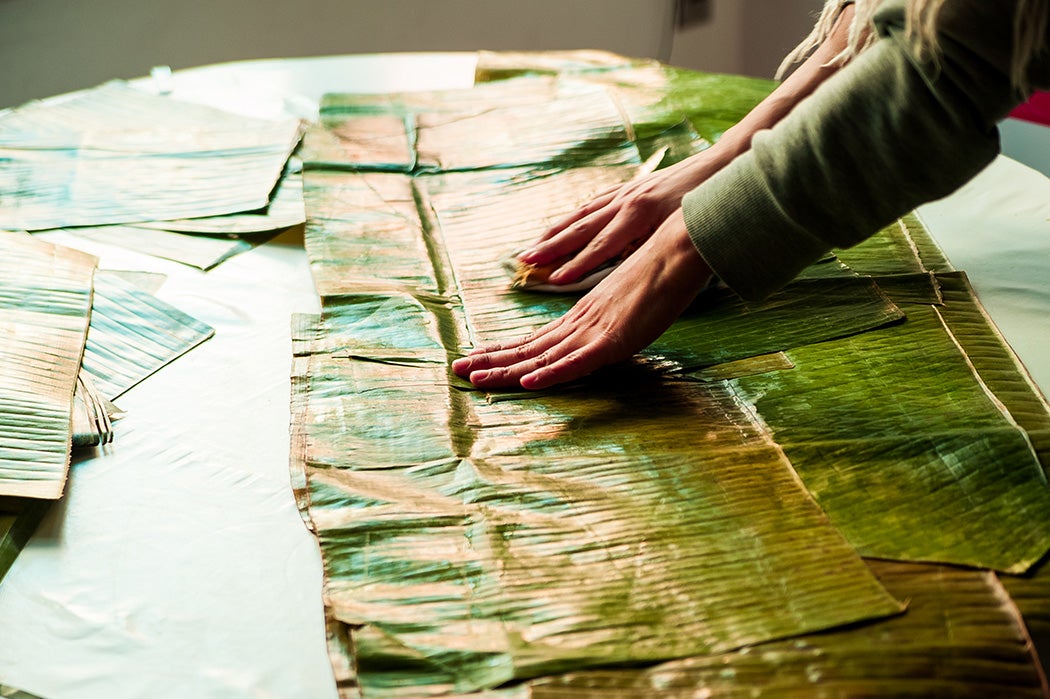
Each year, around Christmas time, my family wraps gifts. Instead of using paper, we use banana leaves; instead of toys, we enclose a meal. As Venezuelans, assembling, eating, and sharing hallacas with family and friends is one of our most important and meaningful cultural activities. This tradition has been passed down and across generations, and this year we made sure to involve my youngest cousin and my sister’s American husband. The process begins and ends with hojas de plantano—plantain leaves—which are paramount to both the distinct flavor and culinary integrity of the corn-dough-stuffed dish. As my grandmother’s careful eye observes: brittle, undersized leaves are a recipe for disaster, ruining days of the whole family’s preparation and effort. Her hyperfocus on the leaf raises questions that extend far beyond the kitchen, inviting an inquiry into the banana plant’s movement across geographies and its role in sustaining cultural traditions.


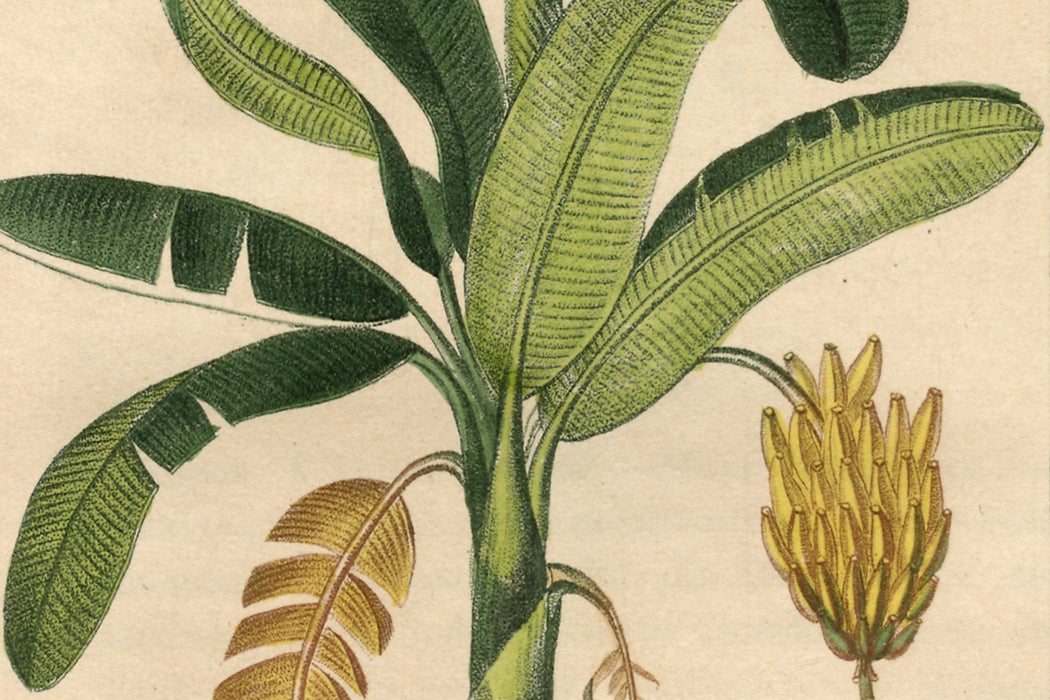
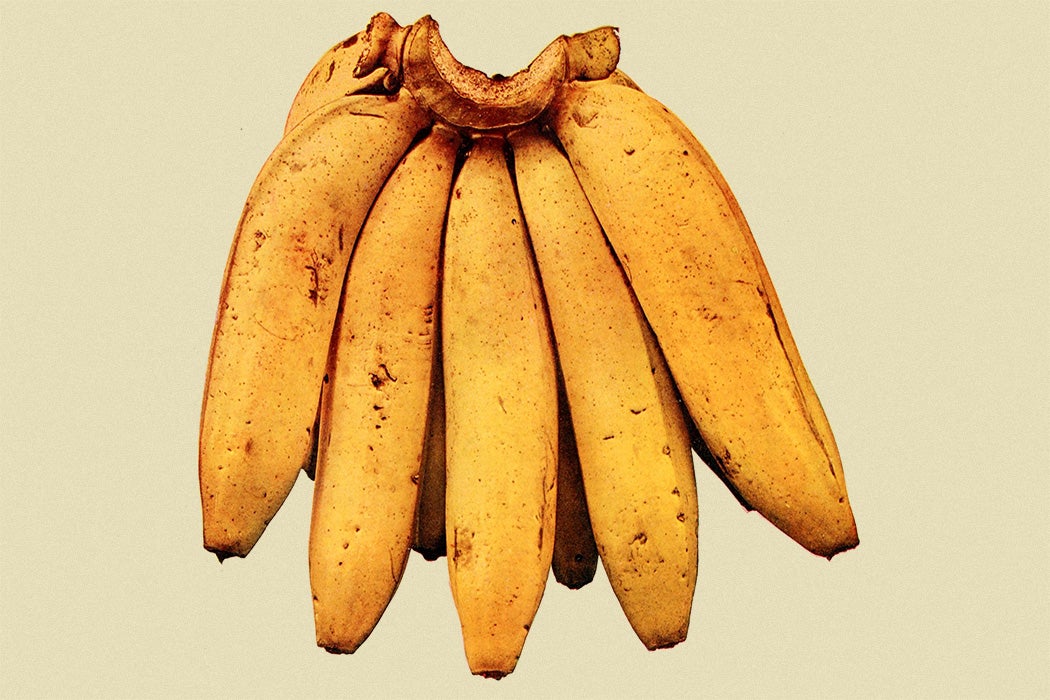
When one imagines a banana, they most likely envision a sweet, curved, yellow fruit, which has become a cornerstone crop for cultivation in economies along the Earth’s equator. While the banana fruit itself has become a worldwide culinary staple, the role of the plant’s leaves in Venezuela, as embodied by the hallaca, is crucial despite the leaf not being edible. Banana leaves became central to this Venezuelan custom not through a linear origin story, but through an inherited practice that contains the intersection of many histories and peoples. To understand how banana leaves came to wrap the hallaca, it is first necessary to explore what the banana plant is—and how humans have classified, cultivated, and dispersed it across the world.
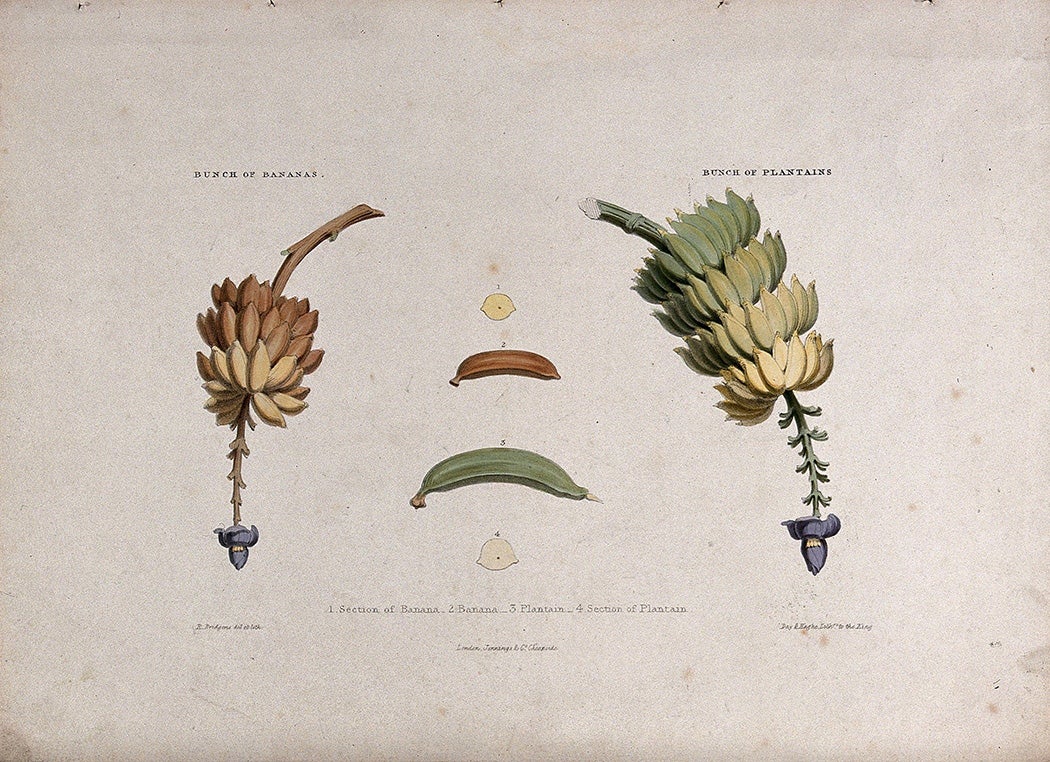
Despite their morphological differences, contemporary bananas and plantains aren’t considered distinct species by scientific botanical standards. Instead, they belong to the plant family Musaceae, within the genus Musa, and are classified as cultivated varieties derived from two ancient species: Musa acuminata and Musa balbisiana. The former is responsible for the sweeter flavor of the more common fruit, so-called dessert bananas, while the latter is known to provide for the starchiness of cooking bananas, or plantains. While some varieties remain shrub-sized, others grow tall enough to be mistaken for trees. In fact, the banana plant is the world’s largest herbaceous perennial: a non-woody plant whose apparent “trunk” is actually a “pseudostem” formed from overlapping leaves. Its seedless fruit grows in clustered bunches from flowering stalks and reproduces through human-directed propagation, a process that has enabled the development of countless domesticated varieties and cultivars.
These biological characteristics—particularly how bananas reproduce through simple cloning—have not only shaped how the plant grows, but also how it has migrated across the world. While bananas are endemic to Southeast Asia and the South Pacific, they now thrive in tropical regions across five continents. By the time the Portuguese flanked the west African coast in the late 15th century, the banana plant had already been cultivated there for centuries. The Portuguese transported the banana, along with enslaved people, to the Canary Islands and other territories across the Atlantic. As imperial forces traversed continents, the meanings and uses of these arrivals—whether people, plants, or ideologies— were actively negotiated and reshaped by the societies and environments compelled to contend with them.
How the banana plant traveled to the Americas remains the subject of historical debate. The plant’s journey across the Atlantic Ocean and to the “New World” is at once well-chronicled and stubbornly indeterminate. The first recorded account of banana dispersal to the Americas, authored by Spanish historian and colonist Gonzalo Fernández de Oviedo y Valdés, credits Spanish Bishop Tomás de Berlanga with inducing the plant’s growth in the western hemisphere. In 1516, de Berlanga brought the plant from the Canary Islands to Hispaniola—now known as the island of the Dominican Republic and Haiti—and later to Panama. As scholar Virginia Scott Jenkins explains in her book Bananas, “[bananas were] the cheapest and most satisfactory food for the growing African slave population,” illuminating the role of the plant as a mobile colonial tool in projects of racialized exploitation and dispossession.
By the time of Valdés’ writing in 1535, he also observed that the plant had already “successfully” spread across the Caribbean and onto the tropical mainlands of North and South America. Within less than two decades, the banana plant had established itself across an exceptionally large geographic area from its initial start in Hispaniola. Esteemed Prussian-born Venezuelan ethnobotanist Adolf Ernst, writing in his work, Observaciones Sobre La Historia Del Banano En América, maintained that the dispersal of the plant couldn’t have been so simple. He claimed that the banana plant variety which produced the plantain fruit was different from the one brought from the Canary Islands, hypothesizing that Portuguese colonizers brought this distinct cultivar to the Americas northward from Brazil. Echoing the uncertainties of the historiography, contemporary scholar Robert Langdon argues against the dominant consensus that the banana was exclusively a European importation, positing archaeological and linguistic evidence to suggest that the plant owed its arrival in the Americas to a much older encounter with Polynesian people.
To this day, the question of how and which banana plants got to the Americas remains subject to an ongoing and increasingly interdisciplinary debate within the academy. However, the scholarly preoccupation with the “nativeness” of a plant is rarely questioned. Regardless of whether the banana plant grew within the ecosystems of the precolonial American tropics or not, Indigenous communities and ecologies across the region adapted to the banana plant in a variety of ways that would eventually come to be part of a sustained tradition. Italian Jesuit missionary Felipe Salvador Gilij, who lived along the Orinoco River in Venezuela in the mid-18th century, is considered the first to document Indigenous leaf-wrapping practices. Gilij’s published ethnographies describe Native people preparing various cornmeal-based dishes boiled within folded leaves, precisely the same method used by Venezuelan families today to cook hallacas. He attributes a range of alternative spellings of this early hallaca to Indigenous vocabularies, illustrating how attempts by colonial interlocutors to record language, plants, and Native life reveal the persistent and complex connection between traditional leaf-based foodways and the “arrival” of the banana.
More to Explore
Fruit Geopeelitics: America’s Banana Republics
Throughout the 19th century, as African and European influences permeated South America, the ingredients inside the hallaca began to change, and likely differed across region and class. However, the archetype of the hallaca has always remained the same; cornmeal dough wrapped and cooked in banana leaves. In his 1861 book on national agricultural and culinary practices, El Agricultor Venezolano, José A. Díaz affirmed this, providing a recipe of the dish, describing it as “…masa de maiz, envuelto en hojas de plátano y cocido así en agua,” (corn dough, wrapped in plantain leaves and cooked in water).
Despite being the first country in South America to achieve independence from Spain in 1811, Venezuelan people remained dispersed across disconnected parts of the young country, and unification of a national identity remained weak until the early 20th century when hallacas, wrapped in the vibrant leaves, came to be formally recognized as a national dish and tied to Christmastime celebrations.
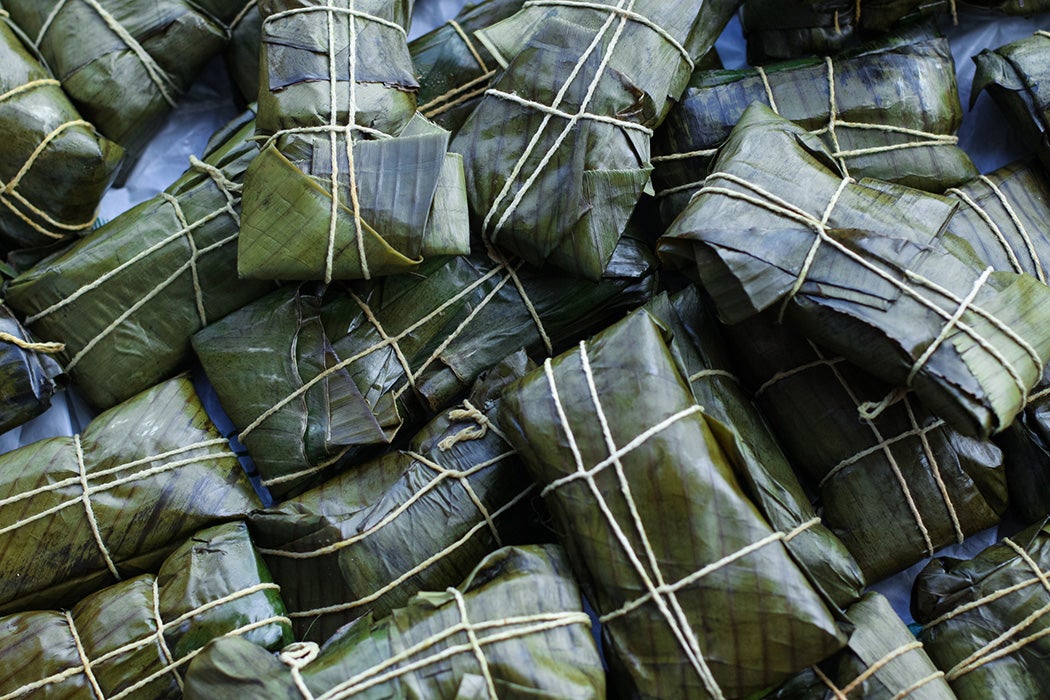
While Venezuelan identity grew with the banana plant, many other cultures around the world—particularly in Southeast Asia and western Africa—also use banana leaves to wrap food and, more recently, use the leaves as a sustainable alternative to plastic wrapping materials. Why, then, is the banana leaf meaningful in the Venezuelan context? Fittingly, lessons from a northern voice can help provide a path towards understanding. In her book Fresh Banana Leaves, Indigenous scientist and scholar Jessica Hernandez meditates on the meaning of the banana plant within the ecologies of her ancestors across what is now Mexico and El Salvador. Rejecting Western environmental frameworks that seek to determine the plant’s origin or label it invasive, Hernandez offers a perspective shift that invites her readers to understand the banana plant as a displaced relative that has “adapted well to our climates and is now incorporated into our traditional diets.” She ultimately argues that it is the nature of the relationship forged between plants and peoples that determines their meaning within a community. For inheritors of the banana leaf-wrapping tradition, this practice has both the literal and symbolic capacity to contain that relationship.
Weekly Newsletter
"*" indicates required fields
Despite the contested history of the banana plant across the Americas, its presence within Venezuelan ritual traditions enables members of the diaspora to wrap and unwrap their heritage in the face of displacement. As Venezuelans forcibly migrate across the world, they continue to use banana leaves in this way. The irony of global capitalism—which has made various banana plant products widely available—is that while it allows some well-off immigrants to maintain these traditions abroad, extreme poverty and political instability can render them inaccessible to those within Venezuela itself. The history of the banana leaf mirrors the displacement and adaptability of people who use it, continually shaping its significance as a container for land, patrimony, and memory.
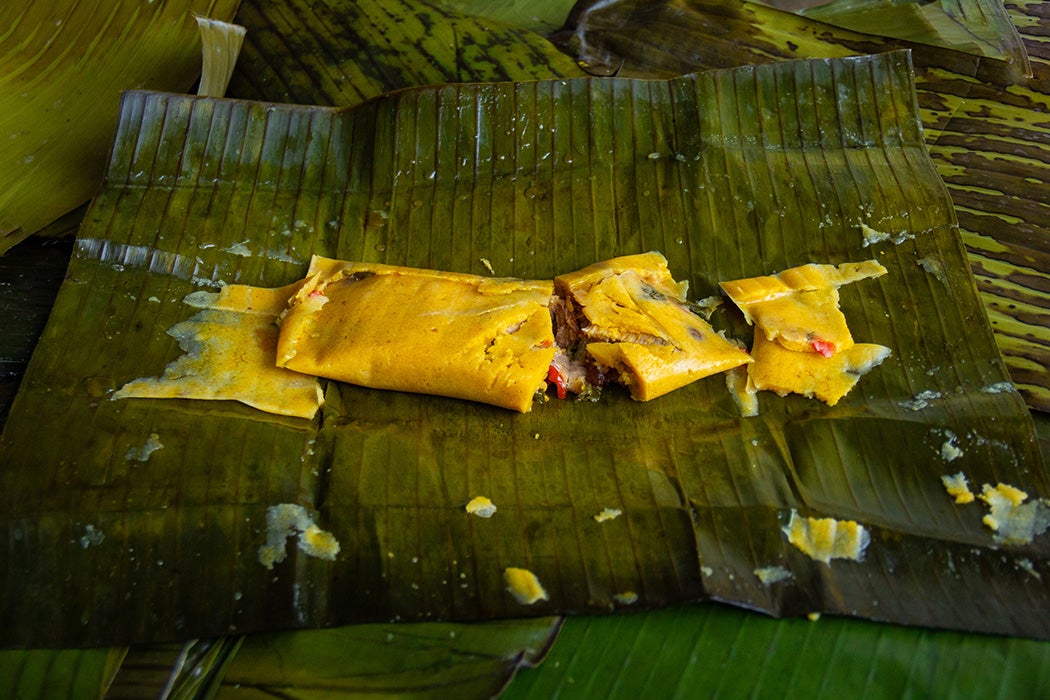
As my family, along with millions of other Venezuelans, navigate life far from our homeland, opening gifts wrapped in banana leaves is a reminder of where we come from and of the importance of practicing traditions that nourish both our livelihoods and cultural identity. While the “true” origins of the banana plant remain obscure, we remember, rehearse, and actively live a story that was never written down, but instead folded and enclosed within each hoja de plátano.