How did the National Geographic Society end up becoming, in the words of historian Susan Schulten, “one of the most ubiquitous sources of information and images about the world in American culture” during the twentieth century?


As Schulten details, the Society was formed in Washington, DC in 1888 with thirty-three scholars and scientists led by wealthy attorney Gardiner Greene Hubbard. Through lectures and the organization’s journal, the Society functioned as “a clearinghouse for geographic research and exploration, especially that conducted by the federal government.” Its journal was essentially an academic publication, and images were discouraged. After a decade, Society membership stood close to one thousand and the organization was approximately $2000 in debt.
The Spanish-American War (1898) transformed the magazine. It helped that a second generation of leadership came to the fore in the same period. After Hubbard’s death in 1897, his son-in-law, famous inventor Alexander Graham Bell, took charge. Together with his son-in-law, Gilbert H. Grosvenor, Bell pushed the Society towards a wider, nonspecialized membership and rode the imperialist wave. (Grosvenor was editor, president, and finally chairman during a tenure that lasted until 1966.)
In 1905, the magazine started to run lots of pictures. By 1910, when the title of the publication became The National Geographic Magazine, fully half the contents were photographs. While professional geographers “struggled to secure even a small niche in the new American universities,” notes Schulten, the Society “managed to grow by leaps and bounds in the early twentieth century.” Monthly circulation reached 170,000 in 1913 and one million in 1926.
More to Explore
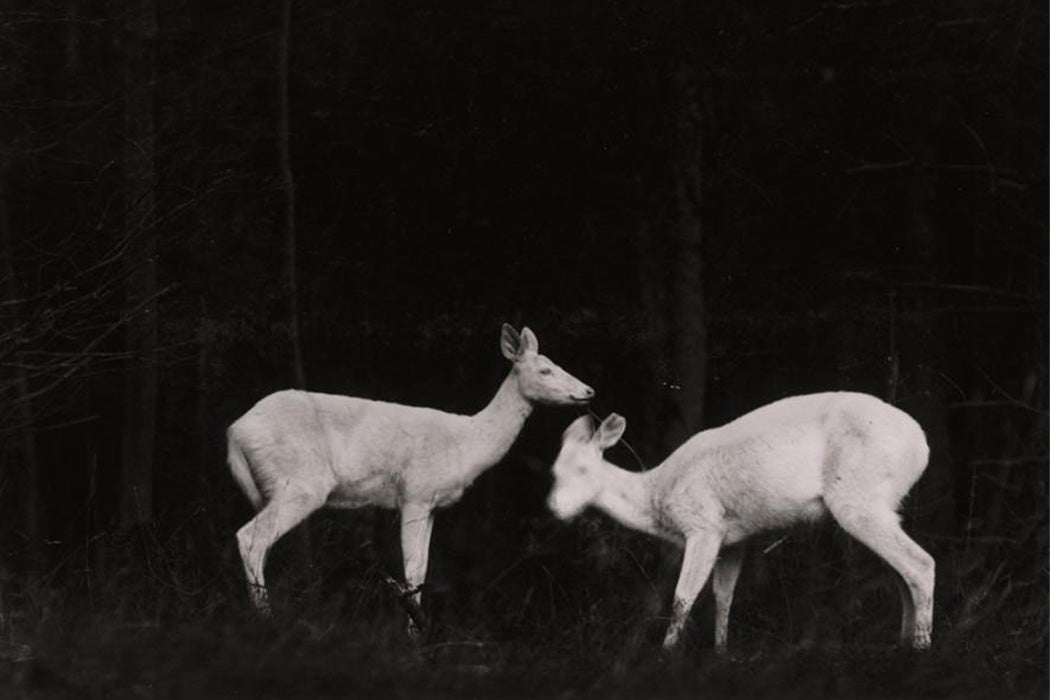
Photography Changed Americans’ Ideas about Nature
Originally a private adjunct to the federal government, forging a direct connection between geographical knowledge and “the health of the nation itself, a precondition for vigorous nationalism,” the Society’s mission after the Spanish-American War was supercharged. The decisive American victory in that war resulted in a far-flung empire, from Cuba and Puerto Rico in the Caribbean to the Philippines and Guam in the Pacific. For the Society, writes Schulten:
The war […] gave the Geographic the exhilarating opportunity to cover international events and defend the nation’s goals abroad, while at the same time bringing the exotic and potentially enriching reaches of the new American orbit home to its readers. By taking advantage of the opportunity, the magazine’s scope was effectively enlarged to include not just geographical research, but also political and commercial issues that related to the nation’s new international posture.
Unmentioned in the magazine before the war, the newly annexed territories were all covered repeatedly afterward. The April 1905 issue on the “culture, politics, and resource wealth of the Philippines,” illustrated with 32 pages of photos, was “so popular it had to be returned to press to meet the demand.” (By then, the Philippine-American War—in which the United States employed torture, scorched earth, and concentration camps—had resulted in the crushing of an independent Philippines, although the Moro Rebellion continued until 1913.)
In 1899, only three of the fourteen Society board members worked outside government. Without correspondents abroad, the magazine depended on information from government agencies. Maps either came directly from government sources or were modeled on those drawn by the War Department or Army Corps of Engineers. “In general,” writes Schulten, “the men behind the Geographic were eager to employ their skills in service to the state.”
Weekly Newsletter
"*" indicates required fields
Needless to say, the American Anti-Imperialist League, with Mark Twain as its most prominent member, “found little sympathy” in the Society’s pages. Long before Time Inc.’s Henry Luce coined the term “American Century,” National Geographic Magazine was delivering it to millions of mailboxes.
At its peak in the late 1980s, about 13 million subscribers received the magazine every month. With the decline of print in the digital era, the magazine—now majority owned by Disney—is no longer ubiquitous, but “National Geographic” remains a potent media brand. On Instagram, for instance, NatGeo is the third most popular non-celebrity account.