Reveal Digital on JSTOR
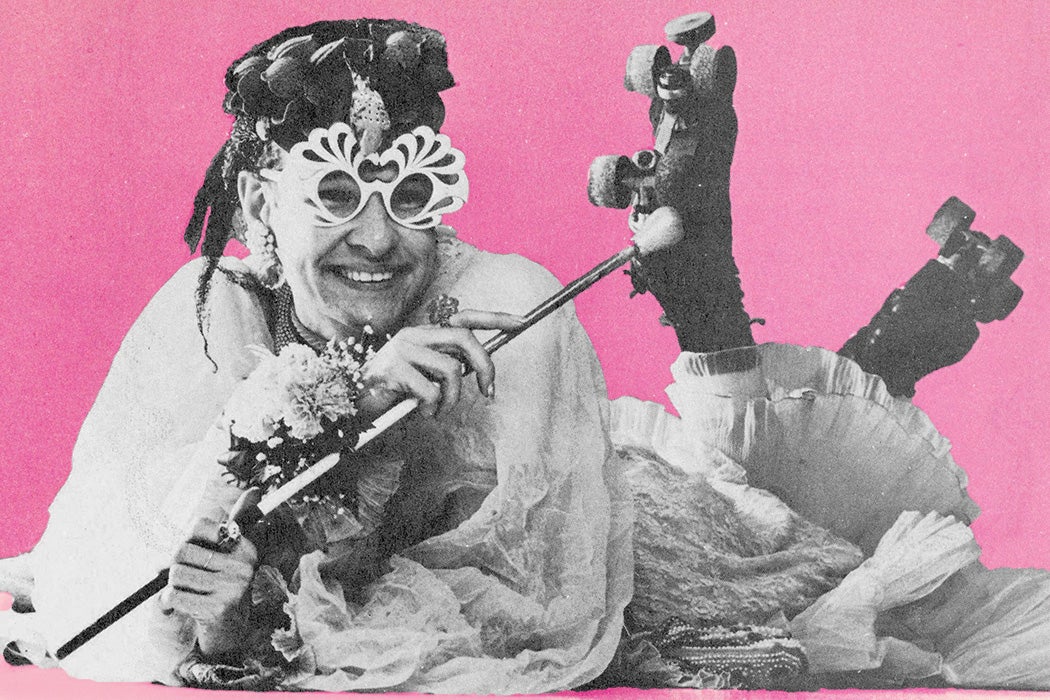
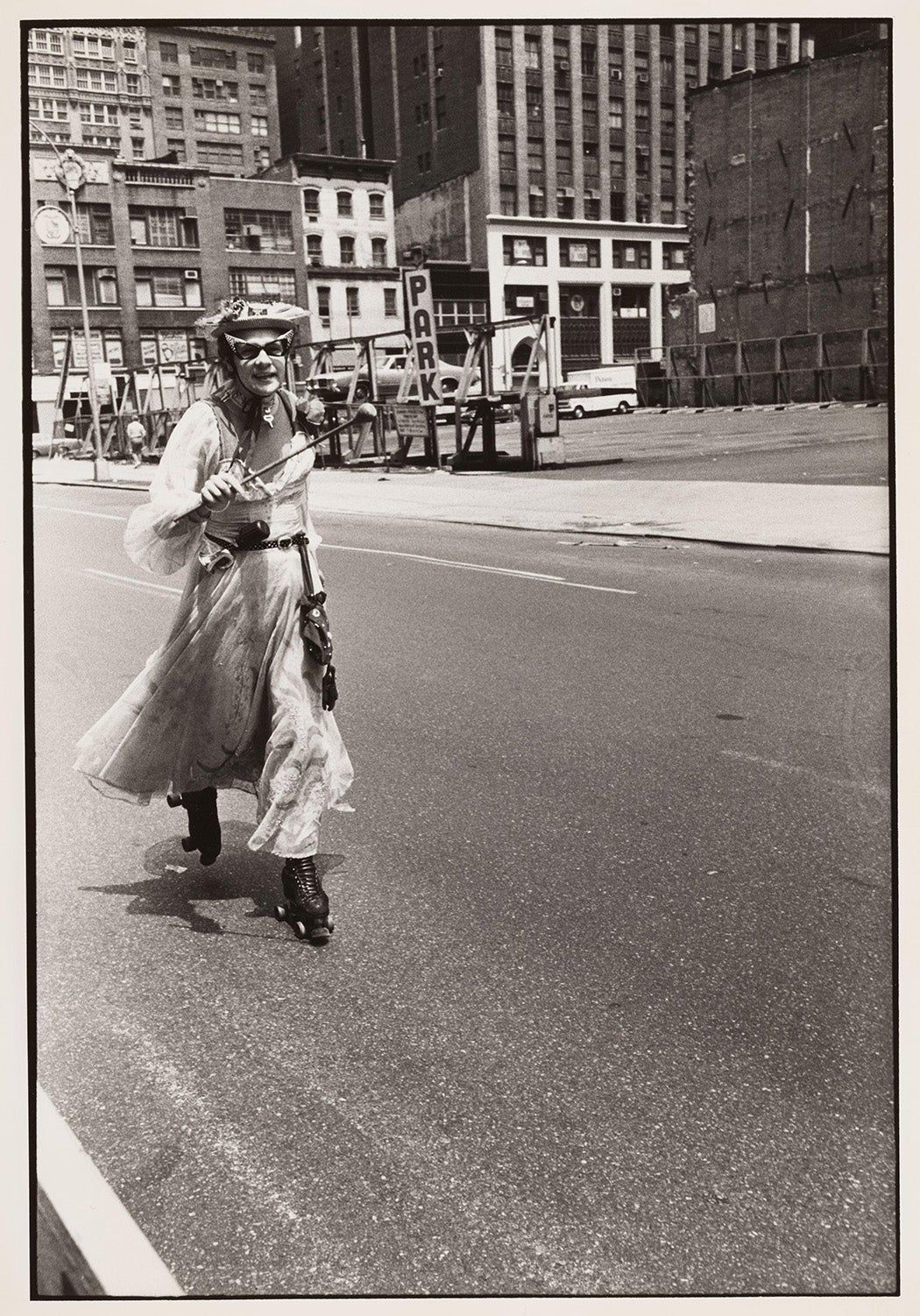
Before Rollerena was an AIDS activist, she was already reshaping public life. The impetus for lacing up her rollerskates may have begun as a simple longing to avoid the crowds on her Lexington Avenue line, but it evolved into a form of performance and public expression unlike anything New York had seen. Gliding about on tall, black vintage rollerskates, she became a celebrity presence, recognizable by her flowing gown, ornate hats, rhinestoned glasses, and wand. She became New York City’s Fairy Godmother, a surprisingly vital presence for spreading queer joy.


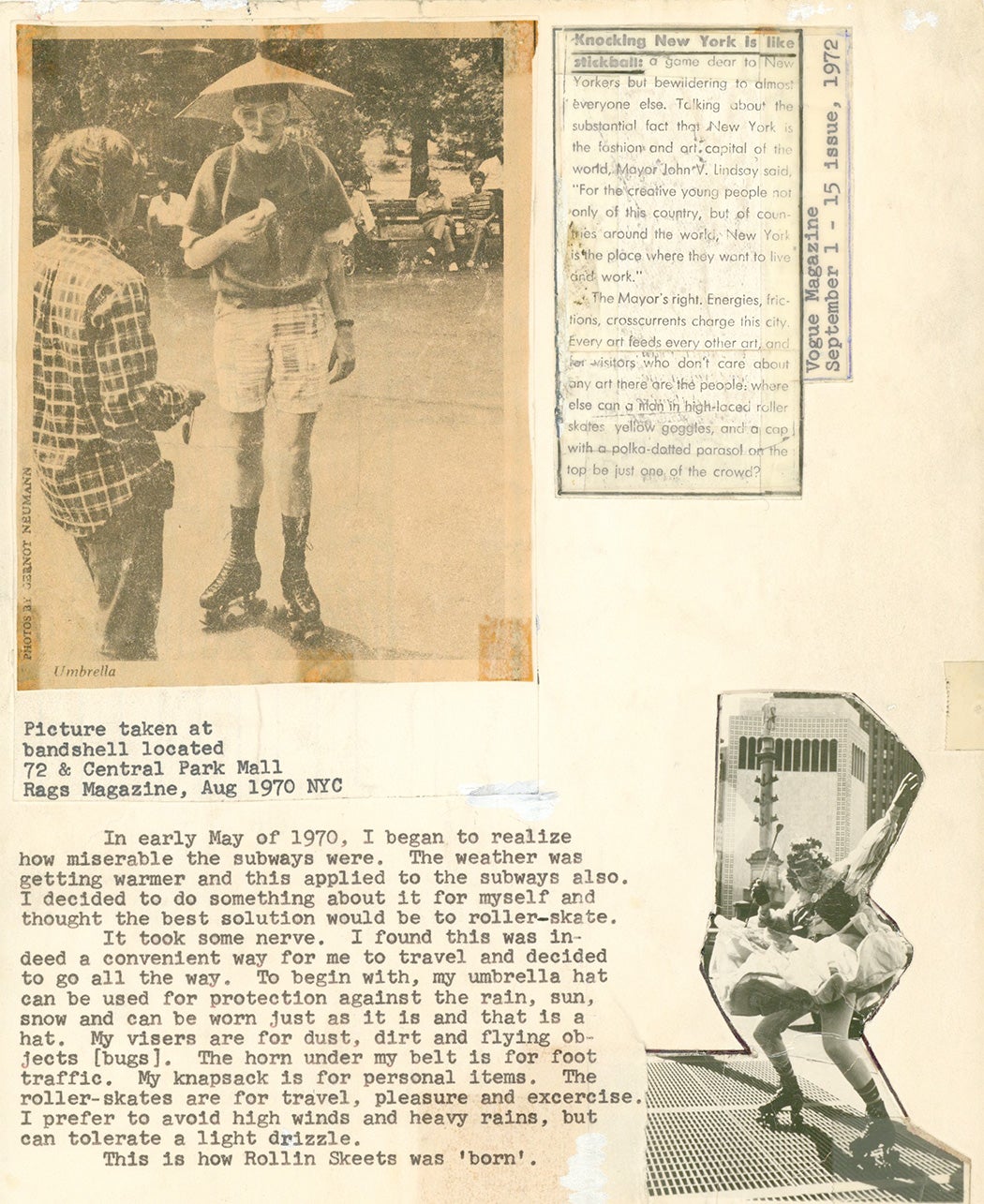
Rollerena’s archive, recently published by Reveal Digital as part of its HIV, AIDS, and the Arts collection, records the evolution of Rollerena as a public self. According to her own account, the persona of Rollerena was born on the evening of September 16, 1972, when a young Kentucky-born Vietnam War veteran first put on a gown and skates. But that favored account skips an earlier version: “Rollin Skeets,” a less transformed, first-draft figure who lightly obscured its creator behind an umbrella hat, horn, and goggles. The archive introduces this precursor on its very first sheet, in a collage format that recurs throughout the collection: article clippings, images, and electric-typewriter text taped to a backing sheet. Rollerena understood the value of an origin story. If she could not arrive by magic, she could at least stage her own transformation.
By 1982, a piece in the Philadelphia Gay News assumed that “most New Yorkers, gay and not” already knew “what to say to a man clad in a frilly gown your great-grandmother would have thought chic as he’s whizzing by on roller skates,” and it was: “Hi! Rollerena!” Famously skating through gay neighborhoods and appearing at the city’s early Pride events, then known as Christopher Street Liberation Marches, Rollerena was a familiar figure in queer New York. She also appeared at Easter parades and was waved in past long lines by bouncers at discos, including the incomparable Studio 54. In a 1981 interview, Rollerena explained that her “purpose in life is to be a good fairy godmother … to bring love, to bring happiness, to unite people in a common cause.” That unifying spirit is one of the archive’s clearest points. Rollerena’s audience was never narrowly defined—her world intentionally included gay men, lesbians, transgender people, drag queens, activists, partygoers, and curious strangers alike.
More than a broadly inclusive figure, Rollerena moved between communities and helped produce a unified queer counterpublic. Photographed, discussed, and televised on the streets, in marches, in discos, and through chance encounters, her presence made a distinctly queer mode of being more visible. But that world depended on more than visibility. It was sustained through the repeated display of style and action outside the norm. Rollerena’s “acts of gaiety” were not just private feelings of queer joy made visible. They constituted a social form: a way of making that life more public, even as some in the gay mainstream of the time found such activities perplexing.
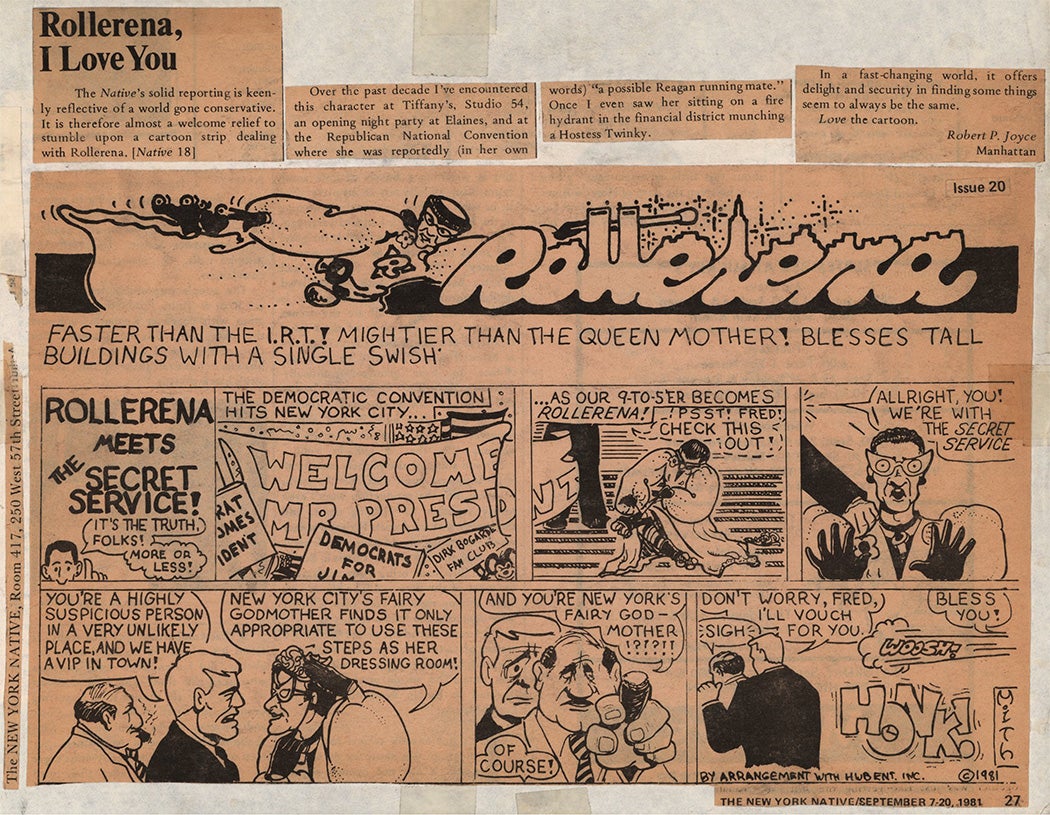
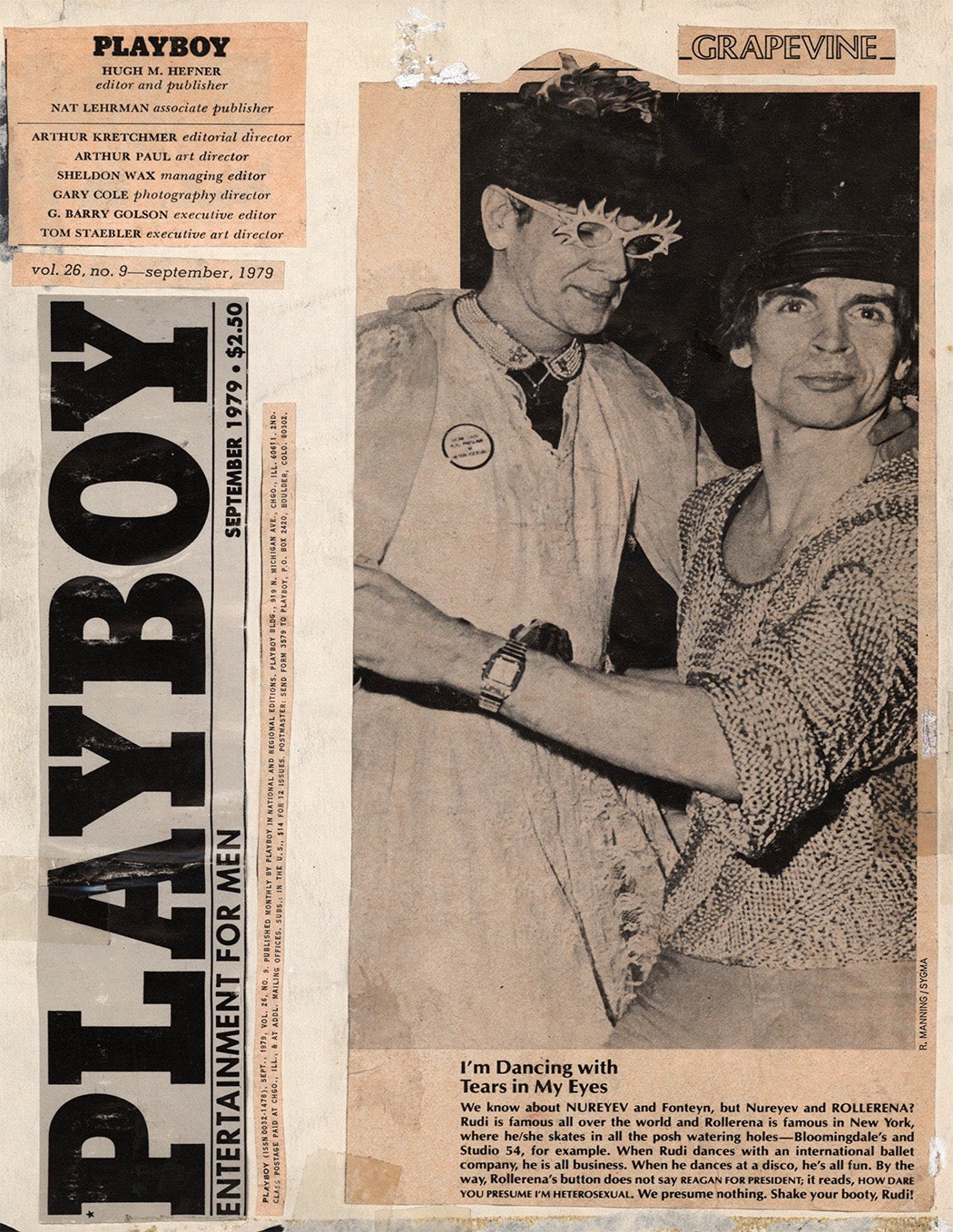
As media recorded, fictionalized, and reworked Rollerena, her public life circulated well beyond the city. She became the titular figure of a comic strip, was featured in news clippings from a generally laudatory gay press, and turned up in Vogue and even Playboy. She danced with legendary queens Lady Bunny and Flotilla DeBarge, as well as with celebrated ballet dancer and choreographer Rudolf Nureyev. The archive preserves marked-up references to a Rollerena-inspired figure in Andrew Holleran’s Dancer from the Dance and “Miss Rollarette” in Larry Kramer’s Faggots.
Looking back, it is easy to mistake Rollerena for a charming camp novelty. Her visibility made her iconic, but iconography can flatten as easily as it elevates. What the collection restores is the density and texture that caricature could strip away. The papers make clear that Rollerena’s life was also political, and that creativity and contributions to a queer public culture were themselves forms of political service. The most affecting evidence may be the acceptance speech for a 1988 lifetime achievement award, preserved not as a polished script but as notecards, numbered 1 through 13, that she handled on stage and later stapled to backing sheets.
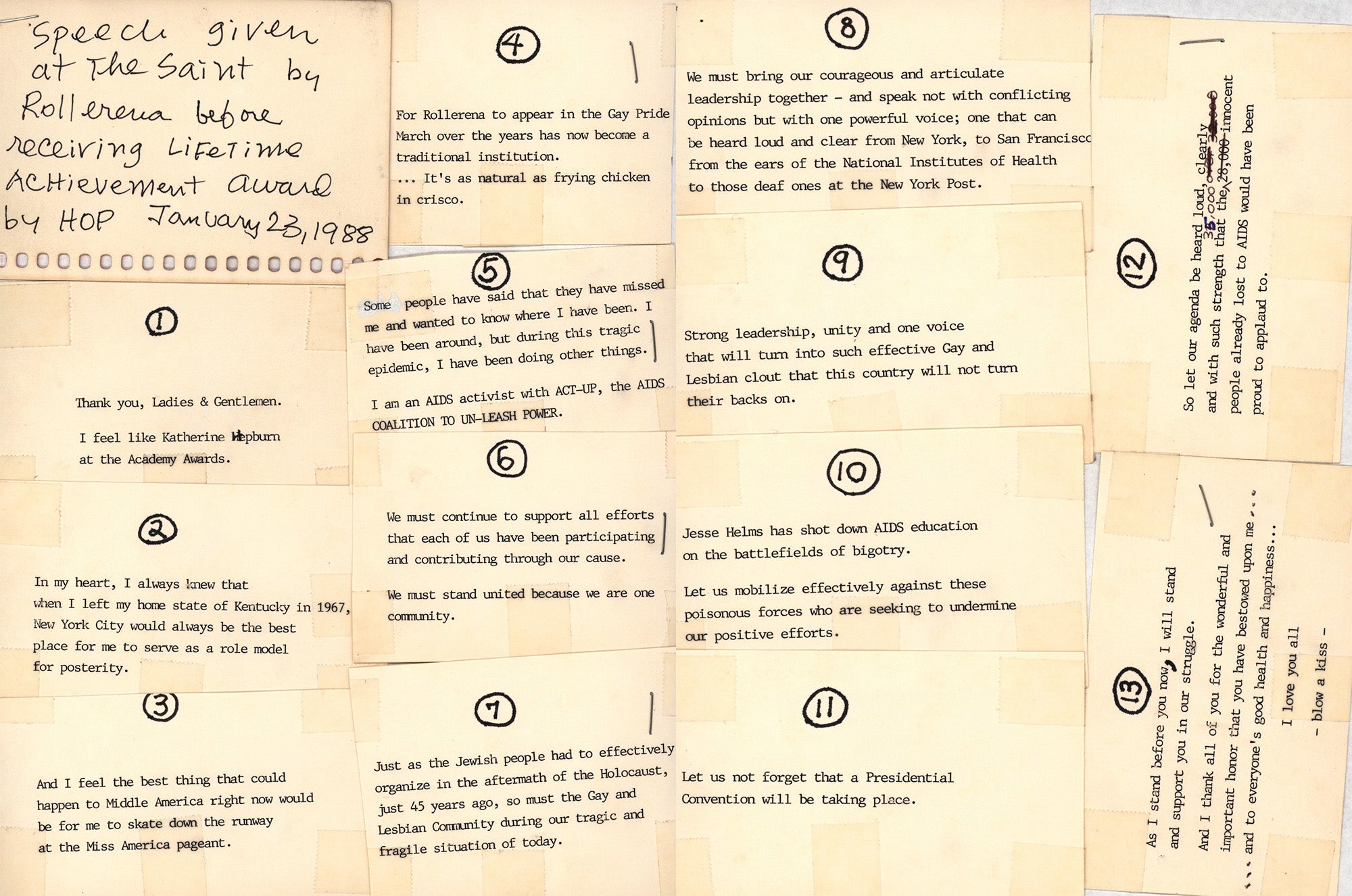
On those cards, Rollerena links her long-standing role in Pride to the emergency of the AIDS epidemic. “For Rollerena to appear in the Gay Pride March over the years has now become a traditional institution,” one card reads. She continues, “but during this tragic epidemic, I have been doing other things. I am an AIDS activist with ACT-UP, the AIDS Coalition to Unleash Power.” Activism appears here not as a break with Rollerena’s earlier public role, but as its necessary extension. The speech closes with a call for solidarity: “We must stand united because we are one community.” That ethic of collective obligation shaped Rollerena’s public appearances from then on.
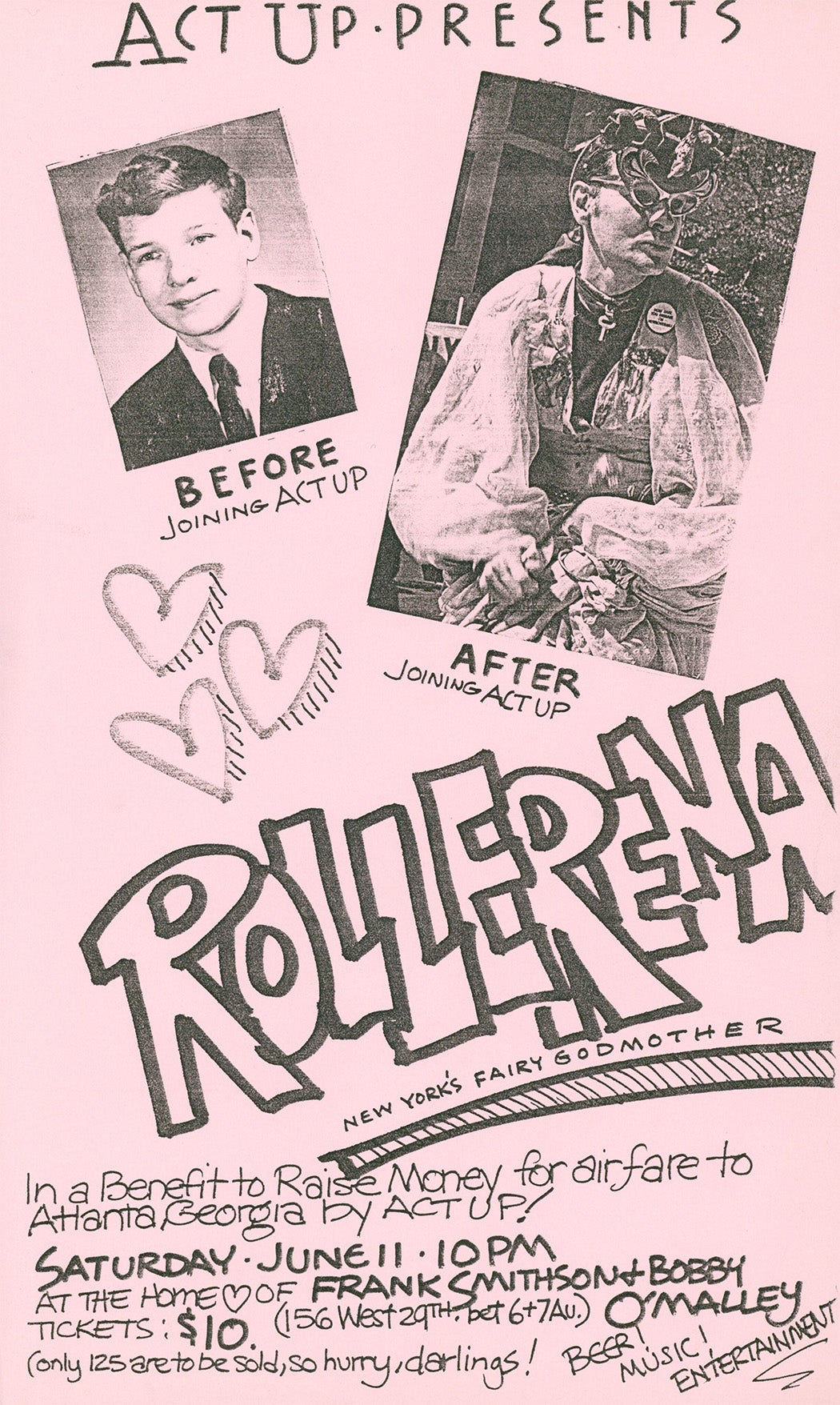
That shift appears just as clearly in Ron Goldberg’s account of ACT-UP New York, where Rollerena reappears not as a relic of pre-AIDS nightlife but as “the Fairy Godmother of the AIDS activist movement”: present at benefits, on recruitment posters, and before a younger generation as a figure of continuity between earlier public cultures and the movement formed in the epidemic.
Weekly Newsletter
"*" indicates required fields
Douglas Crimp remembered ACT-UP meetings as “completely electric,” with Rollerena skating around handing out flyers amid the movement’s heated discussions. These were not incidental flourishes. They belong to what Deborah Gould describes as ACT-UP’s affective life: the charged, collective process by which people learned new ways of appearing, feeling, and belonging together in public.
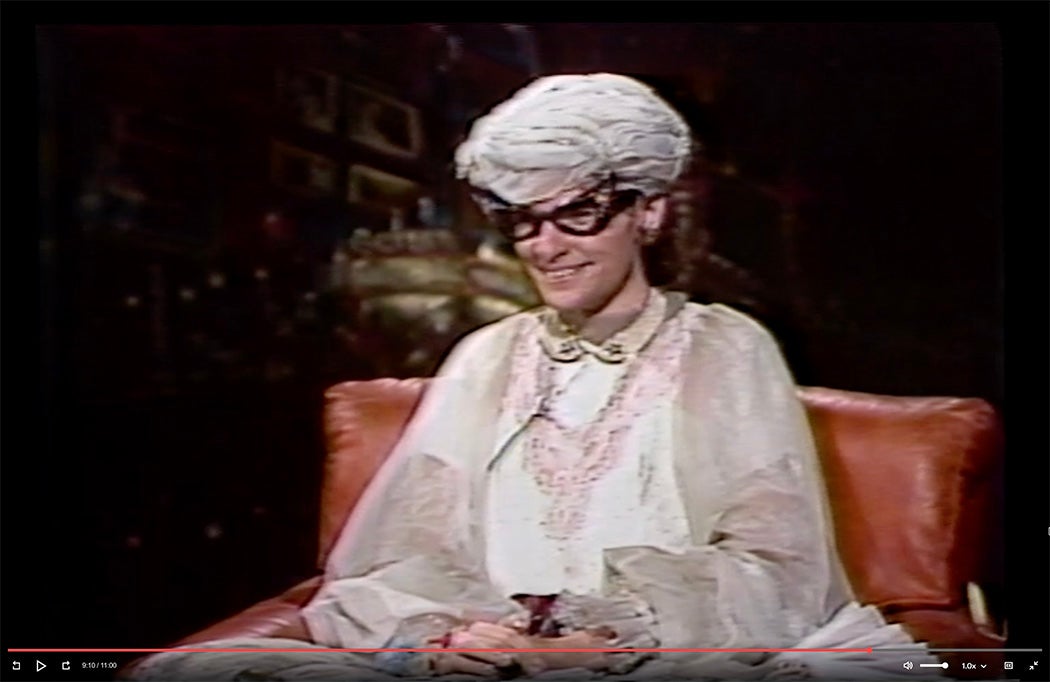
Serving as Grand Marshal at Provincetown’s controversial third annual Lesbian and Gay Pride March in 1989, Rollerena refused to speak until someone placed a “SILENCE = DEATH” sign in front of the podium. The gesture was theatrical, but it also established the terms under which she meant to be heard. With that urgency established, Rollerena used her speech to champion “creative expression” as part of the American dream. She meant something more than a defense of generic self-expression. It was a claim that performance, style, and public imagination mattered desperately in a moment when queer people were fighting not only for rights, but for recognition of their lives as lives worth saving. That same year, Jim Hubbard’s Elegy in the Streets featured Rollerena as an almost angelic presence. Her public image was capacious enough that Rollerena could carry not only camp and sociability, but profound grief as well.
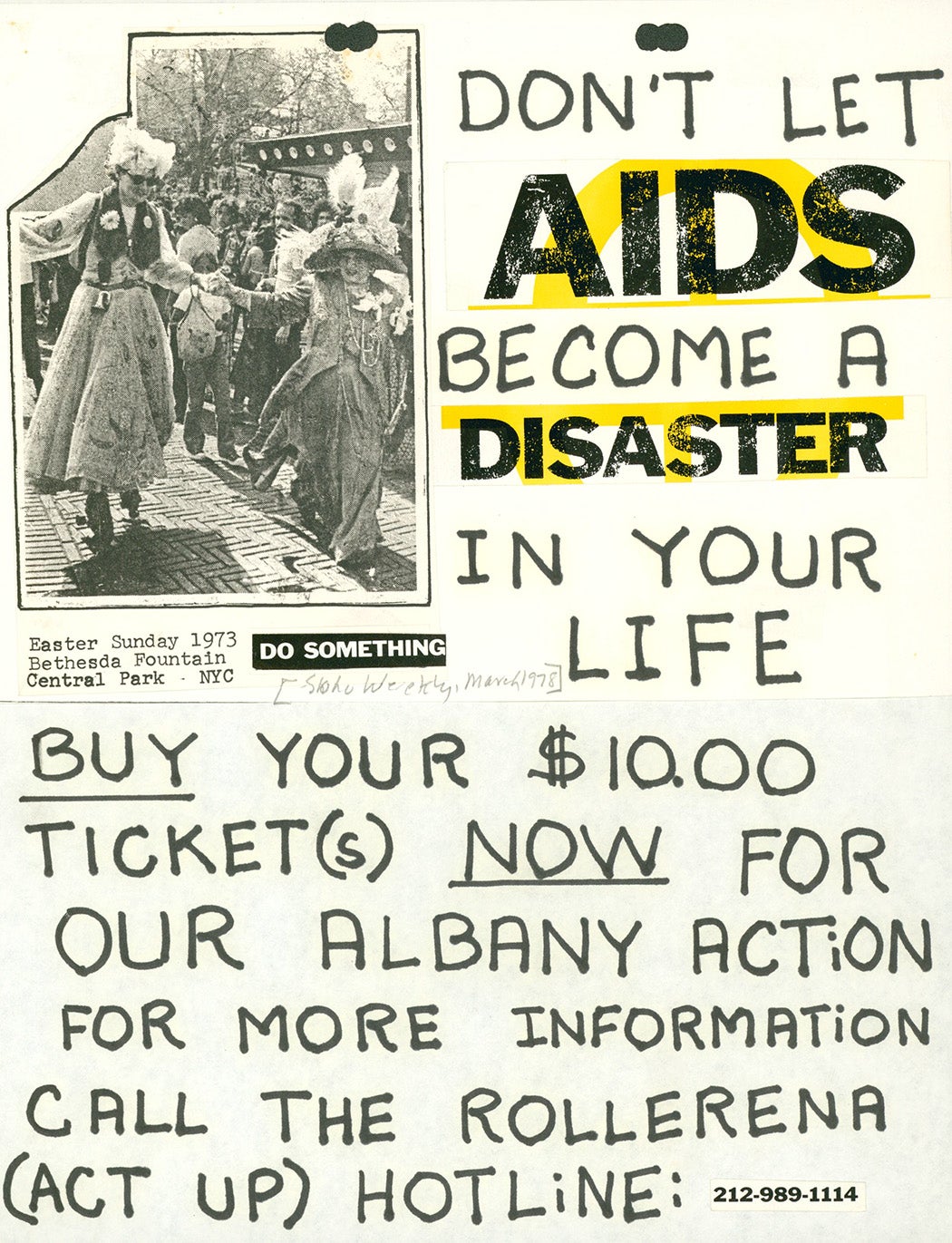
Rollerena’s insistence on the political force of performance helps clarify a distinction visible throughout the collection between Rollerena and the person who made her. By Rollerena’s own later accounts in the archive, the person who joined ACT-UP protests and demonstrations did not do so explicitly as Rollerena. Rollerena remained the public emissary of glamour, continuity, and queer publicness, while the person behind Rollerena undertook a different labor of activism and, according to marginal notes on newspaper clippings documenting ACT-UP protests, was arrested multiple times.
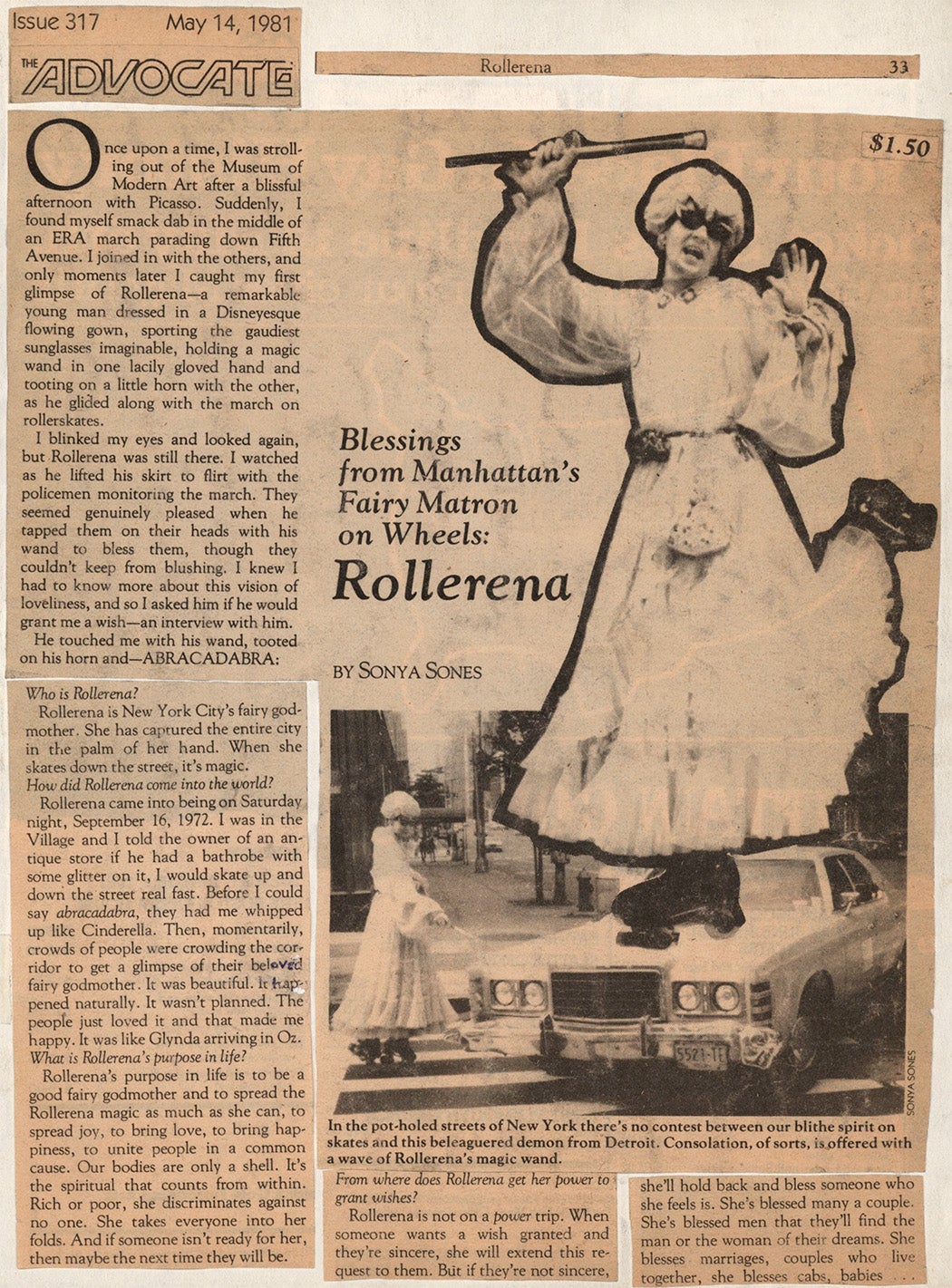
Rollerena Fairy Godmother’s collection is not just an archive. It is also what performance scholars call a repertoire: the repeated gestures, stylings, movements, and appearances through which cultural memory is carried. Queer archival scholarship has emphasized that queer lives often enter the record only in the fleeting spaces where they could first be performed and recognized. Rollerena seems to have understood this almost intuitively, resisting the slide into obscurity. Her collection preserves not only the traces of a public life, but evidence of a performer who refused to separate politics from performance and performance from ephemerality.