Reveal Digital on JSTOR
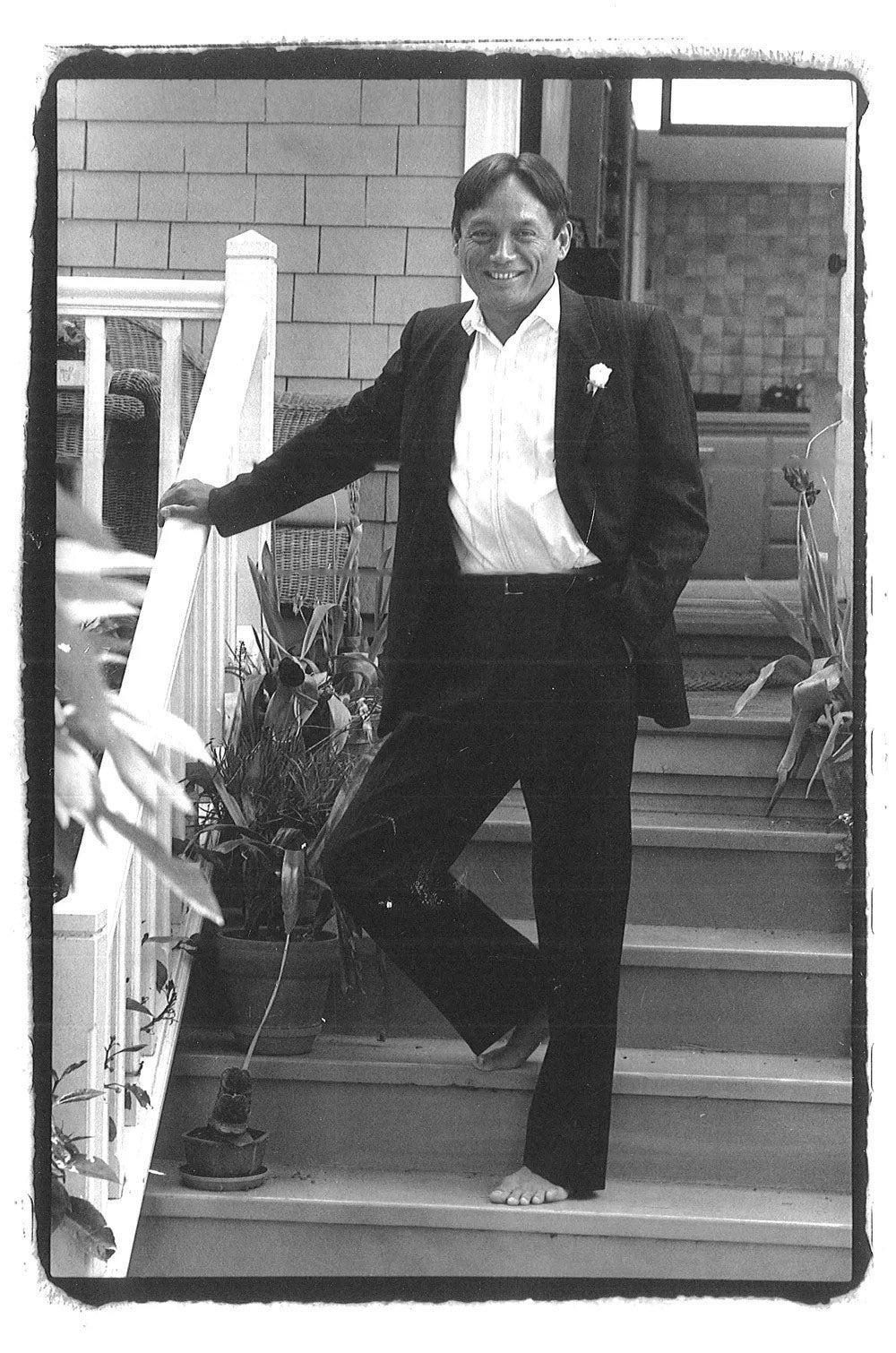
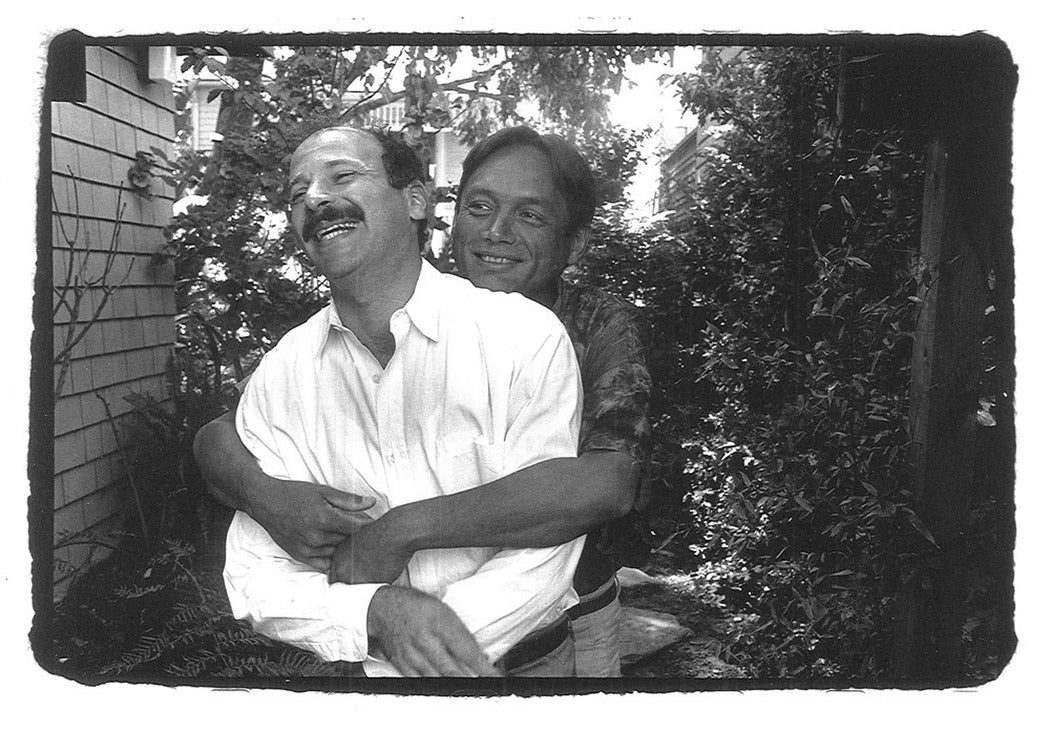
I met Ed Aulerich-Sugai through a portrait. In it he’s standing relaxed in a suit wearing a white rose boutonnière. His smile is authentic and full. His feet are bare, even though the photograph was taken in San Francisco and it was likely cold outside. I encountered it on the website Ed’s last partner, Daniel Ostrow, created and maintains to share Ed’s work and to honor a love that has endured for more than three decades. The photo suggests why. Ed is magnetic.
I had been working on building Reveal Digital’s open collection, HIV, AIDS, and the Arts when I found Daniel’s website, the Ed Aulerich-Sugai Collection and Archive. From there, I turned to Dylan Huw’s piece for Visual AIDS and Robert Glück’s book About Ed, written, as its title suggests, about Ed, a longtime friend and former partner of Glück’s. Motivated, I cold-called Daniel to ask if we could help make more of Ed’s work accessible. He graciously agreed to chat.
Daniel told me that it was an unusually warm February morning in 1985 when he first met Ed at the Conservatory of Flowers in San Francisco. He was working as a psychiatric social worker at a nearby hospital and had brought a young outpatient for a walk. The door to the west wing, filled with flowering and ornamental plants, was open. It was not the public entrance, but they looked inside. An award-winning gardener, Ed was there tending the seasonal display plants, dressed in a draped shirt, loose shorts, and knee-high rubber boots, absorbed in his work.
Weekly Newsletter
"*" indicates required fields
Daniel, too, was captivated. He describes meeting Ed in a love-at-first-sight kind of way, recalling it as “being enlivened.” A week later, Daniel’s partner at the time told him he had dreamed that Daniel met a man at the park. The energy of their meeting must have been palpable.
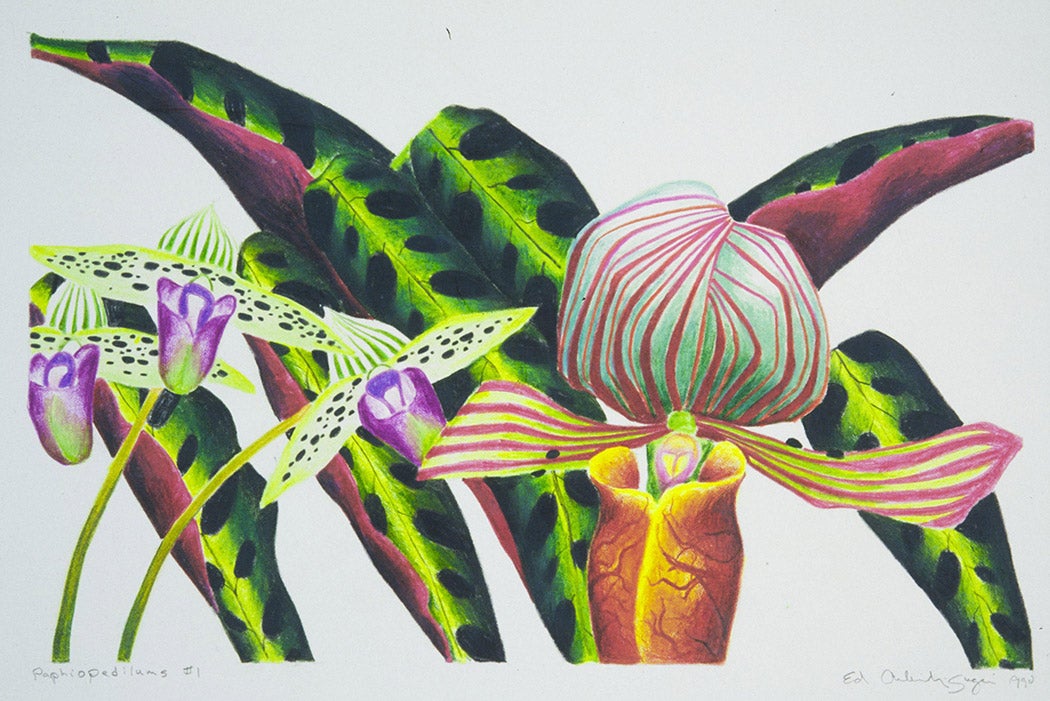
The Conservatory situates this story in forms of care—care for plants, for patients, for each other. It also offers, in retrospect, a way of understanding what would follow. When Ed died of AIDS-related causes in 1994 he left behind a body of work created largely in the years after his diagnosis. That work survives in large part because Daniel kept it—continuously, carefully—over decades. It might easily have dispersed into institutional collections or faded into memory. Instead, it stayed with the person who had also cared for Ed himself, making any encounter with the work inseparable from that relationship. Rather than being preserved at a distance, the archive was sustained as part of an ongoing life.
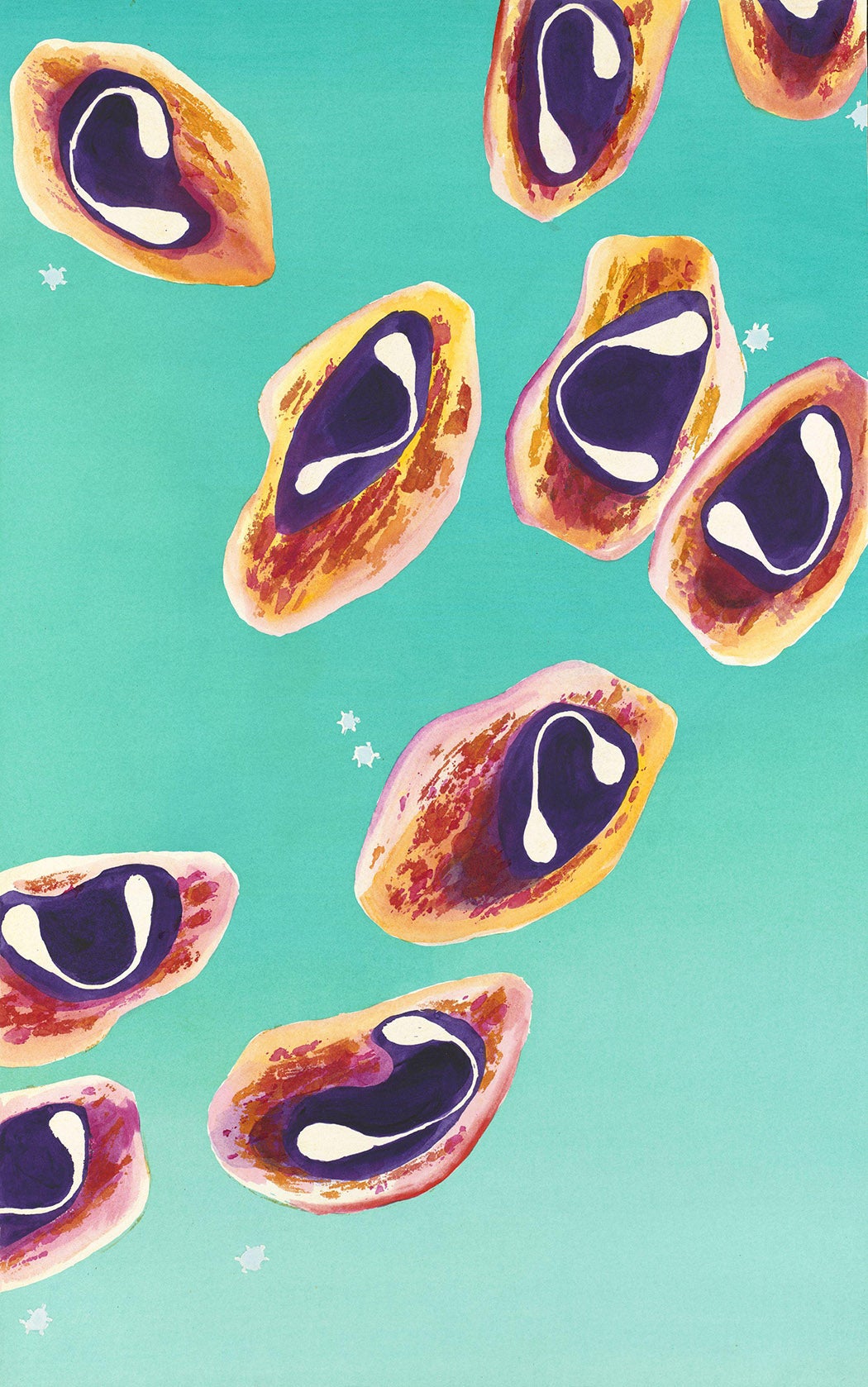
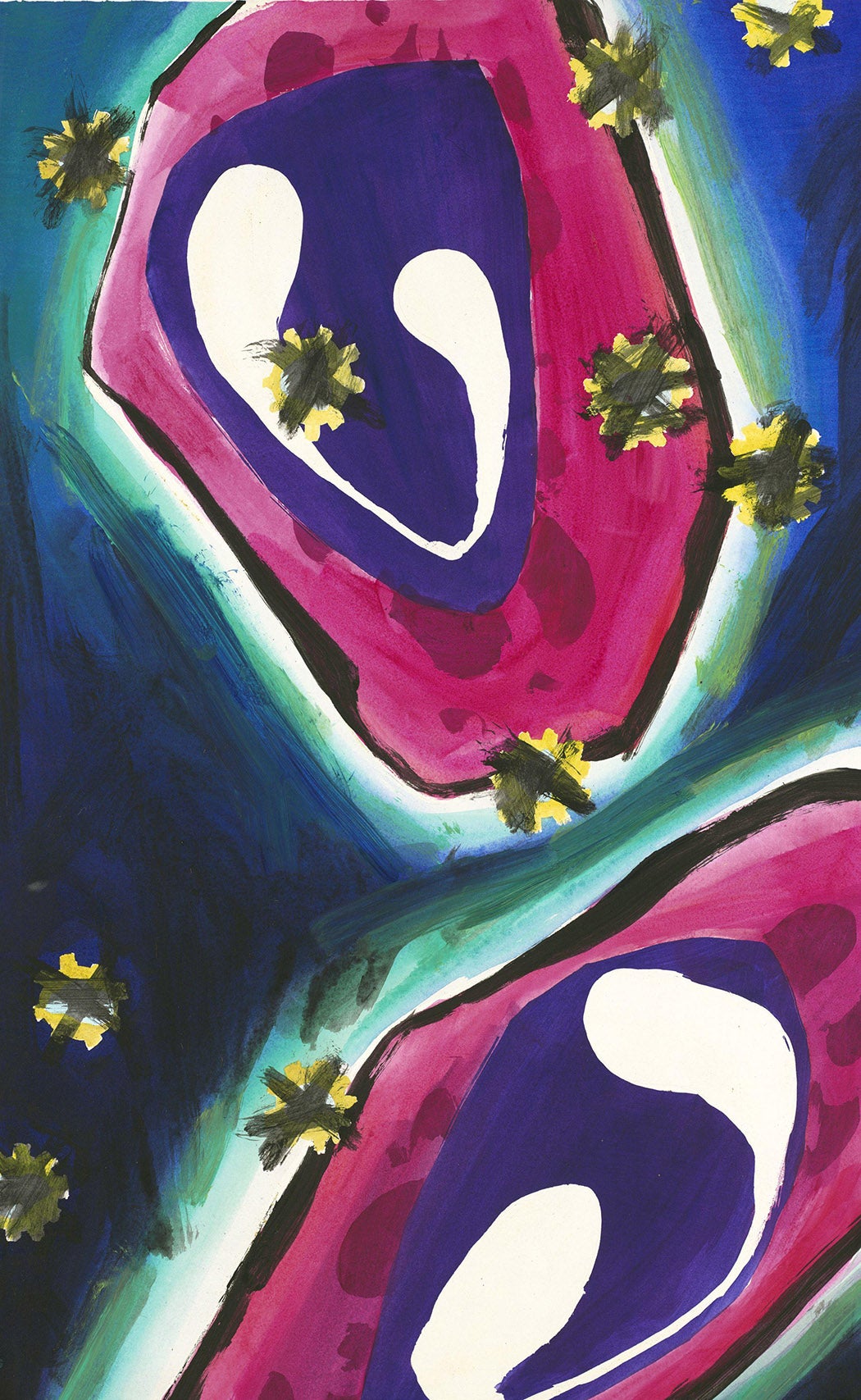
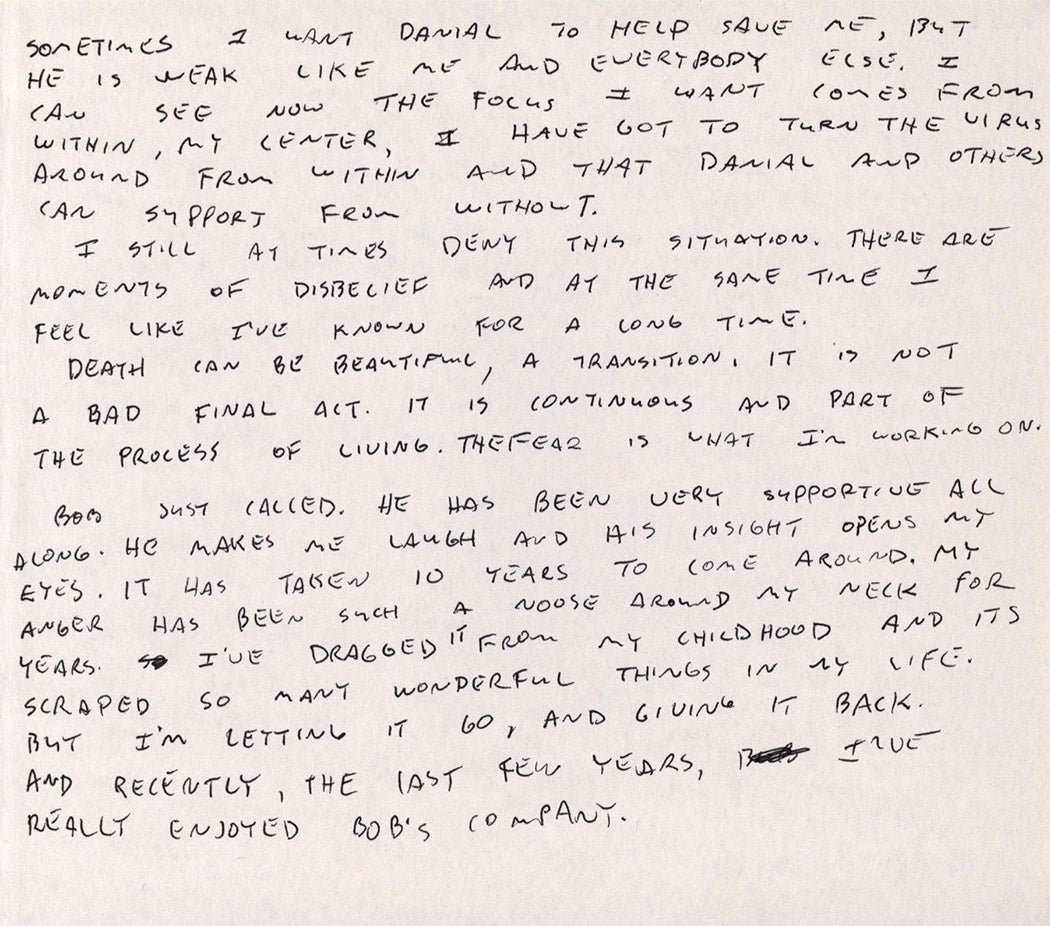
Daniel and Ed moved into a small house together on Potrero Hill at the end of 1986. They cultivated a garden and built a studio. There was a painfully short time between then and Ed’s diagnosis, which came in October of 1987. There had been subtle signs from his body that demanded attention. Ed was, after all, already creating the Cells series, looking at mitosis and immune response through a visual vocabulary shaped by Japanese woodblock design. Daniel and Bob Glück accompanied Ed to receive his HIV antibody results. Diagnosis sharply transformed Ed’s intuitive artistic investigations into a conscious confrontation with illness. “I think I’ve known for a long time,” he wrote in his journal.
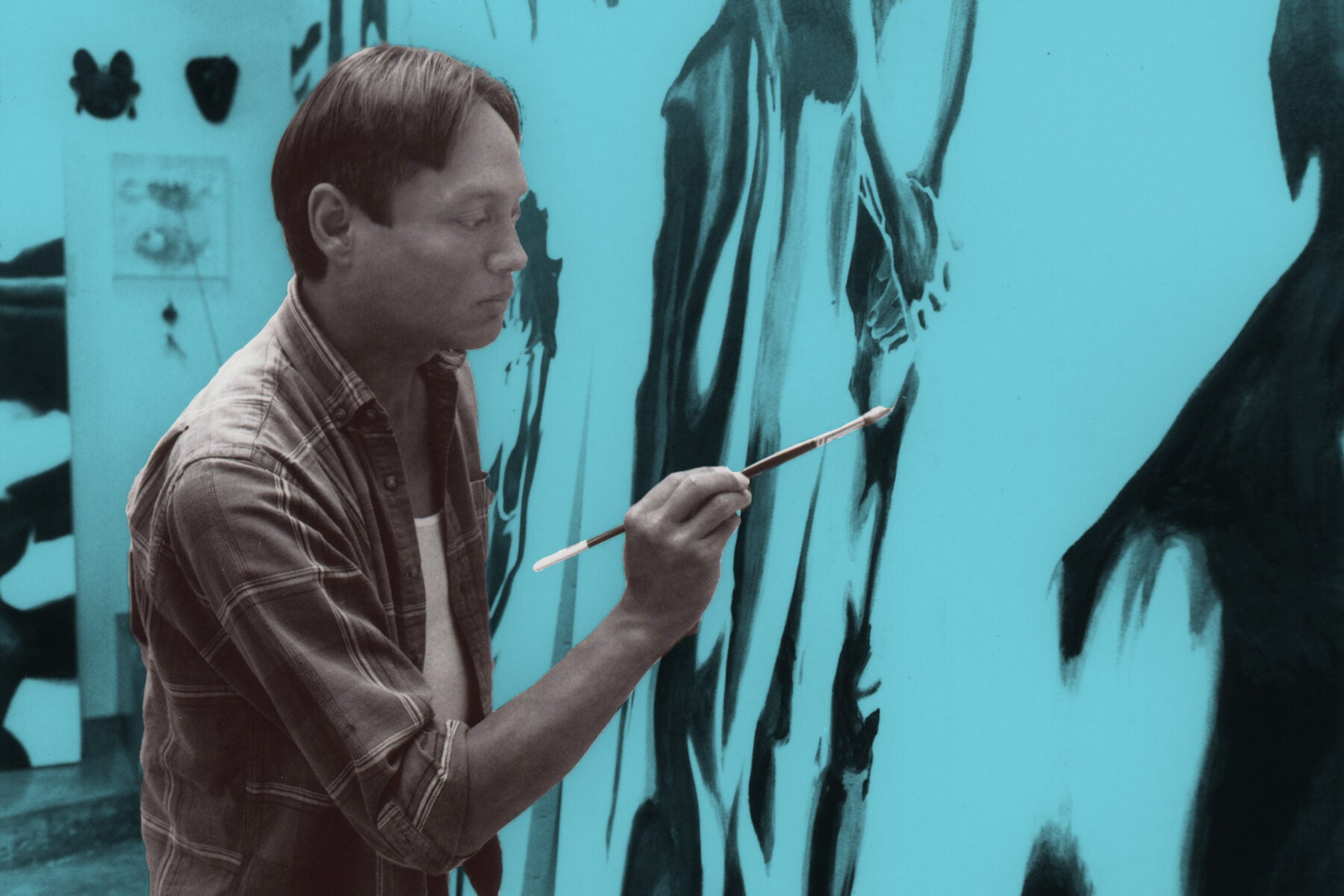
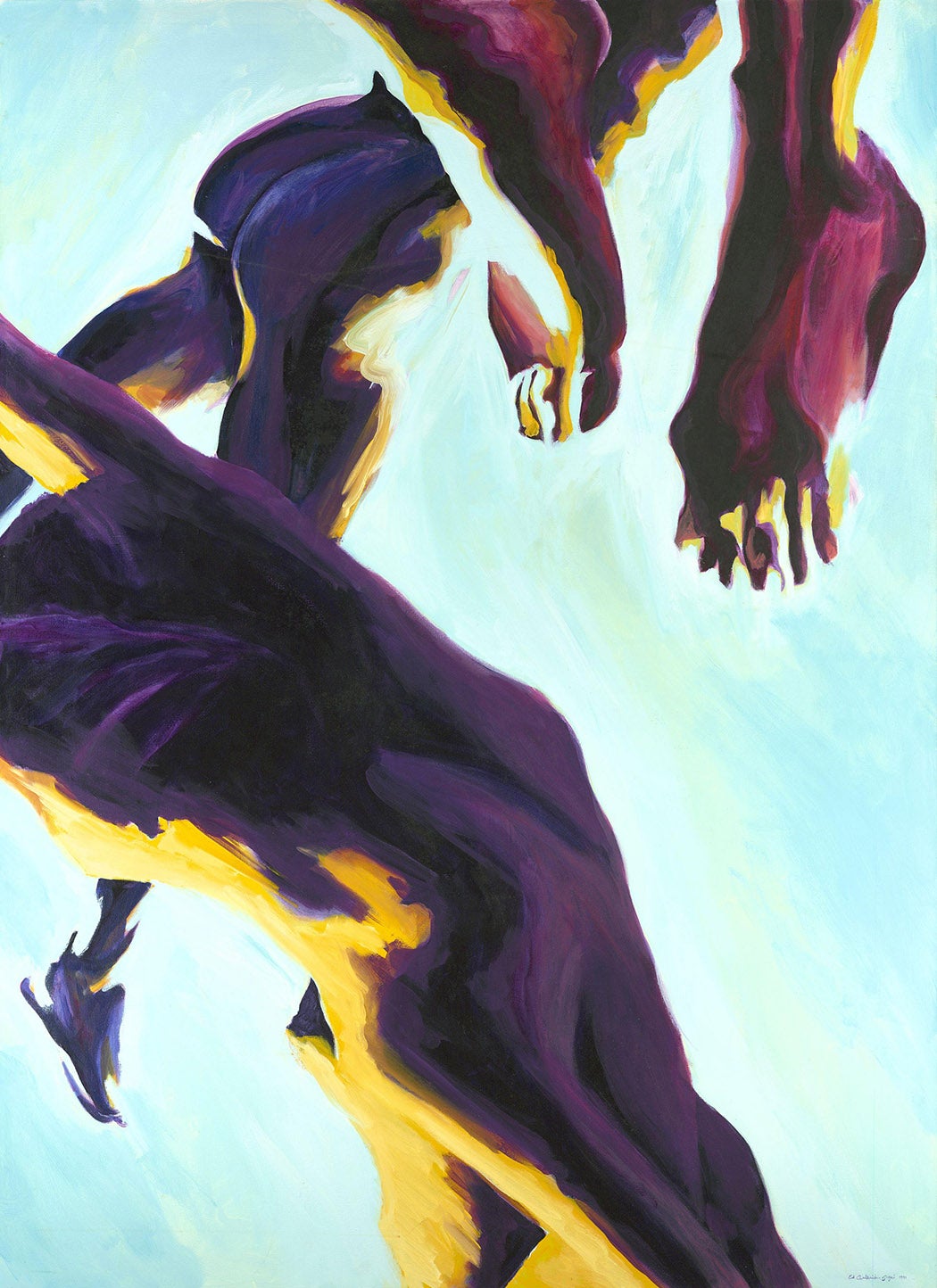
After diagnosis, the stakes of his work shifted. If Cells was driven by intuitive inquiry, Figures opened up a space for asking how to remain in relationship to a body. In the Figures series, bodies hover in suspension, emerging from and dissolving back into surrounding space. Ed described them as “bodies to grow into.” The figures aren’t necessarily idealized forms though. They are sites of inhabitation, drawn and painted through attention to other bodies at scale. Models came to his Potrero Hill studio and lay on fragile sheets of translucent paper while Ed traced their outlines. Daniel still has these tracings today, rolled tightly and frayed at the edges.
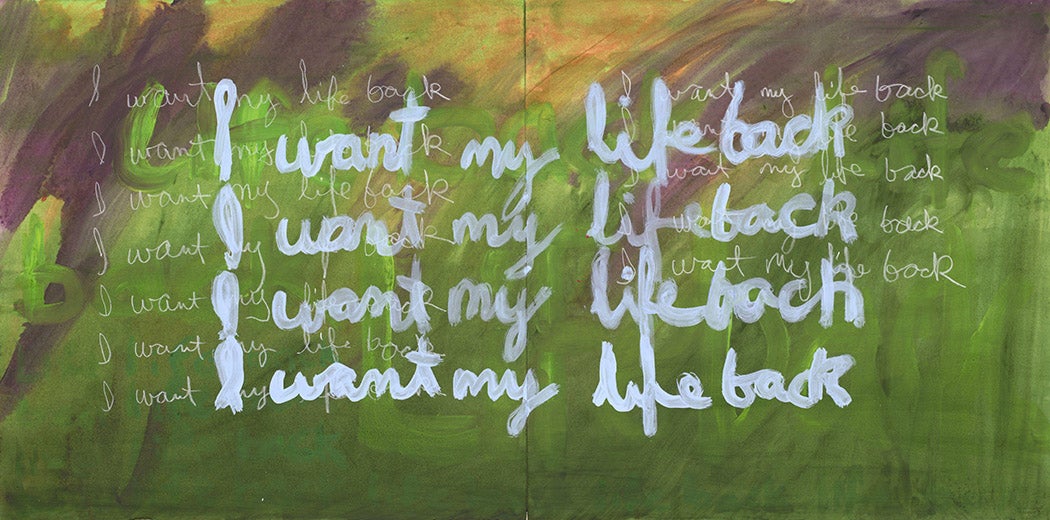
The Meditations series followed. Created while Ed was undergoing chemotherapy, the works carry a sense of urgency: Daniel remembers him crouching on the floor, applying pigments directly with his fingers. On one nearly four-foot wide diptych where yellow and orange at the top blend into claret and pull down into vibrant greens, Ed wrote lines in rows, repeating the words: “I want my life back.” He wrote them neatly over and over again. The statement is stark in its clarity—no metaphor, no narrative frame, no effort to make it stand for anything beyond itself.
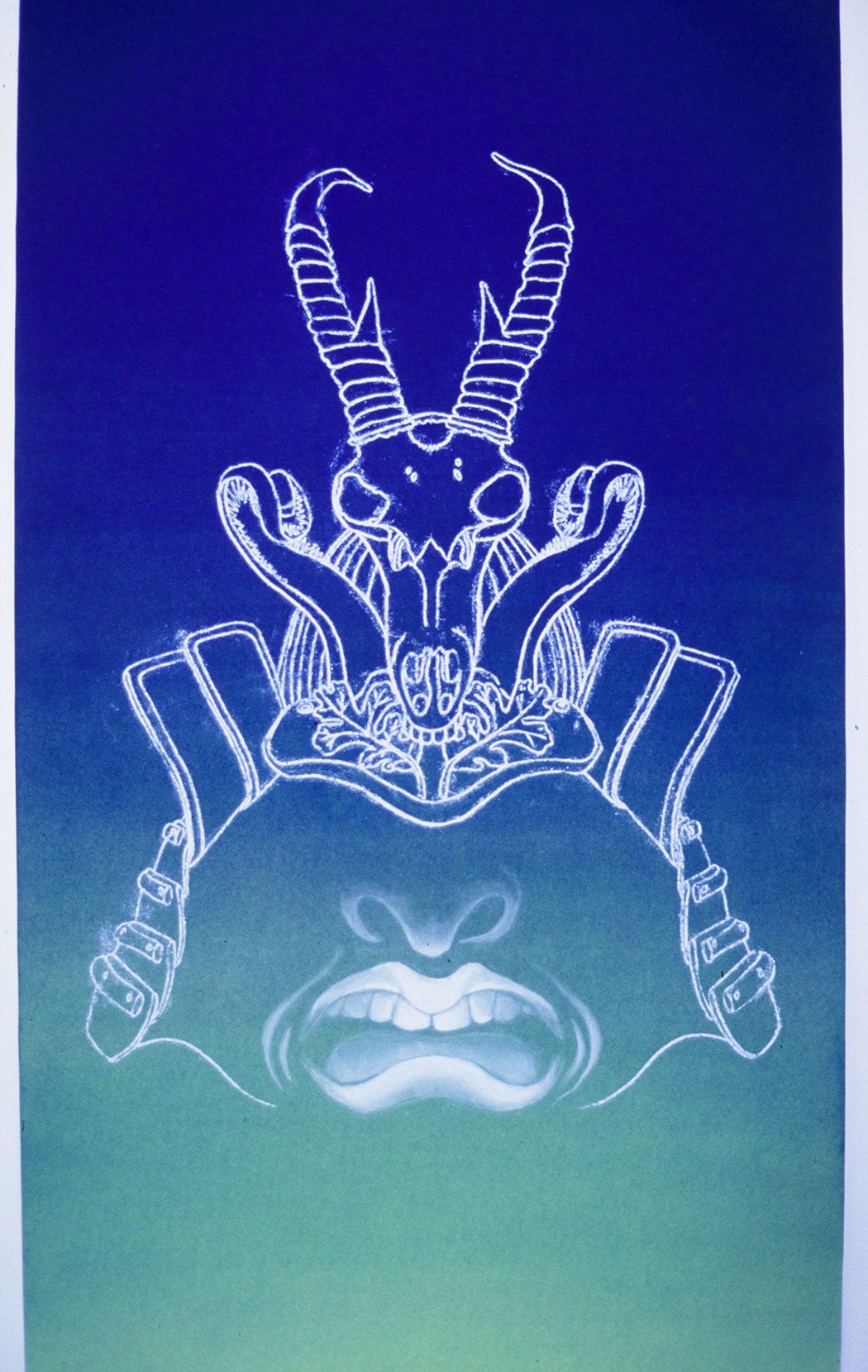
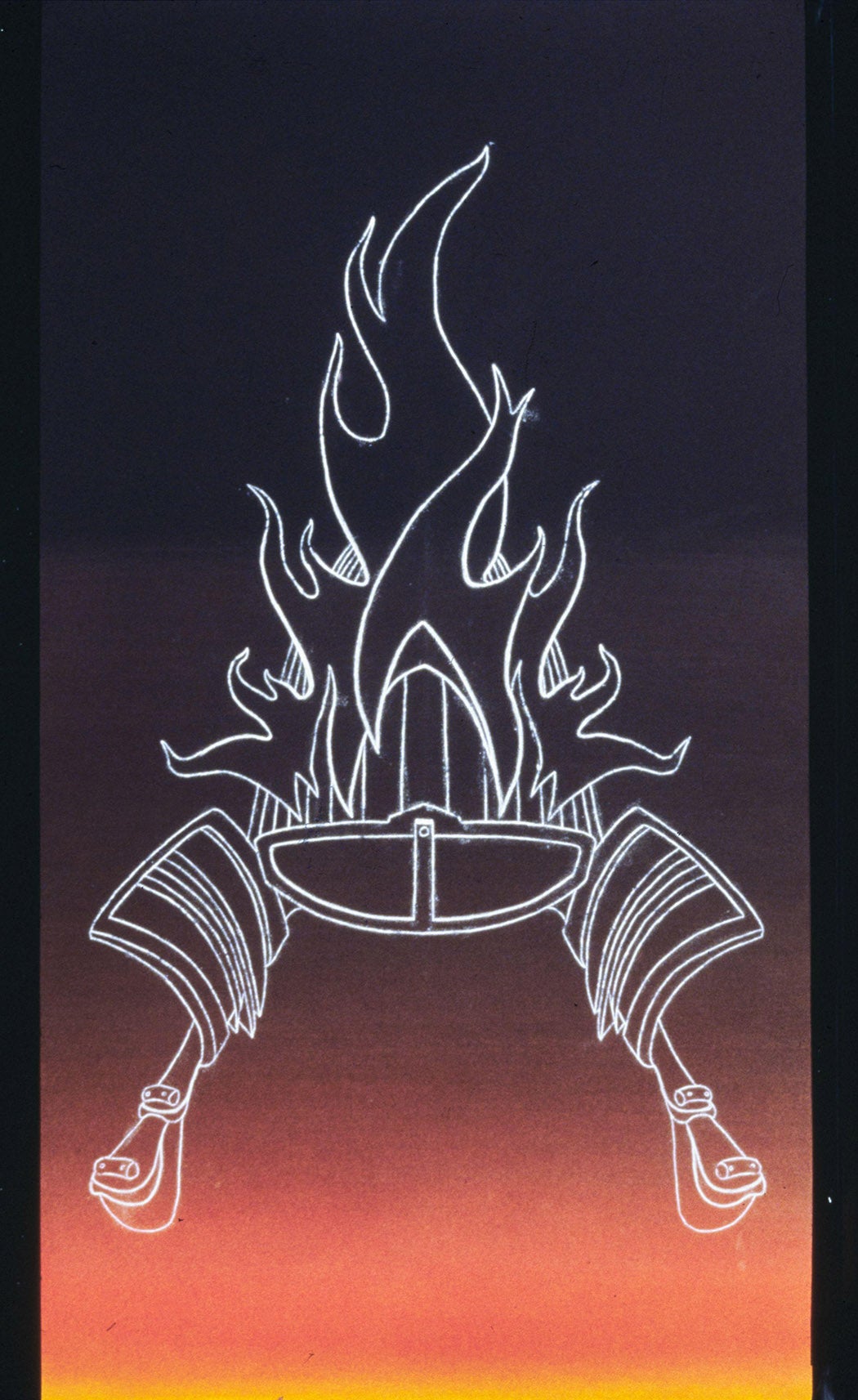
Where Meditations shielded nothing, in other work Ed turned instead to forms that were themselves a protection. The Power in Storage: Samurai Masks and Helmets series drew on Japanese iconography to portray warriors. “Since the beginning of my illness,” Ed said, “fear has overpowered me many times. Then I look into my Japanese ancestry and call forth the warrior there…as visual mantras, empowering me with their certain strengths.” The helmets, made with unfixed chalk, were visually forceful but materially fragile, holding protection and vulnerability in the same frame.
In the Julian series, narrative anchored what his more abstract series could not. Inspired by a drawing made by his nephew, the work unfolds as a sequence of panels in which the titular child, Julian, succumbs to illness.
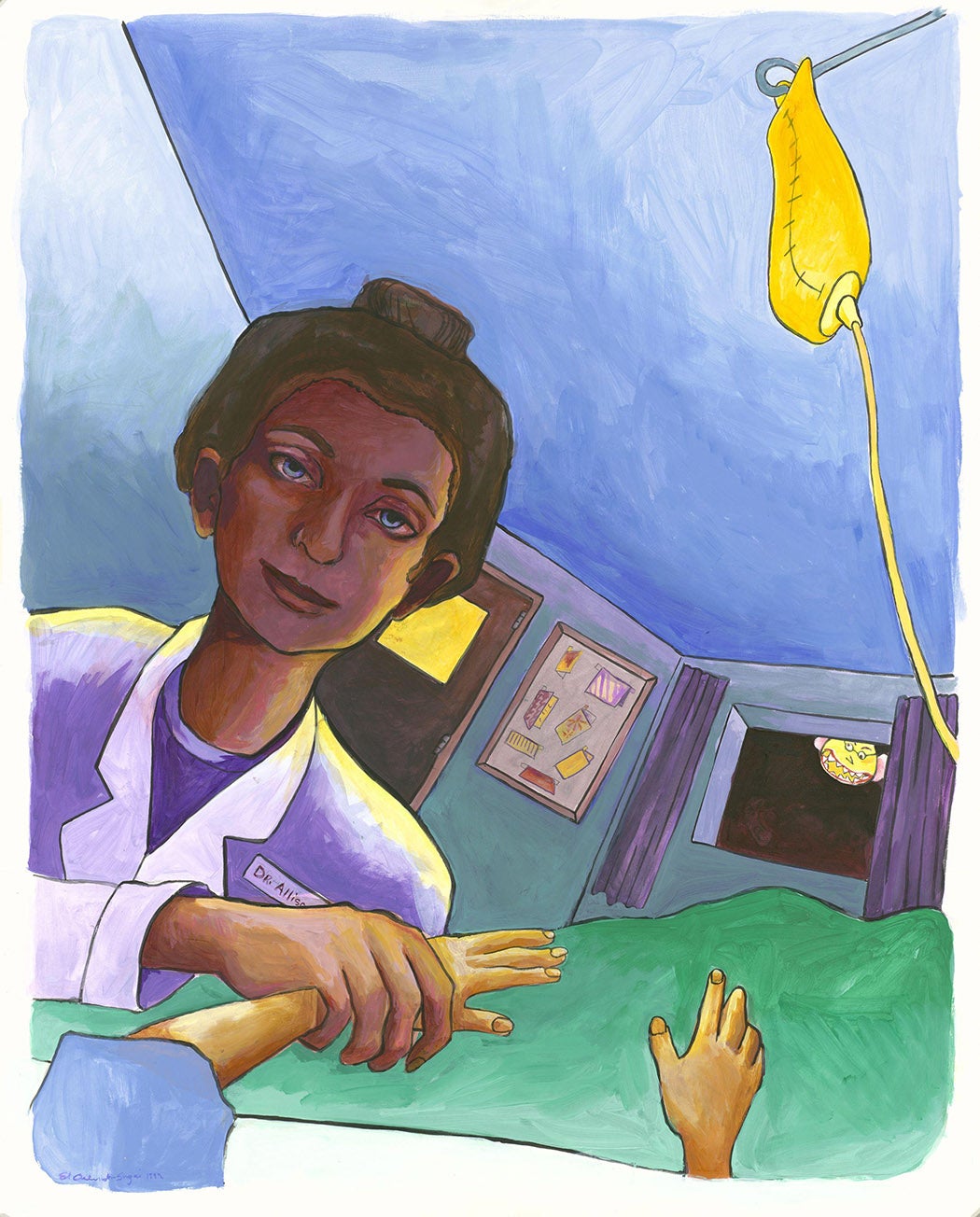
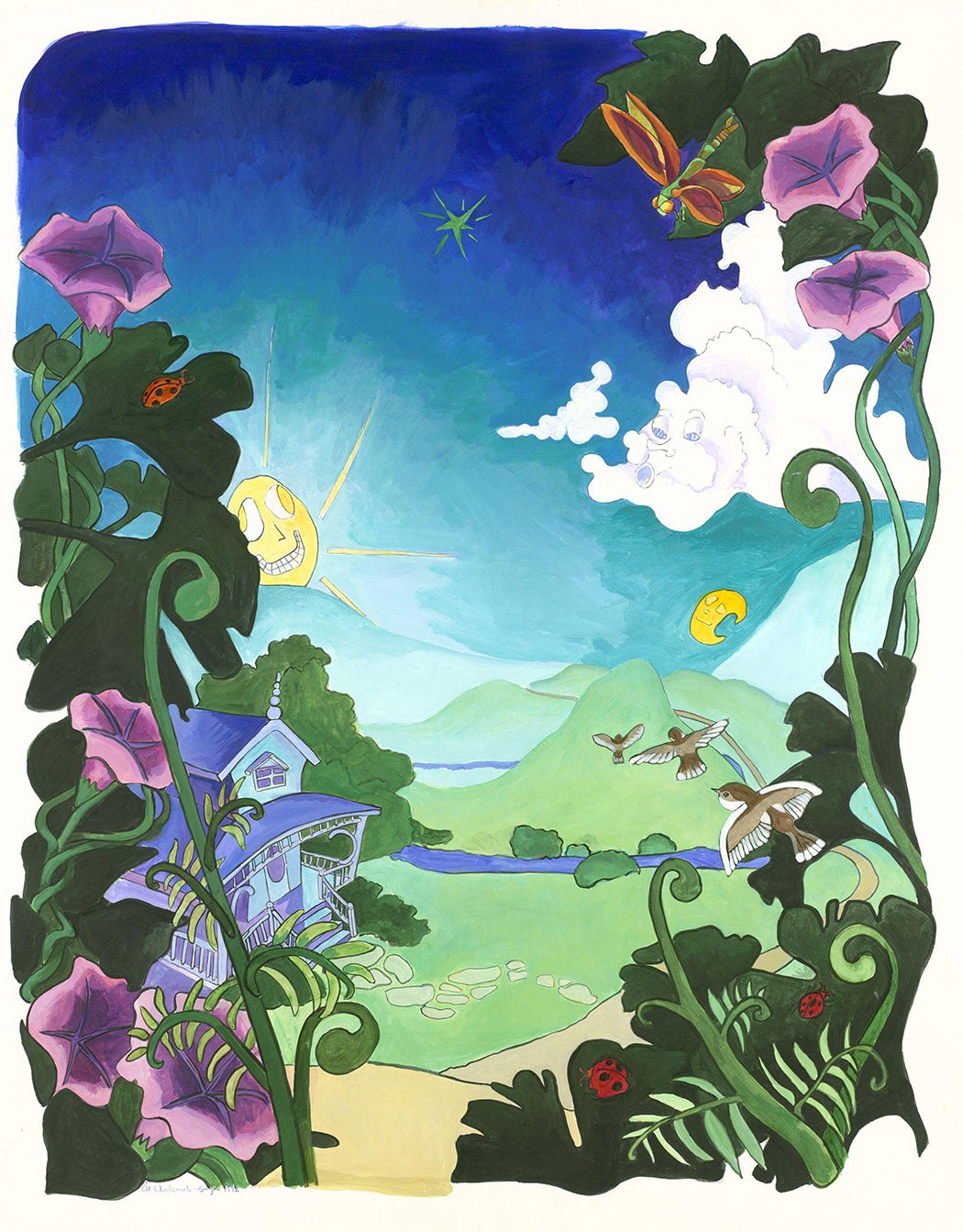
Looking at a final image of the series with Daniel in Ed’s studio, we both found ourselves moved to tears. You can see the cottage where they lived, the gardens Ed planted and that Daniel has tended. You see the studio, and the bed that Julian leaves behind as a spirit, rising into the night sky to look over all of it. You can see how Ed imagined leaving his life and being freed.
I have been moved to tears by archival encounters before, but this time felt distinct. I was moved by the intimacy of Daniel’s care for the collection over all these years, even as he’s cultivated new love, led a distinguished career, been a father, and carried on with his own life.
Eighteen months after Ed died, Daniel enrolled in a modern art survey course. He told me he needed grounding. He didn’t want his education in art that began with Ed to end with Ed’s death. He kept a journal then and he shared an entry with me from September 2, 1995, written while he waited for the lecture to start: “Overwhelmed by the task of carrying his art into the world, I’ve enrolled in a lecture series at SFMOMA… Sometimes I wish a curator would enter my life and ease the task, but perhaps it is better for me to stumble along, let go of the pressure, allow Ed’s artwork to lead me.” And so it did, shaping a new kind of relationship to Ed through art, legacy and stewardship. Daniel has not just been preserving Ed’s work, he has been holding open the possibility of a future for it.
Working with Daniel and seeing his care for Ed’s archival record alongside the finished works helped me reorient not just to Ed’s archive, but to the story of the AIDS crisis more broadly. Loss has stuck as the dominant framework. Of course the loss is extraordinary, but it’s not all there is.
It is easy to be devastated by the truth that there have been countless people living with HIV and AIDS who were largely unsupported and whose legacies are fractured or lost to time. What can be harder is to see the other side. “The peripheries of my world seem so much smaller now,” wrote Ed in his journal, days after receiving his HIV diagnosis. “But within it, the love and care from my friends is enormous, boundless.”
Boundless care was not my narrative frame for the AIDS epidemic. It can be difficult to recognize, especially if loss is the only frame you inherit. Like many people of my generation born in the midst of those crisis years, but living far from the realities of them, particularly as a queer person, I inherited stories of HIV/AIDS shaped around generational rupture and profound loss. That inheritance is real. But this archive makes it impossible to ignore the other side of the record: that care existed and that care made not only survival, but creation possible.
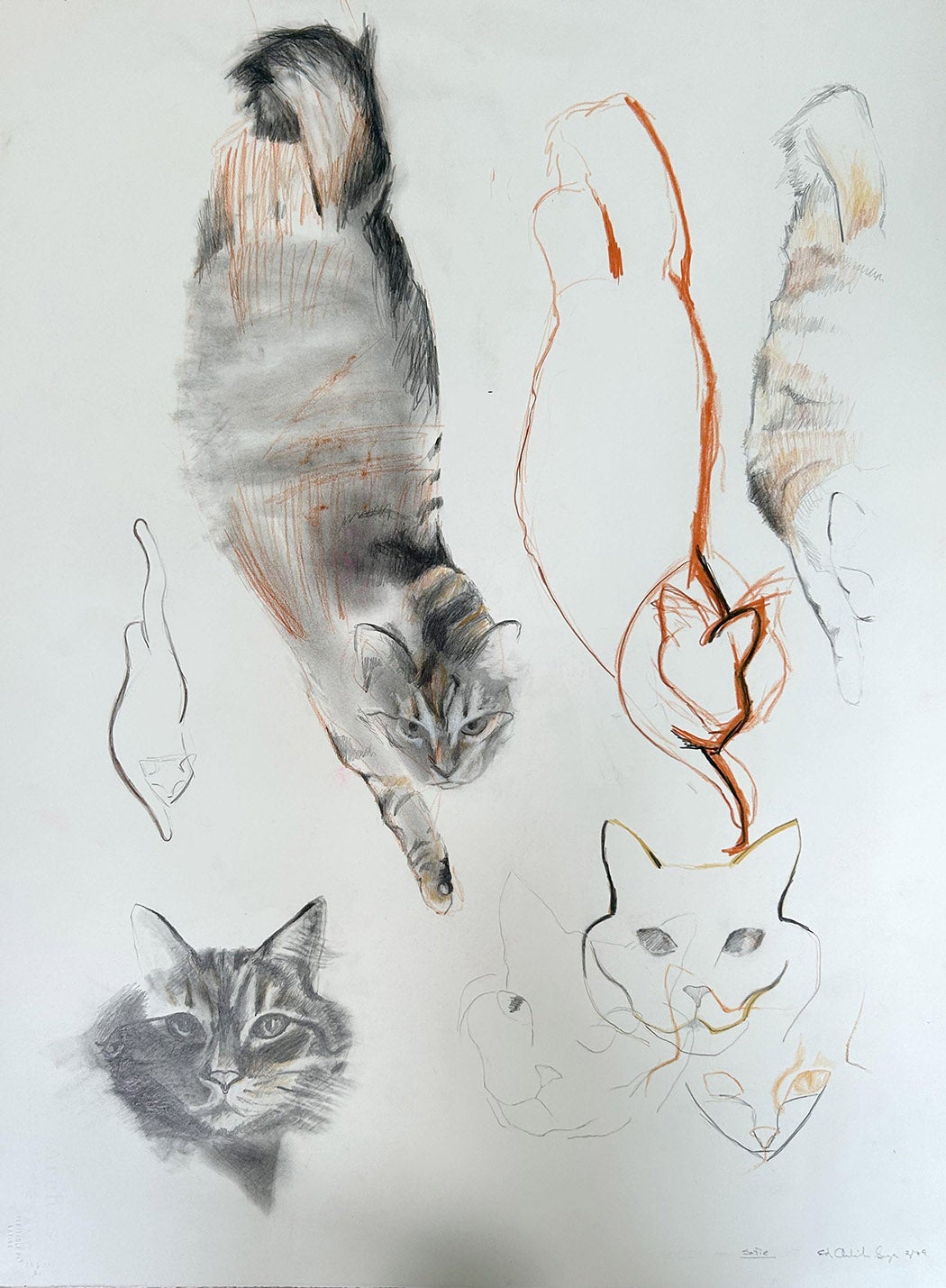
Ed was employed by the City of San Francisco where the City’s policies allowed his colleagues to donate sick time to him so he could get treatment, rest and create. He was supported by Visual Aid (SF) who gave him one of their first artist grants, by Shanti Project which Daniel remembers helping them clean their house and providing significant support to Ed. Friends, Ed’s family, even Daniel’s parents were present. There was Sofie as well, Ed’s beautiful and beloved cat–not the only steadfast one I’ve come across in the archives of artists who AIDS took too soon.
The collection that Daniel holds is now fully digitized, and includes Ed’s finished paintings and works on paper, preparatory tracings, journals and sketchbooks. Importantly, it also includes Daniel’s 1993 address at the International AIDS Social Work Conference–an event that Ed, fragile and in pain, attended with his home health aide. That address sits alongside Ed’s artwork not as context or a simple gesture towards provenance, but as a parallel record. Taken together, these materials insist on a reframing: care was not simply what surrounded the art. It was a condition of its very possibility.
Near the end of his life, Ed asked Daniel to “bring my art out into the world.” That request initiated a lifetime of work. After all these years shaped by domestic care, the full archive enters public circulation, where it can be taken up by any interested viewer. The continuity of Daniel’s care and admiration is not broken by this movement; it is extended. In its older sense, inheritance names not the transfer of possessions but the condition of being recognized and admitted into an existing set of relations and responsibilities. Now, we all inherit an archive and the devotion that held it together.