“Perhaps in all the world there is nothing more rare than real friendship,” Gertrude Wood Davis wrote in remembrance of her friend Kate Thompson Westfall, who died in July 1915 at the age of 39. “Her’s was a friendship that trusted…Her’s was the friendship that could accept the ‘broken hour.’”


Prior to a long illness that kept her confined to her bed, Westfall had been a fixture in the town of Ypsilanti, Michigan, where she had moved to study and later teach mathematics at the Michigan State Normal School. After her marriage, Westfall had, as middle-class women of the era were expected to, turned her attention to civic life, becoming the president of Ypsilanti’s Ladies Literary Club, of which Davis was also a member. Davis included many of these basic biographical facts in her ode to Westfall, alongside more personal memories of Westfall’s “gift of happy expression,” “the literary quality of her writing,” her “strong, positive character,” and her “joy of service.” The tribute was read aloud at a club meeting that fall, and then some unknown club member filed away the typewritten pages—preserving them in what would become a century-spanning collection of approximately 150 memorials to members of the Ladies Literary Club.
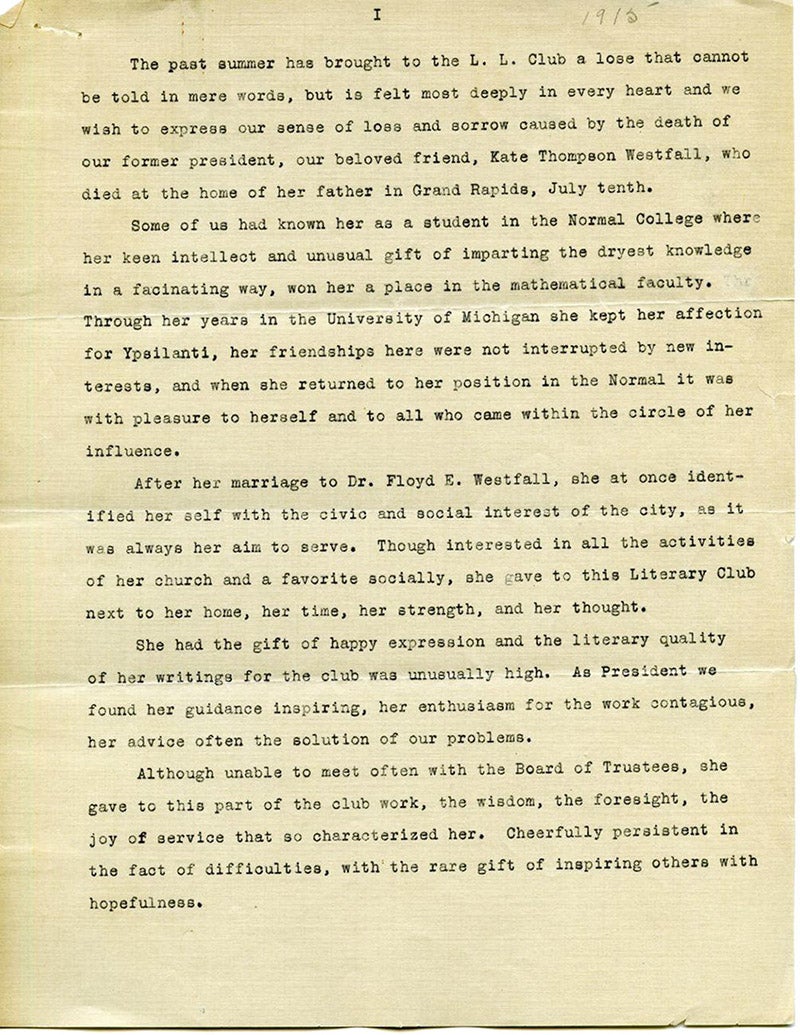
Now shared via JSTOR by Eastern Michigan University, the successor to Michigan State Normal School, these mini-biographies offer an intimate view of the evolution of American womanhood, as experienced by the “ladies” of Ypsilanti—overwhelmingly white, educated, Christian married women of some means—whose shared interests brought them together.
Their club, which is still active in Ypsilanti today, was established in 1878. “Not to be out done by the gentlemen of the Review Club, the ladies of this city have organized a Ladies Literary Club,” the local newspaper reported that summer. The purpose of the new women’s organization, like the men-only Review Club founded a few years prior, was a broadening of horizons—“the mutual improvement of its members through the study of literature, art, science, and the vital interests of the day,” according to its first constitution. The club members lived in a town of barely 6,000 people in the American Midwest, but every other Tuesday afternoon some 40 women would gather in a member’s living room to discuss the world. First, they explored Africa—its history and geography, its colonization and the slave trade, its production and commerce, and the wonders of the Pyramids—and then they moved on to the study of Asia.
Weekly Newsletter
"*" indicates required fields
After the turn of the twentieth century, as the women’s club movement in the United States grew into a societal force, the Ladies Literary Club shifted its focus to the local community, adding to its constitution the commitment “to serve as an energizing and uplifting force for all that makes for civic or community betterment.”
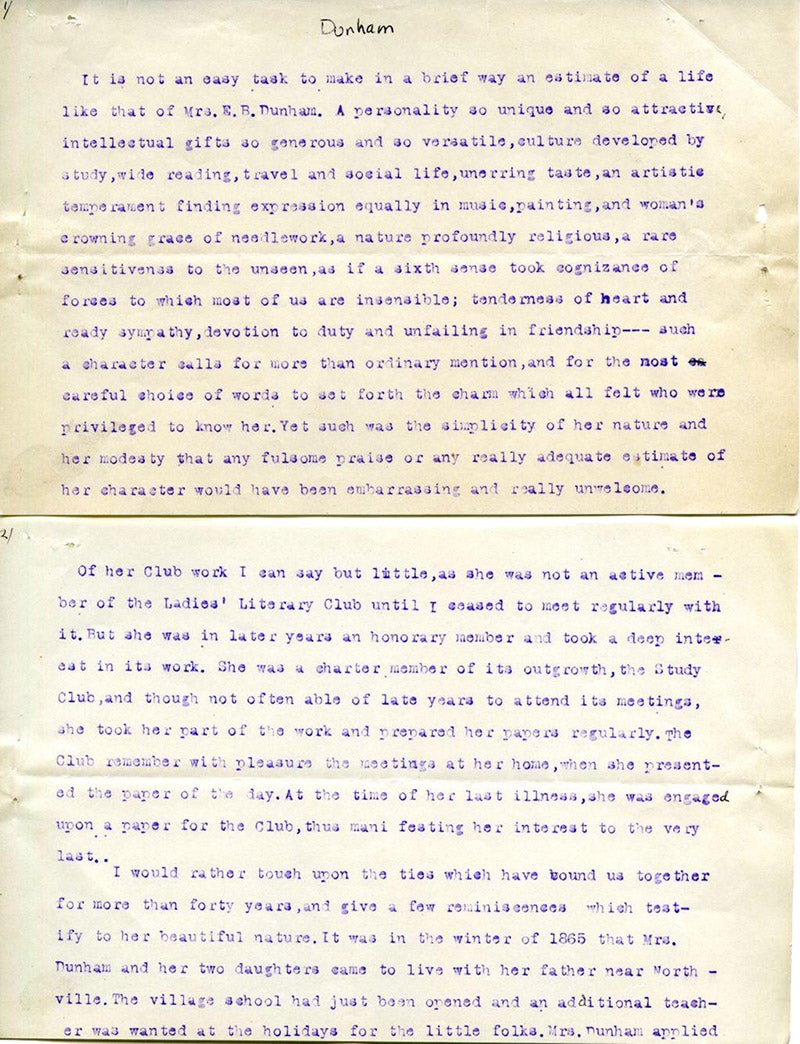
The preserved documents—often far more personal and revealing than the average newspaper obituary—speak to this era’s contributions to Ypsilanti, extolling leadership roles in local philanthropic and religious organizations. They are also a trove of insight into the women’s changing educational opportunities, their career paths, their family lives, and sometimes, their individual quirks. Describing her friend E.B. Dunham, Lucy A. Osband writes of a personality “so unique and so attractive,” intellectual gifts “so generous and so versatile,” “unerring taste,” “an artistic temperament” and “a rare sensitiveness to the unseen”—that is to say, Dunham believed herself to be a medium. “I have heard her say that during the Civil War, she always knew when a great battle was on,” Osband avowed.
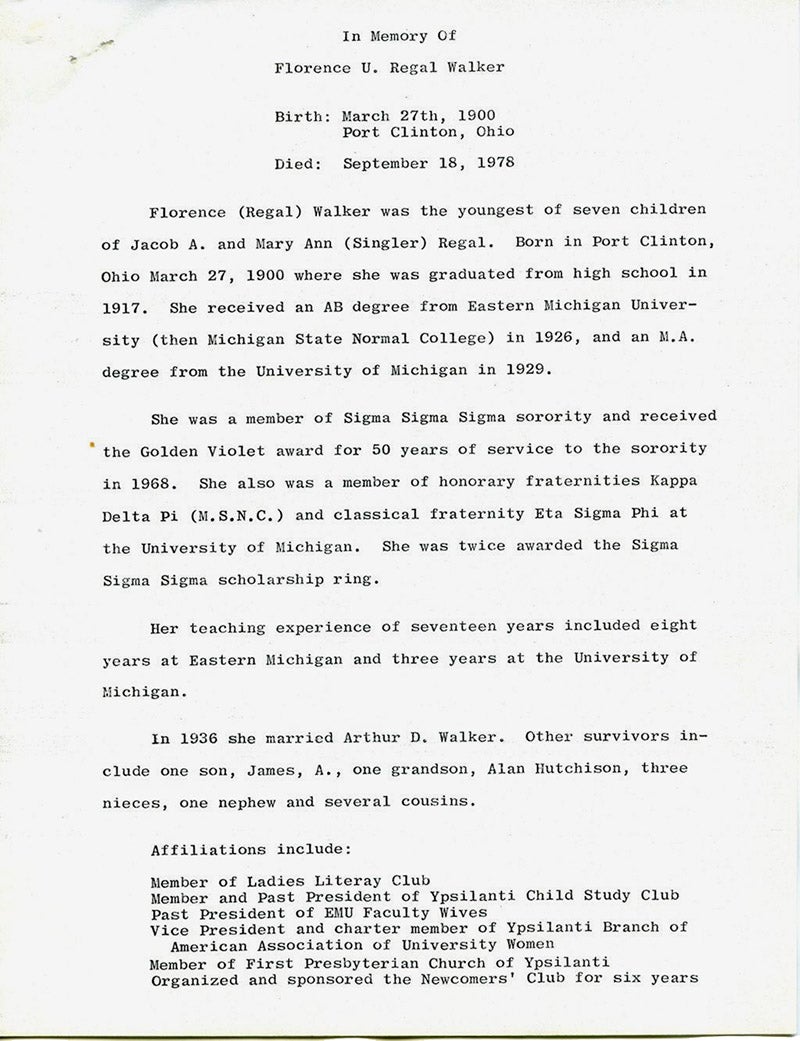
Read dozens of the remembrances together and a rich portrait of the women’s experiences in historical moments emerges: During World War II, some volunteered with the Red Cross on the home front while at least one served as a nurse in the Pacific. Many others took jobs at the Willow Run Bomber Plant just outside Ypsilanti; Florence Regal Walker founded the Newcomers Club, making daily visits to Willow Run to invite those who had come to the region for work to join the Ypsilanti community. “She wanted everyone to be happy and did everything she could to make it happen,” an unnamed club member and friend wrote in 1978, when Walker died at the age of 78.
In the collective, society’s gendered expectations are also clear: The women writing these tributes are quick to praise a deceased member as a “true gentlewoman,” “uncomplaining,” “unassuming,” and “tireless,” with a “quiet heart,” a “quiet dignity” and “quiet excellence.”
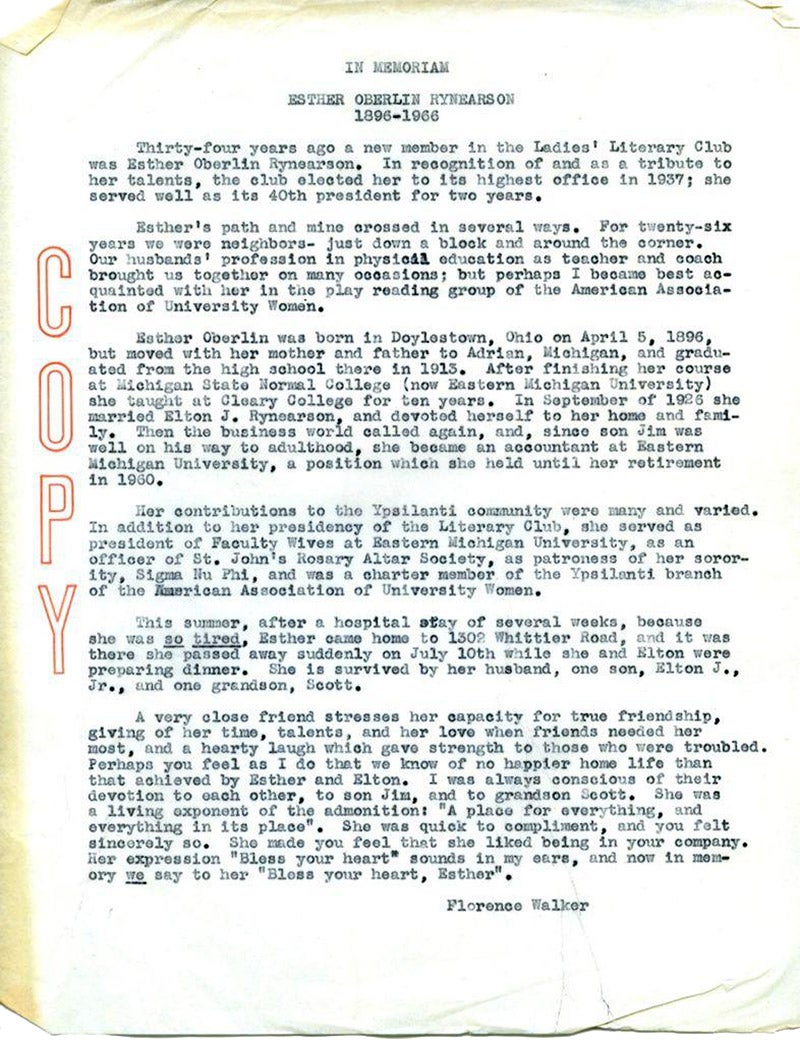
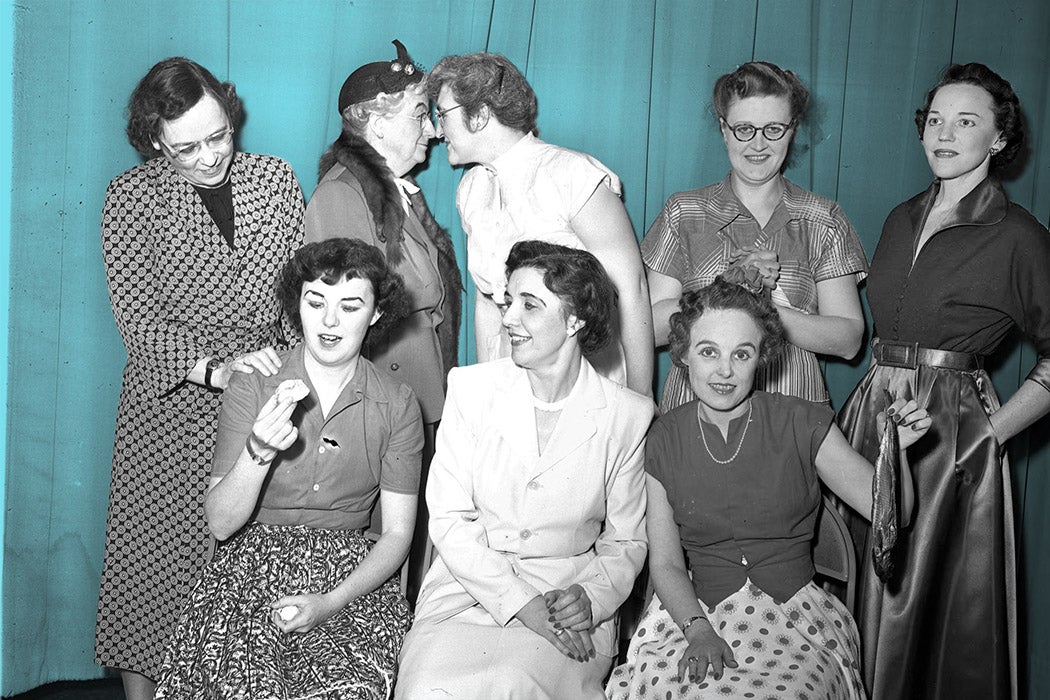
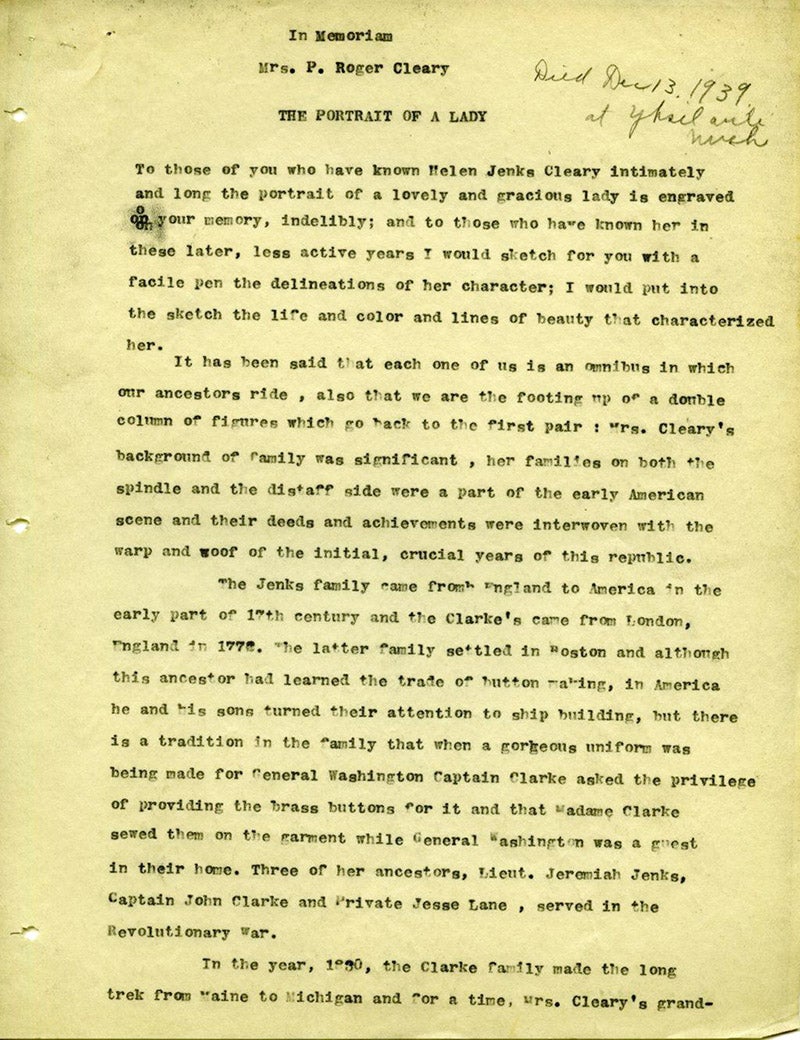
At its heart, though, this is an archive of friendship. The women speak repeatedly of forging bonds as strong as any between family members and relationships that lasted decades. “Her talent for friendship was unique, in that to each she gave a special kind of friendship, and yet it did not detract from that which she gave to another,” Lulu Carpenter Skinner wrote of Helen Jenks Cleary on her death in 1939. Yet the “capacity for true friendship, giving of her time, talents and her love when friends needed her most”—as Florence Regal Walker described Esther Oberlin Rynearson in 1966—was perhaps the most common trait among the members, seen not just in words but in actions: in countless oatmeal chocolate chip cookies shared, games of Oh Heck! played, children’s Christmas gifts hidden, notes of sympathy written, lawns mowed, practical advice offered, and confidences kept.
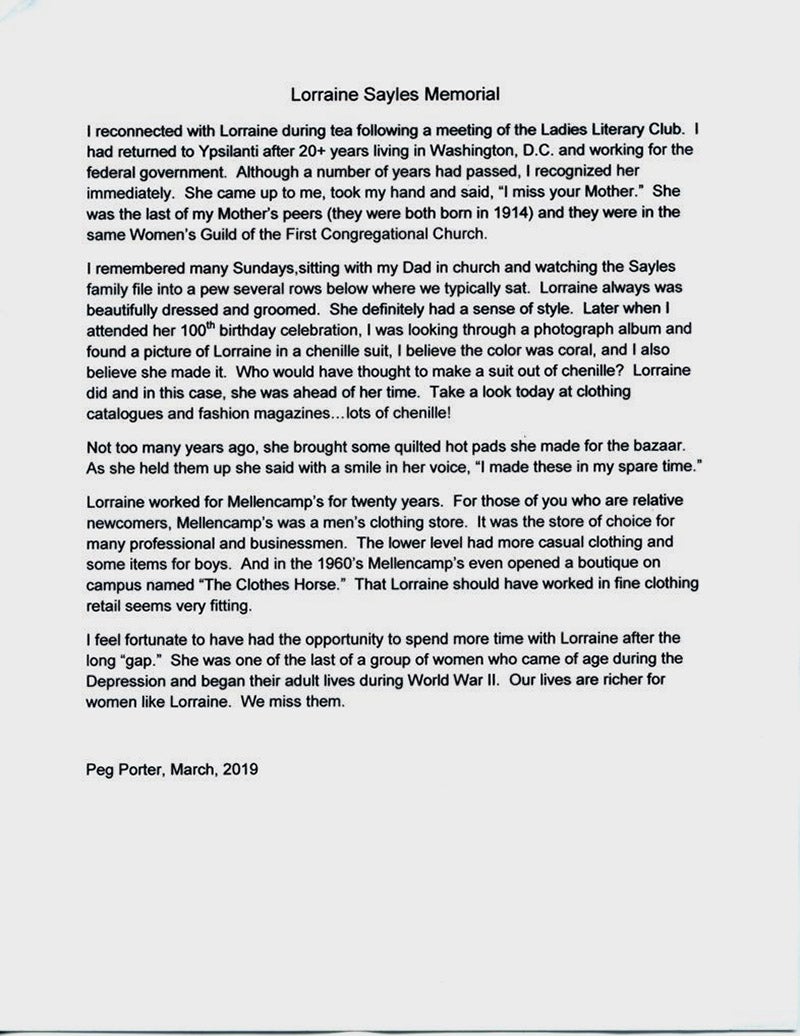
Though the evidence is only anecdotal, the women of the Ladies Literary Club seemed to thrive in these friendships: Of those remembered in this archive, at least 20 percent lived into their 90s, with several passing the century mark. Lorraine Sayles was 104 when she died in 2018—her life spanning almost the breadth of the archive itself. Sayles was remembered by Peg Porter for relationships that crossed generations; she had also been a friend to Porter’s mother. “Our lives are richer for women like Lorraine,” Porter wrote. “We miss them.”