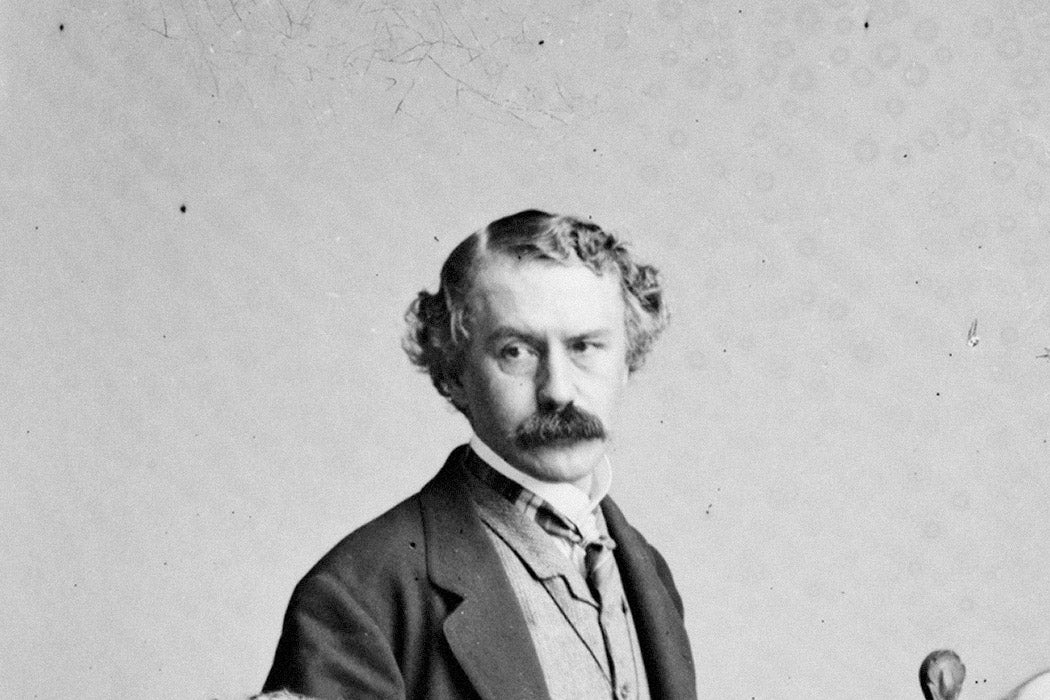
Beginning with the stimulus of a cup or two of strong coffee, fifteen-year-old Columbia College sophomore George Templeton Strong started a diary in 1835. He continued to make entries until his death in 1875, toting up to around four million words, an extraordinary document of life in mid-century America as seen from the commercial and cultural capital of New York. Especially for the terrible years of the Civil War, Strong’s job as Treasurer of the U.S. Sanitary Commission, a charity dedicated to fighting the “third army” of disease, gave him a wide perspective on the war, making his diary one of the most visceral portals into understanding the destruction of American slavery.


In his mammoth anthology Writing New York, Philip Lopate called Strong’s day-to-day record “the greatest American diary in the nineteenth century.” Lopate quoted historian Allan Nevins, who wrote that “Strong was an artist who was consciously trying to render his own city, his own time, his own personality in such form that later generations could comprehend them.” And, unlike a lot of nineteenth-century writing, Strong succeeded: he remains eminently readable today, warts and all.
But four million words … ! The diary, in the collection of The New York Historical, has never been published in its entirety. A four-volume edition, edited by Nevins and archivist Milton Halsey Thomas, came out in 1952. This covered about half the total content. Much of the material about music was left out. In the 1990s, concert pianist and music historian Vera Brodsky Lawrence remedied that by publishing three volumes of Strong on Music: The New York City Music Scene in the Days of George Templeton Strong.
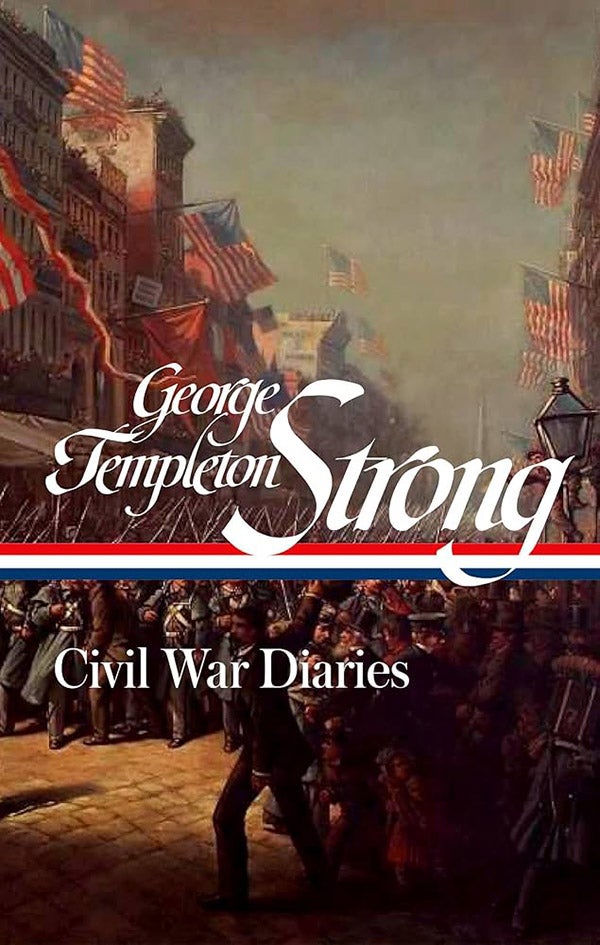
And now, in the midst of our own peculiar version of civil dissolution, comes a new edition from the Library of America. According to editor Geoff Wisner, Civil War Diaries includes 45% more material than the 1952 volume—which was reissued in 1963 for the centennial of the war—covering the same 1860–1865 period.
It’s worth consulting the reviews of the original 1952 publication for further Strong context. Law Professor John P. Frank wrote that Strong’s “legal career held only a small part of his interest and very little of his heart.” Like his father, Strong became a partner in what was the oldest law firm in town—a firm that, after numerous name changes, still exists today. Strong himself admitted “I don’t think I’ve got one lawyerlike faculty.” Nonetheless, in 1866 he argued a case before the Supreme Court, reporting that he survived to tell the tale with a headache.
More to Explore
Capturing the Civil War
“The art of recording a life so vividly that it may be constantly relived by those who follow is a rare one,” wrote historian Roy F. Nichols, who argued that Strong possessed this talent as “a frustrated literary man, doomed to the law, who sought compensation in these voluminous annals.” Nichols also described how Strong was wired into the city elite by family, marriage, and a range of financial, cultural, educational, and religious associations: “He almost literally knew everybody and saw everything in Gotham.”
Weekly Newsletter
"*" indicates required fields
Historian Irvin G. Wyllie declared, “What Strong left to posterity was a rich and balanced cultural history of his city and his age, an account blessed with the variety and freshness of a newspaper, but written with far more perspective and literary grace.”
In fact, reading Strong in 2026 may be the closest thing to being there in the 1860s. His voice leaps across the intervening years clearly and confidently. It seems he held nothing back, his prejudices unfiltered, about people (Lincoln: “among the ugliest whitemen I have ever seen”) and peoples. It’s no accident the diary was a secret until well after his death. He wasn’t a paragon; he was a person of his age, one unusually alert and extraordinarily gifted in capturing the flavor of those times. After 780 pages of diary, the sense remains that you could keep reading more.