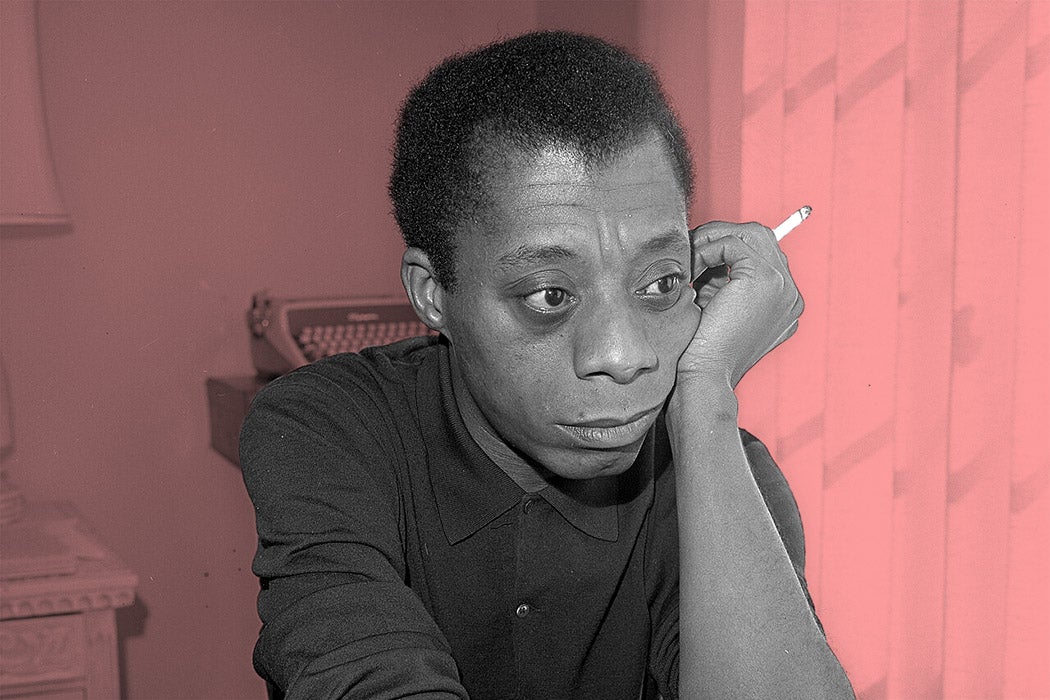
James Baldwin rose to prominence as a novelist, essayist, and public intellectual at a time when psychoanalysis was all the rage. Many of the writers, agents, and editors he worked with were undergoing the talking cure themselves and also publishing theory and fiction touching on the topic. As literary scholar Dorothy Stringer writes, Baldwin was famously hostile to this trend, yet he also incorporated Freudian themes into many of his later works.


Baldwin repeatedly criticized and mocked psychoanalysis. In Nothing Personal (1964), he compared people “in genuine trouble” to comfortable professionals “whose only real trouble is inertia, who work at the most disgraceful jobs in order to pay, for the luxury of someone else’s attention, twenty-five dollars an hour.”
Stringer suggests that Baldwin had good reason to be hostile to Freudian analysis as a Black man who had relationships with both men and women. Postwar intellectuals used psychoanalytic ideas in a variety of ways, including to discuss race relations and homosexuality. Often, this involved locating the suffering of minority populations in their psyches rather than in the structural and material hardships they faced.
Both in personal correspondence and in published work, white writers used psychoanalytic language to “diagnose” Baldwin’s struggles with mental illness. In one profile, Fern Marja Eckman focused on his childhood love for Harriet Beecher Stowe’s Uncle Tom’s Cabin. She claimed that he must have identified with the character of Topsy, a dark-skinned, gender-nonconforming girl. She dismissed his criticisms of Stowe’s liberal racism in his 1948 essay “Everybody’s Protest Novel” as a reflection of his own insecurities.
More to Explore
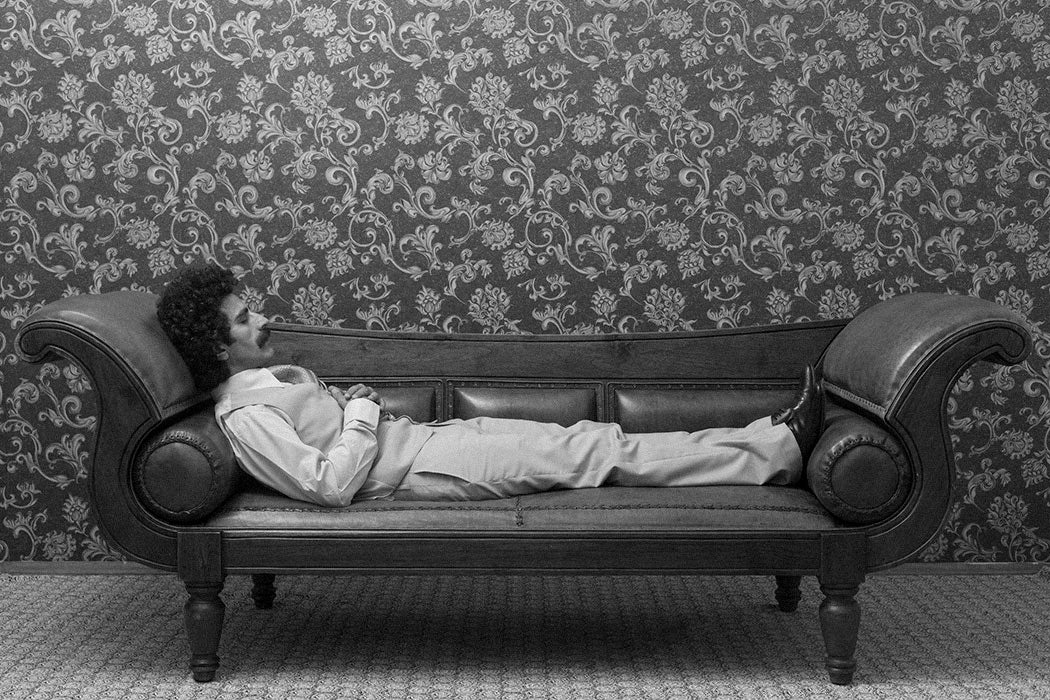
The Inner Life of Neoliberalism
One major influence on postwar psychoanalytic approaches to homosexuality was Sándor Radó, who, contrary to Freud, argued that heterosexuality was innate and universal. Homophobia was common among psychoanalytic writers and provided justification for the abuse and institutionalization of queer people.
It was in this context that Baldwin published Giovanni’s Room in 1956. The book’s protagonist, David, a white American living in Paris, notes that his lover, Giovanni, is about to die “this morning, on the guillotine,” before repressing that awful situation to focus on how he ended up in a relationship with a man in the first place.
“David’s internalized homophobia leads him away from his real, present loss and into a highly scripted, homophobic etiology of his own queer desire,” Stringer writes.
Weekly Newsletter
"*" indicates required fields
Through self-analysis, David concludes that his desire for men results from Oedipal failure related to his mother’s early death and his childhood relationship with his father and aunt. Although the story is viciously critical of the gay scene in Paris, it concludes with David rejecting a pathologizing view of his gay identity and moving toward authenticity. Although David’s use of psychotherapeutic ideas is self-destructive, Baldwin uses psychoanalytic concepts, particularly repression, in this and other works.
In one of his last essays, “Freaks and the American Ideal of Manhood,” he suggested, in what Stringer identifies as Freudian-influenced terms, that all people are in some sense androgynous and that homophobia boils down to hatred of a part of the self.