Psychiatric facilities and their patients have long been fodder for horror stories. As historian Troy Rondinone writes, films of the 1970s harnessed and shaped the American public’s understanding of deinstitutionalization and its aftermath.


Rondinone writes that the downsizing and closure of many state mental hospitals between the 1950s and 1970s were partly driven by the wider availability of low-cost antipsychotic medications and partly by efforts to save money. But another factor was growing public concern about the human cost of involuntary commitment, institutional abuse, and ineffective treatment.
The Exorcist (1973) presented medical institutions as helpless to address the real problems of madness. When Jesuit priest Damien Karras visits Bellevue Hospital, the institution is shown in a depressing and frightening light familiar to the public from exposés of mental hospitals over the previous three decades. Regan, the possessed little girl, is saved only when Father Karras abandons modern medicine for religion.
Two years later, Rondinone writes, One Flew over the Cuckoo’s Nest (1975) reflected the era’s cynicism toward government, depicting an individual caught in a dehumanizing institution. Jack Nicholson played the protagonist R. P. McMurphy as a gleeful, anti-authority trickster. The film drew on existing tropes about authoritarianism generally and mental hospitals specifically. It portrayed treatments that were already outdated by the film’s 1963 setting—intensely painful electroconvulsive therapy (ECT) and lobotomy—to dramatize the inhumanity of the system.
More to Explore

Selling Slashers to Teen Girls
By the late 1970s, though, public understanding of mental health issues was changing. Deinstitutionalization hadn’t gone as many self-advocates with mental illness had hoped. Instead of building better systems of community care, federal, state, and local governments had largely abandoned individuals who had previously been institutionalized in psychiatric hospitals. In the media and political discourse, discussion of mental illness began to center on unhoused people and the danger they supposedly posed to others.
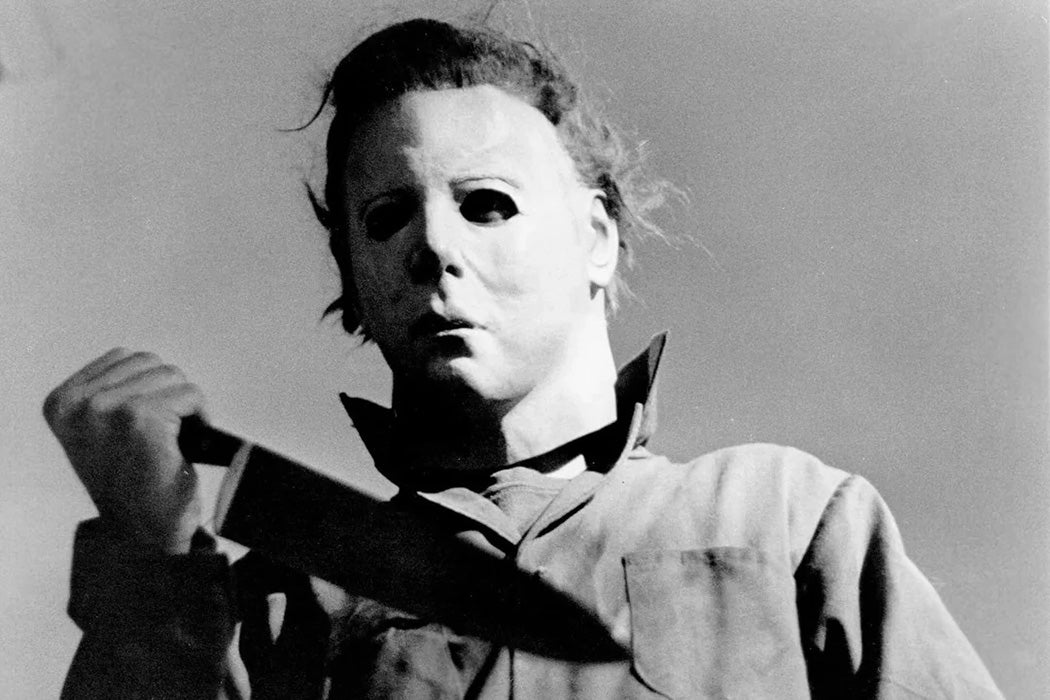
Against this backdrop, Rondinone writes, Halloween (1978) and When a Stranger Calls (1979) both portrayed people who had escaped from psychiatric hospitals as monstrous killers. The institution that Halloween’s villain, Michael Myers, escapes from is shown not as a place of healing or a site of authoritarian domination of the innocent, but as a prison where medications are used primarily to subdue monsters.
Weekly Newsletter
"*" indicates required fields
In When a Stranger Calls, a psychiatrist at the mental hospital from which child-killer Curt Duncan escaped explains that Duncan received effective, if unpleasant, treatment—including tranquilizers, lithium, and 38 rounds of ECT. But these treatments prove all in vain. Duncan ends up on the streets, where he is beaten and later seen nervously muttering to himself. Ultimately, he resumes his irrationally murderous behavior.
Neither film advocates a return to institutionalization. Instead, they reflect a cynicism about mental hospitals—and a rejection of any humanistic hope for the rehabilitation of people with mental illness. Rondinone writes that this shift was part of a turn toward a Reagan-era cinematic world in which individuals must confront unpredictable dangers without hope of government support or protection. In these films, the horrors of institutionalization gave way to the horrors of a world without it.