The Manhattan Project National Historical Park commemorates the importance of Los Alamos, New Mexico; Oak Ridge, Tennessee; and Hanford, Washington, in the building of the first atomic bombs. This mission employed more than 130,000 people. They produced bombs at an average cost of $5 billion each (in 1996 dollars). One of those bombs was tested at Alamogordo, New Mexico, on July 16, 1945. Two were dropped on Japanese cities: Hiroshima, on August 6, 1945, and Nagasaki, on August 9, 1945. These are still the only uses of nuclear weapons in war.


But the subsequent Cold War’s production of nuclear weapons “dwarfed its wartime predecessor in size, scale, personnel, and expense,” writes historian Jason Krupar. At its peak in 1985, the world’s nuclear arsenal totaled around 63,600 warheads. After the breakup of the Soviet Union in the early 1990s, America’s “nuclear fabrication system” began to be dismantled. (There are still some 12,000 nuclear weapons in the world; the Doomsday Clock of the Bulletin of the Atomic Scientists is 85 seconds to midnight, the closest it has ever been.)
While the World War II-era Manhattan Project has a historical park designation, America’s Cold War nuclear weapons landscape has hardly been memorialized at all. In general, the monuments that have been put up are often about the remediation and cleanup, not the original weapons production. In many ways, this history has been removed from the landscape, although the pollution remains.
Krupar’s examples of the “disappearing nuclear landscape” include the once-secret Rocky Flats Plant eighteen miles west of Denver, Colorado. Rocky Flats produced 60,000–70,000 “plutonium pits” or triggering devices over nearly forty years. These were the fissionable parts of warheads that triggered the nuclear (fusion) explosion. In a system that otherwise had much redundancy, Rocky Flats was the only facility capable of “assembly-line machining of the critical plutonium devices.” Krupar continues:
“Rocky Flats became a chokepoint in the streams of nuclear and non-nuclear components that crisscrossed the nation. The technological failures and industrial catastrophes which occurred at Rocky Flats generated ripples across the entire nuclear weapons manufacturing network.”
Those catastrophes included hundreds of fires—machined plutonium is highly flammable—including major ones in 1957 and 1969. The latter cost the Atomic Energy Commission, then the federal entity with oversight of such facilities, more than $65 million in cleanup costs and plutonium consumed by the fire. It was also a turning point in regional opinion about the plant: the Cold War had first made people proud to be involved and communities eager to thrive on federal expenditures, but the human health and environmental costs of nuclear weapons production took their toll over time.
More to Explore
The Radioactive Reindeer Problem
Rocky Flats was shut down a couple of years after an unprecedented raid by FBI and EPA officials in 1989. The investigation found sixty-two pounds of plutonium in the ventilation system, and evidence that more than 2,600 pounds of plutonium and other radioactive material had simply been lost over the facility’s lifespan.
During the decommissioning of Rocky Flats, hundreds of buildings were demolished and more than a million cubic meters of waste removed. More than twenty-one tons of weapons-grade material were removed and sixteen million gallons of water treated.
Weekly Newsletter
"*" indicates required fields
Former workers and other concerned community members, as well as historians, found no ally in the Department of Energy, the AEC’s successor, in salvaging pieces of the plant’s history. A long-term effort to build a museum on or near the site hasn’t come to fruition: the Rocky Flats Cold War Museum remains a virtual affair.
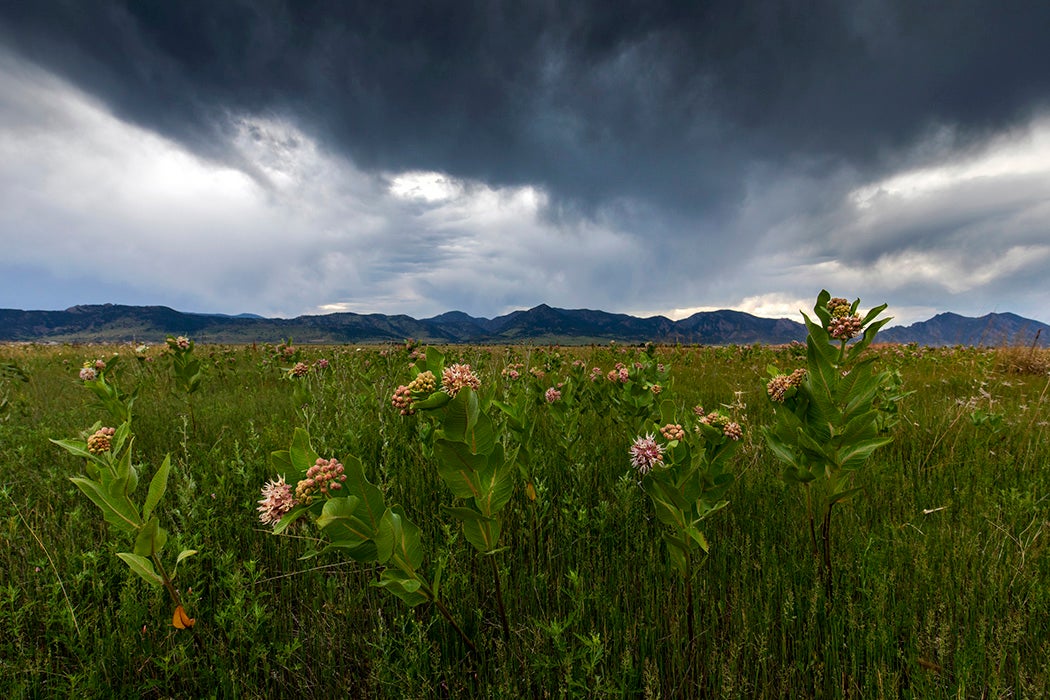
Today, Rocky Flats consists of a 400-acre central industrial core surrounded by a 5,237-acre national wildlife refuge. The inner core, now a restricted Superfund site, is labeled “Department of Energy Legacy Site” on the US Fish and Wildlife Service’s trail map for the refuge. It’s almost as if the legacy of the atomic age, which of course isn’t over, has been buried and greenwashed. Nothing to see here, folks, but a herd of elk—which, under the USFWS administration, can be hunted September through December. The landscape may have been restored to something resembling its natural state, but the environmental consequences of its nuclear past remain.