In the fall of 1975, Johnetta Brazzell, a young Black woman in a smart plaid blazer, stood inside a small grocery store on the south side of Pontiac, Michigan. She was there to interview the shop owner, T.C. Holland, whose son had been appointed as the city’s first Black mayor the previous year. But Brazzell was not interested in discussing the contemporary politics of the city: an uneasy mix of economic uncertainty as the region’s automotive sector faltered, ongoing racial tensions stemming from school desegregation efforts, and the boisterous civic boosterism that accompanied the debut of Pontiac’s massive new stadium, which locals had nicknamed the Silverdome.


Instead, Brazzell wanted to know how the story had started for the city’s Black residents, who made up more than a quarter of Pontiac’s booming population. She went back to the beginning: “Where were you born?”
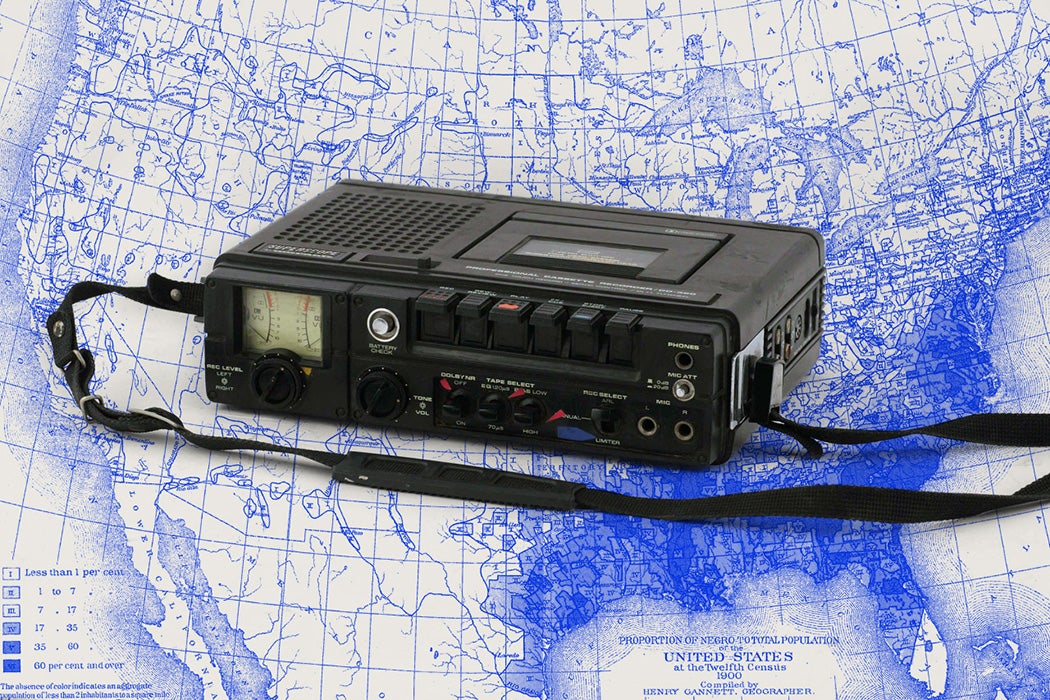
Brazzell and several of her colleagues in the Urban Affairs Center at Oakland University, located just outside the Pontiac city limits, were part of a new movement of oral historians documenting the stories of everyday people in their own voices with the use of newly portable and increasingly affordable cassette recorders. “We’re trying to locate people who lived [in Pontiac] and get eyewitness accounts of what was going on, how people lived, where they worked and, generally, just what life was like for them,” she told the Detroit Free Press in 1975. There was an urgency to her efforts. “If we don’t get it from those individuals, then we can’t get it from anyone else. Oral history is usually considered a supplement to written history, but here oral history is the only account anyone has.”
Over the next several years, the oral historians would record about 80 tapes capturing the history of Pontiac’s Black community, along the way mapping the routes of the Great Migration, which drew 6 million people from the rural South to the cities of the Northeast, Midwest, and West in the early and mid-20th century. Today, 23 of those interviews—in audio form with machine-generated transcripts—have been shared via JSTOR by the Oakland University Archives and Special Collections.
Holland, one of the first interviewees, told Brazzell he was born in northeastern Georgia in the first decade of the Jim Crow era. As a teenager he lathered faces in a barbershop catering to white clientele in Atlanta. In his interview, he tried to gloss over the racism he experienced there: “Then sometimes a customer would become dissatisfied by certain things and he’d say certain things and I decided I didn’t want to be bothered with it.” He wasn’t yet 17 when he “had become dissatisfied with the South.” He planned to leave for New York, until a chance encounter with an old neighbor who had returned from his home in Pontiac to move his mother north. Holland joined the family on the ride back to Michigan.
Pontiac, Michigan, had been a town of 10,000 at the turn of the century when Mary and John Morton brought their infant daughter, Nelly, to the city from Canada. In her conversation with Brazzell in 1975, Nelly, who went by her married name, Ryder, did not know how her family had come to settle in Chatham Township in Ontario—then known as the Black Mecca of Canada—nor why they had moved to Pontiac. “Perhaps working conditions were better,” she speculated. With her parents’ encouragement, Ryder would become the first Black student to graduate from the city high school in 1917.
By the time Holland arrived in Pontiac on January 3, 1919, there were more than two-and-a-half times that many people in the city. By 1930, the city’s population would double again. Among the new arrivals in the 1920s were Edith Richardson, who had also lived in Chatham Township before relocating; Adele Walker, who was raised by her grandparents—both formerly enslaved—on a farm in Mississippi, and Mary Belle Scott, who had made her way from Mississippi to East St. Louis (where she witnessed the 1917 massacre that displaced 6,000 Black people) and then to Chicago and Milwaukee before settling in Pontiac.
Scott would become a prominent figure in the Black neighborhood that developed in the southwest of the city. Known to the interviewees as Mellow Lane or Bagley and Wesson—for the intersection that was so central to community life it was referred to simply as “the corner”—the area was home to such institutions as the Newman A.M.E. church, which Scott attended; the Southwest Community Center, where she was a supervisor; and the Bethune Art and Study Club, which Scott and Ryder helped to establish in 1928. “Everybody who’s been here any time knows Mrs. Scott,” Scott remembered people saying.
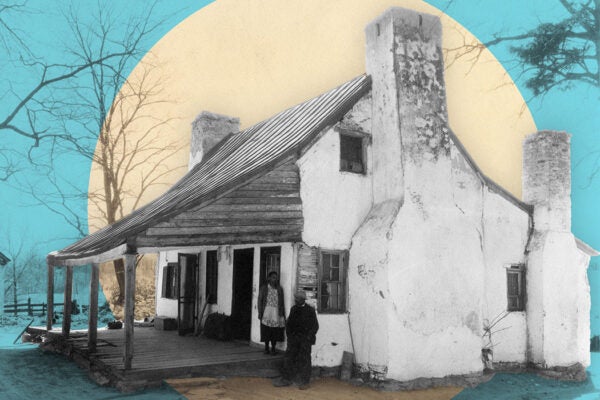
Black residents continued to arrive through the 1940s, often for jobs at General Motors or Wilson Foundry. Like those who came before them, most settled in the south of the city, in vibrant Black communities that struggled economically after being redlined by the federal government in 1937. But by the 1970s, when Brazzell was asking her questions, many had grown disillusioned with the place where they had once seen nothing but opportunity. “Pontiac is not the Pontiac I used to know,” said Willie Hilton Dean, who had traveled to the city for a two-week visit to his wife’s family in the 1940s and never left. Walker had come to realize that “segregation and all those things are still here, plentiful, but they use different names.”
“Would you like to speculate on the future of Pontiac and what’s gonna happen here?” Brazzell asked as she finished her nearly two-hour conversation at Holland’s Grocery in the fall of 1975. T.C. Holland demurred—“Oh no, I couldn’t, I wouldn’t exactly speculate…”—before declaring himself an optimist.
Weekly Newsletter
"*" indicates required fields
The city faced a challenging moment—and there would be much more adversity to come in Pontiac—but “crisis brings men together. And when it brings men together, you plot a new course. He may stray from you later, but you and him will walk side by side for a while in that new course,” Holland said. “We walk side by side.”
For the Classroom
- After listening to one or two of the interview recordings, what does hearing the speakers—their pauses, laughter, hesitations, or emotion—add to your understanding that a transcript alone cannot? How should historians treat those vocal elements as evidence?
- Several interviewees describe migration as a series of decisions shaped by opportunity, chance encounters, violence, discrimination, and family networks rather than a single dramatic departure from the South. How do these individual stories complicate or deepen familiar narratives of the Great Migration? What larger historical patterns emerge when these personal accounts are considered together?
- Johnetta Brazzell’s interviews capture memories of the early twentieth century alongside the perspectives of people living through the challenges of the 1970s. How does the historical moment in which the interviews were recorded influence the stories people tell about the past? What questions would you ask if you were conducting a follow-up interview today?
- Imagine you are creating a public history project using these interviews. Which voices, excerpts, or themes would you highlight, and what larger story would you want readers or listeners to take away? What might be gained—or lost—through the choices you make?