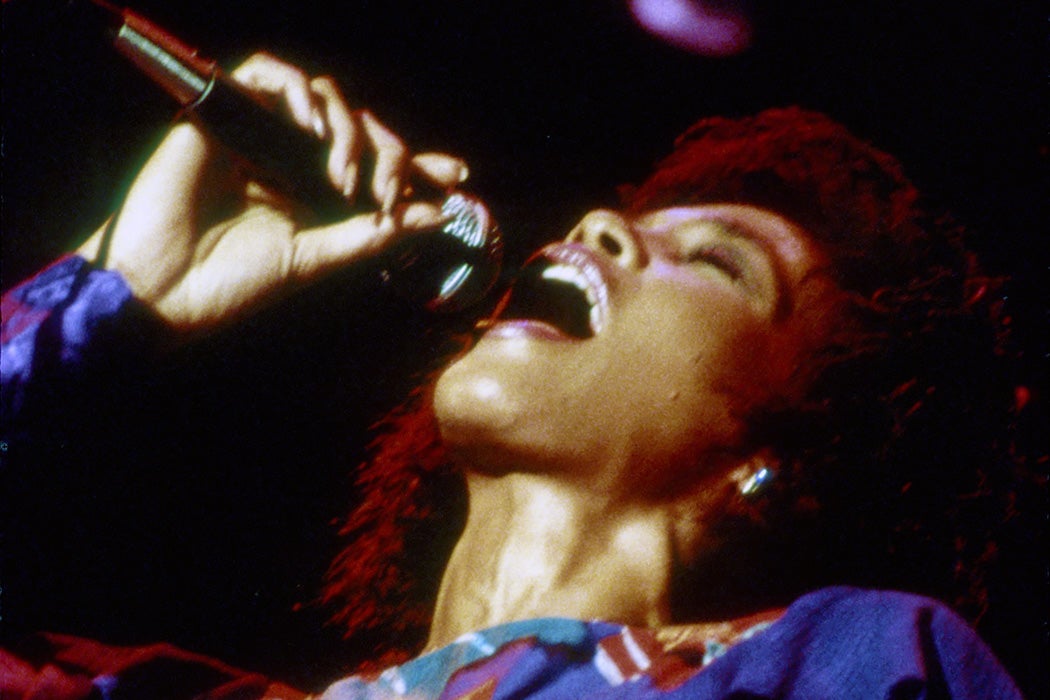
“It’s All Coming Back to Me Now,” “My Heart Will Go On,” “Without You,” “I Don’t Wanna Miss a Thing,” and “Total Eclipse of the Heart” are songs that have transcended their original moment and become enduring pop culture touchstones.


Formally categorized as power ballads, these songs are what David Metzer defines in Popular Music as “songs that grow bigger, louder, and more fervent on the way to impassioned finales.” Yet despite their cultural staying power, power ballads have historically received little scholarly attention, in part because they are often dismissed as schlocky and banal.
Culturally, power ballads are having a renewed moment: “It’s All Coming Back to Me Now” draws inspiration from Wuthering Heights, whose 2026 adaptation, written and directed by Emerald Fennell, dominated pop culture conversations this past winter. This summer, the film Power Ballad traces the trajectory of a hit song in the genre, while in September 2026, Céline Dion is set to return to the stage in Paris.
The power ballad traces its roots to the 1970s. In a 1970 Billboard article, Gus Gossert—described as an “authority in oldies”—observed that “Both [Tom] Jones and [Engelbert] Humperdinck continually draw upon ‘power ballad’ tracks that were first brought to us via Elvis Presley and Roy Orbison in 1960 and a little later, Gene Pitney.” Earlier, Billboard had even referred to Orbison as a “drama-ballad king.”
Metzer sees four phases of the power ballad: the 1970s hits by Barry Manilow and his imitators; the 1980s rock and heavy metal power ballads; the late 1980s–1990s R&B-infused power ballads of Whitney Houston and Mariah Carey, and the 2000s, when the genre absorbed elements of teen pop and even classical crossover.
The power ballad notably crosses between genre lines—hip-hop artists, R&B artists, rock groups, and pop stars have all sung power ballads in their respective genres. “This mobility might cause some surprise, given that power ballads are commonly considered to be rock songs, especially those by 1980s rock and heavy-metal bands,” writes Metzer. From R&B ballads, the power ballad borrowed technical vocal conventions like melismas (the singing of multiple notes over a single syllable), ornamentation, pitch inflections, call and response, moans, and shouts. Melismas, in particular, “became so common in R&B power ballads and, through their examples, other types of song […] that they were rampant in contemporary popular music, most notably in performances of American Idol,” writes Metzer.
For hip-hop, R&B, and rock, the ballad provided “an expressive forum—slow-tempo songs focused on romance—that was largely missing from the origins of each one,” Metzer writes. “In that trade, the host genre takes in the lyricism and vulnerable emotionality of the ballad and gives back to the ballad its own distinct qualities, like the raucous sounds of rock, the growling teases of R&B, or the swagger of hip hop.” The resulting songs span themes of love, heartbreak, longing, and loss. Yet regardless of genre, “ballads court intimacy. A singer imparts what comes across as deeply felt emotions and draws in listeners through delicate candor,” writes Metzer.
More to Explore
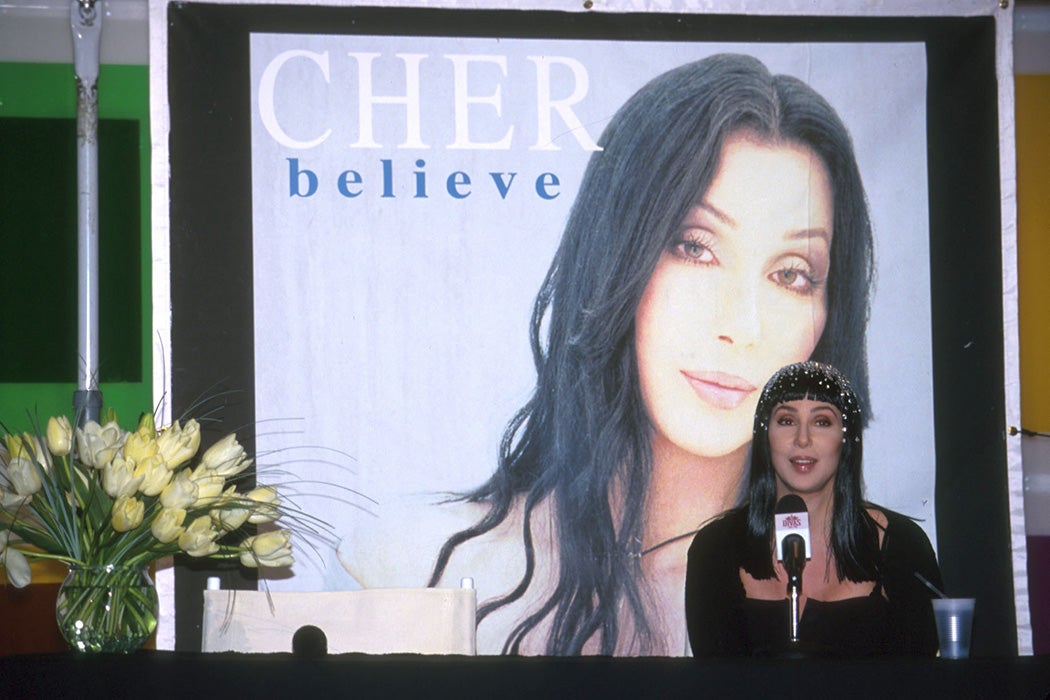
Cher’s Vocoder Is the Sound of Both Y2K and Camp
Barry Manilow is credited with giving power ballads a structure. “Manilow may not have invented the power ballad, but he did help construct the musical formula employed by the song,” writes Metzer. The ballad’s main features include a basic verse/chorus structure, slow tempo, lyrical melodic lines, rich harmonies, and accompaniment that support those melodies. Soft openings give way to towering conclusions.
To transform a ballad into a power ballad, “the crux of the musical formula is continual escalation, [starting with] relatively quiet, introspective openings through a series of expressive plateaus, each more intense than the last,” writes Metzer. Vocally, vulnerable verses gradually give way to ecstatic displays of emotion, and the instrumentation follows a similar pattern, with a restrained acoustic accompaniment at the start, and a multi-instrumental orchestration at the climax. Additionally, a key change signifies the final release, “as the culmination of all the ‘power’ gestures executed both by voice and instruments,” before the song descends back to baseline.
“I Will Always Love You” and “My Heart Will Go On” follow this structure. Metzer places Céline Dion in Manilow’s lineage: “In songs like ‘It’s All Coming Back to Me Now’ (1996) and ‘My Heart Will Go On’ (1997), Céline Dion bounds each step of the power ballad musical formula to reach splendiferous vocal finales,” he writes.
Weekly Newsletter
"*" indicates required fields
Overall, power ballads rely on sentimentality and uplift, two antithetical sentiments at first glance. “Some power ballads ascend to such optimistic heights, like those paeans to self-esteem, Mariah Carey’s ‘Hero’ (1993) and R. Kelly’s ‘I Believe I Can Fly’ (1996),” writes Metzer. “Most, though, combine the sorrow of sentimentality and the stimulation of uplift. It is this combination that makes the power ballad so unique in both the history of sentimental arts and the ballad.”
As schmaltzy as the genre can be, this sentimentality is also the power ballad’s saving grace. During the 2000s, “all of the different kinds of power-ballad genre blends could be found in the charts, proving how adaptable and popular the formulas of the songs had become.” Sure, one can chuckle at power ballads being used as a crowd pleasers or virtuoso showcases at talent shows like American Idol or being adapted into teen-pop hits. Yet as middlebrow as they might seem, youth audiences and network television viewers remain important demographics within the culture industry.