In 2023, iconic tailgate beverage Bud Light was hit with a nationwide boycott by right-wing activists over the brand’s collaboration with a trans social media influencer.


Political boycotts, however, are nothing new in the American beer industry.
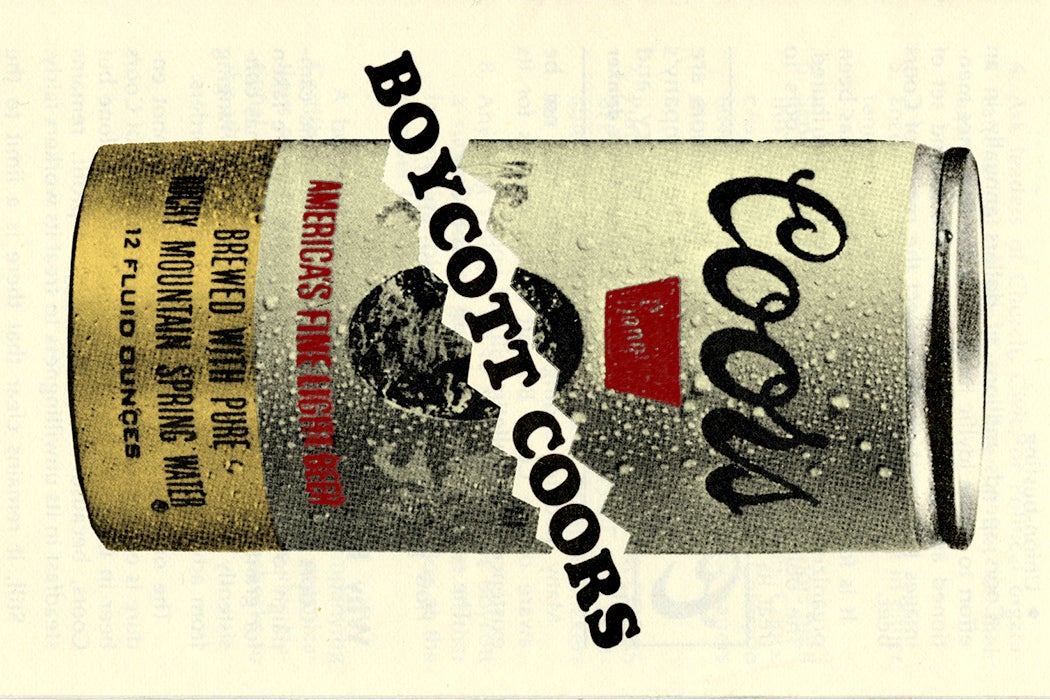
Long before Bud Light, Coors was the target of a consumer boycott that lasted more than twenty years and became, in the words of historian Allyson P. Brantley, “one of the most prominent and longest-running consumer boycotts of the late twentieth-century United States.”
Running until the late 1980s, the “beercott” brought together an unlikely political coalition of pro-labor advocates—including gay rights groups, radical Chicanos, the Black Panther Party, and unionized “hardhats,” who were typically blue-collar, right-wing-leaning men.
“Hard-fought efforts to build this coalition, including outreach and affirmative action campaigns, cultivated a movement that bridged the divisions of class, identity, and sexuality and offered a creative means of political protest,” Brantley writes.
While opposition to Coors began with a workers’ strike in 1957, it gained momentum as the emerging African American and Mexican American civil rights movement protested the company’s hiring discrimination. Mexican American activists, for example, cited underrepresentation in the Coors workforce relative to the population in the surrounding Denver area.
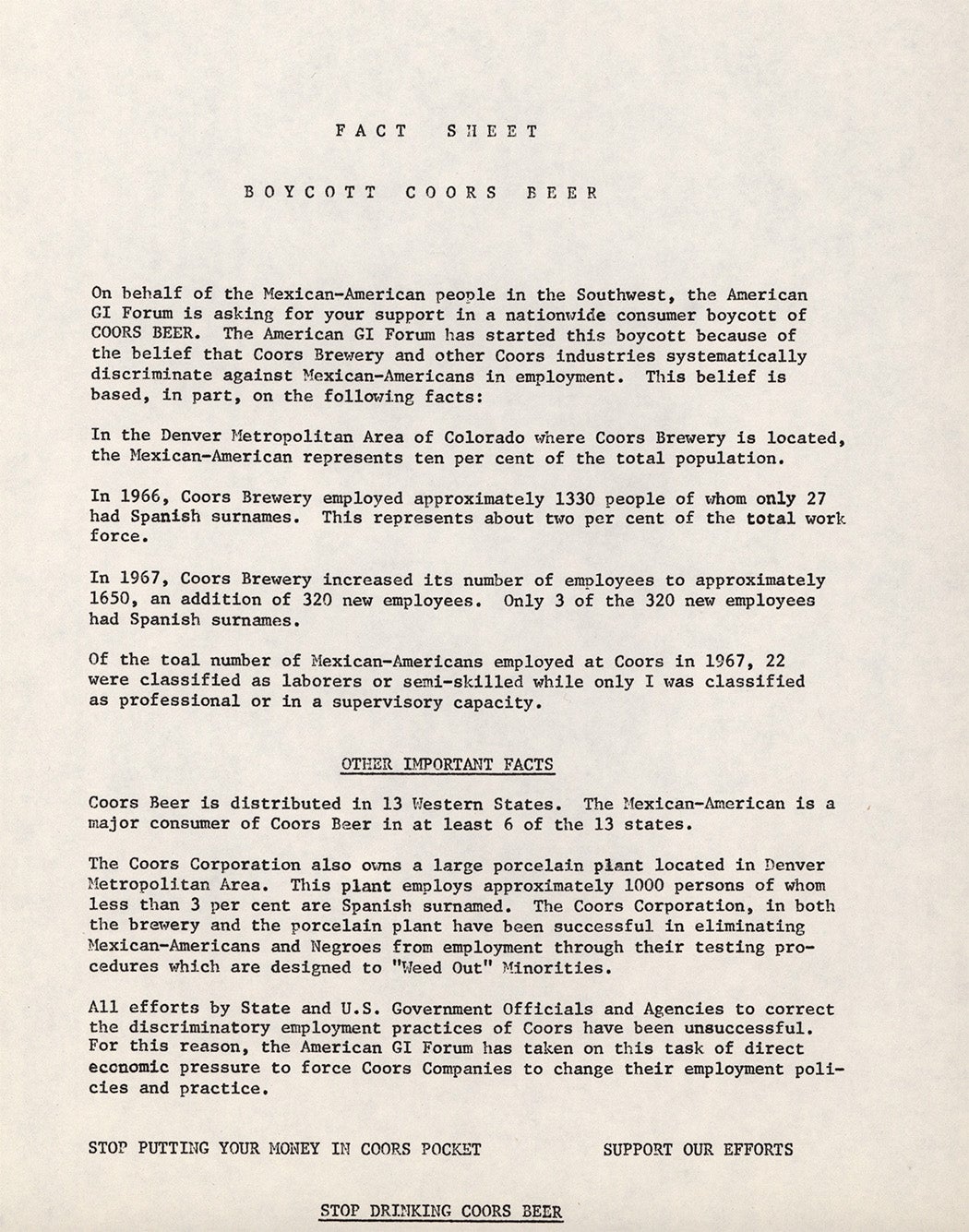
In the early 1970s, diverse groups protesting Coors consolidated in Northern California. Brantley argues that this history challenges the conventional view of the decade as a period when leftist activism receded and conservative politics prevailed.
The International Brotherhood of Teamsters Local 888—a largely white union of truck drivers who delivered beer from warehouses to retailers—called for a boycott of Coors in June 1973 after failing to reach an agreement on wages and working conditions with distributors. Their efforts initially met only patchy success. For example, East Bay retailers “restocked Coors immediately after pickets left—and the beer sold well,” Brantley writes.
To shore up the boycott, the Teamsters had to look beyond their traditional support base. Local 888 called on Allan Baird, the president of the San Francisco newspaper drivers’ union and a resident of its working-class and predominantly gay Castro District.
More to Explore
When Does Political Resistance Work?
Baird and his fellow Teamster Andris Cirkelis were aware that communities of color viewed the disproportionately white and male union with what Brantley calls “widespread distrust.”
In reaching outside the labor movement to organizers like the Black Panther Party, they “emphasiz[ed] Coors’s discriminatory practices and history” and further vowed—albeit belatedly—to address the lack of Black and Chicano beer drivers in their own ranks.
The union also started to amplify Mexican Americans’ longstanding criticism against Coors’s hiring practices. This won Local 888 the backing of Chicanos, who were already proclaiming that “Coors beer was ‘fermentado con la sangre de Chicanos’” (brewed with their blood).
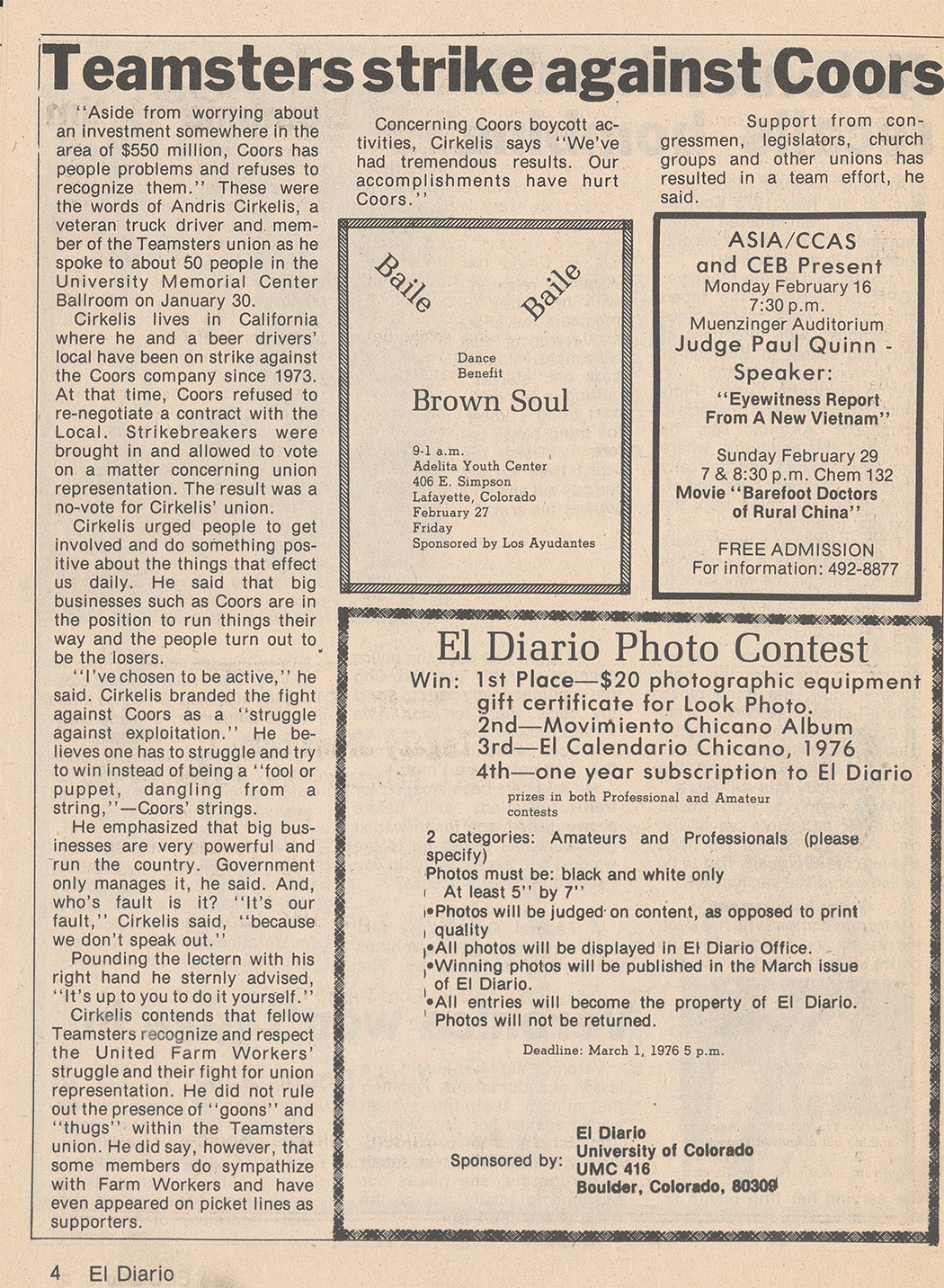
Colorado community newspaper El Diario de la Gente, which was published in Boulder, carried a report in early 1976 that told its readers about budding sympathies between the striking Teamsters and the heavily Mexican American United Farm Workers movement.
“The message was simple: Local 888 was on the side of equity and workers’ rights; Coors was on the side of discrimination and union-busting,” Brantley explains. “But within this message lay a more gripping narrative—that of a Teamsters’ Local willing to reject its union’s history of exclusion, linking fights for labor and racial justice under the call to boycott.”
In addition, Local 888 pushed for not just the unprecedented hiring of openly gay beer delivery drivers, but also the inclusion of stronger anti-discrimination clauses in job contracts.
Recounting that “the lesbian and gay union group in San Francisco was responsible for getting the Coors boycott onto Castro Street,” another labor leader adds in an interview, “I understand that to this day you cannot buy Coors beer on Castro Street.”
Weekly Newsletter
"*" indicates required fields
The political climate of the 1970s helped to spur the boycott, as Baird and Cirkelis linked a preference for Coors beer to Presidents Richard Nixon and Gerald Ford. “Coors was no longer just ‘the anti-union beer’; it was now also the beer of detested Presidents and the New Right,” writes Brantley, who notes the Coors family’s backing of conservative causes.
Teamster leadership axed Baird and Cirkelis from their roles in the boycott in 1975 over their ties to the United Farm Workers, and Local 888 was dissolved not long after. But the boycott had taken on a life of its own. “[B]y the eighties, the ‘boycott Coors’ refrain could be heard from coast to coast—only diminishing after the company signed high-profile, million-dollar settlements with protesters, in exchange for an end to the boycott,” Brantley observes.
“The simple act of rejecting beer,” Brantley writes, “can be a simultaneously radical and pragmatic step toward solidarity and political change.”