Skip to content
from JSTOR, nonprofit library for the intellectually curious
  • Newsletter
  • Collections on JSTOR
  • Teaching and Learning Resources
  • Arts & Culture
    • Art & Art History
    • Film & Media
    • Language & Literature
    • Performing Arts
  • Education & Society
    • Education
    • Lifestyle
    • Religion
    • Social Sciences
  • Politics & History
    • Politics & Government
    • U.S. History
    • World History
    • Social History
    • Quirky History
  • Science & Technology
    • Health
    • Natural Science
    • Plants & Animals
    • Sustainability & The Environment
    • Technology
  • Business & Economics
    • Business
    • Economics
  • Contact The Editors
Politics & Government

American Individualism and American Power

The American habitus was forged partly by the conquest of Native land and partly by the experiences of superiority and entitlement among white enslavers.

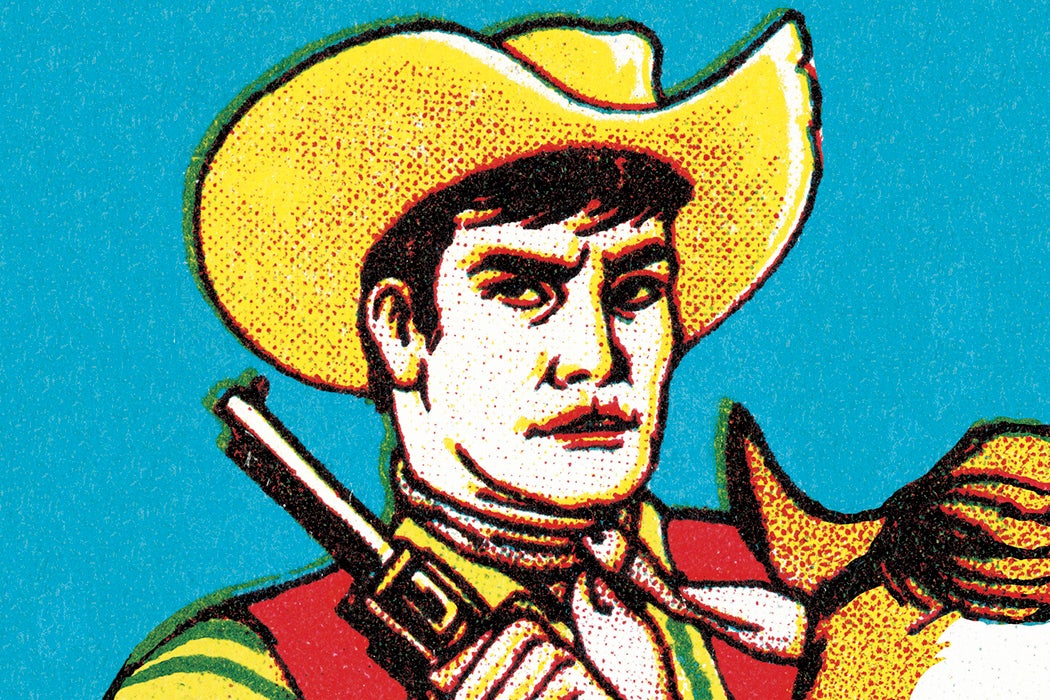
An illustration of a cowboy with a serious expression
Getty
Share
Copy link Facebook LinkedIn BlueSky Threads Reddit WhatsApp Email
By: Livia Gershon
May 17, 2025 December 3, 2025
2 minutes
The icon indicates free access to the linked research on JSTOR.

Whether you consider it an asset or a problem, most people agree that Americans are exceptionally individualistic. But why? Sociologist Stephen Mennell suggests that the contours of national character are easiest to see from the outside. From his position at University College Dublin, and writing during the first Trump administration, he offered some ideas.


“Collaborate”“Collaborate”

Back in 1835, another outsider, Alexis de Tocqueville, famously described Americans as uniquely unbound by tradition or group norms. Many writers associate this with the “frontier” and images of self-reliant cowboys. However, Mennell argues, another experience of the frontier was being on the winning side of a violent power struggle with Indigenous people. He suggests that, in the country’s early history, the American habitus—the traits people acquire through contact with people around them, starting in early childhood—was forged partly by the conquest of Native land and partly by the experiences of superiority and entitlement among white enslavers.

Mennell makes a similar argument regarding the nation’s place in the world since World War II. Not only did the US develop globally commanding military power, but it also prints the world’s major currency. This gives the American government enormous power over other countries while freeing it from the need to abide by international laws that most other countries follow.

Americans are unusually likely to view “free markets” as inherently fair rather than looking at the relative power positions of buyers and sellers.

In general, Mennell suggests, as any nation’s place in the world rises, its citizens tend to associate this power with “a special virtue.” For example, the British Empire’s status in the nineteenth century helped convince its people that they were taking up “the white man’s burden” to civilize the world.

More to Explore

Human hand holding an asterisk

History’s Footnotes

Matthew Wills
July 6, 2024
The addition of footnotes to texts by historians began long before their supposed inventor, Leopold von Ranke, started using them (poorly, as it turns out).

Many sociological studies have shown that, in any situation with a power dynamic, weaker parties know more about powerful ones than vice versa. This helps explain why Americans are generally not very knowledgeable about other countries. And Mennell suggests that it also influences a habitus with “a curious blindness to power relationships.” For example, Americans are unusually likely to view “free markets” as inherently fair rather than looking at the relative power positions of buyers and sellers.

Weekly Newsletter

"*" indicates required fields

This field is for validation purposes and should be left unchanged.

Get your fix of JSTOR Daily’s best stories in your inbox each Thursday.

Today, however, other countries, particularly China, are challenging American economic dominance. Even if it remains among the most powerful nations for the foreseeable future, Mennell argues, this relative decline in position “may be experienced as humiliating by individual Americans.” And that, in turn, could make the US “an even more dangerous force in world affairs than it has been in the first decades of the 21st century.”

Have a correction or comment about this article?
Please contact us.
individualismUnited States historyHistorical Social Research / Historische Sozialforschung
JSTOR logo

Resources

JSTOR is a digital library for scholars, researchers, and students. JSTOR Daily readers can access the original research behind our articles for free on JSTOR.

Power, Individualism, and Collective Self Perception in the USA
By: Stephen Mennell
Historical Social Research / Historische Sozialforschung, Vol. 45, No. 1 (171), Special Issue: Emotion, Authority, and National Character (2020), pp. 309–329
GESIS - Leibniz Institute for the Social Sciences

Get Our Newsletter

"*" indicates required fields

This field is for validation purposes and should be left unchanged.

Get your fix of JSTOR Daily’s best stories in your inbox each Thursday.

Read this next

A student standing at a crossroads
Education & Society

Why Everyone Doesn’t Value Choice to the Same Degree

Studies show that college-educated white Americans value having choice -- and yet having too much choice can paralyze and lead to dissatisfaction.

Trending Posts

  1. Where Did All the Public Bathrooms Go?
  2. Ancient Rome: A City of Immigrants
  3. The Culture Wars of The Phantom of the Opera
  4. How the Big Dig Changed Boston’s Landscape
  5. Neurodiversity in the Clinic

More Stories

A visual representing counting people
Politics & Government

Beyond Body Counts

Who records the victims of war, and why documenting every death matters after the fighting ends.
A headline from The Brunswick News on December 9, 1922
U.S. History

How a Murder Fueled Racial Terror in Florida

The hunt for Charlie Wright exposed how convict leasing, labor tensions, and white supremacy shaped rural life in the Jim Crow South.
The Washington Monument circa 1860
U.S. History

Why the Washington Monument Looks the Way It Does

For nearly a century, Americans argued over how to honor George Washington. The monument they built reflected those debates.
Men standing with pile of buffalo skulls, Michigan Carbon Works, Rougeville Mich., 1892.
U.S. History

What Happened to the Bones of the American Bison?

The near-extinction of the bison sparked an industry that left almost nothing of the animals behind.

Recent Posts

  1. Why Hawaii Put Japanese into Public Schools
  2. The Culture Wars of The Phantom of the Opera
  3. Where Did All the Public Bathrooms Go?
  4. Neurodiversity in the Clinic
  5. Ancient Rome: A City of Immigrants

About Us

JSTOR Daily provides context for current events using scholarship found in JSTOR, a digital library of academic journals, books, and other material. We publish articles grounded in peer-reviewed research and provide free access to that research for all of our readers.

  • About JSTOR Daily
  • Contact The Editors
  • Newsletter
  • Submission Guidelines
  • Unsubscribe
  • The JSTOR Daily Sleuth
  • Teaching and Learning Resources
  • American Prison Newspapers
  • RSS
  • JSTOR.org
  • Terms and Conditions of Use
  • Privacy Policy
  • Cookie Policy
  • Cookie Settings
  • Accessibility
logo

JSTOR is part of ITHAKA, a not-for-profit organization helping the academic community use digital technologies to preserve the scholarly record and to advance research and teaching in sustainable ways.

© ITHAKA. All Rights Reserved. JSTOR®, the JSTOR logo, and ITHAKA® are registered trademarks of ITHAKA.