Since wet grains ferment naturally in the presence of airborne yeasts, various forms of beer were likely discovered by multiple agriculturalists across the early farming regions of the world. The earliest archeological evidence of fermentation dates back 13,000 years. For thousands of years, beer was an artisanal product made at home, one that was sometimes safer to drink than the local water. Then the Industrial Revolution transformed beer into a mass-produced beverage.

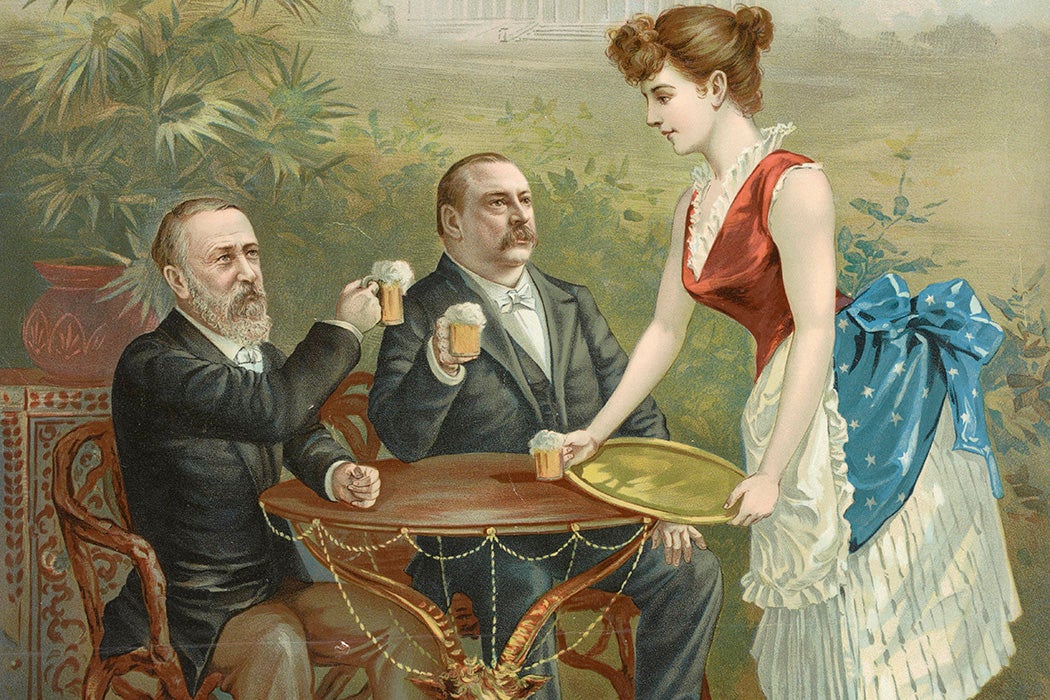
German immigrants were largely responsible for bringing beer culture to the US. Anheuser-Busch, Pabst, Schlitz, Coors, and Yuengling, for instance, were all founded by German Americans. These giants of the industry today (minus Schlitz) emerged victorious from the wild and foamy “beer wars” of the late nineteenth century.
Historian Braden Neihart explores that ferocious competition in a case study of Rock Island, Illinois.
“Brewers fought constantly for market share on multiple fronts, through price dropping and undercutting each other with little concern for the immediate fallout. The end goal was survival, and the casualties along the way were the cost of sustaining business.”
In 1886, Rock Island’s three major local breweries produced a total of 80,000 barrels of beer. This was enough, Neihart figures, for an astonishing 800 beers per resident annually. Because this was well-above-average, the brewers were clearly finding additional markets in nearby towns like Moline as well as in Bettendorf and Davenport across the Mississippi in Iowa.
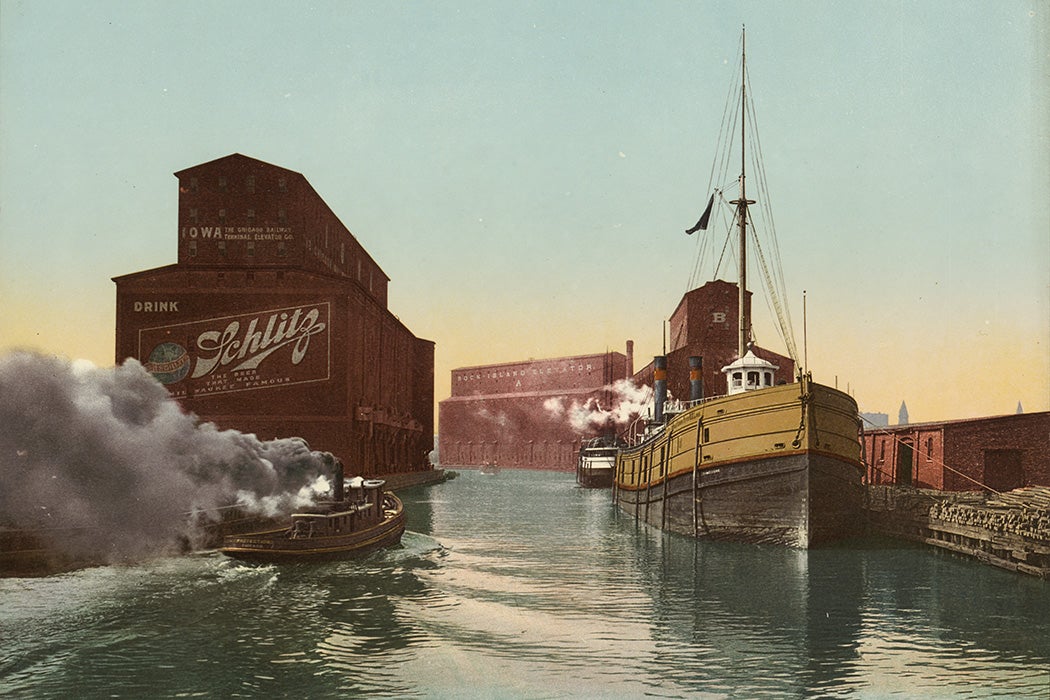
“Brewers operated within a fiercely capitalist market, restrained by few rules and characterized by high risk,” writes Neihart, noting that the competition was both homegrown and from big beer cities like Peoria, Chicago, and Milwaukee.
Locally, the Rock Island Brewing Company (RIBC) ended up buying its competitors, Atlantic Brewery, City Brewery, Rock Island Brewery, and Junge’s Bottling Works, by 1894. But then, in early 1895, Milwaukee-based Schlitz Brewing Company started rolling its barrels into town. On the road to becoming the nation’s largest beer producer, Schlitz dropped the price of its barrels from $6 to $4. The RIBC was forced to follow suit, though the price was ruinous for the company. The RIBC counterattacked with an advertising campaign to “Sustain Home Industry” and support local unions, which helped it weather the onslaught.
More to Explore
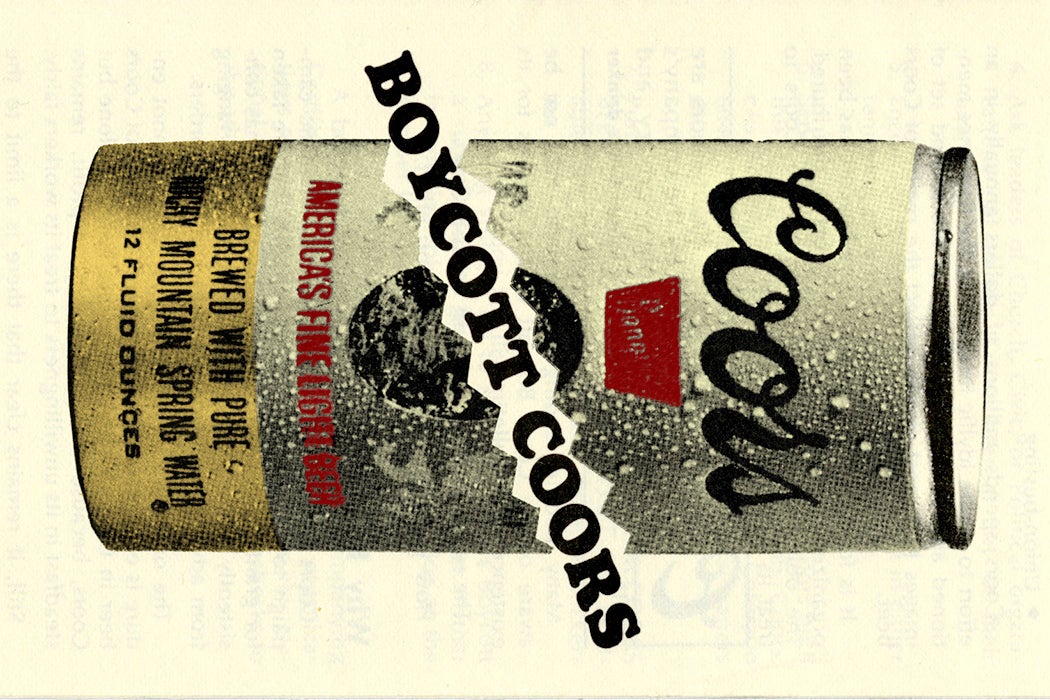
“Brewed with Blood”: The Coors Beercott of the 1970s
Drinkers, on the other hand, celebrated; in one locally notorious case, a construction worker’s rented room collapsed from all the hoarded cheap beer he was storing against an inevitable price increase.
Another strategy was to challenge a competitor’s ingredients and hence impugn their purity. German immigrant brewers came with the tradition of the centuries-old Reinheitsgebot “purity order.” This stated that “beer” was to be made from water, barley, and hops. As a form of time-honored branding, this meant that if you added anything else, you could be called out for faking it.
Challenging the purity of ingredients still goes on, as Neihart notes. Anheuser-Busch spent $30 million during the 2019 Super Bowl boasting that its Bud Light was made from rice while Molson Coors’ products, Miller Lite and Coors Lite, were made from corn syrup. Molson Coors subsequently took Anheuser-Busch to court. The Court of Appeals, which hopefully didn’t have to do a taste test, said the companies were free to list each other’s ingredients.
Weekly Newsletter
"*" indicates required fields
But back to the turn-of-the-twentieth-century strife and competition. It all came to a sudden end with the onset of Prohibition in January 1920. The Eighteenth Amendment to the Constitution prohibited the “manufacture, sale, or transportation of intoxicating liquors.” The law crippled America’s robust beer industry and culture. Local brewers like the RIBC were driven out of business, but large factory producers had the wherewithal to pivot to legal “near-beers” and “soft drinks.”
The re-legalization of beer in 1933 left the field to the beer factories that had survived the dry years. Local beer-making didn’t really recover until the 1970s, when craft beer and the microbrewery movement began. These were in many ways a protest against the bland quaffs sold by the major players. More recent years have seen the rise of “nanobrewers”—very small operations producing beer for sale—because, like all those millennia ago, you can still brew beer at home.