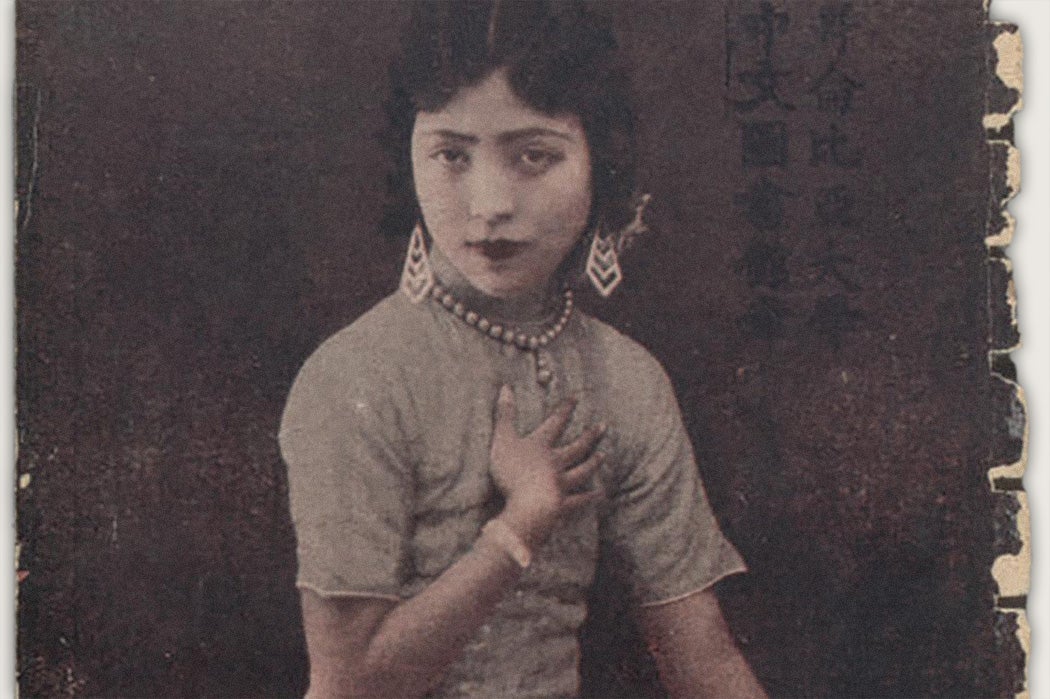
“Every female student,” the famous Chinese American author Eileen Chang once recounted, “had an issue of Linglong magazine in hand during the 1930s.”
What can this cheap, widely read magazine tell us about women’s changing roles in twentieth-century China? Historian Louise Edwards explores this question by examining back copies of Linglong, which was published in Shanghai from 1931 to 1937 and sold for just seven fen (cents).
The editors saw themselves as playing a serious role in promoting a new Chinese society. They sought to do so by “helping China’s modern women understand how to manage their lives, manage their relationships, and manage their fashion in a very serious manner,” Edwards explains.
Yet the magazine’s messages about women’s changing roles were sometimes contradictory. For instance, while editors took the existence of working women for granted, “[r]eaders were also cautioned against chatting and laughing with male colleagues.”
Throughout its run, articles were aimed at helping readers “create a new vision of Chinese modernity with just enough modesty and virtue and just enough freedom of movement and social intercourse to be both modern and Chinese.”
In other words, “Linglong’s modernity was framed around the principle of moderation and pitched neatly between the poles of Confucian confinement and American depravity.”
Unlike many other women’s journals of the time, the pocket-sized Linglong was “an explicitly commercial operation” that advertised businesses owned by its publisher. While readers could turn to Women’s Life for feminist critique and political debates, Linglong offered beauty products, articles with headlines like “How to stop your husband from straying?”, and celebrity news on topics such as Hollywood actress Janet Gaynor’s divorce.
Given earlier norms that called for “‘good girls from good families’ remaining secluded from the public sphere and segregated,” the lifestyle depicted in Linglong was undoubtedly novel for its time.
Yet Edwards also emphasizes how Linglong paired “comparatively radical” text “with modest pictures of the authors” to reinforce an editorial message about balance. As she explains, “The bad old days were too restrictive, but moralists fearing the decline of social values should be reassured.”
This contrast is visible in the very first issue, which presents two visions of womanhood. The front cover depicts a Chinese socialite with a short, crimped bob wearing “hybrid-style clothing” that combines a narrow-waisted European ballgown skirt with a high Tang collar and sleeves. The back cover, meanwhile, focuses on a Hollywood actress’s bare skin as she and her co-star are “lying prone in a near kiss.”
“The juxtaposition of alluring American actresses wearing clothes that hinted at the prospect of sex and the demure Chinese woman with her collared neckline and covered arms was standard throughout the life of the journal,” Edwards observes.
Similarly, the magazine regularly printed pictures of women in swimsuits, but the Chinese swimmers wore caps that drew attention away from their exposed limbs, and were portrayed as “keeping fit and aspiring to become the much-promoted ‘healthy beauty.’”
More to Explore

How Fashion Magazines Talked in the 1930s
“In contrast, the magazine depicted American women’s motivation for wearing swimming togs as their desire to look sexy,” writes Edwards. American swimmers were always pictured with their hair uncovered, and usually modeled fashionable swimsuits while wearing high heels.
Meanwhile, articles about local balls promoted the idea that modern women could socialize with the opposite sex in public, yet a 1931 editorial also lambasted Western women, claiming that “99 percent of western girls are no longer virgins” because of their participation in mixed-gender dancing.
“This mixed message was typical of Linglong’s approach to managing narratives about the correct (moderate but modern) balance on significant social reforms,” writes Edwards.
Weekly Newsletter
"*" indicates required fields
Depicting American culture as excessively permissive was also key to the magazine’s goal of promoting modern Chinese identity, she argues: “The magazine’s position was clear—America was indisputably modern, but it was devoid of morality. For itself, China would take another path.”
Linglong’s publication came to an abrupt end with the outbreak of war. Its last issue was published in August 1937, just days before the Japanese attack on Shanghai.
Still, Edwards sees the magazine as a valuable record of how ideas about women’s place in society that were “fundamentally radical but superficially conservative” could reach “right into the living rooms and handbags of Shanghai’s modern, aspirational women.”