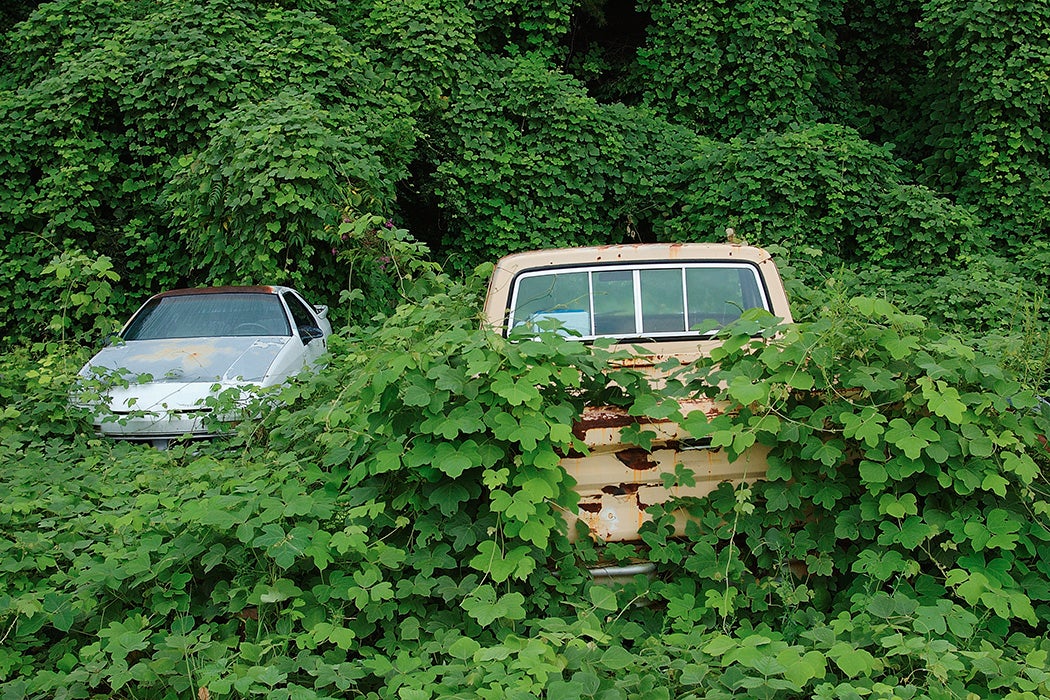
Across the American South, few plants are as recognizable as kudzu. Its vines blanket trees and power lines, turning roadside clearings into walls of green. Over time, this landscape has given rise to the story of a “vine that ate the South,” with kudzu framed as a menacing invader that swallows everything in its path. But kudzu’s presence in the South is more complicated than this myth suggests. Brought to the region to address economic and environmental woes shaped by the ghost of plantation slavery, kudzu was later abandoned as shifting needs rendered the plant unnecessary. Though its purported usefulness was short-lived, kudzu has persisted in both the landscape and the collective memory of the South.


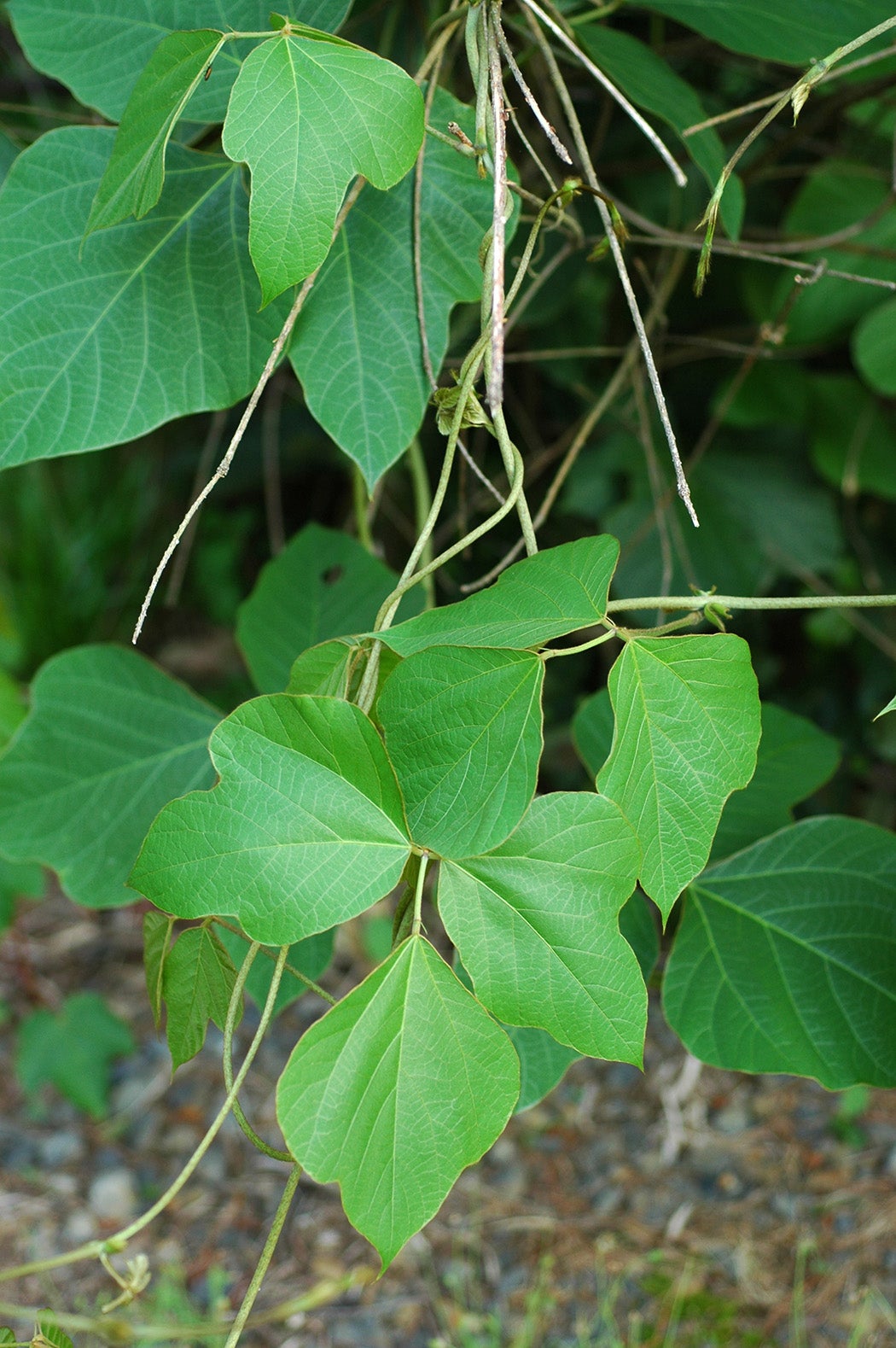
Kudzu (Pueraria montana) is a perennial climbing vine native to East Asia, particularly China and Japan. It has broad leaves, organized in groups of three, and large, tuberous roots, which allow the plant to survive and regenerate even after its aboveground growth is removed. Under favorable conditions with plenty of rainfall and mild winters, Pueraria montana can grow as much as sixty feet in a season, with some reports alleging that its vines may extend by roughly twelve inches in a single day during periods of rapid growth. Kudzu also fixes nitrogen through its symbiotic relationship with soil bacteria, allowing it to thrive in nutrient-poor or heavily disturbed soils. It is especially successful in sunny, open environments, such as forest edges, roadsides, and abandoned fields. As a result, kudzu is exceptionally skilled at flourishing in damaged landscapes.
Kudzu’s characteristics made it well suited to thrive in the southeastern United States. The plantation economy that developed in the American South institutionalized an intensely extractive relationship with the land. As historian David Silkenat argues in his book Scars on the Land: An Environmental History of Slavery in the American South, Southern planters prioritized maximizing production through enslaved labor rather than sustaining the health and long-term productivity of the land. The result was a landscape repeatedly cleared and exhausted for cotton and other cash crops.
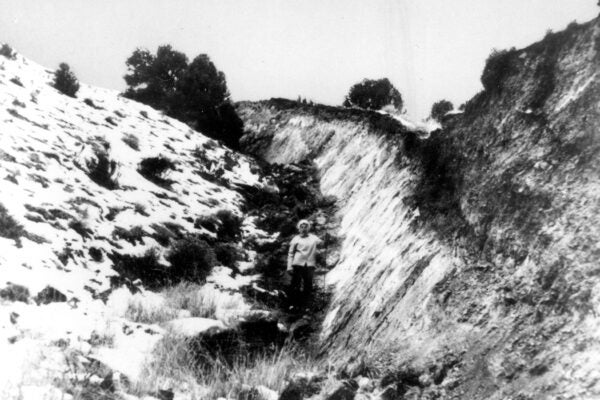
By the twentieth century, intensive farming practices had left the South dangerously vulnerable to erosion, producing depleted swaths of land where kudzu would later flourish. Kurt Kinbacher traces this history to an enduring American assumption that land was essentially limitless, citing a 1909 Bureau of Soils declaration that “soil is one indestructible, immutable asset that the nation possesses” and “the one resource that cannot be exhausted; that cannot be used up.” In reality, decades of land abuse and exploitation left behind a scarred terrain uniquely prepared for the arrival of kudzu as a fast-growing pioneer plant.
The vine made its American debut as an exotic plant at the Philadelphia Centennial Exposition in 1876, where it was displayed as part of the Japanese government’s exhibition and first caught the attention of American gardeners. Seven years later, kudzu was brought to the South as part of the New Orleans Exposition, where Southern gardeners took notice of its potential as an attractive ornamental vine they could use to provide much-needed shade for porches and gardens. By the early 1900s, pioneering farmer C. E. Pleas had begun experimenting with the vine as feed for his livestock in Florida, but by 1934, only about 10,000 acres of kudzu had been planted across the nation.
Amid the crises of the Great Depression and mass soil erosion that devastated agricultural production, the United States began to view kudzu as a “miracle vine” with the potential to save the South. In 1933, Congress established the Soil Erosion Service, which was later renamed the Soil Conservation Service and eventually became the Natural Resources Conservation Service.
More to Explore
How the Himalayan Blackberry Took Over the Pacific Northwest
The creation of this federal program helped spur a rapid expansion of kudzu across the South. Between 1935 and 1942, federal nurseries distributed over 85 million kudzu seedlings to Southern landowners, and the government offered farmers up to $8 per acre to plant the vine on their land. The newly established Civilian Conservation Corps also planted kudzu seedlings along deforested roadsides, which were particularly vulnerable to soil erosion. Popular enthusiasm grew alongside government support, driven in part by figures such as Georgia journalist and radio show host Channing Cope, who created the “Kudzu Club of America” and championed the vine as the region’s economic savior. By 1946, approximately 3 million acres of kudzu had been planted on farmland across the Southeast.
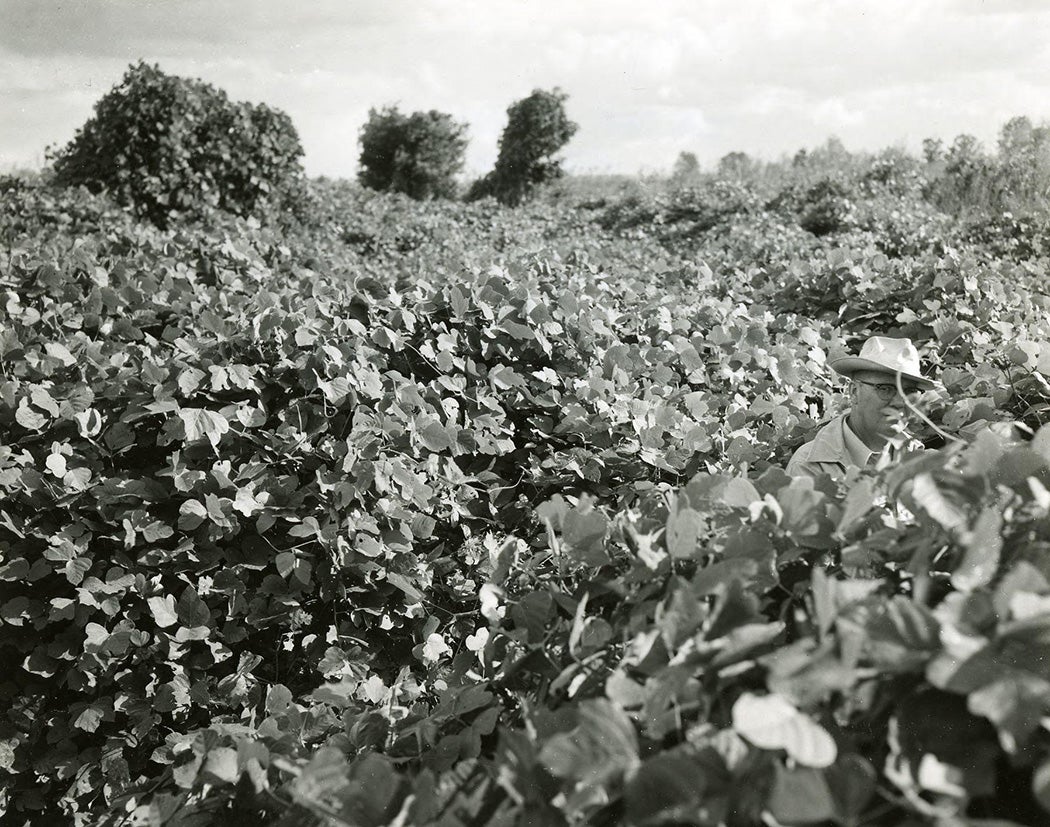
At the time, the strategy appeared successful. One study conducted at the Soil Conservation Service’s experiment station at Watkinsville, Georgia, found that “land under kudzu had nearly 80 percent less water runoff and over 99percent less soil loss than land under cotton.” Kudzu seemed to offer exactly what the South needed: a fast-growing, inexpensive plant that reinvigorated depleted Southern soil while producing a useful crop.
But as post-WWII agriculture shifted toward chemical fertilizers, herbicides, and heavy machinery, the need for kudzu decreased rapidly, and the federal government retracted its support for the crop. In 1953, the United States Department of Agriculture (USDA) removed kudzu from its list of cover plants permissible under the Agricultural Conservation Program. By 1962, the Soil Conservation Service had reversed its earlier support, recommending that the vine only be planted far from developed areas. In 1972, the USDA listed kudzu as a common weed in the South, and in 1997, it was added to the Federal Noxious Weed List, effectively prohibiting the interstate transport of kudzu without approval from the Secretary of Agriculture.
Federal abandonment of kudzu left the plant to spread along the unmanaged margins of the region, sparking exaggerated fears about its unchecked growth. Popular media and Southern folklore frequently claimed that kudzu was swallowing 150,000 new acres every year and had overtaken anywhere from 7 to 9 million acres across the region. According to naturalist Bill Finch, kudzu’s threat to Southern landscapes has been exaggerated. Finch argues that because kudzu is most aggressive along roads, railways, and forest edges, the vine has become hyper-visible in the age of the automobile. In reality, Finch notes that the reach of the sun-loving vines does not extend far beyond these brightly lit edge habitats. Data from the Forest Service tentatively confirms Finch’s hypothesis, suggesting that kudzu occupies around 227,000 acres of Southern land, just a small fraction of the millions of acres it has been said to cover.
Weekly Newsletter
"*" indicates required fields
The dramatic gap between public perception and ecological reality reveals how deeply kudzu has become embedded in Southern memory. For generations of Southerners, the vine has been a familiar feature of roadsides and rural landscapes. Writers have used it to evoke Southern identity and decline, while others have looked to the plant as a symbol of the region’s stubborn resilience. As Derek H. Alderman and Donna G. Alderman argue, people use kudzu as a metaphor for a range of social and environmental issues, and the plant has become a cultural lens through which Southerners understand environmental threats beyond the vine itself.
Kudzu’s reputation, then, tells us as much about the changing South as it does about the plant itself. Its shifting roles show how human needs can reshape the meaning and understanding of a plant. The Plant Humanities Initiative at Dumbarton Oaks asks us to consider precisely these entangled relationships between plants and people, prompting us to examine the many meanings that grow around them.