250 years ago, as the leaves changed and the weather turned colder, General George Washington and the Continental Army marched across Pennsylvania and New Jersey. In the evenings, Washington retreated to his marquee tents, which served as both the center of field command and the general’s private quarters. Through the rain and the ice, Washington camped under a canopy made of linen—trusty, waterproof, and American-made.


In the 1760s, as taxes on British imported goods rose under King George III (r. 1760–1820), American colonists turned to homespun textiles as symbols of resistance and ultimately, independence. One of these textiles was linen, spun and woven from the fibers of the flax plant. Washington’s tent was made by a Pennsylvania upholsterer rather than in private homes, but for women, spinning bees and weaving contests became a way of participating in Revolutionary activities while navigating complex gender dynamics. While cotton is king in the history of American textiles, flax played an important role in the cultural front of the American Revolution, uniting soon-to-be Americans in industriousness and self-sufficiency.
A Brief History of Flax
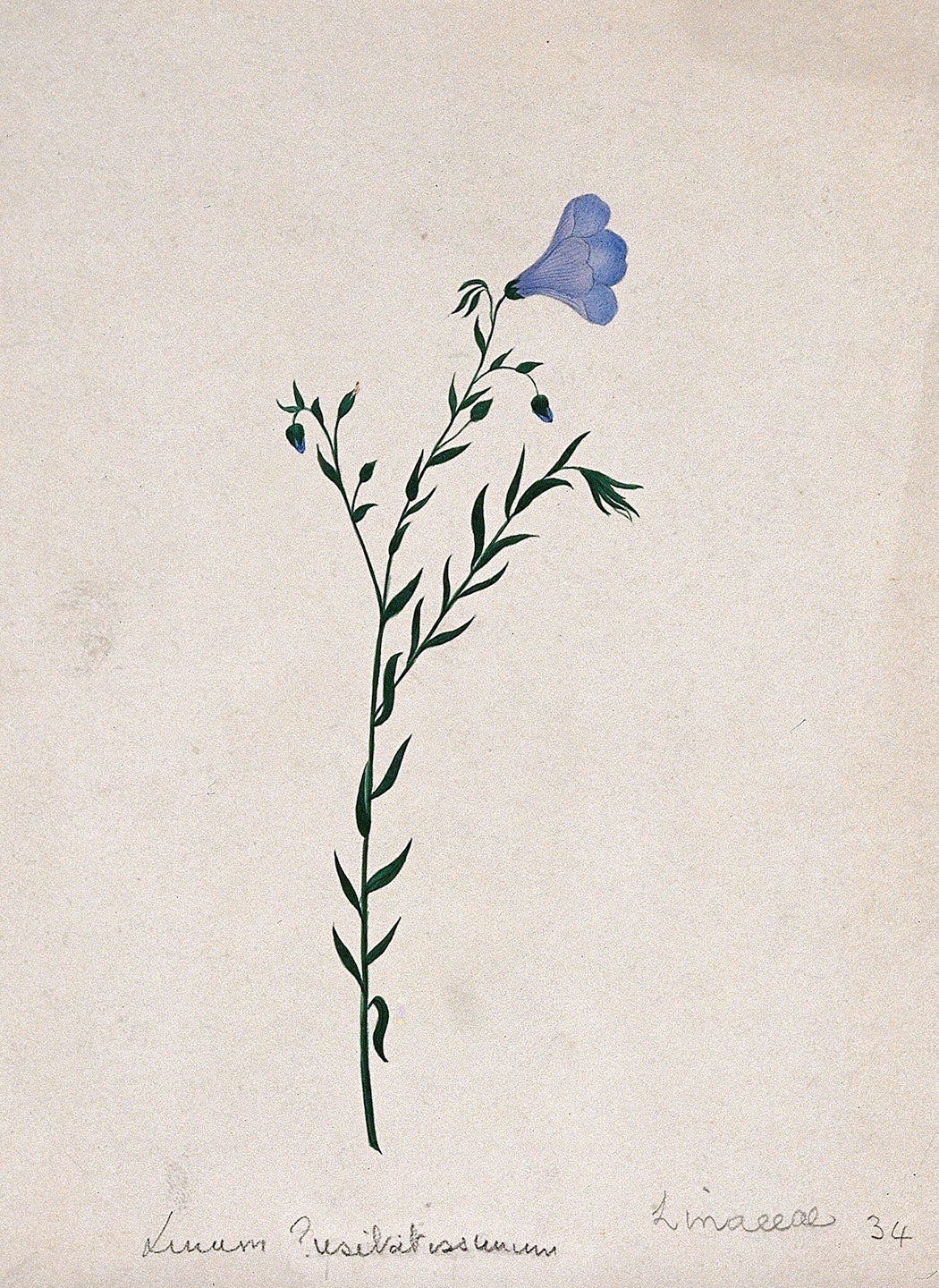
Flax, or Linum usitatissimum, is one of the oldest continuously cultivated plants in the world, with fibers discovered in the Alps dating back to 5000 BCE. It typically grows in sandy loam and temperate climates, creating blankets of slender stalks and blue flowers in the springtime. Flaxseeds can be ground and eaten or pressed into flaxseed oil or linseed oil. The former is edible and rich in mega-3s, and the latter is used in commodities ranging from paints to linoleum (a material named after the words “linen” and “oil”). But far and away, the most common use of flax is to create the durable, breathable textile—linen.
In ancient Egypt, linen made from flax was ubiquitous, appearing in everything from mummy wrappings to everyday attire. It quickly spread to Europe and beyond. In 789, the future emperor Charlemagne decreed that all households should cultivate their own flax and produce domestic textiles at home.
By the seventeenth century, the weaving of linen was a skilled craft in Europe. Peasants would typically grow, process, and spin their own flax yarn and then bring it to a local artisan—who was usually male—to weave into cloth. As the colonial world expanded, so did the linen trade. Both the Virginia Company and the Massachusetts Bay Company had unsuccessfully encouraged settlers at Jamestown and Massachusetts to cultivate flax in the early seventeenth century, but later efforts to grow the crop in North America succeeded. Linen plants were soon growing up and down the East Coast, along with the most productive colonies in the mid-Atlantic region.

The (Flax)seeds of Revolution
In seventeenth-century North America, women spun thread but did not weave; weaving was considered a skilled craft that only a man could hone and monetize. However, by the mid-eighteenth century, the gender norms of linen production were changing. The economy of the thirteen colonies developed rapidly, with complex networks of trade connecting the settlers to mainland England and beyond. Despite the common misconception of early American self-sufficiency, the average colonist spent more than one-quarter of their budget on imports.
Even so, they were no strangers to taxation that caused shockwaves in the homegrown textile economy. The Wool Act of 1699 prevented colonists from exporting their wool to protect the English textile industry. Weaving became a way for daughters to contribute wealth to the household at a time when it was unseemly for them to work in the field or accept wages. As historian Laurel Thatcher Ulrich writes, the development of weaving among American women was “neither an artifact of rural poverty nor a response to frontier exigency. It was a colonial adaptation to an expanding mercantile economy.” By the 1770s, the American textile industry was developing rapidly. As such, the act of turning flax into usable textile products became part of the daily lives of women, who, as Ulrich explains, “measured their days, not in coffee spoons, but in knots and skeins.”
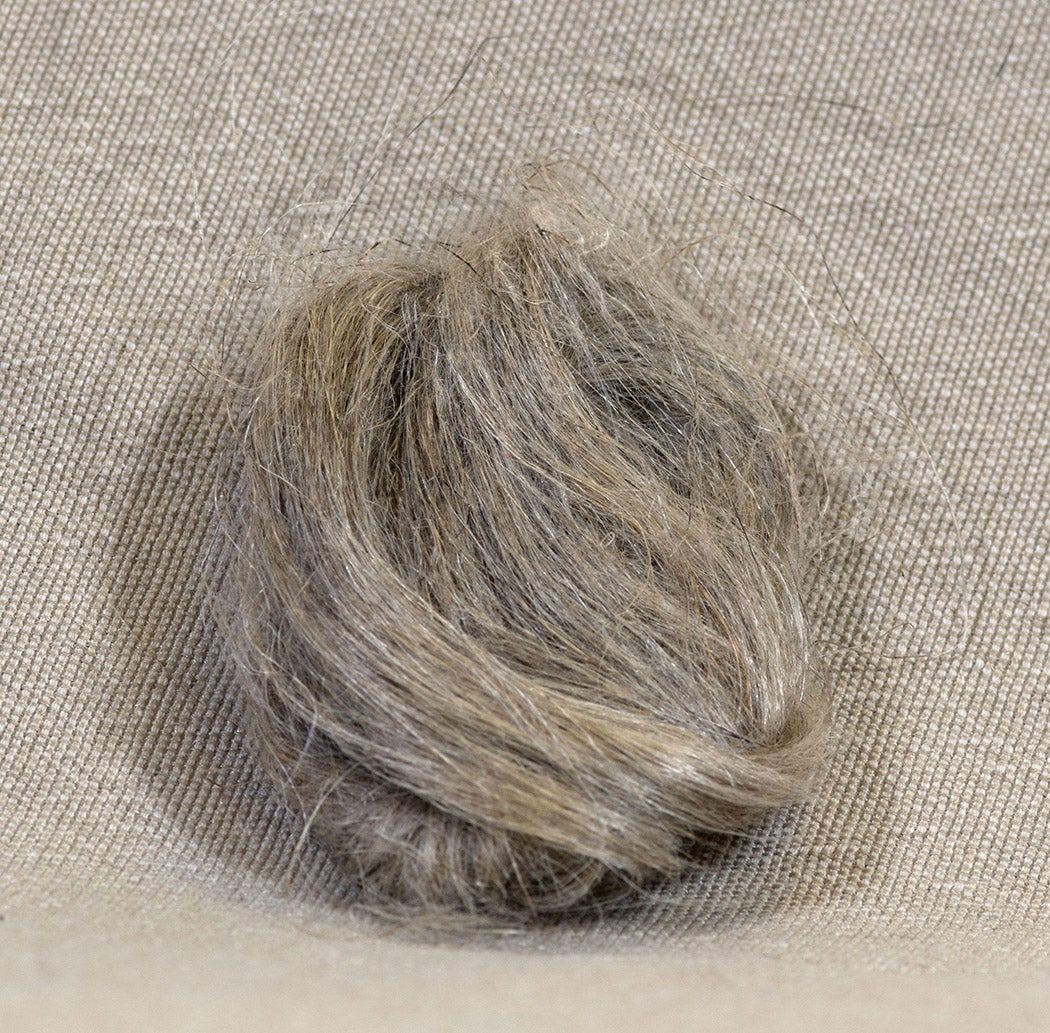
Linen was not the only useful flax product in early America. When clothing, tablecloths, and bedsheets wore out, the material was reused for two other essential colonial industries: bookbinding and papermaking. Flax was the material of choice for bookbinding thread due to its durability and strength. Nearly every book printed in the thirteen colonies was stitched with linen thread.
Before paper came to be made by pulping wood, it was crafted from old linen rags. An advertisement in The Massachusetts Spy from October 18, 1779, sought “all Linen & Cotton and Linen Rags, be they ever so small, as they are equally good for the purpose of making paper.” In fact, in 1776, before later transcribing it onto speciallyprepared vellum, the Declaration of Independence was drafted on flax paper. From textile to text, flax bound and dressed the story of America from the very beginning, making the concept of America itself legible for the first time.
Spinning Freedom
For British rule in North America, however, the writing was on the wall as plainly as it would soon be written on the flax. Growing economic dissatisfaction sowed discontent with mainland England. In 1765, the government of King George III passed the Stamp Act, which required written materials such as legal documents and magazines to be printed on London-milled paper embossed with a special stamp. The act enraged the colonial printing industry and papermaking, spurring the slogan “no taxation without representation.” This legislation was soon deemed unenforceable and repealed.
The Stamp Act was only one of many taxes and trade restrictions implemented by Britain that attempted to force the colonists to import goods at higher prices. In response, Patriots boycotted English goods, leading to shortages of textile products and the rags needed to make paper. Across the colonies, people opted to make their own goods, rejecting English rule in favor of American ingenuity. A wheelwright in Lexington, Massachusetts, reported significantly more business in spinning wheels in the lead-up to the revolution.
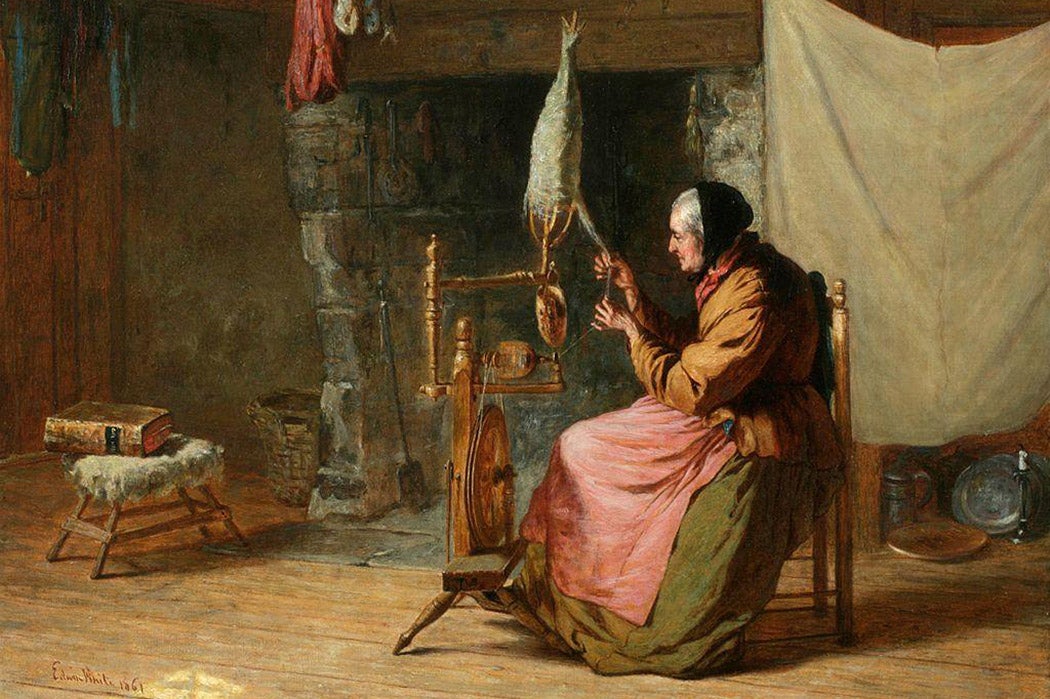
Spinning was catapulted into the public eye as a patriotic act. Eighteenth-century newspapers reported dozens of spinning bees where everyone from elderly women to young girls spun yarn and thread to do their part for the Revolution. This work could even take on a competitive edge. In 1769, two Connecticut women went head-to-head in a competition that was covered in several papers:
On the 16th Instant, the Wife of Mr. John Vaughan of Lebanon agreed upon a spinning Match with a neighbouring young woman; they began their work three Quarters of an Hour after Sunrise, and left off at Nine O’Clock in the Evening of the same Day.
After that marathon, they had spun nearly fourteen skeins of fine linen yarn.
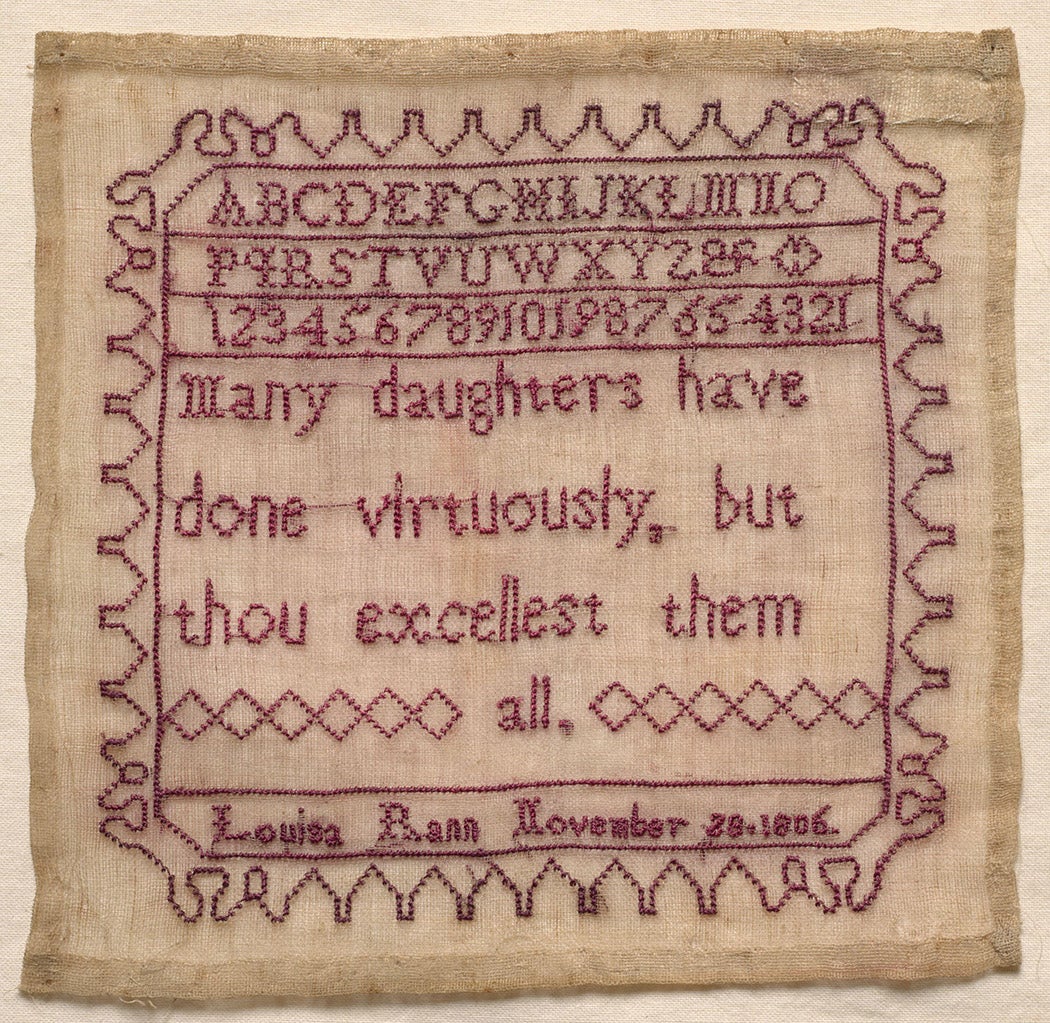
Homespun cloth was not only a symbol of rejecting British control, but a religious symbol of piety and humility in the face of European luxuries, which were seen as mere vanity. In the late eighteenth century, spinning one’s own linens was considered a sign of good character, with reference made to the biblical verse (Proverbs 31:10–31) in which the “Wife of Noble Character” “selects wool and flax / and works with eager hands” on behalf of the household.
The respectable sheen of spinning one’s own yarn from flax enabled women to engage with both revolutionary ideology and manual labor without sullying themselves in the eyes of their peers. Newspapers like The Providence Gazette commended their work, describing these women as “Daughters of Liberty” with “good reputation.” These passionate yet respectable young women working for the cause contrasted with the Sons of Liberty, the revolutionary group known for starting riots and initiating the Boston Tea Party. As historians have argued, this negotiation between Revolutionary fervor and female respectability politics revealed a deeper tension between the desire for freedom and fears of unbridled chaos.
More to Explore

How War Revolutionized Ireland’s Linen Industry
As the revolution wore on, linen became a potently political sartorial choice. Remarking on the clothing worn by the ladies at a 1769 spinning bee held on Long Island, a columnist from Massachusetts called them “true Female Patriots,” who, by wearing homespun, demonstrated the intensity of their disdain for British rule. As historian Mathilde Frances Lind writes, “people wearing cloth spun and woven at home were physically enveloped in the fabric of the revolution, bodily experiencing and displaying their allegiance to the colonists’ cause.” Wearing homespun cloth became a desirable characteristic of marriageable elite women. Just as women sought men willing to die for the revolution, so too did men seek wives who were willing to clothe themselves in it.
Flax Fortunes
Long before women held prominent roles in the workforce, their weaving was a tangible, valuable economic production that showed their active role in the early American economy. Spinning flax into linen was a way for women to express their political preferences and participate in revolutionary economic tactics. In 1774, Abigail Adams, known for her sharp intellect, wrote to her husband, future President John Adams, about the increasing political tension in Massachusetts and his proximity to it. “As for me, I will seek wool and flax, and work willingly with my hands; and indeed there is occasion for all our industry and economy.”
With the nineteenth century came the invention of the cotton gin, the exploitation of chattel slavery, and developments in foreign markets that caused the bulk of America’s textile outputs to shift to cotton. As the Civil War boiled over, cotton constituted 61 percent of the value of all US exports. Linen production largely morphed into more specialized markets for industrial products and luxury goods.
Weekly Newsletter
"*" indicates required fields
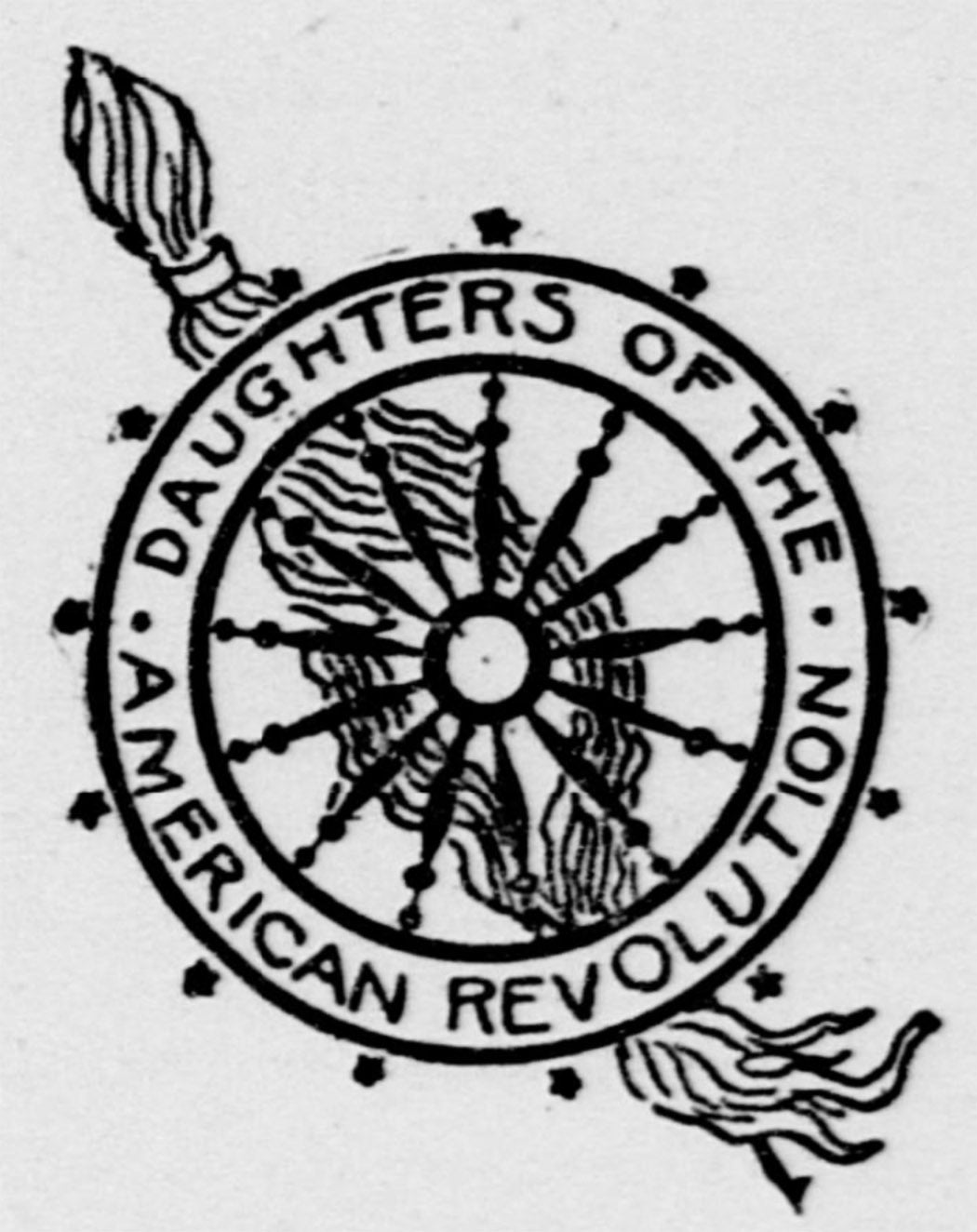
Nonetheless, linen and the “Age of the Homespun” had taken on a mythological valence. Orators and politicians referenced an earlier, simpler age when political change looked like industrious, virtuous women spinning flax yarn together. The Daughters of the American Revolution—a hereditary association founded in 1890 and run by descendants of revolutionaries—adopted an insignia that captured the patriotic spirit of Revolutionary-era women from whom they’d descended. As an homage to the women who supported the boycotts by making their own cloth, they chose a spinning wheel in front of a distaff filled with flax.
The economic and symbolic impact of flax on the American origin story is still visible today, if you know where to look. George Washington’s visage underscores its importance: linen made from flax constitutes 25% of every American dollar bill.
Flax became a product and driver of the American Revolution, enabling women to demonstrate their virulent patriotism within the gender norms of their society. The Plant Humanities Initiative at Dumbarton Oaks seeks to uncover these complexities, revealing the ways that plants tangle with and influence major geopolitical events like the founding of America.