The initial court ruling seemed like a victory for Chinese Americans in the Mississippi Delta: Chinese children could attend school with their white peers, said the judge. But the Mississippi Circuit Court’s decision in the 1924 case was soon overturned.


The first judge had accepted that Chinese students should not have to share facilities with African Americans, whom he called “wholly different from them in racial characteristics.”
Yet the Supreme Court ultimately pointed to the state Constitution’s stipulation that “separate schools shall be maintained for children of the white and colored races.” And “[y]ellow, after all, was a color,” as educational researcher Sieglinde Lim de Sánchez remarks.
Decades before Mendez v. Westminster and the landmark Brown v. Board of Education, the case of Gong Lum, et al. v. Rice shows the ideological contradictions of school segregation.
Chinese immigrants came to the Delta as agricultural workers in the 1870s—soon forming family-centered rural enclaves that contrasted with the bachelor society of urban Chinatowns.
While they lived in predominantly African American areas, Mississippi Chinese “resisted legal and customary efforts to conflate their status with that of blacks” under Jim Crow laws—a sign of the unclear racial status of Southerners who were neither white nor African American.
Community leaders “consulted with sympathetic whites who urged them to adopt ‘white’ behavior patterns in their dealings with African Americans,” explains Lim de Sánchez.
When petitioner Gong Lum fought for his daughter to be admitted to a white school, his legal argument was that the Chinese should not be counted as “colored.”
“If a Chinese family lived in one of the smaller Delta town[s], and was good friends with the Bok Guey [whites], they’d let you go to their school,” longtime Delta resident Jack Chow recalled in an interview with Lim de Sánchez.
As Chinese parents began boarding their children with Rosedale families or moving into the district, the white townspeople of Rosedale pushed back—resulting in the court case that legally barred Chinese American students from accessing white-only schools.
Sending their children to segregated African American schools was out of the question for Chinese community leaders, who considered the matter “an issue of crucial importance.”
Instead, the Mississippi Chinese found a way to have schools of their own. Baptist congregations, eager to proselytize to the Chinese community, were already offering nighttime classes to teach adults English and encourage “Americanized” domestic habits.
“The Chinese gradually realized the missions could be crucial institutional vehicles in facilitating their drive toward full participation in white society, for they provided a forum to demonstrate to whites that they were not heathen,” Lim de Sánchez notes.
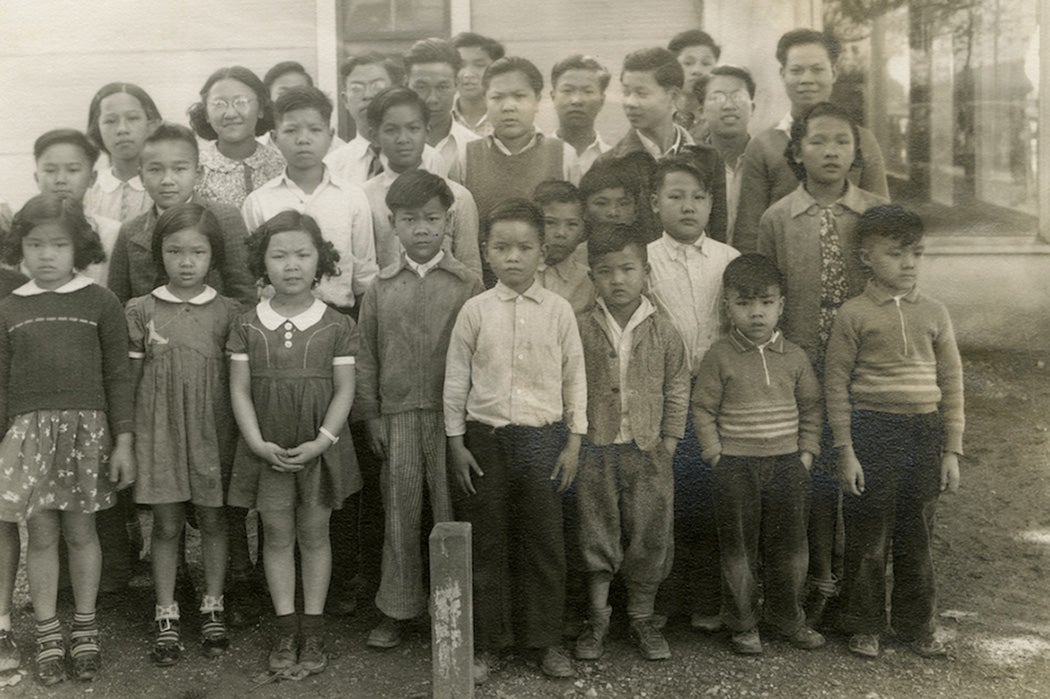
With Chinese parents’ backing, local Baptist churches opened various educational missions in the 1930s, including a single-story “shotgun shack” backed by the First Baptist Church of Greenville and a school under Rosedale Consolidated School’s Chinese Department.
More to Explore
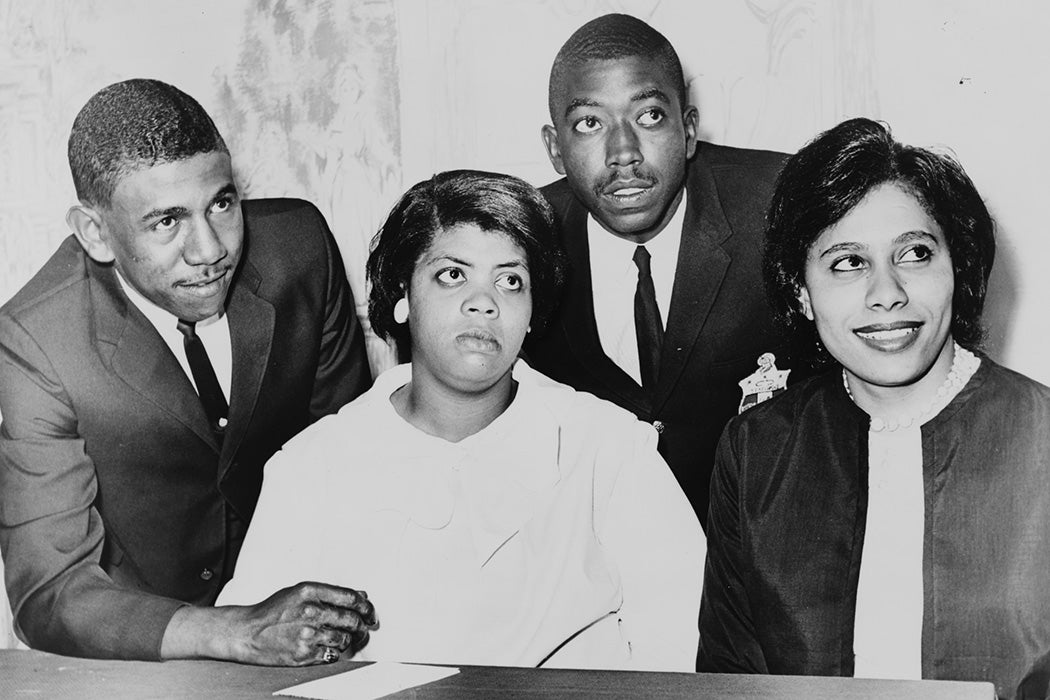
Brown v. Board of Education: Annotated
One notable institution was the Cleveland Chinese Mission School, which opened in 1937 with donations from Chinese communities as far away as New York and San Francisco and even attracted out-of-state Chinese students from places like Tennessee and Arkansas.
Though Chinese community leaders supported after-school programs to impart Chinese culture, the schools were established mainly to teach English. They did not necessarily offer high-quality instruction—the Cleveland school was not even accredited by the state.
Still, mission schools allowed Mississippi Chinese to gain social acceptance in the racially segregated South, as they could “demonstrat[e] to whites that they possessed a cultural heritage and ‘innate’ capabilities that differed from African Americans.”
This came at the expense of Chinese Americans’ relationships with their African American neighbors, as they feared “any association might reverse the acceptance they had spent years trying to achieve within the larger Delta white society,” Lim de Sánchez says.
Weekly Newsletter
"*" indicates required fields
Interracial families were ostracized, and mixed-race children were excluded from the Baptist mission schools. Instead, they attended the local African American public or Catholic schools.
Eventually, Chinese parents in the Delta realized the limitations of a separate school system, and some opted to send their older children to public schools in other states—such as California and Texas—until white Delta schools began racial integration in the mid-1940s.
But recovering the pre–World War II history of these mission schools in the South is critical to “the formation and understanding of issues of educational segregation as well as racial inequality in the United States as a whole,” Lim de Sánchez concludes.
Despite the discrimination they faced, Mississippi Chinese “successfully established alternative schools that paralleled the exclusionary white educational institutions.”