In the 2010s, after Black communities and supporters came together to protest the police killings of Eric Garner, Michael Brown, and many others, some reformers and politicians suggested that a remedy was more and better police training. From 2015 to 2018, anthropologist Jessica Katzenstein took a close look at what that might entail, observing trainings conducted at Maryland police departments.


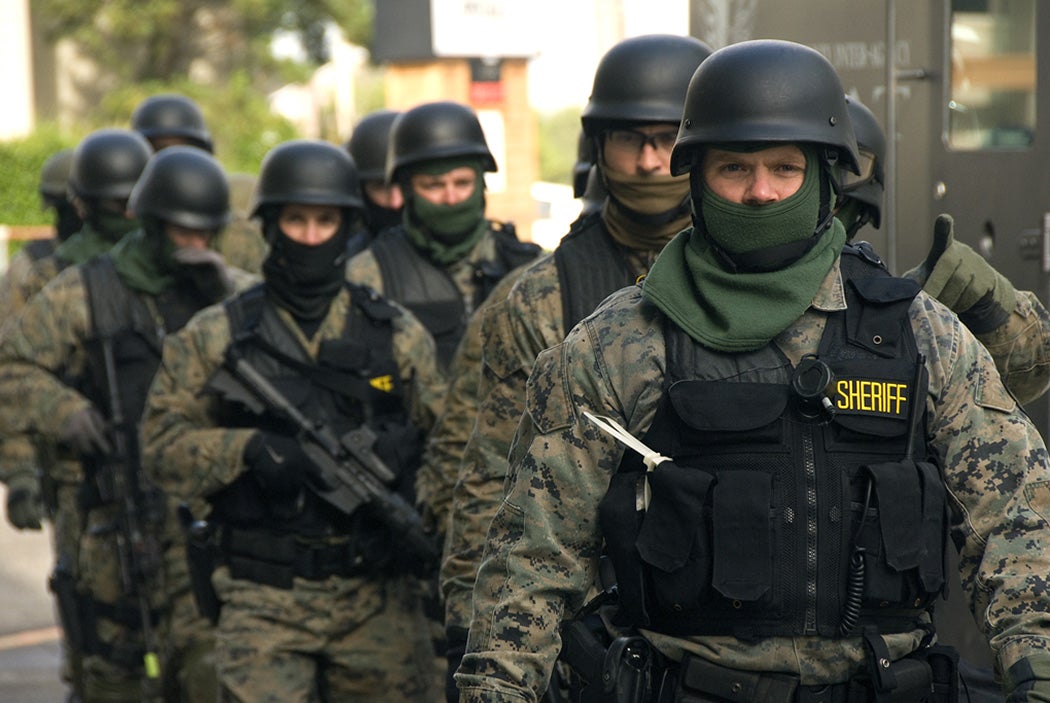
Katzenstein noted that the departments she worked with actively tried to dispel the idea that they were teaching cops to think of themselves as warriors, instead promising to help them serve the community as engaged “guardians.”
A key aspect of this effort is practicing various scenarios, such as responding to a drug overdose call. This is supposed to help officers overcome fears and implicit bias.
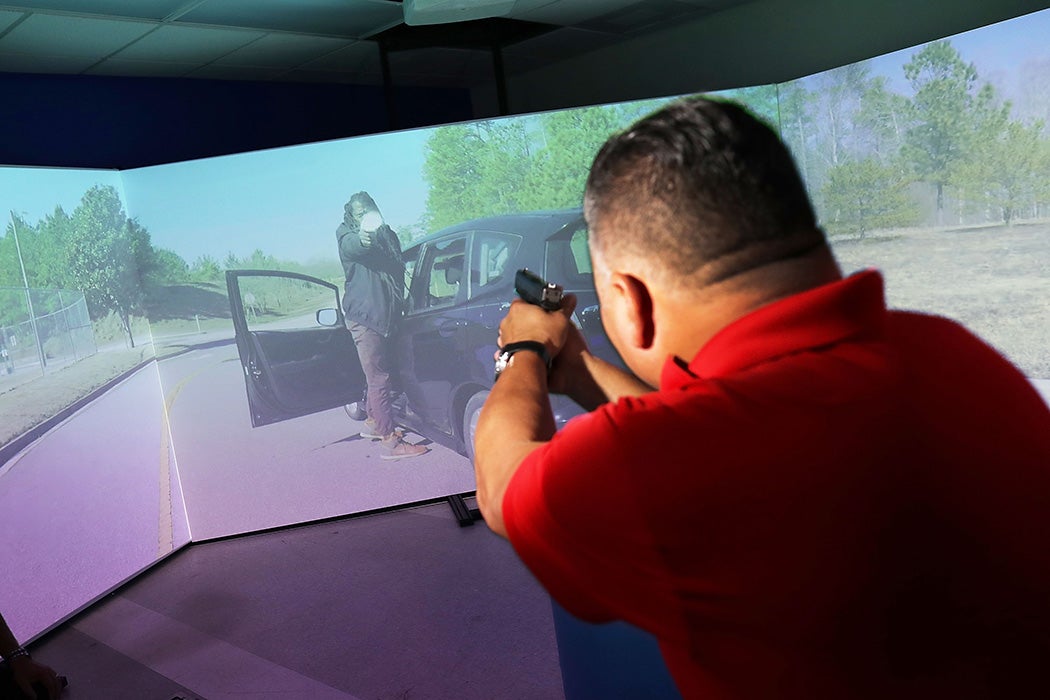
However, Katzenstein found that these scenarios are still often dramatic enactments of worst-case scenarios. In one virtual-reality simulation that Katzenstein tried out, an injured woman lies in a parking lot with a little girl nearby, seeming to play with a phone. When the trainee approaches the scene, the girl’s phone turns out to be a gun, and she shoots them.
In another VR scenario, the recruit must shoot a man who draws a gun during a traffic stop. Then, rather than immediately rendering aid, they must keep holding their weapon on him, searching him for another gun, before tending to his wounds.
More to Explore
Military Policing and Militarizing the Police
“If in real life, someone holding a gun may not necessarily shoot an officer, in the simulator they almost certainly will,” Katzenstein writes. “And can you afford to wait and see?”
One training officer explained that a situation only “breaks bad” on “1 percent of calls,” but police always need to think tactically about the possibility of being attacked or ambushed.
To avoid an escalating violent situation, recruits learned, it’s important to maintain “command presence,” a display of both strength and professionalism. In theory, this reduces potential danger. In live trainings, volunteers posing as troublemakers behaved obnoxiously but backed down in the face of an authoritative response. If the recruit seemed hesitant, they escalated into violence. Women and smaller people were especially encouraged to mimic masculine traits, lowering their voices and escalating to physical contact quickly.
Weekly Newsletter
"*" indicates required fields
Katzenstein argues that the logic of “command presence” assumes a racialized “thug,” “poised to attack the weak and unimposing, who understands only the language of dominance.”
Indeed, instructors explicitly told recruits that they would need to present themselves differently in a poorer, Blacker part of their jurisdiction than in a wealthy, white area. In the poorer area, if officers fail to maintain control “they’ll walk all over you,” one instructor claimed.
By the time Katzenstein ended her fieldwork, many people in protest movements were shifting away from calling for training and toward calling for police departments to be defunded. This only accelerated two years later when George Floyd was murdered by Derek Chauvin—an experienced Minneapolis police officer who was a field training officer for his department.