Sometimes called Cambodia’s Elvis Presley, singer Sinn Sisamouth was a household name in the 1960s and remains an icon of Cambodian pop music today. The decade marked a golden age for music in the Southeast Asian nation, which even counted its king among its avid pop singers. Yet the lives of many stars—including Sinn Sisamouth and Ros Serey Sothea—would soon be tragically cut short by war.


This musical era came to a violent end under the Khmer Rouge regime of the 1970s, which shuttered entertainment venues and killed nine in ten of the country’s professional musicians.
It might seem impossible for a culture to recover from such wholesale devastation. But while “Cambodia’s popular music culture virtually ceased to exist for a twenty-year period,” it has since made a remarkable comeback, according to ethnographer Stephen Mamula.
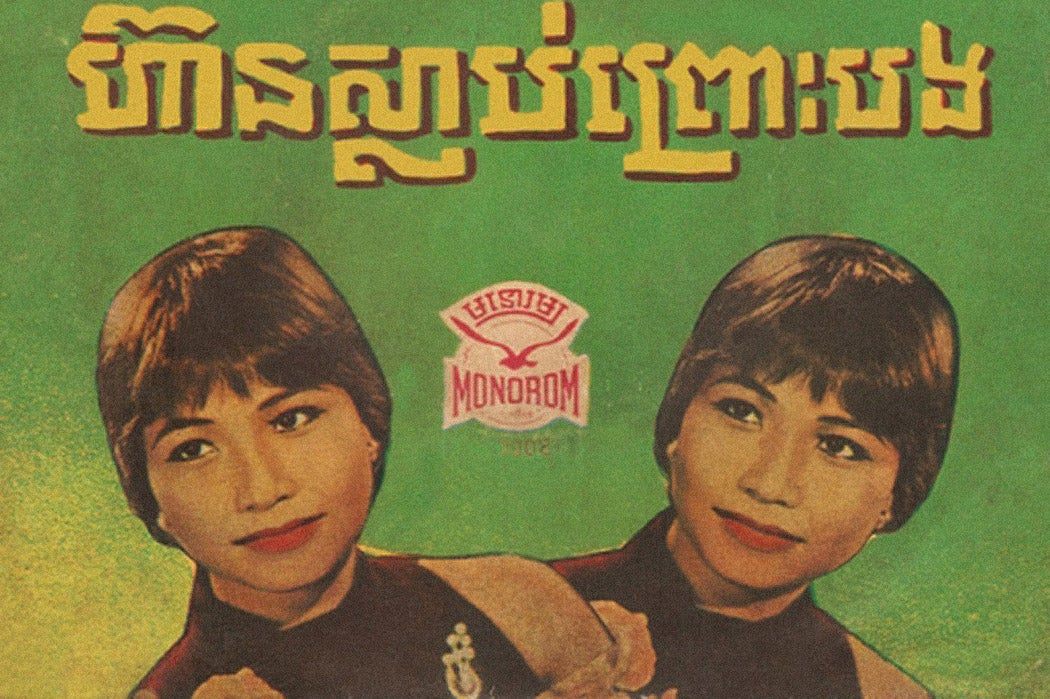
While conducting fieldwork in Phnom Penh between 2004 and 2006, Mamula was struck by the “musical vitality” of the country’s soundscape and the ubiquity of the “colorful CD jewel cases” on display.
He found that access to technologies such as television and compact discs (CDs) “has been instrumental in regenerating indigenous culture” in Cambodia.
Mass media is “circulating both traditional and popular musics, producing a degree of re-stabilization to the former and a syncretic conduit for the latter whereby vernacular, non-vernacular, native, and non-native styles are dynamically hybridized,” he writes. At the time of Mamula’s research, music producers based in Phnom Penh or the United States distributed pop music on CDs that could sell for as little as $1.50 to $2 in stores or 40 cents on the black market.
Televised broadcasts and inexpensive video compact disc (VCD) recordings of performances were also common at the time, a prevalence that Mamula attributes in part to the role of visual culture in a society with low literacy rates.
Thanks to cassette recordings that survived the war, contemporary musicians at the time could draw on the work of their predecessors and perform versions of songs from the 1950s and 1960s.
Alongside programming devoted to traditional genres like pin peat (a form of court music) and mohori (a type of folk ensemble music), the popular channel Cambodia Television Network aired covers of oldies for hours each day.
By the time of Mamula’s research, Cambodian artists had also developed a pop repertoire of their own. The versatile Preap Sovath—“[a]rguably the most popular singer in Cambodia today,” Mamula writes—has released CDs in styles ranging from folk music and lounge tunes to disco and rap. He was among the performers who appeared on the nationally broadcast program Best of the Best, where they showcase “imitative interpretations of Western styles such as disco, rap, power balladry, and innocuous love songs”—complete with choreographed dance routines.
More to Explore
Born Without a Country
Still, Mamula finds contemporary Cambodian pop a far cry from the music of the country’s golden age. “Current popular music styles in Cambodia are superficially broad—drawing heavily on Western models—and compositionally weak,” he writes. Citing “highly clichéd, 1980s electronic textures such as synthetic drums and keyboard washes,” he describes the result as having a “heavily derivative and homogenous sonic quality.”
That’s in stark contrast to musicians of the golden age, known for creatively combining Western and other artistic influences with traditional Cambodian techniques. Popular music from the 1960s blended the Khmer heritage of courtly performing arts with French cabaret songs, brass music, and bossa nova introduced by way of the Philippines.
Mamula suggests that a “body-to-music relationship inherently shared by African and Southeast Asian expressive traditions” encouraged the adoption of dance moves like the twist and the jerk. Performers also developed “a unique hybrid technique crossing African-derived hip movement with indigenous apsara gestures.” These gestures come from the centuries-old Cambodian apsara dance form, which involves complex movements of the hands, wrists, and head.
At the time of Mamula’s research, however, Cambodian artists had “not yet matched [this] syncretic and musical depth,” a gap he attributes in part to having had to learn their craft through digital media.
Weekly Newsletter
"*" indicates required fields
“Through its genocide, the Khmer Rouge effectively severed the creative link between this rich generation of popular song composers—those possessing vast professional experience and teaching skills—from the generation that followed,” he explains.
Still, Mamula concludes, “[W]ith the aid of mass-mediated communication, Cambodian popular music bearers may continue to rekindle vital connections to their past and reestablish indigenous popular music as a unique cultural phenomenon.”