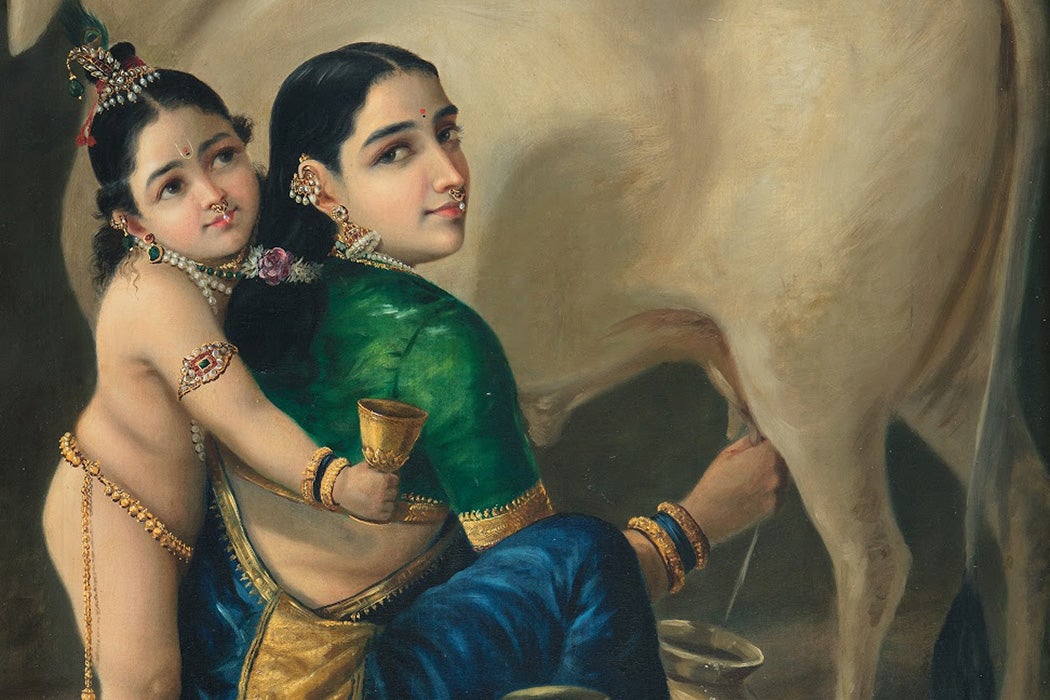
In April, a new record was set for the Indian art market when a painting by renowned Indian artist Raja Ravi Varma, created in the late nineteenth century, became the most expensive Indian artwork ever sold at auction. Yashoda and Krishna sold for 1.67 billion rupees ($17.9 million), far surpassing the previous record, held by modernist painter MF Husain’s Untitled (Gram Yatra), which sold for $13.8 million in 2025.


It’s noteworthy that an artwork painted in a predominantly Western-influenced style and depicting an overtly religious subject could command such a high price in a market where works by modernist artists have reigned for decades.
Ravi Varma, born in 1848, belonged to the royal family of Travancore, a kingdom in what is now the southern Indian state of Kerala. He challenged caste and class hierarchies by choosing to be a painter and became the first Indian artist to paint Indian subjects in a Western style. He is widely regarded as a pioneer of modern Indian painting and one of the most influential artists from the subcontinent. Varma’s popularity grew at the height of the British Empire in India, as Western-style oil painting, with its emphasis on depth and chiaroscuro, gained prominence in the country. He began by painting grand portraits of royal and noble figures from across India and later turned to scenes from Hindu mythology in his work, becoming the first Indian artist to gain a nationwide audience.
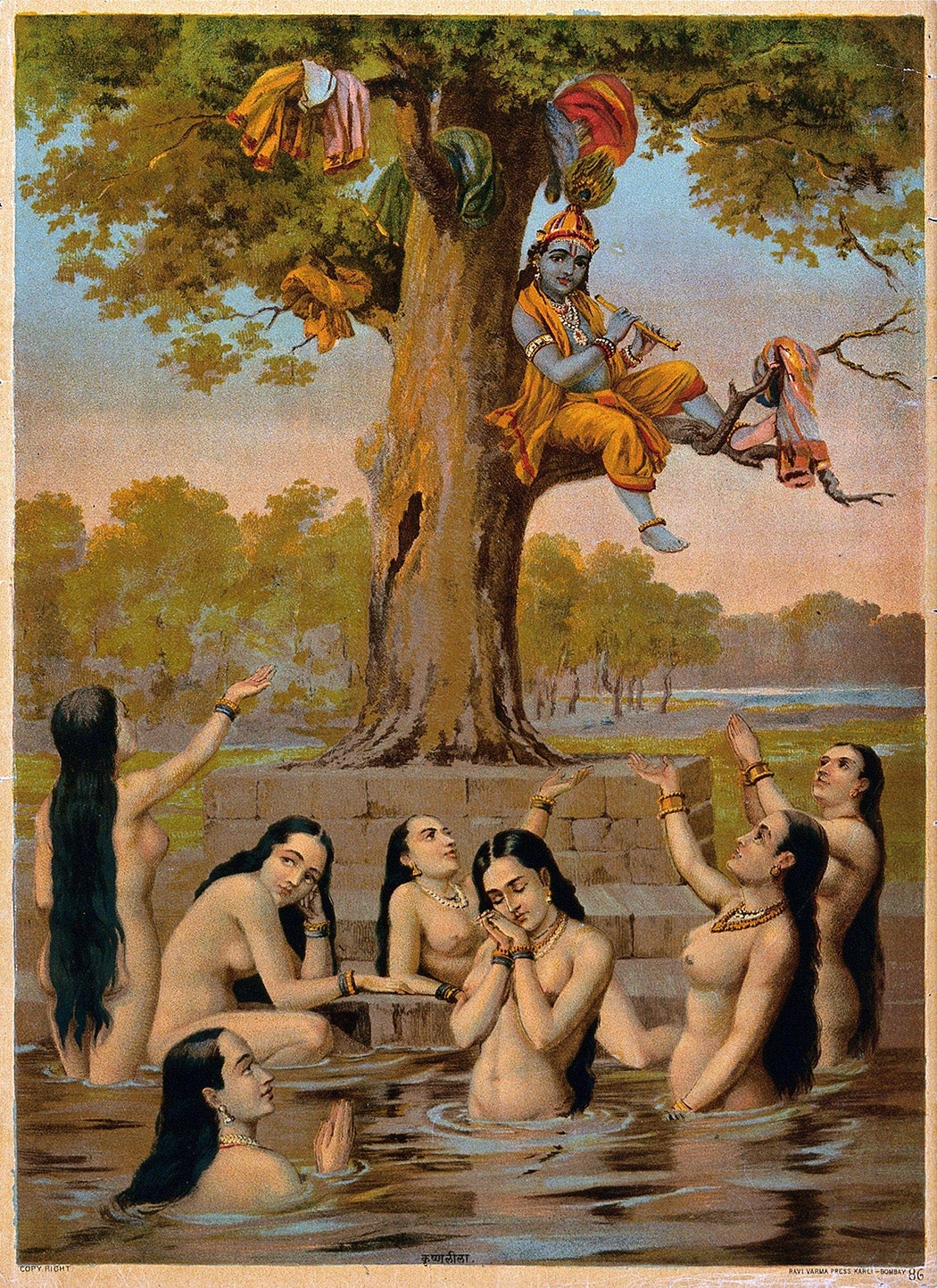
In “Indian Painting from 1825 to 1900,” published in the 2011 volume Masters of Indian Painting II: 1650-1900, independent researcher Tryna Lyons describes Varma as “the first of India’s ‘gentleman artists’” because, “at the time that he made the daring decision to learn the craft of painting, artists enjoyed roughly the same social status as tailors and cabinet makers.”
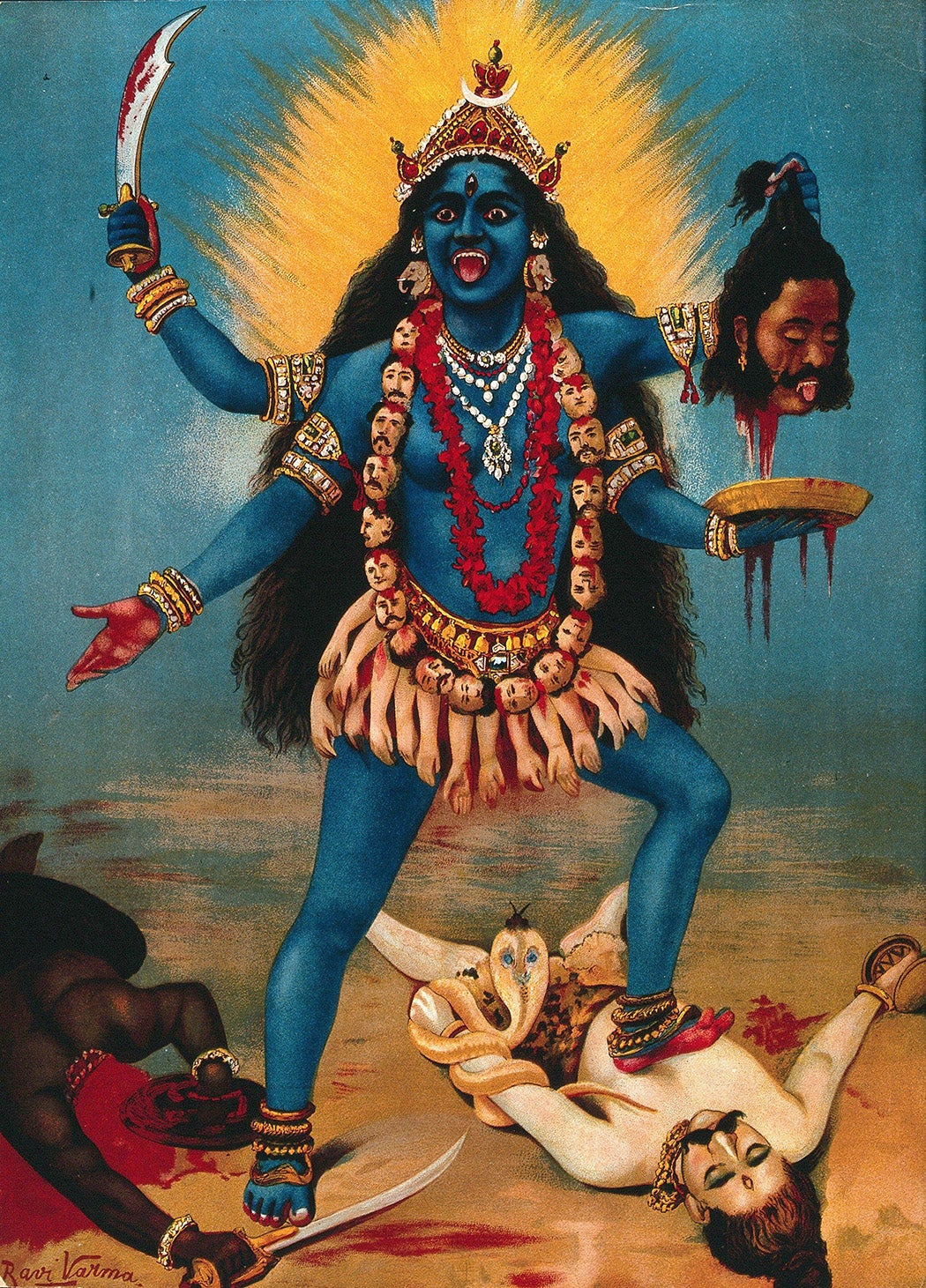
By adopting the expensive medium of oil paint, Ravi Varma popularized the foreign art of representation, which, according to Lyons, was “primarily concerned with duplicating the observed world.” Yet it was his “theatrical interpretations of Sanskrit epic and drama” that glorified scenes from Hindu mythology and made him a household name.
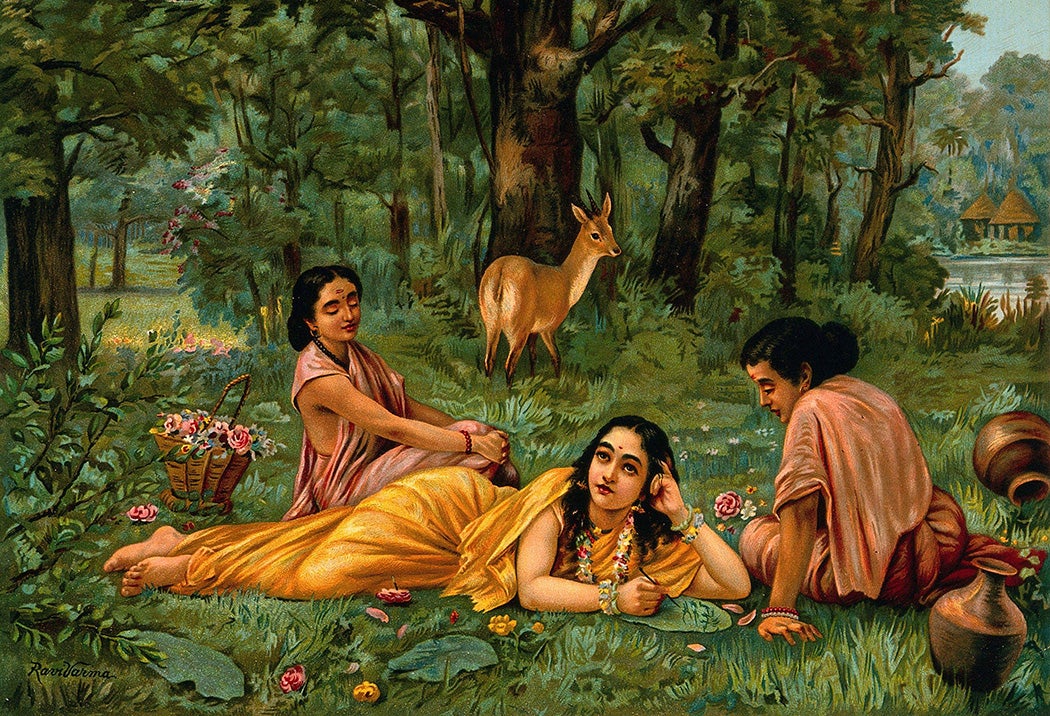
His paintings and oleographs, produced by his own printing press, came to define Hindu religious iconography in India. Professor Knut A. Jacobsen, in his 2004 article, “The Child Manifestation of Śiva in Contemporary Hindu Popular Prints,” published in Numen, argues that Ravi Varma was the undisputed founder of a genre he terms the “God poster industry.” This genre took on a vibrant life of its own and remains popular today.
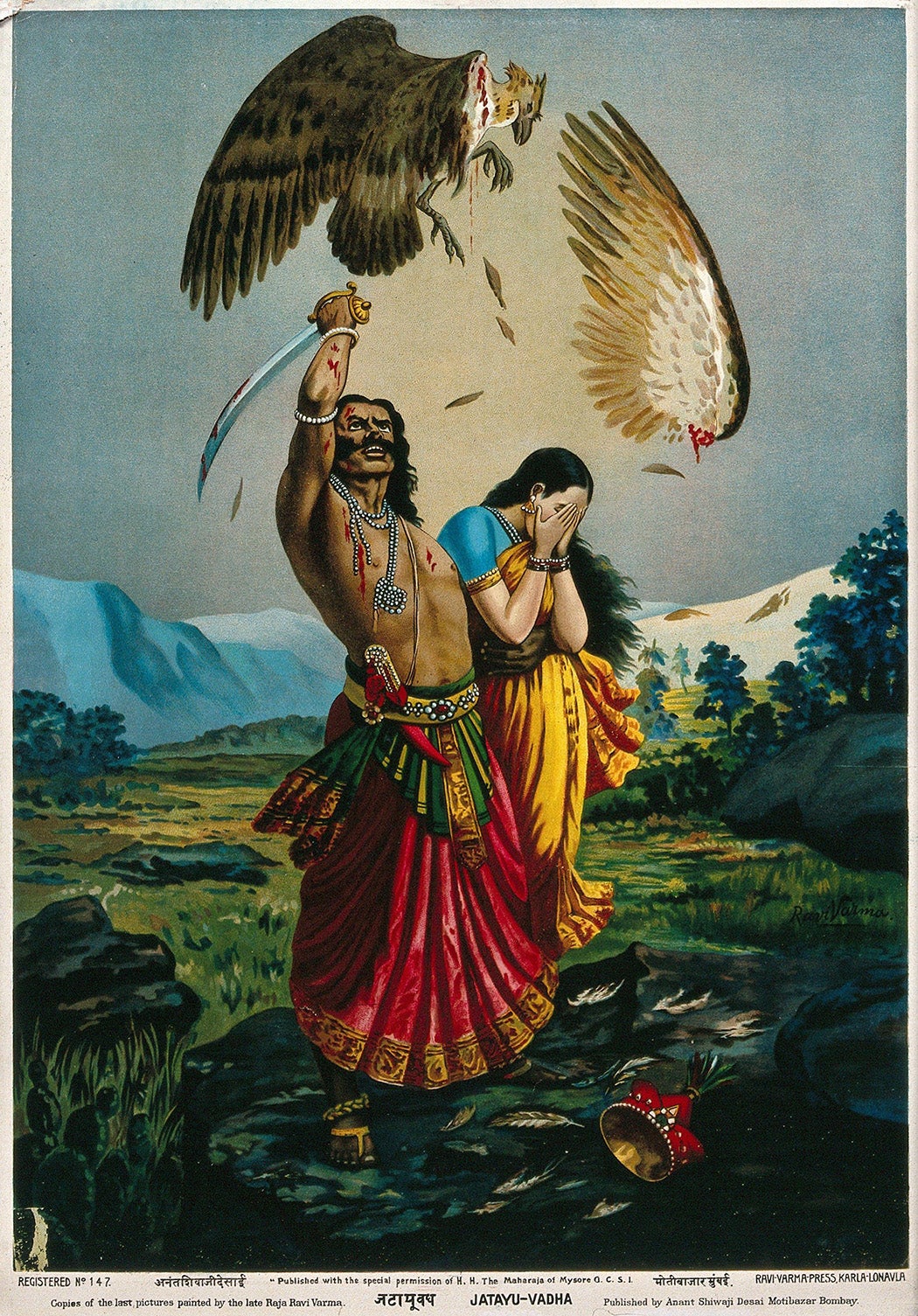
Jacobsen writes: “During the last one hundred years colourful prints of the Hindu gods, usually called God posters, have become one of the most visible aspects of popular religious culture in South Asia. There is hardly a Hindu home, shop or workshop without one print or more on the wall or on the puja table.” He connects this popularity to sacred narratives, noting that “some of the posters do indeed illustrate sacred narratives found in the Saiva Puranas. The artists re-actualise themes from the Puranas.”
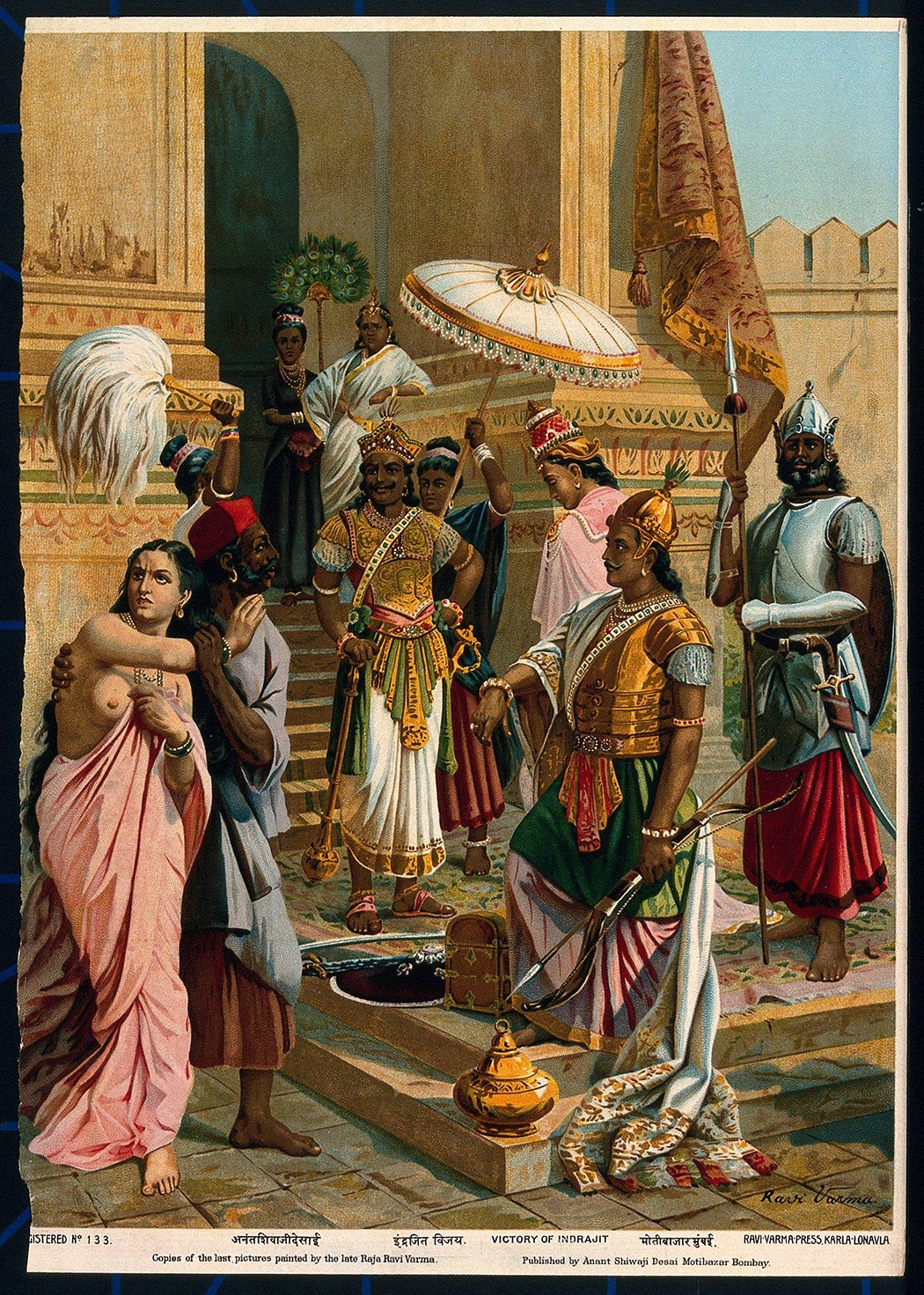
Despite his focus on Hindu religious iconography, Lyons argues that Ravi Varma also embraced the ideal of “harmony in diversity,” which came to define modern India. She cites his participation in the 1893 World’s Columbian Exposition in Chicago, where he displayed ten works featuring female subjects from across India in regional dress.
Weekly Newsletter
"*" indicates required fields
Anthropologist and art historian Christopher Pinney, however, offers a different interpretation in his 1997 article, “The Nation (Un)Pictured? Chromolithography and ‘Popular’ Politics in India, 1878–1995,” published in Critical Inquiry. He identifies the Ravi Varma Press as a main propagator of Hindu religious ideals and political ideas. He writes:
The ubiquity of Hindu propaganda is a necessary mark of the popularity of religious nationalism, and the proliferation and invasiveness of the imagery contriv[es] a sense of the irresistible tide of Hindutva … Both the Chitrashala Press and the Ravi Varma Press (which started in 1894) found themselves at the nexus of a political ferment in western and northern India. A diverse set of individuals and groups were involved in strategies which mobilised both two- and three-dimensional imagery in their attempts to control public spaces. In agitations such as that over Cow Protection and Tilak’s co-optation of the Ganpati festival, there was a less visible, but no less potent, colonisation of private domestic spaces by the products of early presses which ran parallel to the much better known struggles over public spaces and signs.
The “new media,” which included oleographs, captured the popular imagination in the early 1890s. British officials at the time saw this development as the emergence of “print nationalism.” Pinney argues that the female figures in Ravi Varma’s work helped drive its proliferation. He cites the painting Tarini, “in which it has been suggested an enveloping sari assumes the form of India (though curiously an India without Bengal). More than any other individual, Ravi Varma crystallized a putative Indian national identity in various feminine figures.”
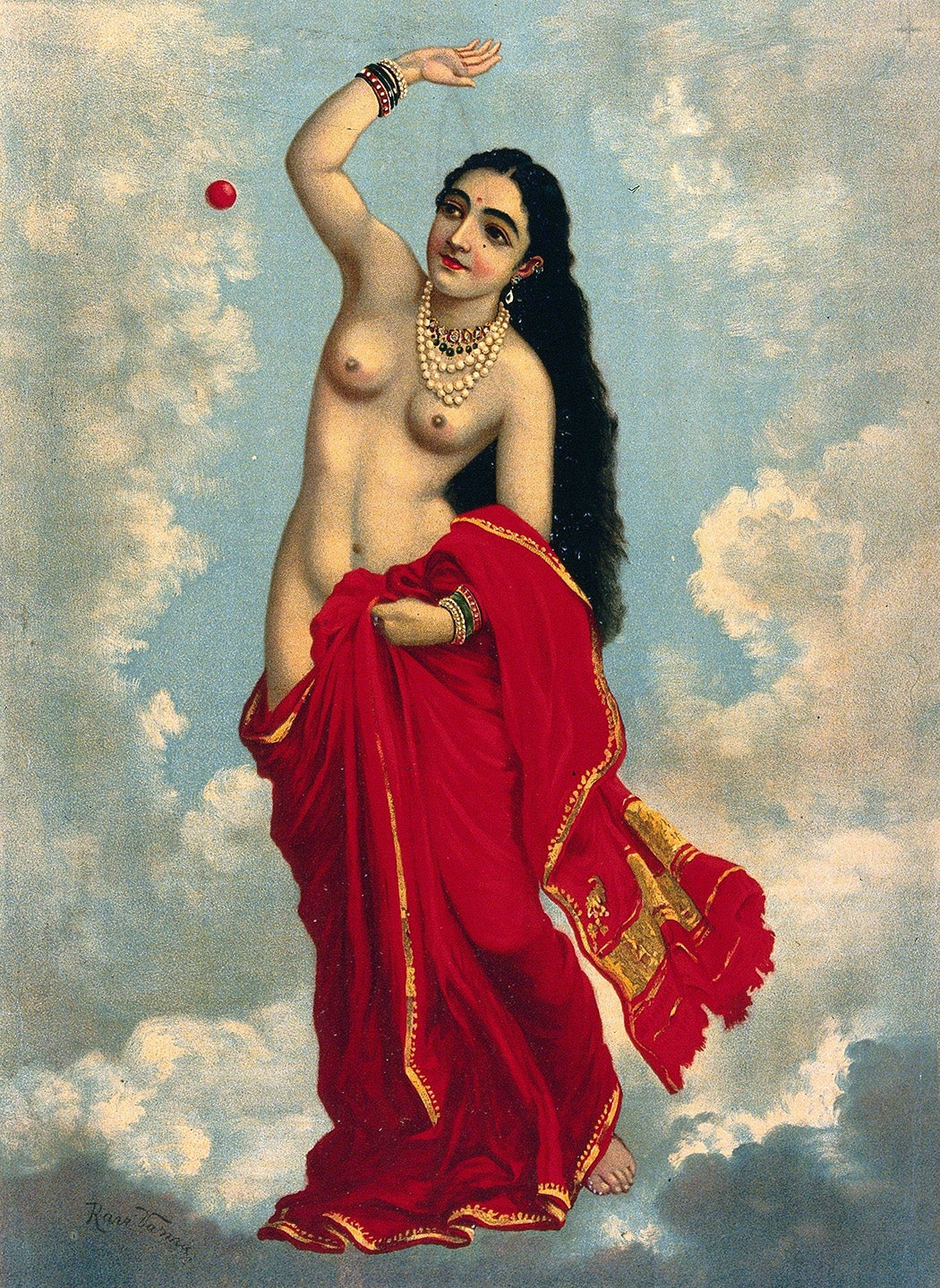
Raja Ravi Varma’s iconic status in the Indian art pantheon is undeniable. However, the record-breaking sale raises a question: Why now? The high-value sale of his painting in 2026 may reflect the changing political landscape in India, where Hindutva politics has gained influence in recent years. After all, history repeats itself, and the popularity of historical art can, too.