In 2021, a lawsuit unfolded with a peculiar plaintiff: wild rice. Manoomin et al. v. Minnesota Department of Natural Resources (DNR) positioned manoomin, or wild rice in the Anishinaabe language, as the plaintiff in a lawsuit that challenged a state permit for the construction of Enbridge’s Line 3 tar sands pipeline. The permit authorized Enbridge to withdraw roughly five billion gallons of freshwater from wetlands and aquifers for the construction of the pipeline, depleting water in a region where wild rice depends on stable levels of clean water to survive.


The case emerged at a moment when manoomin faces increasing threats from climate change and infrastructure development across the Great Lakes. This comes at great cost to Anishinaabe people indigenous to the region, for whom wild rice is central to cultural, spiritual, and economic life. According to Anishinaabe tradition, manoomin is a gift from the Creator that “wove the cultural fabric” of the Anishinaabe people, serving as the “foundation of their legends, songs, and ceremonies.” More than a resource, manoomin is a relative. Harvesting it requires entering a “relationship of reciprocity in which the rice provides sustenance for humans and in return humans take care of the plant so it can thrive.” Informed by this cultural perspective, the manoomin lawsuit advanced an unprecedented claim: that the rights of wild rice itself had been violated.
Weekly Newsletter
If rivers were the earliest subjects of the rights of nature movement, Manoomin et al. v. Minnesota DNR signals a pivotal expansion of that framework. By centering a plant, the case inaugurates a new phase of environmental protection informed by Indigenous philosophies in which plants have always stood at the center of ecological, cultural, and political life.
The Cultivation of Wild Rice
The biology of wild rice informs Anishinaabe approaches to its cultivation and preservation. “Wild rice” refers to four species of aquatic grasses in the genus Zizania, three of which are native to North America. Although wild rice’s English name invites comparison to cultivated paddy rice in the genus Oryza, the plants are botanically and geographically unrelated. The species most closely associated with the Great Lakes region is Zizania palustris, often called northern wild rice.
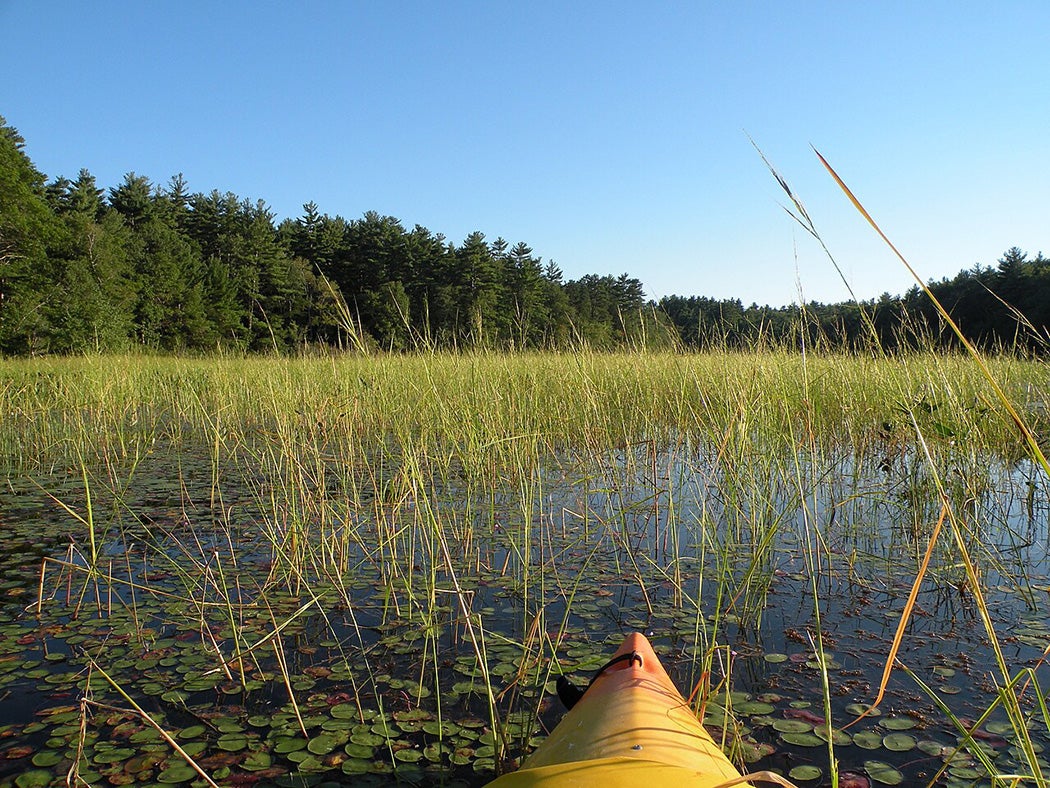
Known as manoomin in Anishinaabe and psíŋ in Dakota, Z. palustris grows in shallow freshwater lakes and wetlands. Its growth cycle is tightly bound to seasonal rhythms: seeds settle into lakebed mud in the fall, remain dormant through winter, germinate in late spring, flower in early summer, and ripen in late August before dropping grains back into the water to reseed. Mature stalks extend two to eight feet above the water’s surface, creating dense fields of grass navigable only by canoe so as to not disturb the sediment below.
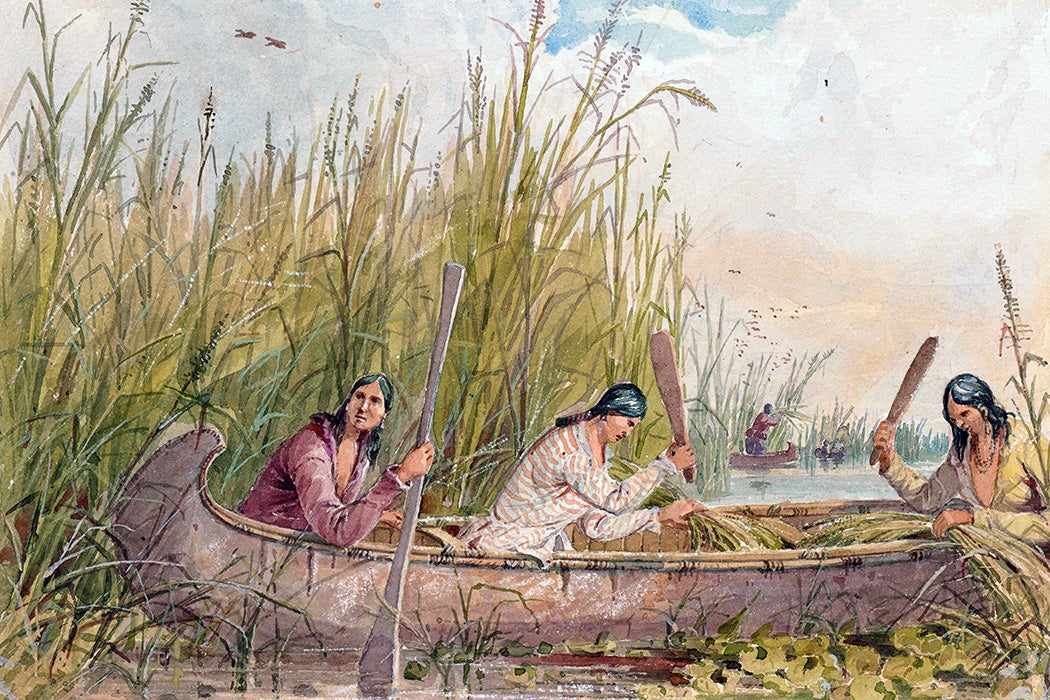
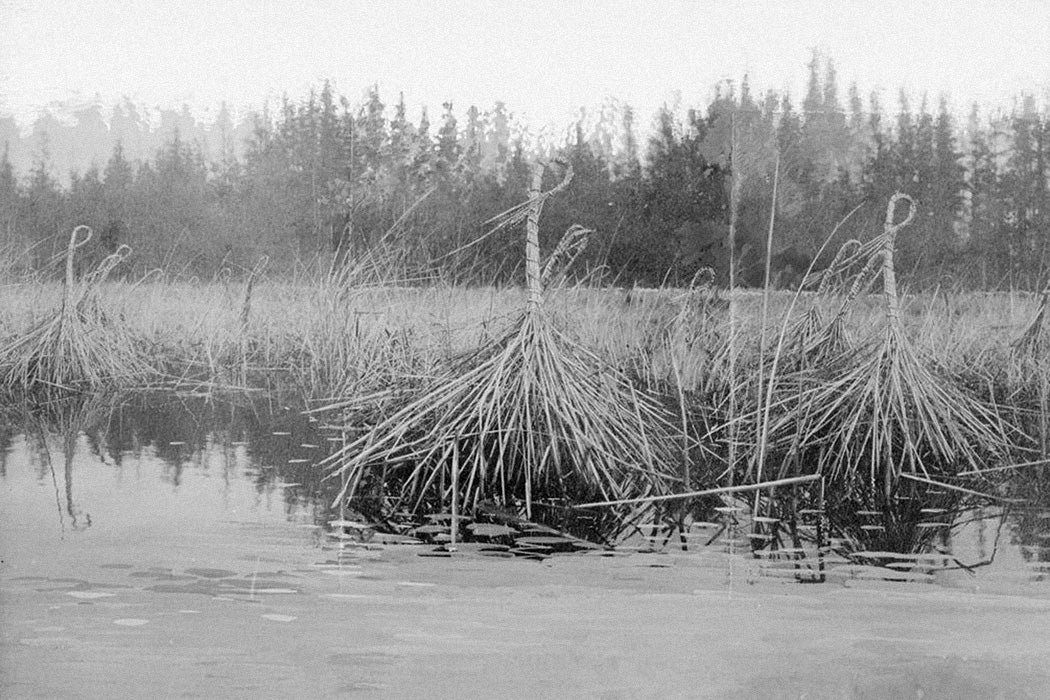
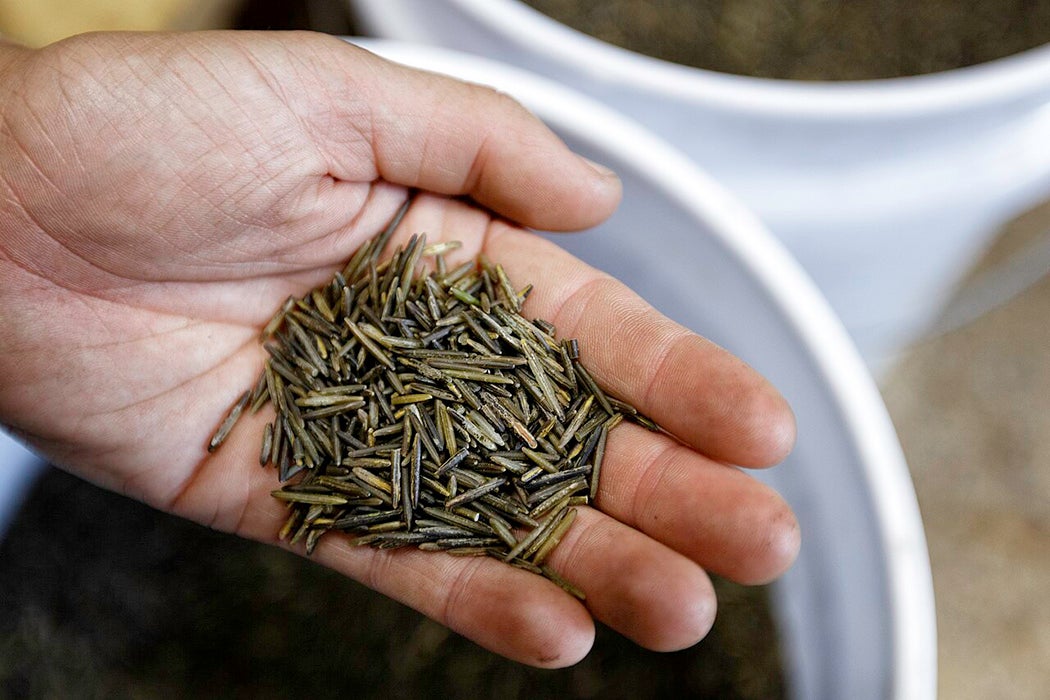
Contrary to early European assumptions that wild rice “sow[ed] itself,” the abundance of manoomin across the Great Lakes region was the product of generations of Indigenous stewardship grounded in reciprocity and restraint. Roughly ten days before harvest, Anishinaabe women paddle through the rice beds and tie stalks into loose bundles, or sheaves. This crucial step prevents mature grains from being blown away. When the manoomin is fully ripe, harvesters untie sheaves one by one, bend the stalks over the canoe, and knock the grains into the boat. In doing so, they knock some manoomin back into the water, deliberately reseeding the sediment to ensure future harvests. This process is repeated across many sheaves before returning to shore to parch, thresh, and winnow the grain. Far from extractive, manoomin’s cultivation is structured to sustain both the plant and the people who depend on it, thus embodying the reciprocal relationship that defines wild rice as relative.
Mounting Threats
Despite careful Anishinaabe cultivation, manoomin has repeatedly faced threats to its survival. Eighteenth- and nineteenth-century efforts to transplant and commodify wild rice detached the plant from its ecological and cultural context, reframing manoomin as a resource to be extracted. European colonizers viewed wild rice as a “low-cost, nearly labor-free” grain with potential to feed domestic and imperial populations. Botanists attempted to transplant it to Europe, hoping it could sustain “slaves, the poor, and [their] expanding empires.”
To colonial dismay, these efforts ultimately failed. Europeans could not replicate the ecological conditions or Indigenous stewardship practices that enabled wild rice to thrive in North America. As historian Anya Zilberstein writes, the plant confronted Europeans with the “limits of their ability to subsume local climates” and incorporate new species into imperial political economies.
A century later, more direct threats emerged. Settlers in the Great Lakes region began harvesting wild rice commercially, often gathering it too early, damaging rice beds with large boats, or using machines that removed too much grain to allow natural reseeding. Habitat destruction compounded the damage as logging, drainage, dams, and invasive species degraded wetlands across Minnesota. State regulations beginning in 1927 restricted mechanized harvesting and aimed to protect rice beds, but their effectiveness varied.
Today, threats to manoomin look different but no less serious. Climate change disrupts the seasonal rhythms on which wild rice depends, while mining and development projects threaten water quality. In the face of these rising pressures, one band of the Anishinaabe Ojibwe people has turned to a transformative legal strategy to protect manoomin: the recognition of wild rice as a non-human person deserving of rights.
A History of the Rights of Nature
The rights of nature movement represents a “legal and cultural reimagining” of how human societies relate to the non-human world. Rather than viewing ecosystems as property, the movement asserts that nature itself possesses inherent rights. The Global Alliance for the Rights of Nature defines the rights of nature as “the recognition that our ecosystems… have rights just as human beings have rights.”
The first modern articulation of rights of nature within Western legal systems is often traced to legal professor Christopher Stone. In his 1972 essay “Should Trees Have Standing?,” Stone argues that natural resources should have legal standing to sue. That same year, his argument appeared in a Supreme Court dissent for the Sierra Club v. Morton case, marking the concept’s formal entry into U.S. legal discourse.
More to Explore
Rights of Nature: A Reading List
For decades, the debate surrounding the legal rights of nature remained largely theoretical. However, in 2006, Tamaqua borough in Pennsylvania became the first place in the world to legally recognize the rights of nature in a local ordinance banning the dumping of toxic sludge. In 2008, Ecuador then became the first country to formally recognize the rights of nature through its national constitution, followed by Bolivia in 2010 with its Law of the Rights of Mother Earth. Over the next decade, courts and legislatures in Colombia, New Zealand, and Uttarakhand, India, recognized the rights of rivers as legal persons.
Until recently, such recognition centered on ecosystems or waterways. A significant shift occurred in 2018, when the White Earth Band of Ojibwe enacted the Rights of Manoomin, the first instance in which a plant species was granted enforceable legal rights as a non-human person. With this, the movement expanded beyond rivers to plant life itself.
Manoomin et al. v. Minnesota Department of Natural Resources
In 2014, Canadian energy corporation Enbridge Inc. proposed expanding its Line 3 tar sands pipeline from Alberta to Wisconsin, crossing through Anishinaabe treaty territories in northern Minnesota. Against the backdrop of Enbridge’s 2010 oil spill, the expansion raised serious concerns about risks to waterways in the Great Lakes region. Nevertheless, in June 2021, the Minnesota Department of Natural Resources issued a permit allowing the corporation to use five billion gallons of water during construction.
In response, the White Earth Band of Ojibwe filed Manoomin et al. v. Minnesota DNR in August 2021. Centering manoomin as the lead plaintiff, the suit argued that “diverting water violates the protected rights of Manoomin, specifically Manoomin’s right to clean water and freshwater habitat.” Thus, argued plaintiff lawyer Frank Bibeau, the state was “ignoring its treaty obligations and tribal laws,” and the suit was about “upholding manoomin’s right to exist and flourish as established by tribal law.”
Ultimately, the case was dismissed when the White Earth Court of Appeals ruled that the tribal court lacked jurisdiction over “unlawful activities that occur off the reservation.” However, its significance lies less in its outcome than its intervention. By naming manoomin as plaintiff, the suit translated a longstanding Anishinaabe philosophical tradition into the language of contemporary environmental law. In doing so, the case stands as a model for future legal strategies that attempt to advance the rights of nature.
The manoomin suit signals a meaningful expansion of the rights of nature framework. Whereas earlier cases focused on rivers or ecosystems as collective entities, this suit insisted that a plant species itself could be a rights-bearing subject. This shift challenges a legal tradition that renders plant life largely invisible, insisting instead that plants can be harmed in their own right. Manoomin et al. v. Minnesota DNR thus stands as a contemporary legal expression of a centuries-old Anishinaabe understanding of plants as relatives endowed with reciprocal rights and responsibilities. Informed by this perspective, the manoomin lawsuit reveals how plant life can enter the domain of law as a relational subject.
In the story of manoomin, we see a vision of coexistence that upsets the foundations of Western environmental law and asks what protection might look like if plants were recognized as participants in a shared world. The Plant Humanities Initiative at Dumbarton Oaks carries this question forward by placing plants at the center of humanistic inquiry, highlighting how deeply human societies are intertwined with the vegetal world.


,_Coventry,_RI_(39331516895).jpg)
.jpg)