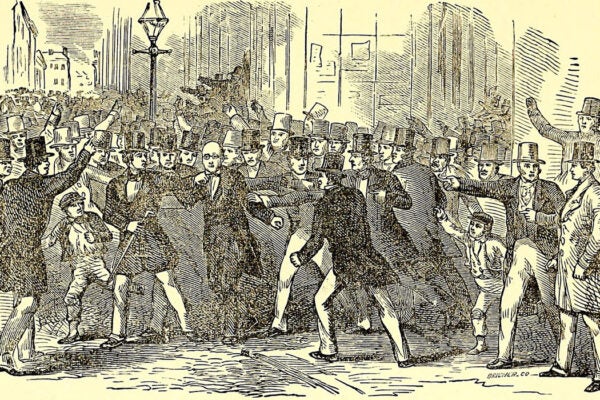
Defying Slave Hunters in Boston’s Courts
A dramatic 1836 courtroom escape shows how Black women challenged slave hunters—and Boston’s elite.
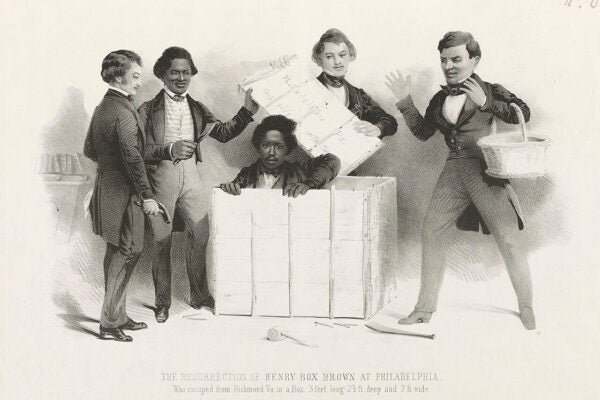
Working on the (Underground) Railroad
Born a free Black man, William Still kept the books and managed the money for the Philadelphia branch of the Underground Railroad.
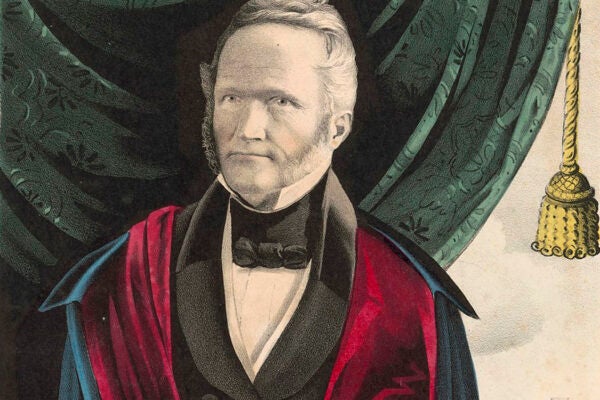
The Power of Pamphlets in the Anti-Slavery Movement
Black-authored print was central to James G. Birney’s conversion from enslaver to abolitionist and presidential candidate.
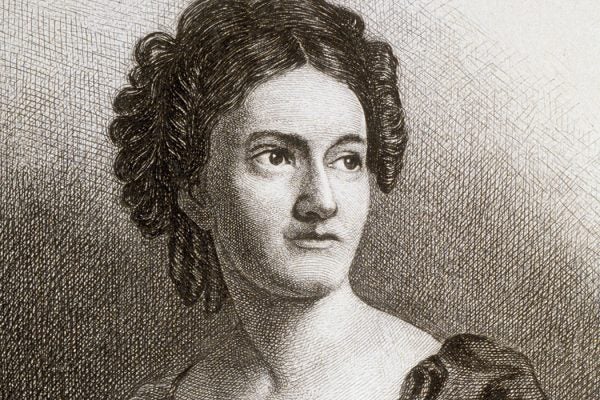
Lydia Maria Child and the American Way of Censorship
Facing ostracism by literary elites and attacks from pro-slavery mobs, an abolitionist blunted her politics.
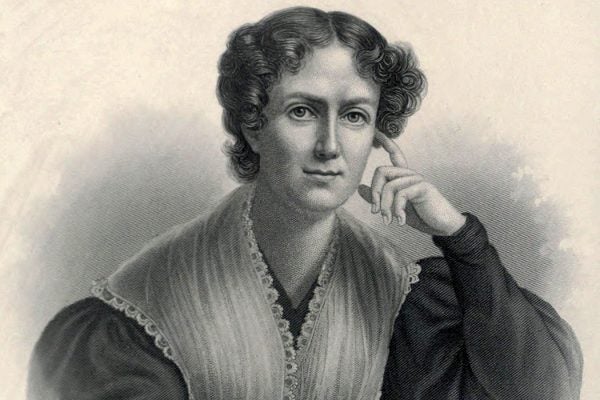
Nashoba: Not So Interracial, Not So Utopian
In the 1820s, Frances Wright established a community whose major project was the emancipation of enslaved people. Why did it crash and burn?
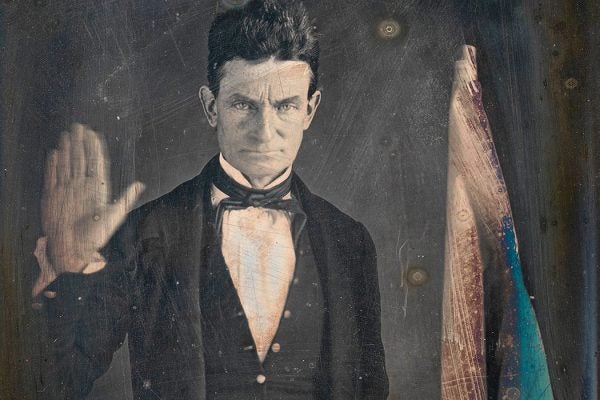
America, Lost and Found at Wounded Knee
Stephen Vincent Benét’s lost epic “John Brown’s Body” envisions a nation sutured together after the Civil War, but fails to reckon with the war’s causes.
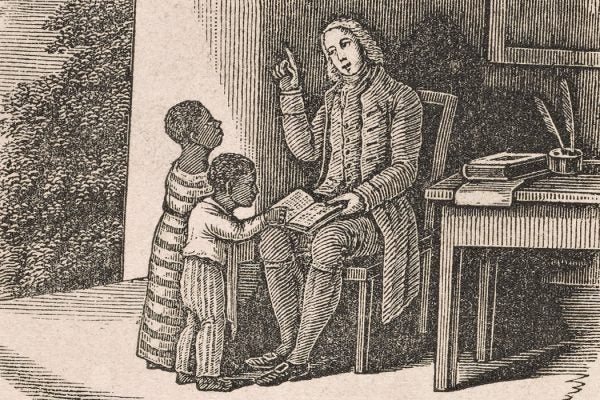
The Undercover Abolitionists of the 18th Century
Since many people considered them an off-putting radical sect, some Quaker abolitionists worked behind the scenes to eradicate slavery.
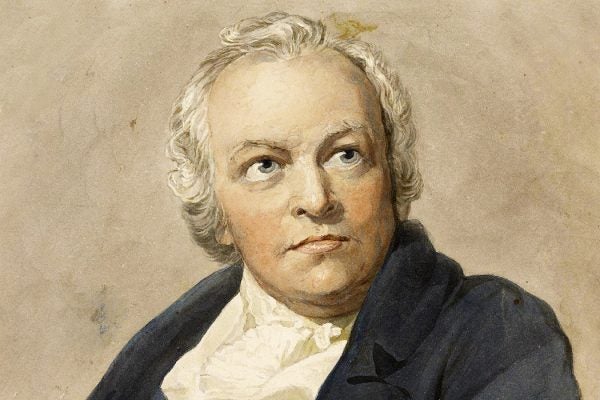
William Blake, Radical Abolitionist
Blake’s works offer an alternative to the failures of the Enlightenment, which couldn’t muster a consistent argument for abolition.
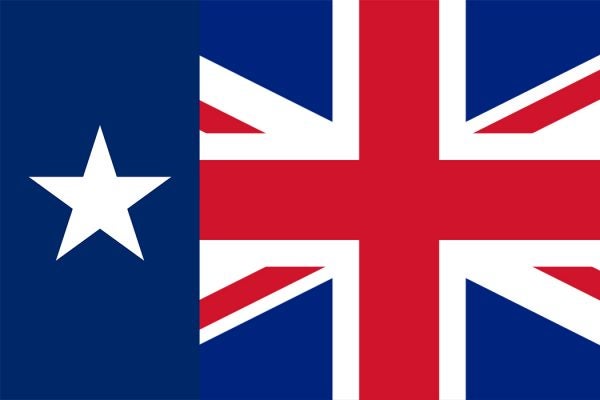
The Plan to Sell Texas to Great Britain
Stephen Pearl Andrews, a lawyer, Houston socialite, and abolitionist, concocted a plan to free Texas' slaves—with a hint of treason.
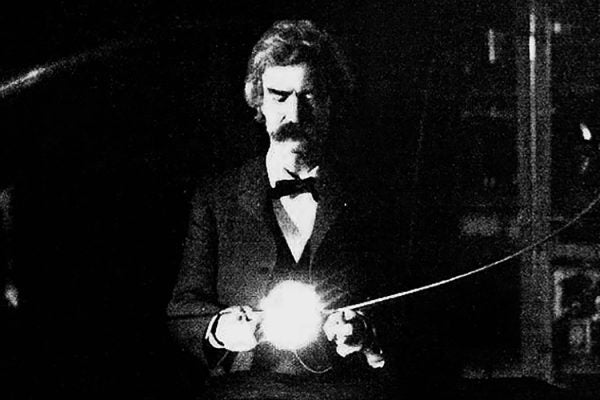
Was Mark Twain a Con Man?
A man named Samuel Clemens received funds from the radical abolitionist Boston Vigilance Committee in 1854. It may have been Mark Twain, pulling a prank.