What do spinning on a merry-go-round, dancing by a campfire, and being hit with a paddle as part of a fraternity initiation have in common? Folklorist Jay Mechling argues that they’re forms of play that can induce unusual states of consciousness. And he suggests that that’s something his fellow scholars of everyday folk practices should take a closer look at.


Mechling draws on the work of philosopher and psychologist William James. He argues that James’s main innovation was to study psychology in a way that centered individuals’ subjective experiences. In his 1902 classic The Varieties of Religious Experience, James considered the role of rituals like fasting, prayer, self-flagellation, drug use, and dance in inducing what he called mystical experiences.
Mechling points to similar methods used by both children and adults in contexts outside of religious practice. He notes a typology created by French philosopher Roger Caillois in 1958 that divides games into four classes: competition, chance, imaginary play, and “ilinx.” Caillois described this last type as attempts to “momentarily destroy the stability of perception and inflict a kind of voluptuous panic upon an otherwise lucid mind.” This includes merry-go-rounds, swings, and all kinds of spinning games—as well as dangerous childhood games involving asphyxiation. The altered consciousness achieved this way may be related to those sought by Sufi Dervishes who spin as a religious practice.
Mechling also describes his own research on a Colorado Boy Scout troop’s imitation of a Pueblo dance ritual, in which drumming and performing dances by the light of a campfire helped induce a trance-like state in participants. While these rituals were more “playing Indian” than participating in an “authentic” ritual, Mechling argues that the mental state achieved may be much the same either way.
Weekly Newsletter
Another modern American example is hazing rituals used by male groups, including college fraternities and sports teams. The events of hazing sessions or “hell weeks” separate initiants from familiar surroundings and frequently use intoxicants, blindfolding, sleep deprivation, and pain, inducing what Mechling argues is a trance-like state. More generally, of course, intoxicants from wine to psilocybin can be found in both religious and purely recreational contexts.
More to Explore
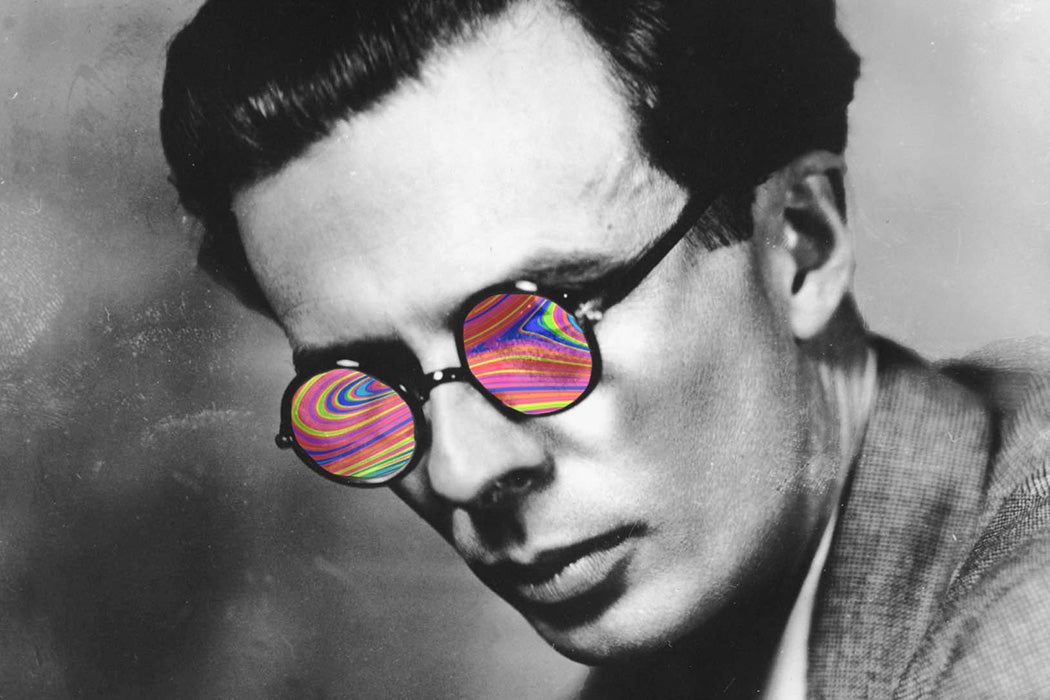
When Aldous Huxley Dropped Acid
Mechling argues that folklorists, like psychologists, should spend more time studying efforts to induce states that fall outside what James called “full sunlit consciousness.” By doing so, he suggests, researchers can learn more about the subconscious elements of our minds that inform our imagination, religious beliefs, and emotional life.
“Far from trivial, our experiences of transmarginal consciousness induced by traditional vernacular practices teach the brain how to recognize patterns and are the engine of human creativity,” he writes.
Support JSTOR Daily! Join our membership program on Patreon today.