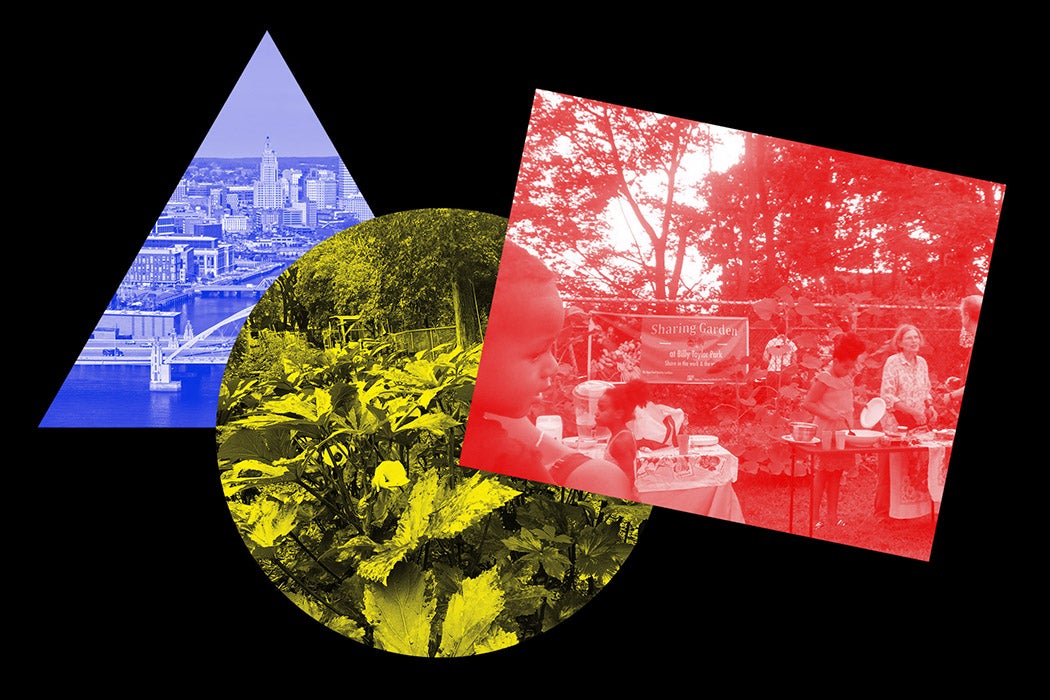
As part of our series Perspectives on Public Space, Sara Ivry speaks with Dannie Ritchie, a physician and public health advocate based in Providence, RI, and an active and longtime member of a community garden. Links to some of the research mentioned in the conversation can be found at the bottom of the page.
Transcript
Sara Ivry: Hi, folks. The places that come to mind, to my mind anyway, when I hear the phrase “public space” are community gardens and public parks. They might have playgrounds and ball fields and benches and so much more. And it’s that last part that’s so much more that we’re focusing on in this episode of the JSTOR Daily podcast on public space.
I’m Sara Ivry, the features editor at JSTOR Daily, and we’re talking now about community gardens and their vitality as a public space. With us to consider this idea is Dr. Dannie Ritchie. That’s the person you contact if you want to know more about the Sharing Garden at Billy Taylor Park in Providence, Rhode Island. Dannie Ritchie is a physician with a specialty in family medicine, and she has an appointment at Brown University. She also leads the nonprofit Community Health Innovations of Rhode Island, but she spends much of her time in the great outdoors at the community garden. Dannie Ritchie, welcome.
Dannie Ritchie: Hi there. How are you?
Ivry: I’m well. How are you?
Ritchie: I’m great. So, you don’t have to contact me to be part of the sharing garden. We just have to come. We have open hours, and I am the facilitator. I like to consider myself a garden facilitator.
Ivry: What is the sharing garden? Can you tell us a little bit about it? When was it created and why?
Ritchie: Well, I live about a mile north of Brown University, and the area is considered, what, like, the most affluent area in Providence, Rhode Island. However, there is a longstanding multiracial community that has a moderate amount of people struggling, low income, and struggling with food insecurity. There’s been a pantry in that community since 1985, a food pantry. And if you know, Jeff Bridges says in A Place at the Table, a documentary, “Charity is not the way to feed people.” Part of the initiative for establishing the garden was to think about other ways that we as a community should be able to make food for ourselves, have more control over our food. We call it the Food Relief to Food Sovereignty Project.
So, we had started a garden at our local recreation center, which again really caters to a large number of children of color. And we were asked at this recreation center to work—a number of years ago—on a survey about recreation centers. But I, as a researcher, have had a lot of experience of “Let’s ask questions and get a document created” and nothing ever comes of it. And so I was able to establish a garden in this recreation center with that that actually created the seed for us to get a Plan4Health grant through the American Planning Association. And it was an attempt by the CDC to really start to combine more the idea of public health and planning. And there was an idea of trying to merge that and have a focus in this case on food and nutrition. And so we, as a small grassroots kind of organization, were successful in getting a grant, and we were able to establish the garden. And that was in 2016, and so we’re almost ten years in.
Weekly Newsletter
"*" indicates required fields
Ivry: And who typically is involved? Who are the gardeners?
Ritchie: We want, we invite volunteers in. And the idea is that that basically anybody in the community can come in, and they get to share in the produce. We ask them to share in the work, but even just harvesting is work, because you have to prune your garden.
And we also, we have in the past been able to have students hired through the rec center, teens, to come and learn about gardening as well as culinary. And most recently, we have moved to provide meals for the children at the rec center. And that came about from our teens that were working with us.
You know, they saw the food that was being provided to the community in the rec centers and in the parks during the summer. And they just were, like, we should just make it for the community. And so that’s how we kind of developed. And, you know, a lot of times it’s so iterative. You listen to what people say, and you realize, “Oh.” And that’s the point, is to start the conversation about questioning our food systems and how we get food.
Ivry: So you’ve been with the garden since the beginning.
Ritchie: Yes.
Ivry: And so can you talk a little bit about the connection that you see between your work as a physician and your work with the garden?
Ritchie: So, I’m a social medicine physician. I did my residency program at Montefiore Medical Center. And we had social medicine, family medicine, pediatrics, and internal medicine, and I’m a family doctor. So, we’ve always understood in social medicine that policies create the conditions in which we live, so when we hear now about the ideas around the social determinants of health, there’s been a long history of physicians who have understood that and have tried to work towards that.
So, food is part of our living, right? We usually just talk about where you live, learn, work, and play. You understand that where you live can determine so much about your education, what you actually have access to in terms of food. So, I consider myself very involved in the issue around prevention. I really felt that by the time people came to see me in the clinic, it’s late. And so how do we do things to get out in front of creating conditions that people can better care for themselves and their family and their community? And that’s how I connect as far as a physician: taking care of community and moving policy and conditions towards making a healthier society and community.
Ivry: Do you see community gardens as part of a larger movement towards social justice and food equity? I mean, what kind of role do they play in democratic ideals and in the fulfillment of those ideals?
Ritchie: That’s a large question. But I would say when we talk about Food Relief to Food Sovereignty, most of it is about how… producing produce is just a small part of how you’re going to get more control over your food, but starting to think about who is the arbiter of what we eat? Why are we so dependent on large supermarkets, which are behemoths and big corporations, determining what we eat? How do we get closer to what it takes to make food? One, so that it’s safer, more wholesome, and we understand what is necessary to make that food and to think about what that cycle is.
One of the things that you start to think about when you think about grocery stores is that there’s a whole issue around, “Well, we just need more supermarkets because there’s places that don’t have supermarkets.” Well, there’s also an idea of food mirages, so that the food is there, but you can’t access it. And that’s because it’s too expensive. There’s also issues around when people are struggling to meet their day-to-day needs, it’s very hard to purchase food that’s going to go bad. You don’t want to throw that food down. You know, you might be restricting yourselves to not have fresh fruits and vegetables because of, one, the expense, but also because it just might not fit into your economic situation.
More to Explore
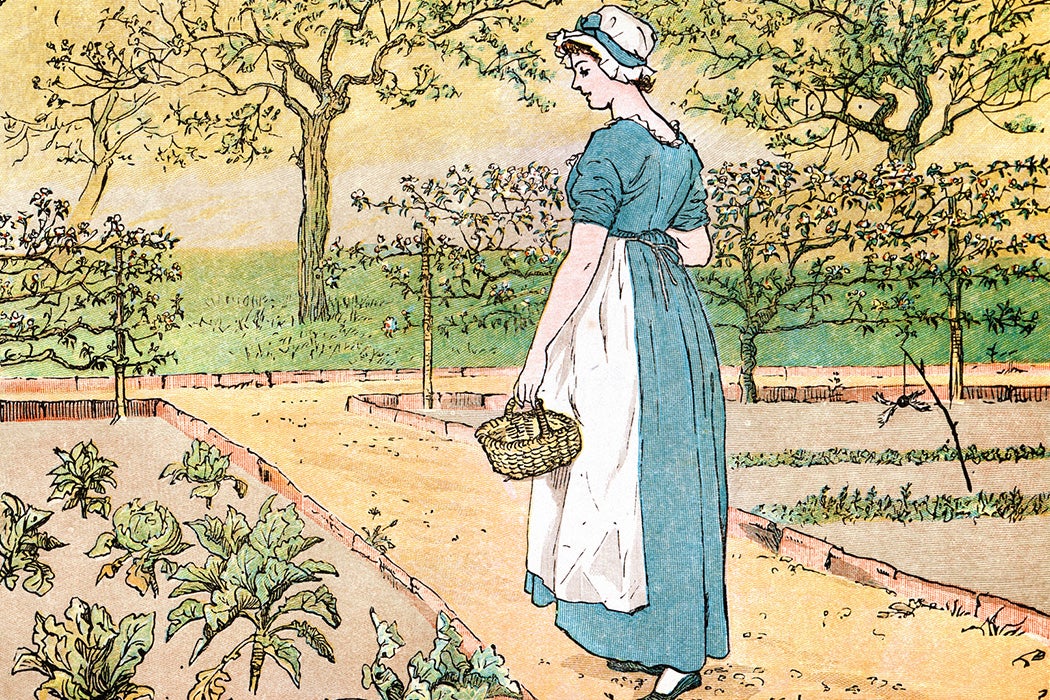
Community Gardens Were All the Rage…in the 1700s
Ivry: It’s interesting because as you were saying that, and I was thinking about when new supermarkets are built, they also tend to build enormous parking lots. So then you’re sort of colonizing this doubly big footprint, both for warehousing the food and for warehousing the cars while people are there. And this is the ideal—the wanna-be farmer in me—wouldn’t it be neat for that parking lot space instead to be like, you know, a lot full of raised beds where people could come and grow their own tomatoes and cucumbers and daffodils or whatever they want.
Ritchie: I think that’s a perfect idea. There are farmers markets, if we can make them accessible. I mean, I’m able to go to a farmer’s market in our community. And everyone’s milling around, and they’re visiting, and they’re socializing, and they’re drinking coffee while they’re shopping. It’s outdoors. It’s fresh air. So this gets to the public space and the place for people to commune.
And that’s not happening in a supermarket. And all of the other environmental issues that happen with the parking lot, with the runoff. It’s not environmentally sound.
Ivry: Another participant in a different episode of this series, Setha Low, made the point that these public spaces, sidewalks or parks or gardens are where democracy happens because it’s where you’re forced to interact with people, you know, in real life and not online and not while you’re just doing a commercial transaction, but, you know, to jostle up against them and to talk to them and, you know, maybe to trade food and recipes and what have you. Has that been your experience?
Ritchie: It has been my experience, and I can tell you, in the sharing garden, we’re inviting the community in. People are outdoors, and they’re working. If you’re walking to the garden, then you’ve just done something physically good for yourself.
But you learn stuff. I learned so much about the community, which is part of how I’m even involved, was having conversations in the community. This community is multi-generational, and they’ve gone through issues around urban renewal. A lot of people left, lost their homes, lost their businesses. And we had somebody who was returning home from forty-four years [away]. And I was just, I had the wonderful conversation. And there wouldn’t have been any other way. And if we had another podcast, I could tell you how I work on the history of the community. But that ends up being a space where we’re going to have a conversation and a commune.
Ivry: Have you always been involved with gardens even before you were in Providence, or was this a sort of new engagement in your life?
Ritchie: No, I was not always a gardener. I think that it’s because of movements for community gardening. And as I was thinking through issues of, you know, now they call it nutrition security because food security, you can be given something to eat, but it’s not necessarily wholesome. So, it was just, it was in the air, and there were other people talking about it, and there was space. And so I was thinking about how, again, how to feed people. What are other ways to start thinking about the food system? And that’s how I became involved with creating gardens.
Ivry: How expensive is it to take a lot or a part of a park and transform it into a community garden? Who are the stakeholders that you have to get on board, and what are the kind of different costs, both materially but also of other natures?
Ritchie: So, having had a relationship with the community already is a very big part. So there needs to be community buy-in, people need to know who you are, having established relationships so that when we ran into some political opposition, there were people to call on and say, “No, we want this.” So having that community buy-in, that community relationship was important. Because there’s some people who actually, because of the politics of oppression and people of color being the farmers, you know, have been the farmers, there’s a resistance for a lot of people to not be gardeners, not to farm, because they don’t want to go back to that. So, that’s a tension that has to be navigated.
It costs a lot of money. We had to build a fence. We had to build raised beds, which means bringing in soil, bringing in wood, constructing it. So, it costs tens of thousands of dollars for establishing that.
Ivry: In New York City, a lot of times, there are fights over lots. You know, somebody might want to make a community garden, and other people—other people being developers, real estate developers—might get access to hat spot of land and build a high rise. I wonder, Is that battle being waged in Providence and should gardens always wins or are there sometimes compelling reasons for a community to not cultivate that as a public space?
Ritchie: It is an argument. We need housing. And there are people who are saying, why are we using land? Now, I’m in a park, so not an issue. But there are the lots. And then there’s the garden group who’s like, we need to have more gardens. I personally, since I work on both worlds, I’m like, we just need to design housing that has gardens on the roofs, that has gardens integrated all through the design.
You know, I went to a community conversation about land that was going to be developed. And I just went and put green space on every type of building block because that can be done. But it has to be, you have to find people who will create that kind of design with that. There’s lots of places that actually really could do a lot of production of produce on the rooftop gardens.
Ivry: Yeah, it’s interesting because on my block in New York City, I live in Brooklyn, there are a lot of gardeners who, I don’t know if they’ve actually demolished the concrete on the other side of the sidewalk, like right next to the road. There’s two big panels of sidewalk, and one of them they’ve taken over, and they’re growing huge beautiful sunflowers and all sorts of wildflowers, so you have these kind of like organic pollinator gardens that are being developed by individuals, and it’s such a pleasure when you walk down the block, you just feel like you’re in a magical little meadow in the middle of an urban landscape.
Ritchie: I’ll tell you when we built the garden, we turned a flat space into three dimensions. And the sense that you have of this space that you’re moving through and communicates with you. And you see green up high. It’s lovely and it’s transformative.
Ivry: I want to ask you, what do you want to see for the garden in the coming years? What’s your dream of what could happen there?
Ritchie: I just want to make sure that it continues to be a site for communing, for feeding the community, for having the conversation in a more constant way with community about food and food systems. I always talk about how metaphorically our garden is all about growth. It’s about planting seeds and understanding our need to be in the open and cultivating ourselves, each other, and our community.
Ivry: Dannie Ritchie, thank you so much for being with us. Thank you for asking me and being interested in our work.
Ivry: Dr. Dannie Ritchie is a physician and public health advocate based in Providence, Rhode Island. You can find a transcript of our conversation, along with other episodes in this series on public space at our website, daily.jstor.org. If this is your first time engaging with JSTOR Daily, well, you are in for a treat. Our website is full of erudite and fascinating blog posts and essays on everything, from Ötzi the Iceman to the Little Ice Age. JSTOR Daily is a project of JSTOR and the nonprofit organization, ITHAKA. This podcast series is produced by Julie Subrin and me, Sara Ivry, with help from JR Johnson-Roehr and Jonathan Aprea. Thank you so much for joining us.
Editor’s Note: When this conversation was recorded, Sara Ivry served as Features Editor at JSTOR Daily. She has since moved on from the publication. We’re grateful for her thoughtful work and the care she brought to this series.