Henry Hobson Richardson is considered a defining figure in American architectural history. The Richardsonian Romanesque architectural style is named after him, an honor few architects in history can claim. Developed by Richardson and widely emulated by others, the style helped secure his reputation as one of the great American architects of the 19th century.


Richardson was born at the Priestley Plantation in St. James Parish, Louisiana, in 1838. He had a privileged upbringing in which his abilities in both drawing and mathematics were recognized and encouraged. After a brief period at the University of Louisiana, Richardson went on to study at Harvard University. While he originally considered studying civil engineering, he soon changed his focus to architecture.
After graduating from Harvard, Richardson went on to study at the prestigious École des Beaux-Arts in Paris, France. He became only the second American, after Richard Morris Hunt, to be accepted into the École when he began his studies there in 1860.
Richardson’s time in Paris, however, became a struggle after the outbreak of the American Civil War in 1861. His family’s financial support came to an end and he had to find employment in France to support his studies. This did not stop Richardson. He found employment in the architectural office of Theodore Labrouste and decided to remain in Paris until the war came to an end. When he returned to the United States for good in 1865, he settled in New York City and lived in the Northeast for the rest of his life. Initially, Richardson struggled to find work as an architect, but by the late 1860s he was receiving regular commissions.
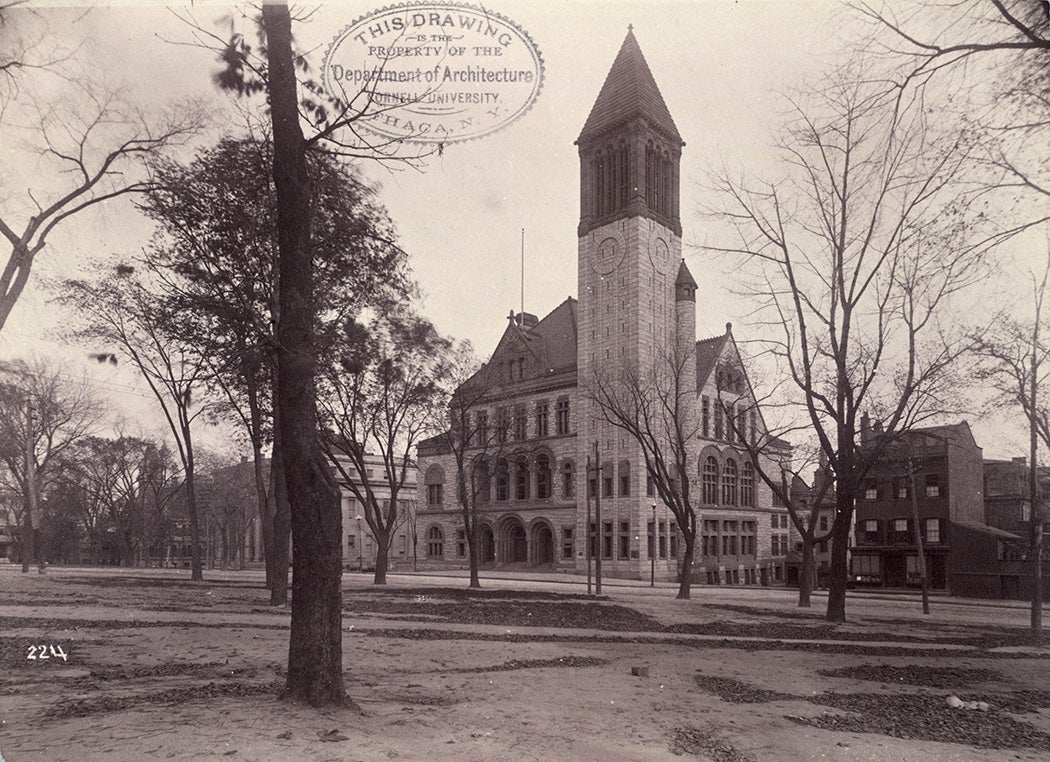
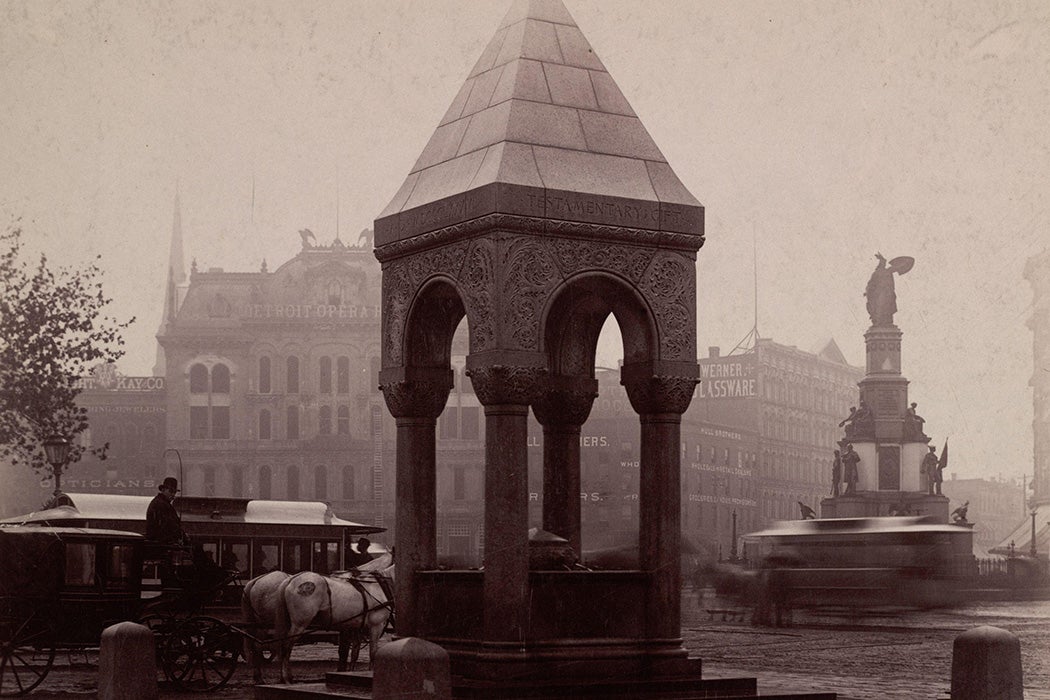
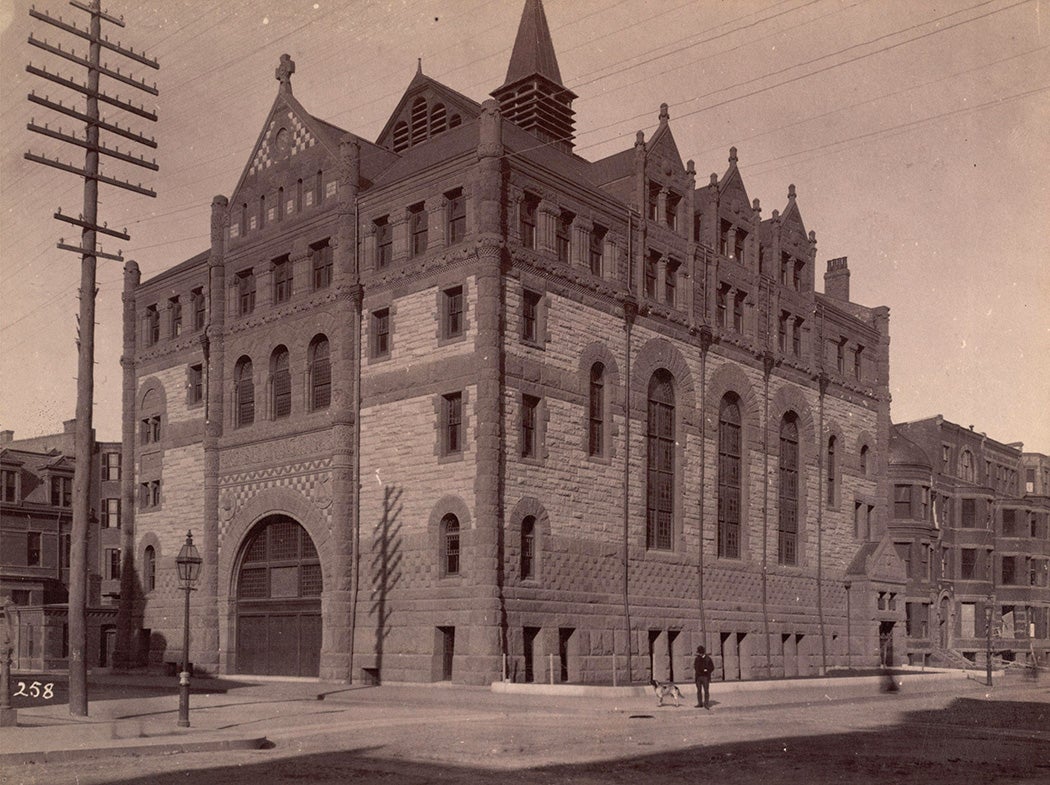
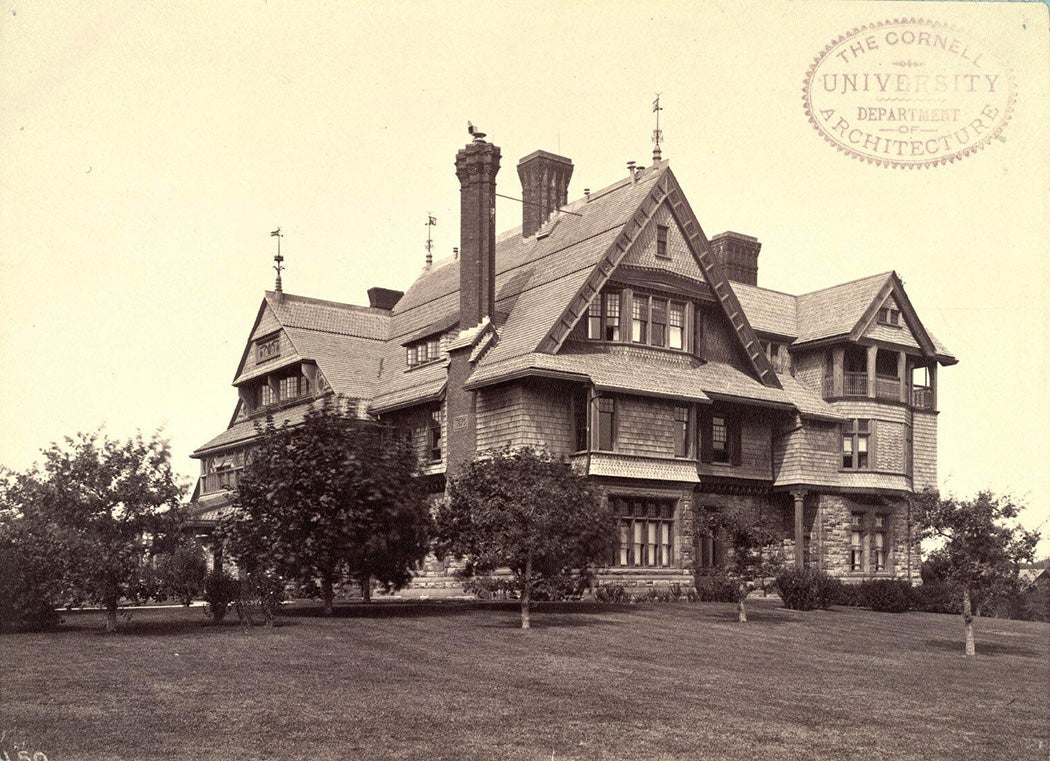
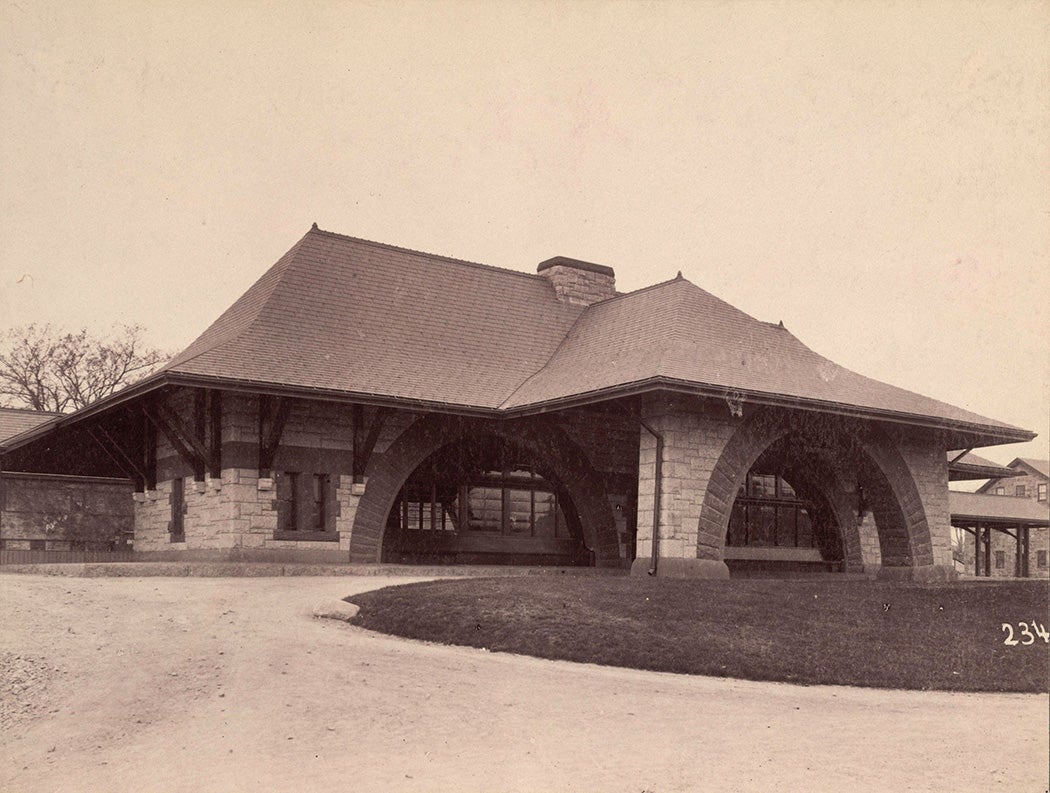
Richardson became known for his distinctive Romanesque revival style, now known as Richardsonian Romanesque. With their heavy, rusticated stones, Richardsonian Romanesque buildings embodied a sense of permanence, typically featuring asymmetrical designs and details in polychromatic stone. Images of Richardson’s buildings, along with a wide range of architectural subjects, have been preserved by the Andrew Dickson White Collection at Cornell University and shared via JSTOR, offering visual insight into the defining features of his work.
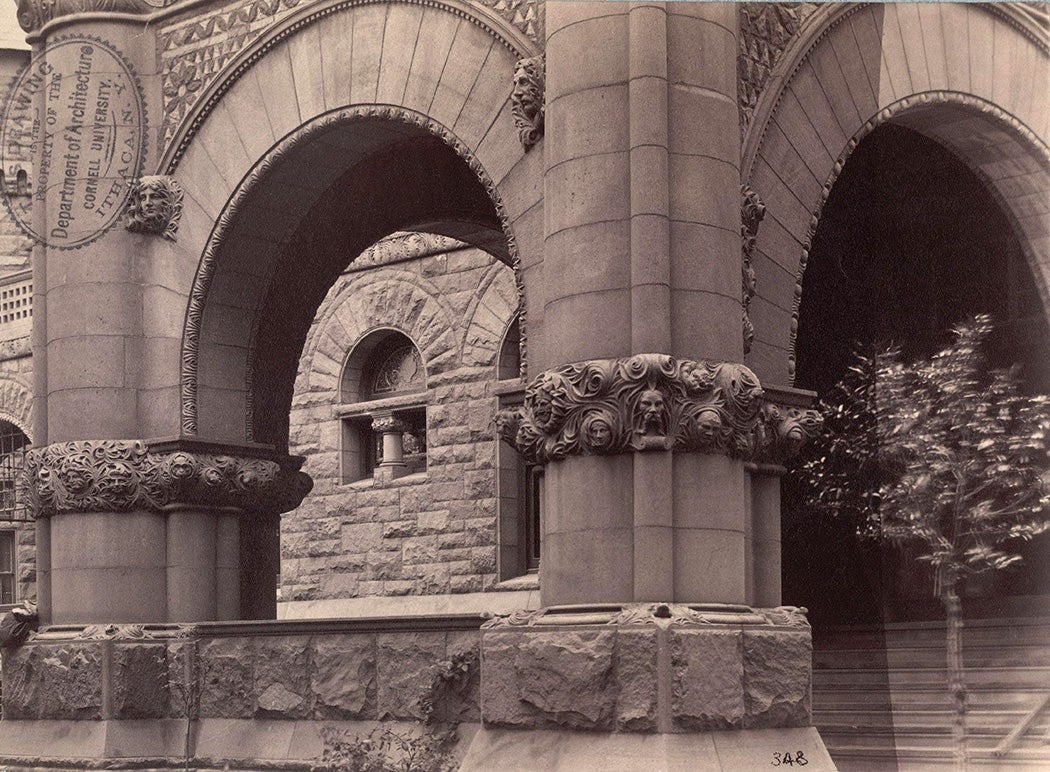
One defining feature of Richardsonian Romanesque was the round arch. These bulky arches often stood out through the use of contrasting stone that differed from the rest of the building. Art historian Ann Jensen Adams explains that for Richardson, “The advantage of the round arch was an expressive one. It was the perfect compromise between the Roman and Renaissance round arches found in French Beaux-Arts buildings, and the Gothic pointed arches of the English Victorian Gothic.”
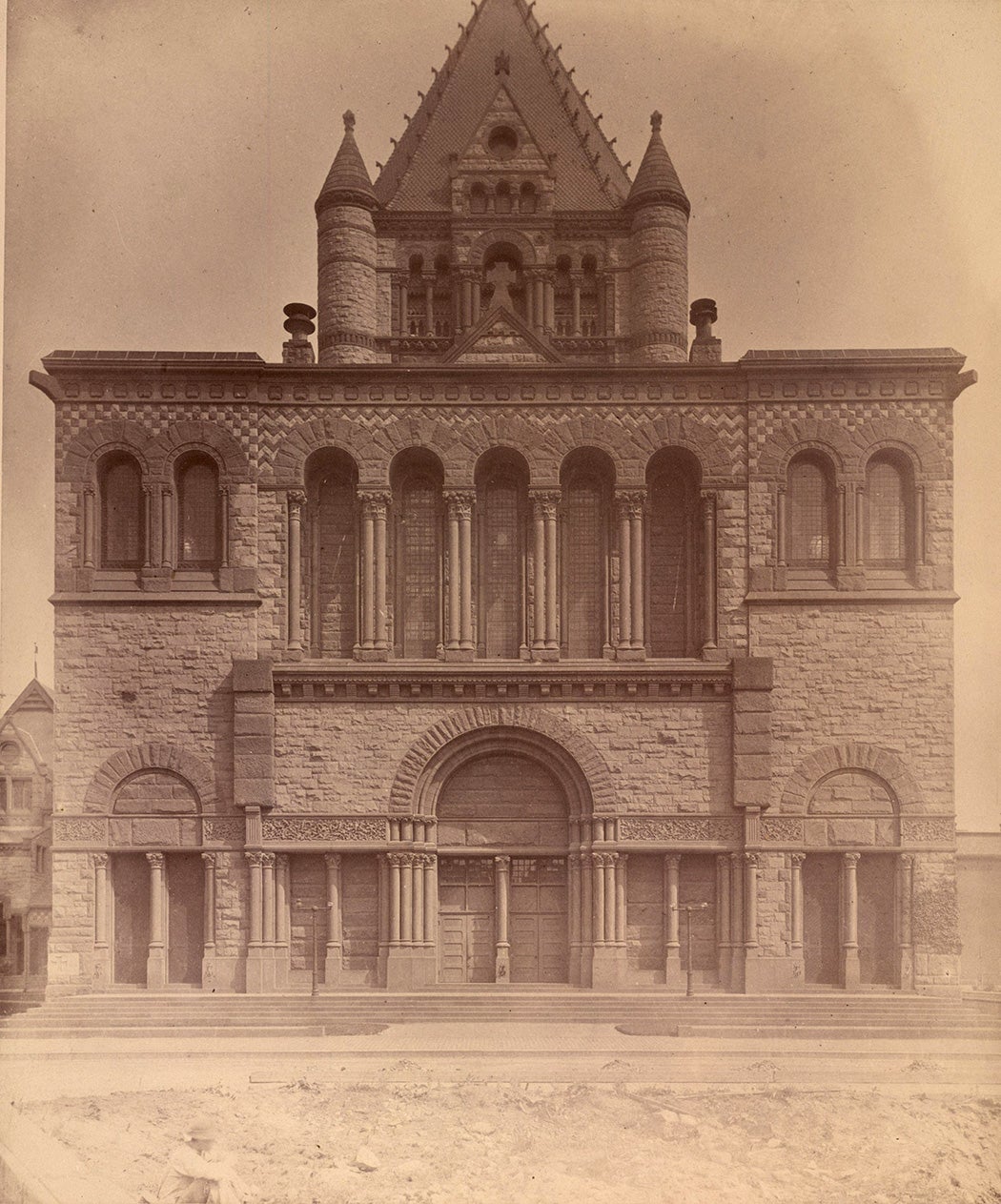
Boston’s Trinity Church, designed in the Richardsonian Romanesque style, was the defining project of Richardson’s career. Built in the 1870s, Trinity Church introduced Richardson’s iconic architectural style to the masses and established him as a sought-after architect for the remainder of his career.
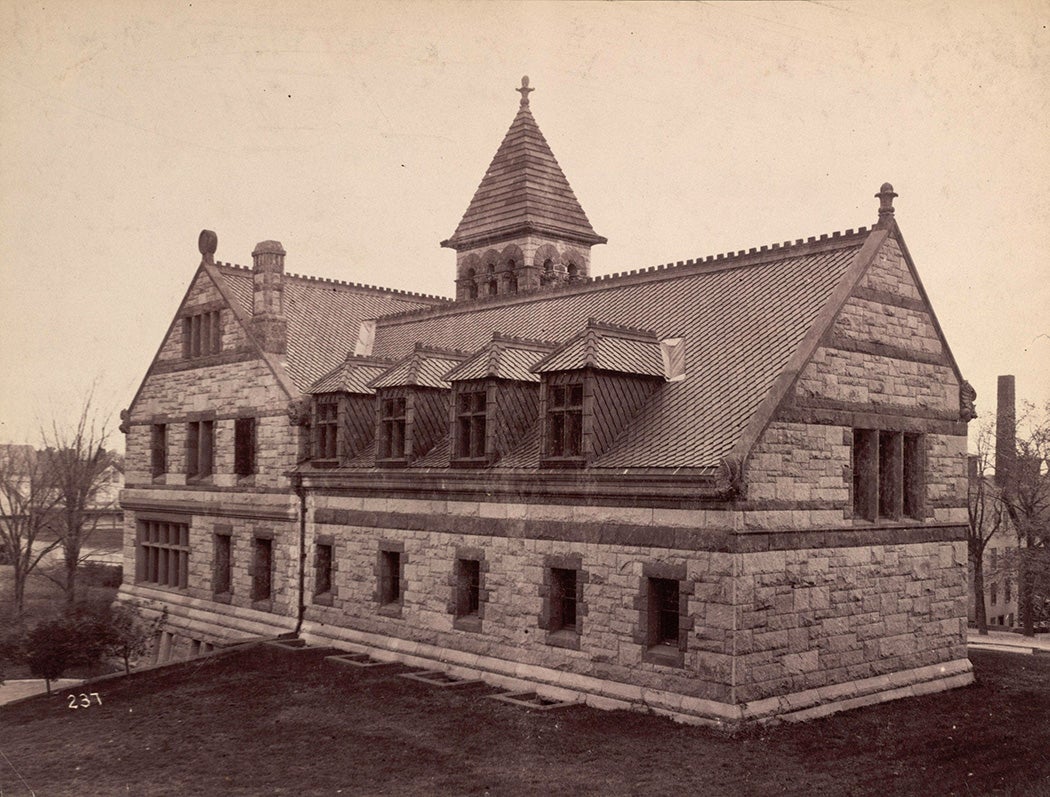
Scholars have long debated what influenced Richardson’s design aesthetic and how he came to his own distinctive revival style. Pulling from multiple European sources, scholars generally agree that Richardson’s architecture was shaped by the French and by his time at the École des Beaux-Arts, as well as by English architecture, which he studied closely. Architectural historian Richard Chafee speculated that Richardson “realized that American clients wanted buildings that looked more English than French,” which influenced his interest in English architecture.
Yet this debate continues. In trying to understand Richardson’s approach to architecture, Timothy Culvahouse describes how “Richardson is notoriously taciturn about his motives and methods. He wrote little, and little of his thinking was recorded by his contemporaries. He drew less than we would expect, preferring to work by way of direct instruction at the site. The work comes to us virtually without commentary and therefore requires careful analysis.”
Richardson died prematurely in 1886, at the height of his career, leaving an enduring influence on American architecture that is still felt today. He was not committed to a certain building type. He designed civic buildings, like the Albany City Hall in Albany, New York, as well as five public libraries in Massachusetts and twelve railroad station buildings, the majority for the Boston & Albany Railroad. He also designed two academic buildings for the Harvard campus, Austin and Sever Halls.
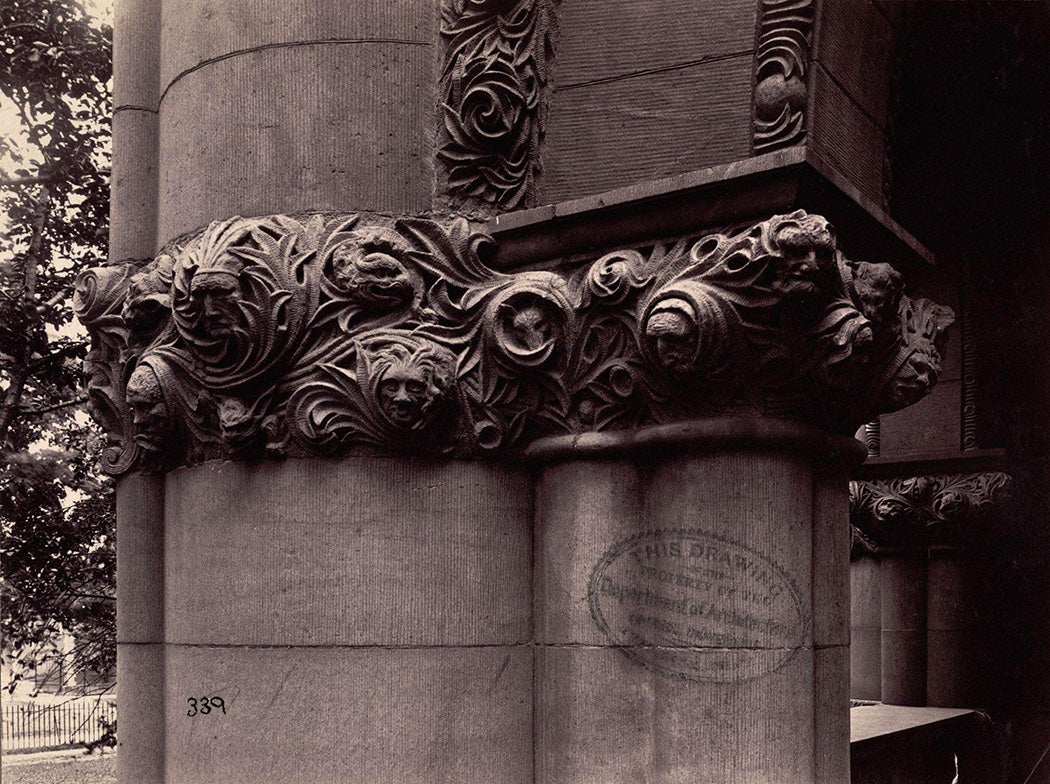
By developing his distinctive architectural style, which helped shape the late 19th century American landscape, Richardson established an individualistic architectural approach that architects like Louis Sullivan and Frank Lloyd Wright would build upon.