Skip to content
H.M.A. Leow

H.M.A. Leow

Rooted in postcolonial Southeast Asia, H.M.A. Leow writes from the crossings of cultures and stories. She has a scholarly background in multi-ethnic US American history and literature, with a career bridging the newsroom and the classroom. Her art and research center on gender, ethnicity, and narrative, but her interests are curious and catholic.
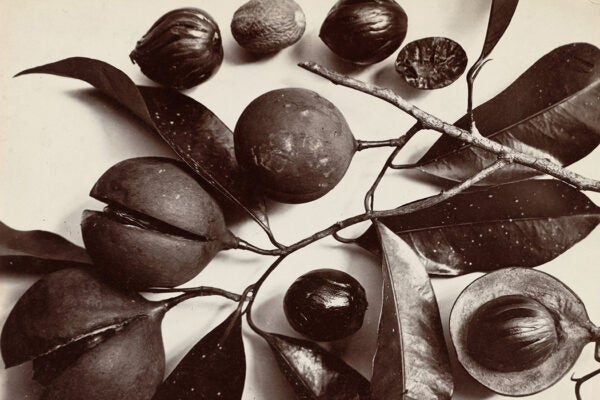
A photograph of nutmeg from the Banda Islands, ca. 1875

The Violent History Behind Nutmeg

Beneath a familiar flavor lies a history of conquest, forced labor, and cultural upheaval in Indonesia’s Banda Islands.
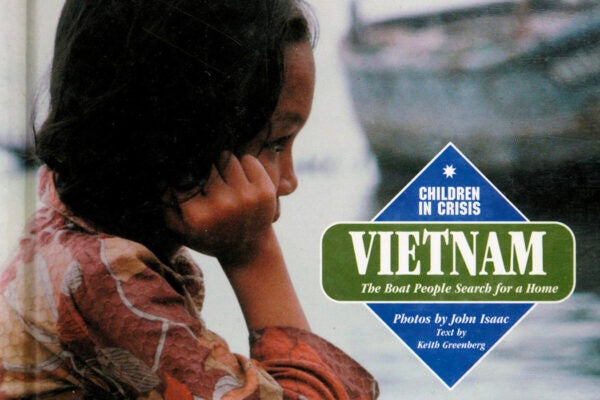
From the cover of Vietnam: The Boat People Search for a Home

How 1980s Children’s Books Framed Vietnamese Refugees

Children’s books introduced Vietnamese refugees to US readers, often simplifying their histories and experiences.
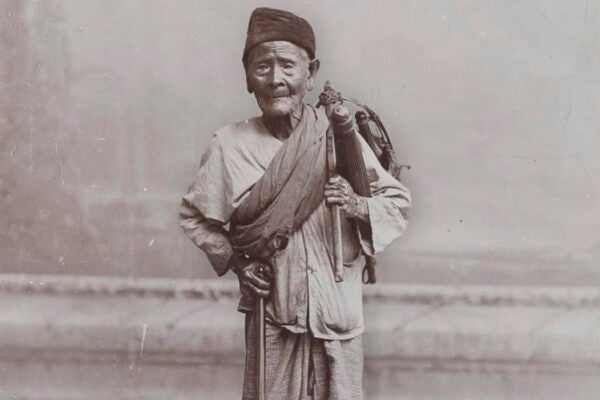
A traditional Malay healer, ca. 1890

The Supernatural Side of Malayan Rice Farming

In agrarian Malaya, spirit mediums negotiated with deities and demons to safeguard crops and shape the rhythms of rural life.
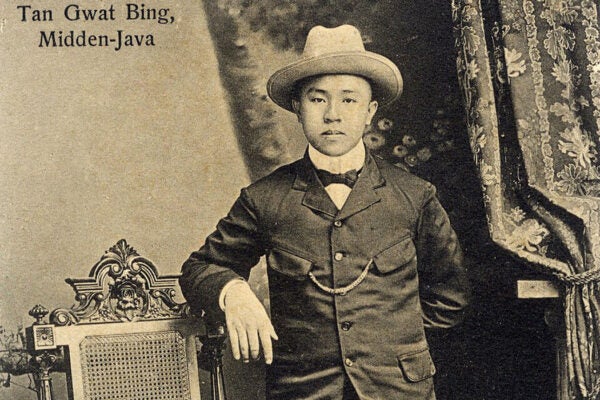
Studio portrait of amateur photographer Tan Gwat Bing in Central Java

The Immigrant Photographers Who Shaped a Nation’s Image

In early twentieth-century Indonesia, Chinese-run studios brought modernity into focus.
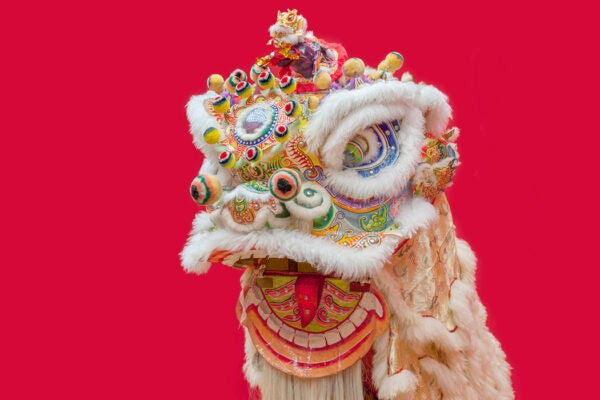
Lion Dance Costume used during Chinese New Year

Chinese Lion Dance Finds New Life in Newfoundland

A small Chinese Canadian community reshapes a performance tradition across generations, redefining how the art form is practiced and understood.
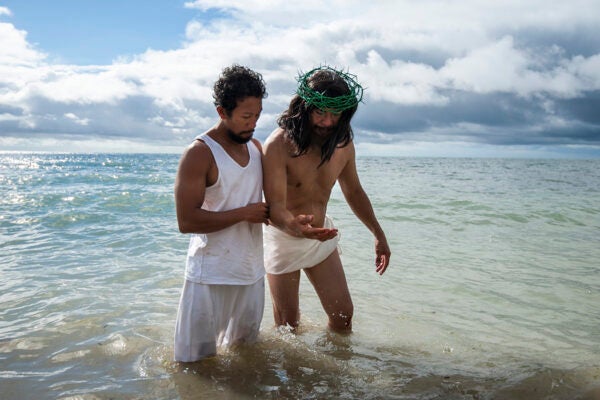
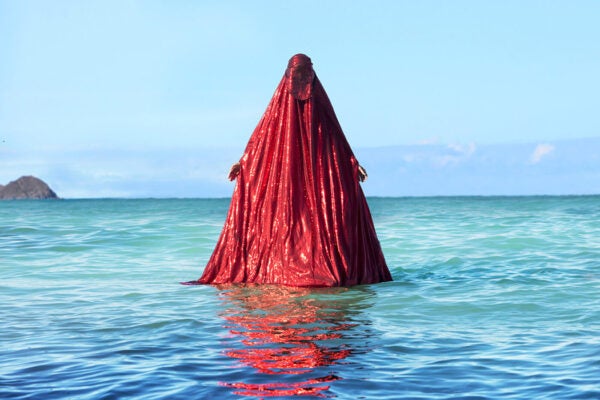
Anida Yoeu Ali, Water Birth, The Red Chador: Genesis I, 2019, Kaiona Beach, Oahu, Hawaii, archival inkjet print. Photo by Masahiro Sugano. Courtesy of the artist.

The Red Chador’s Provocative Public Performance

Anida Yoeu Ali’s Red Chador challenges stereotypes of Muslim identity through performance art in highly visible public settings.
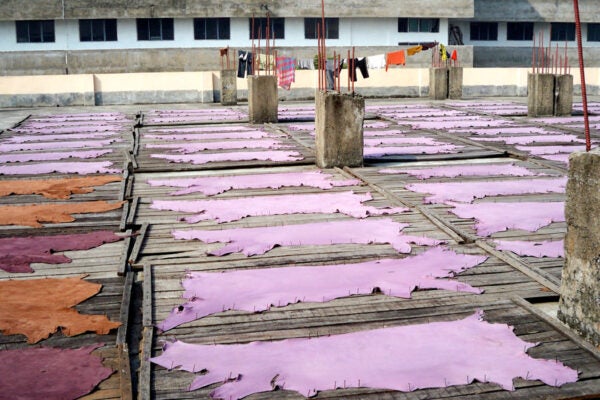
Leather hides drying on tannery rooftop in Kolkata, india

Caste and Culture in Kolkata’s Chinese Leather Trade

In eastern Kolkata, a Hakka Chinese community carved out an economic niche in leather production amid stigma surrounding purity and caste hierarchy.
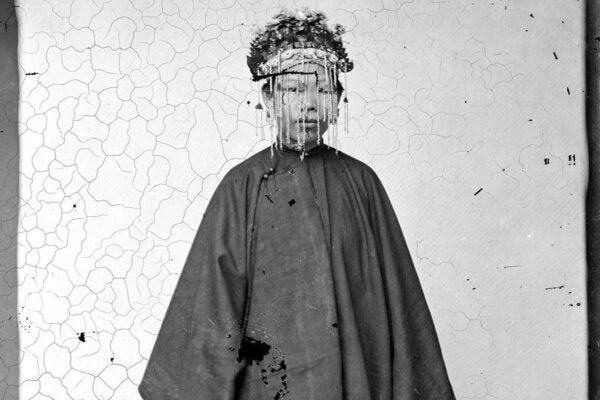
A bride in Guangzhou, China, photographed by by John Thomson,1869.

The Wedding Ritual Where Brides Wept in Song

In southern China, weddings once began with a ritual that let brides speak the unspeakable.
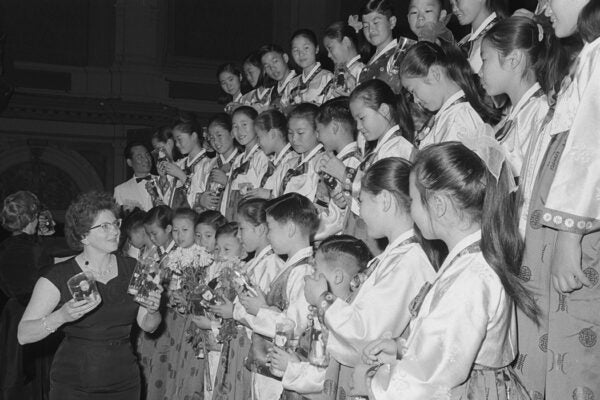
Korean Orphan Choir in the Netherlands in 1962

How Cold War “Orphans” Sang Their Way into American Hearts

Touring choirs helped cast Korean children as ideal adoptees—and Americans as benevolent saviors.
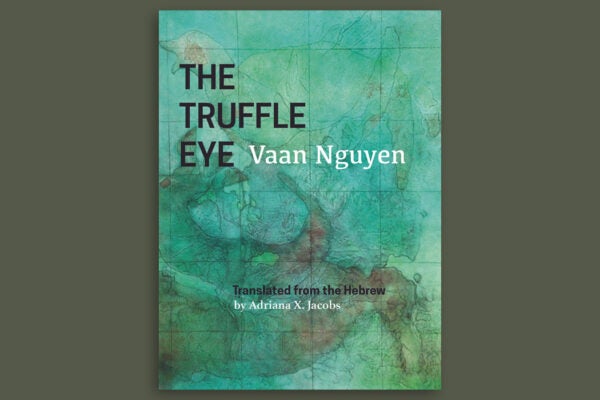
The cover of The Truffle Eye by Vaan Nguyen

The Poet Who Writes About Vietnam in Hebrew

Vaan Nguyen’s poetry examines exile and memory through the lens of her family’s journey from Vietnam to Israel.
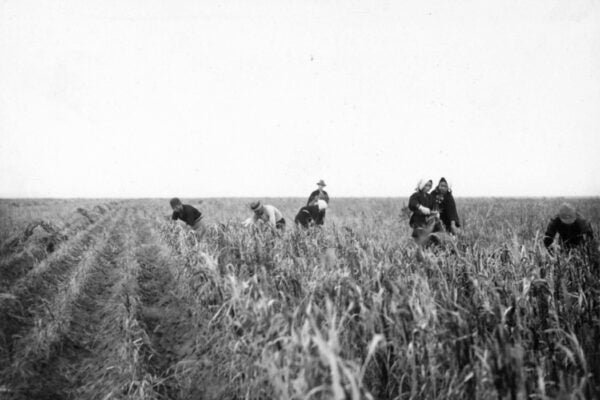
Japanese settlers harvesting millet in Northern Manchuria

When the Dust Settles in Colonial Manchurian Writing

Takagi Kyōzō makes heavy use of natural imagery to decry the miserable status of the settler colonist population in Japanese-occupied Manchuria.
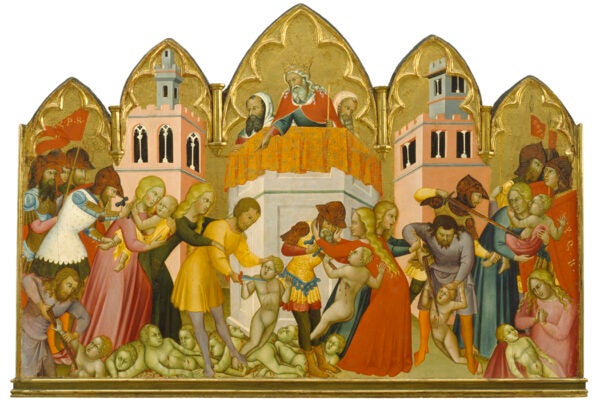
Massacre of the Innocents by Bartolo di Fredi

A Fierce Devotion to the “Empress of Hell”

Medieval dramatizations of the confrontation between the Virgin Mary and King Herod offered a symbolic resistance to tyranny.
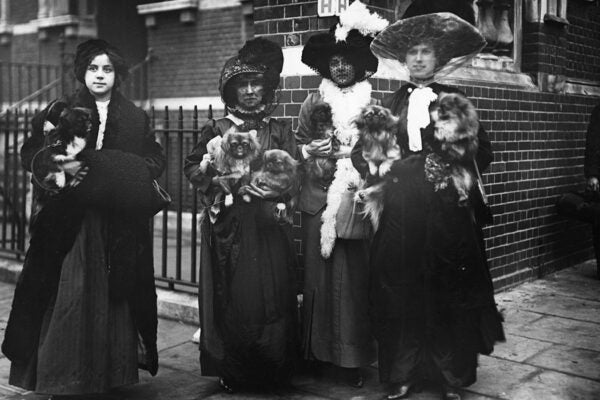
Pekinese competitors arrive in the arms of their owners at the Wimbledon Dog Show, 1912

The Surprising Imperial History of the Pekingese Dog

Upper-class British women in the early 1900s participated in a craze for Pekingese dogs, signalling the role of empire in their social identities.
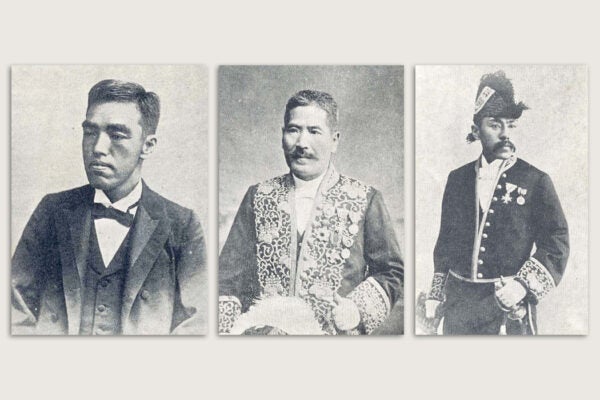
Portraits from the Taiwan shishō meikan

Power Posing in the Taiwan Photo Studio

As photography became more popular in occupied Taiwan, the camera subtly captured the shifting boundaries between Japanese colonizers and their Taiwanese subjects.
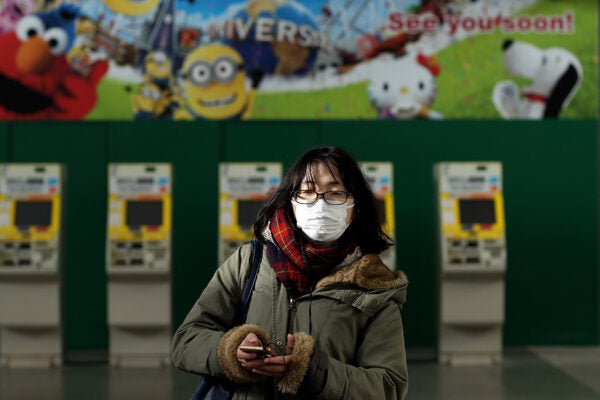
A woman wearing a face mask walks inside the Universal Studio station on March 05, 2020 in Osaka, Japan.

The Fear of Bare, Naked Ladies’ Faces

The mask, like the veil, is seen by the anxious West as concealing a racialized female subject in need of liberation from a backward culture.
Japanese Travel Poster, ca. 1936

Western Travel Writers or Japanese War Propagandists?

Even as Japan courted Western tourists with images of exotic customs and untouched landscapes, the Second Sino-Japanese War raged across East Asia.
Photo: Bruce Lee and Maria Yi in a scene from the Kung Fu film Fist Of Fury in 1971

Source: Getty

The Legacy of Bruce Lee’s Sex Life

Lee’s untimely death in 1973 sparked an argument between his widow and his girlfriend over his libido that played out publicly in international media.
Portrait of a young woman leaning on a meridienne by Louise Hersent, 1828

The Colonial Commodity of Knock-Off Cashmere

The import and mass-market replicas of the Kashmiri shawl highlighted Victorian anxieties about empire and its role in industrial modernity.  
The cover of the play Abbu San in Old Japan

Blackface on Stage in “Old Japan”

The use of blackface may seem out of place in a Japanese-inspired stage production—until you think about the money to be made by dealing in stereotypes.
A portrait of Lin Yutang beside the cover of his novel, Chinatown Family

The Chinatown Novel That Wasn’t

Examining Lin Yutang’s 1948 novel Chinatown Family, Richard Jean So reveals the ways in which literature is shaped by editorial interventions.
Cover of The Chinese question in Australia, 1878-79

The Chinese Question in Australia

The local British tried to bar Chinese traders from Australian shipping routes. Louis Ah Mouy, Lowe Kong Meng, and Cheong Cheok Hong had something to say about it.
The cover of "Go" by Kazuki Kaneshiro

Race and American Pop Culture in Zainichi Stories

A close reading of the 1996 novel GO suggests zainichi identity is in dialogue with multiple national cultures, including American.
A still from the film Sumpah Pontianak, 1958.

The Indonesian Frontier Town Named for a Jungle Vampire

The city of Pontianak is notable for sharing its name with a vengeful folkloric revenant known by various monikers across the Malay Archipelago.

The Geographical Misdirection of Cold War B-Movies

Some American Cold War films meant to allude to the contested theater of Vietnam were filmed in Thailand or the Philippines. Why the positional shenanigans?
Mary Oyama

Dear Deirdre: The Japanese American Agony Aunt

Using the nom de plume Deirdre, California-born writer Mary “Mollie” Oyama Mittwer offered advice on changing gender roles and cross-ethnic relationships.