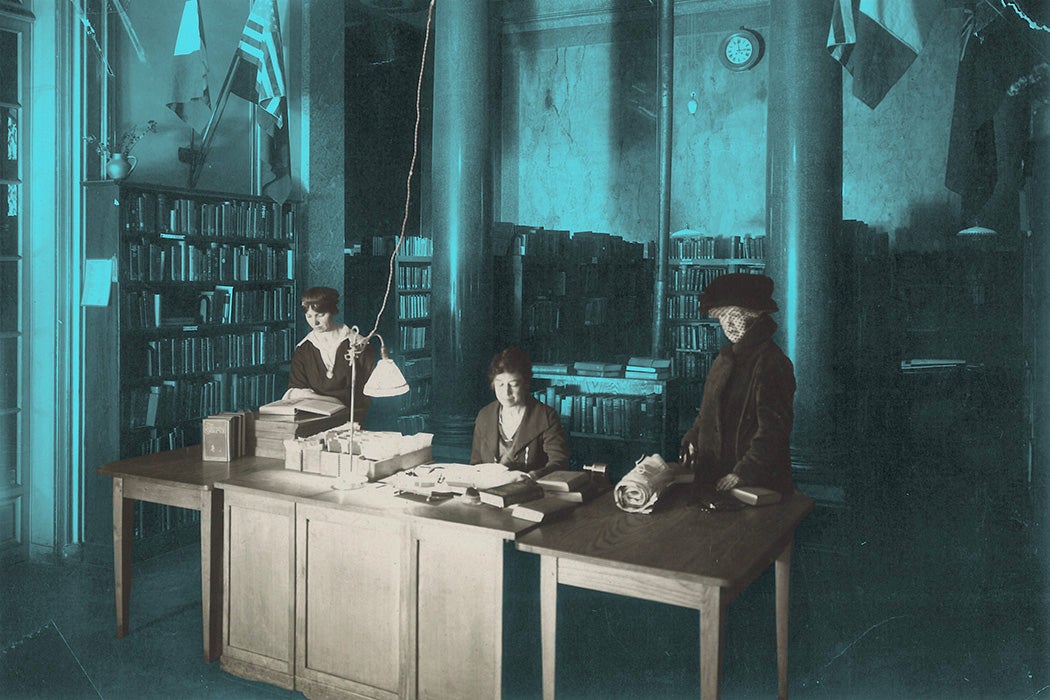
The Germans began firing on Paris again on the fifth of August 1918. Mary Josephine Booth was familiar with the sound of the air raid sirens by then. If they came at night, she would jump out of her bed at the Hotel Petrograd, dress, take what valuables she had, and if the shelling was especially fierce, retreat to the basement. But if the sirens came during the day, then Booth, clad in her olive-green uniform, would remain at her post in an ornate building across the street from the Palais de L’Élysée. “We had to keep working to get the library ready to open,” she would later write.


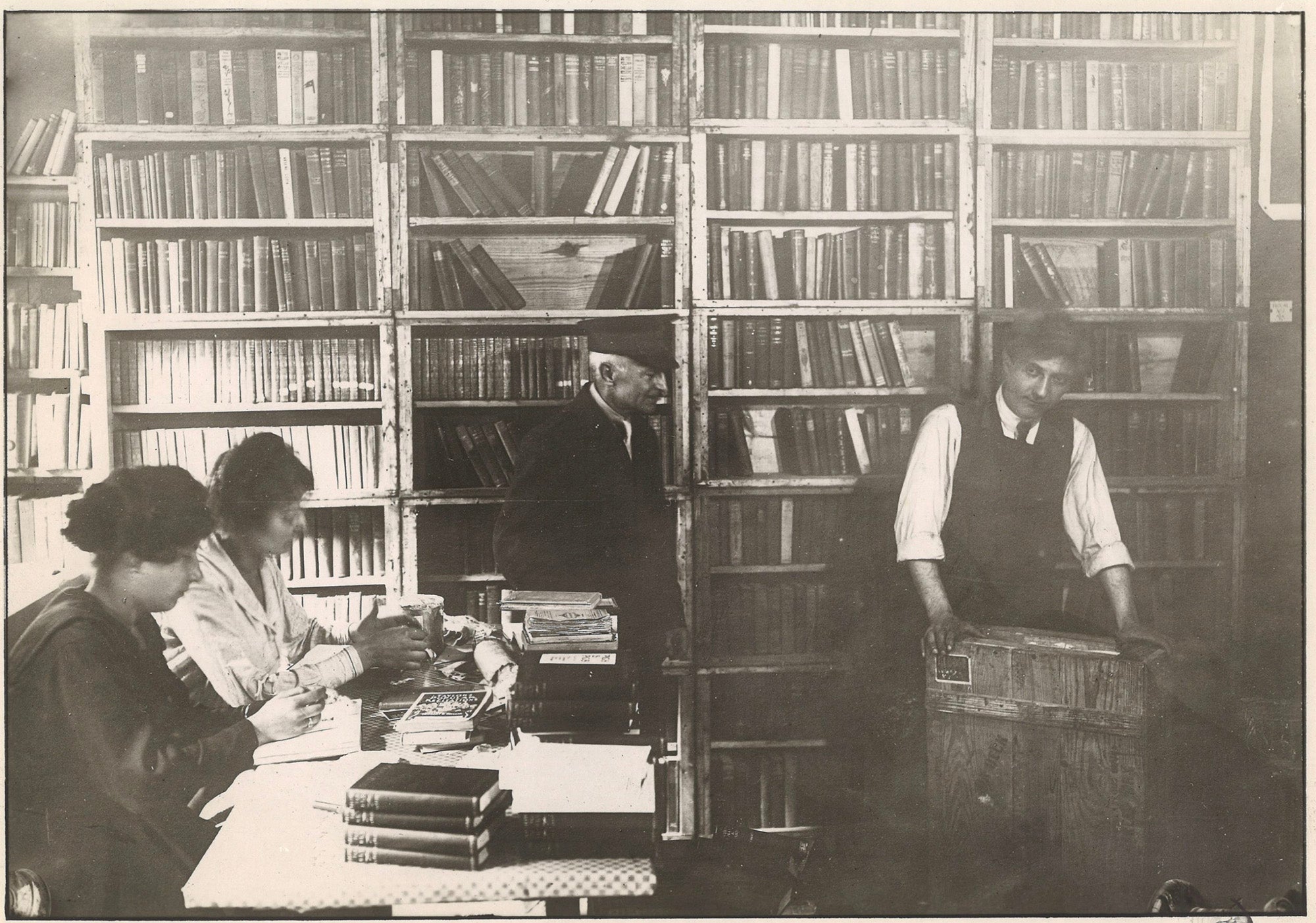
Booth was one of hundreds of librarians who went to war alongside American troops during the First World War. In the summer of 1918, the 42-year-old woman from Illinois served with fellow recruits to the American Library Association’s Library War Service as they prepared to open an American library in the war-scarred French capital, pictures of which are now available from the American Library in Paris via JSTOR. Booth helped with unpacking and sorting the countless books that arrived from the home front, cataloguing titles for the new library (a project made more challenging by the lack of a Dewey Decimal reference guide) and selecting which would be sent to “our boys in the front trenches.”
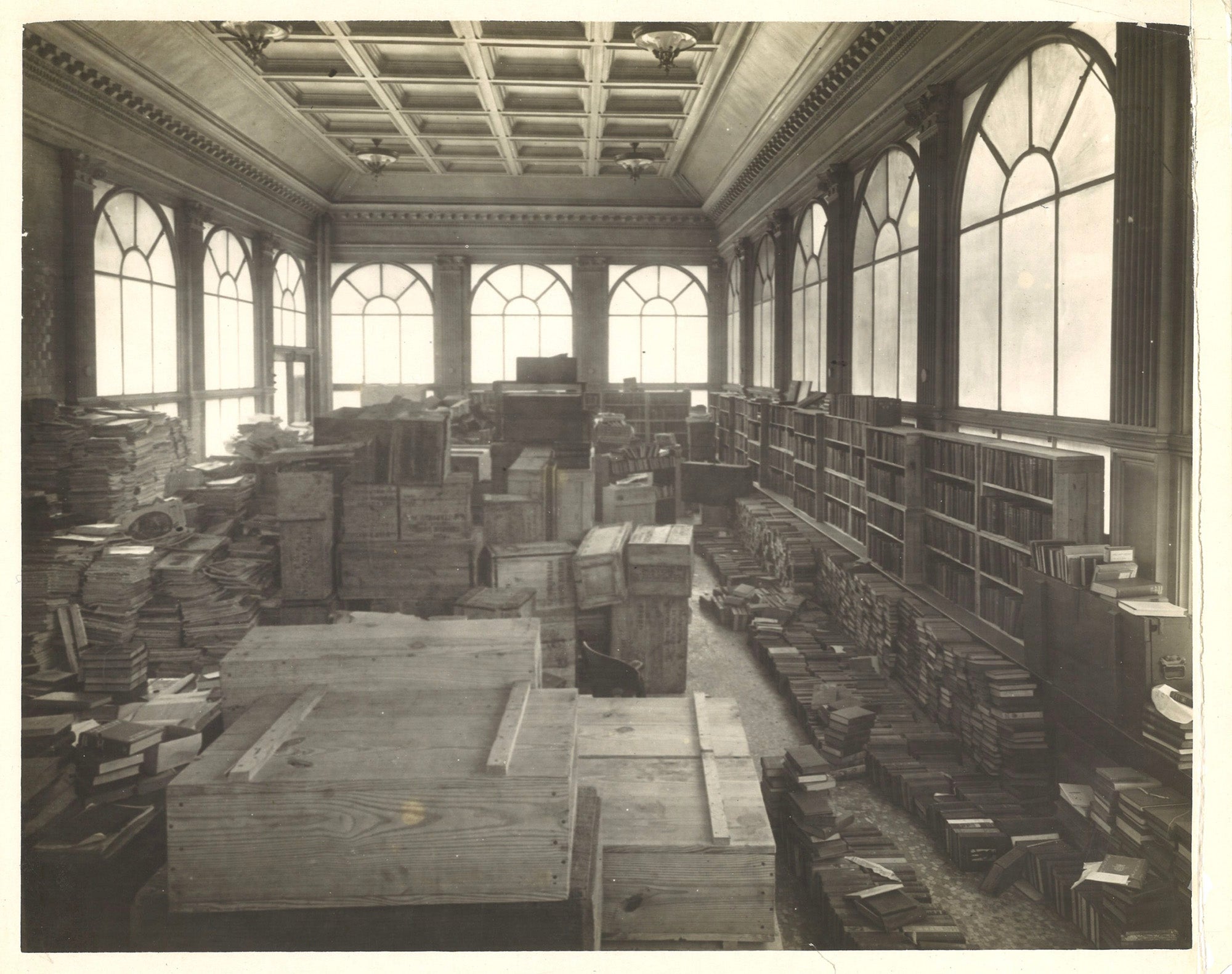
When the United States entered the conflict, the American Library Association had not been well known. In fact, among other organizations doing war relief work, the ALA was, on occasion, mistaken for the American Laundry Association and the Australian Light Artillery. By 1920, the group would raise $5 million from the American public, build 36 camp library buildings, and distribute more than 10 million books and magazines to soldiers stationed at 5,000 locations across the United States and Europe.
Booth seemed like a natural fit for the Library War Service. She was a graduate of the Illinois State Library School, had worked as a librarian at Eastern Illinois Normal School for more than a dozen years, and she was eager to join the war effort in Europe. But the American Library Association did not initially warmly welcome women to the ranks of its war service. The organization saw the undertaking as an opportunity to masculinize the women-dominated profession, historian of librarianship Suzanne M. Stauffer says. Only men “of real executive ability” were officially permitted to be camp librarians, as the presence of women “would interfere with the freedom of the men in their camp life” and would deter “red-blooded he-readers” from using the libraries.
That was not Booth’s experience. She arrived in France in November 1917 as a Red Cross volunteer. Her first assignment was in a canteen at an aviation training center near Tours. There, she made ham, cheese, and jam sandwiches and built a makeshift library of her own. On January 21, 1918, she noted in her diary that there were “about 175 books ready to circulate,” purchased by a fellow canteener who had been given some money to “buy whatever was most needed.” Booth would later recall the popularity of the women’s library: “There were calls for mechanical books, as well as novels with lots of life and love, blood and thunder, and in contrast the poems of Milton and Browning.”
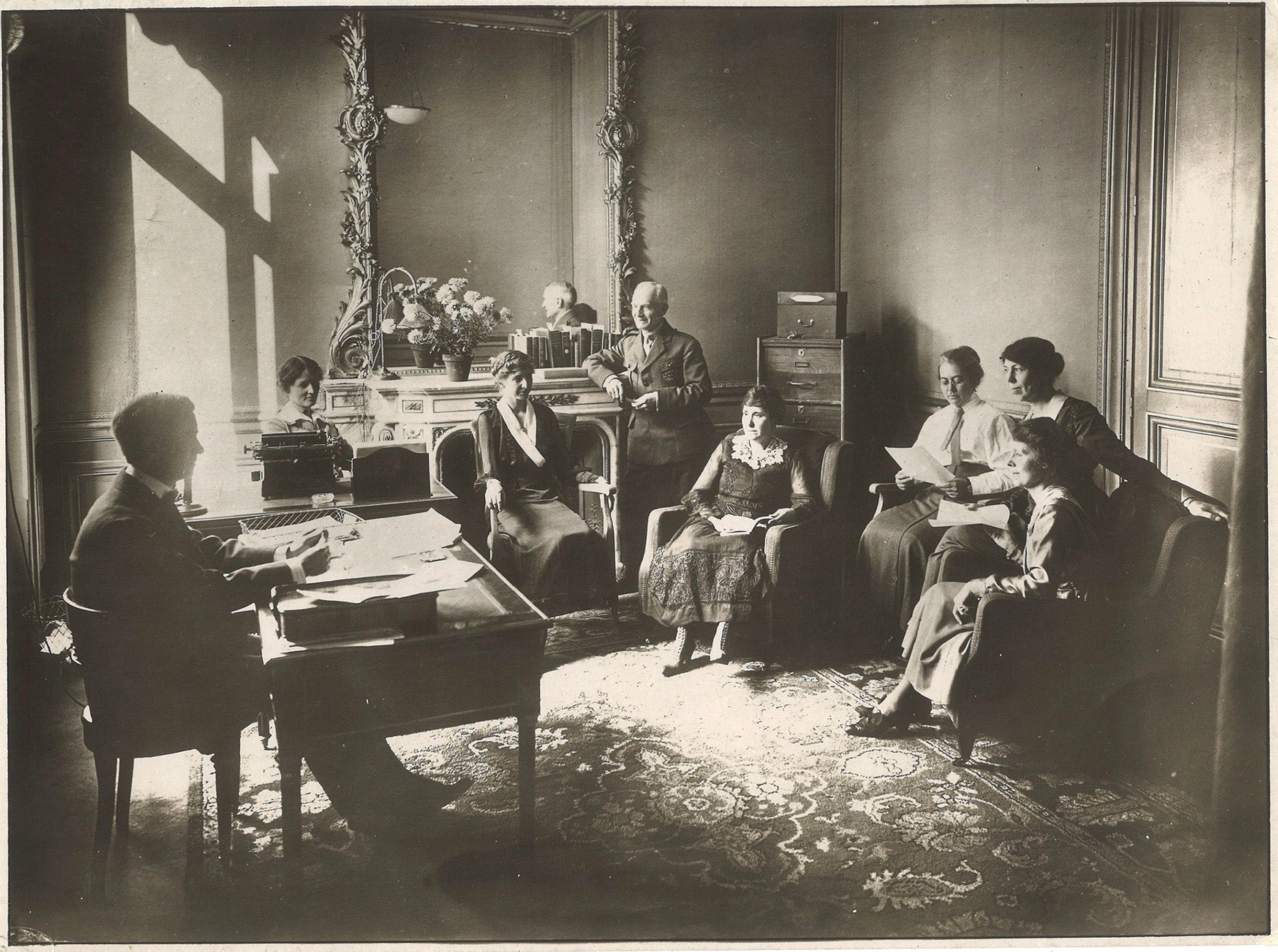
By 1918, the ALA had realized that it could not succeed in its mission without women librarians, though they were oftenrelegated to behind-the-scenes roles. In Europe, the director of the Army Library Service was Burton Stevenson, whose library at Camp Sherman in Ohio served as the basis for the Library War Service. Stevenson sometimes wondered how he, a Princeton dropout who became a librarian after marrying one, had achieved the position. He wrote to a friend from Paris, “my library work previous to about a year ago, was a sort of avocation, a sort of recreation which kept me in touch with books; so it seems strange to me sometimes that I should be the man selected to come to France to represent the A.L.A.” A photo in Stevenson’s office dated 1919 shows the American library staff. Booth, in her ALA uniform complete with tie, is gathered with five other women, including librarian-in-charge Elizabeth Gray Potter, and one other man.
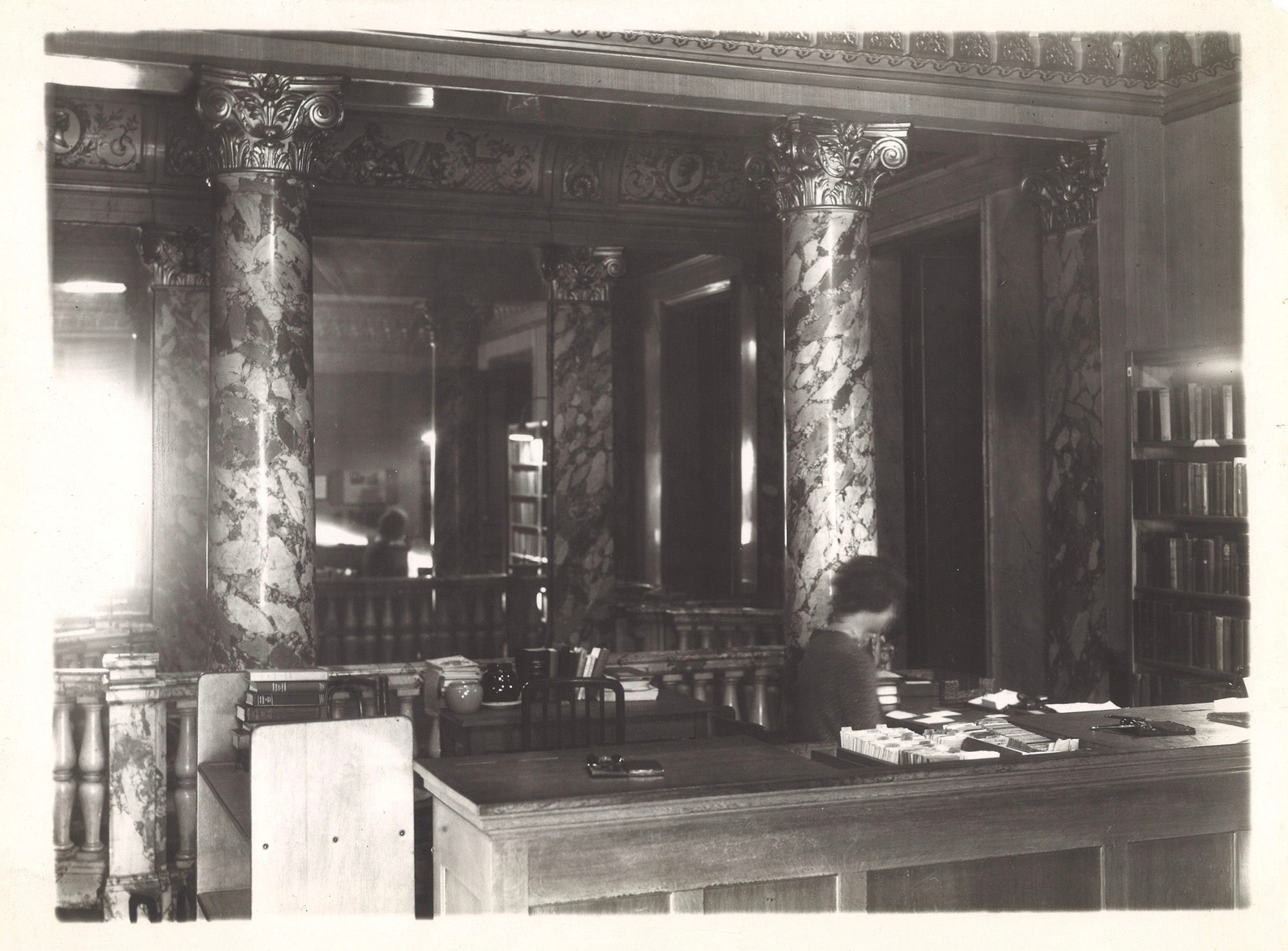
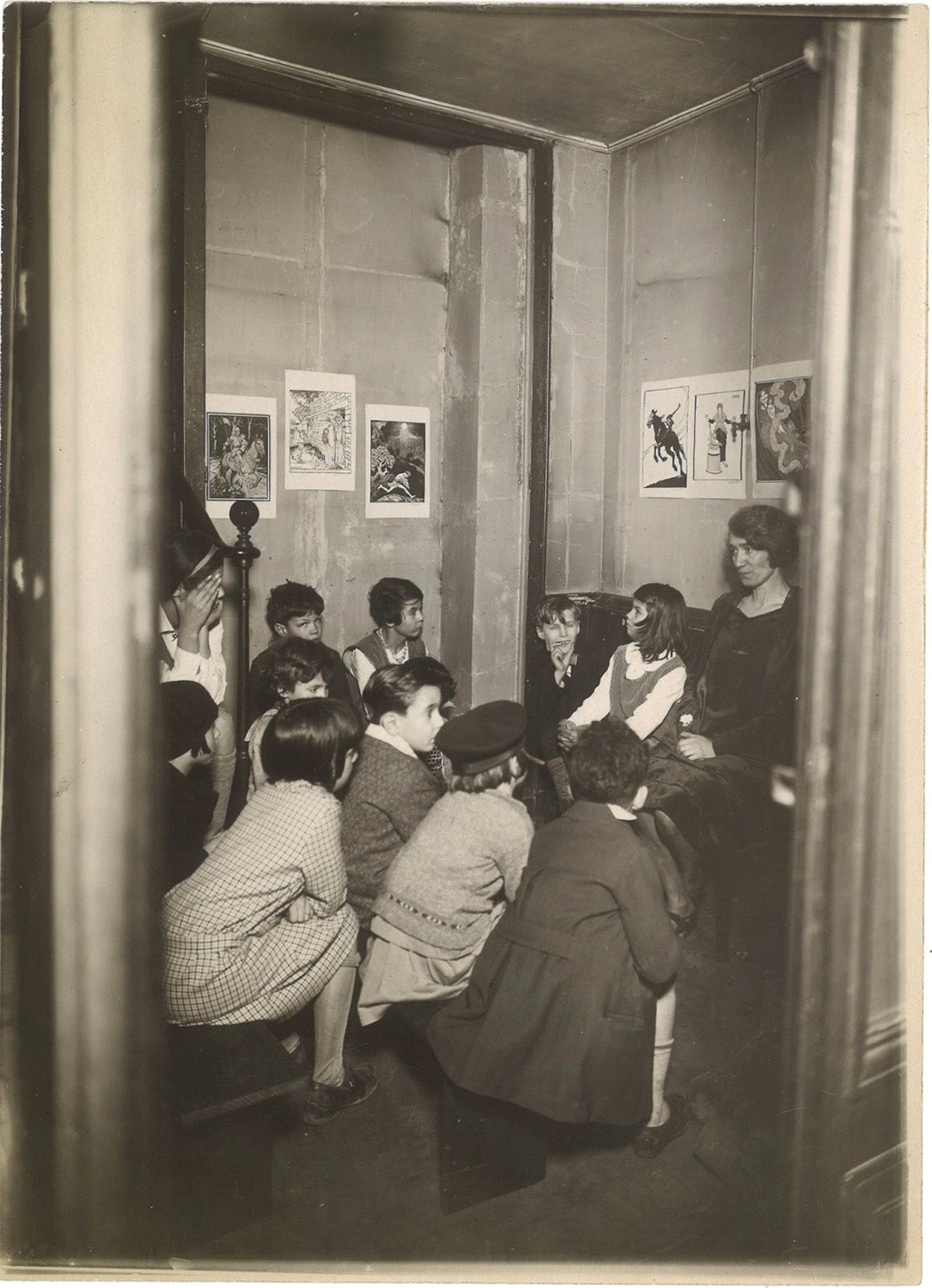
The American library opened its doors at 10, Rue L’Élysée on August 29, 1918, as planned. The marble-columned entrance hall of the former home of the papal legate was taken up with a circulation desk; two large reception rooms with frescoed ceilings and mirrored walls had been converted into reading rooms; and the central hallway was lined with bookshelves for more than 7,000 titles. It was soon filled with men in khaki. “It was astonishing how quickly the soldiers discovered there was an American Library in Paris,” Potter noted.
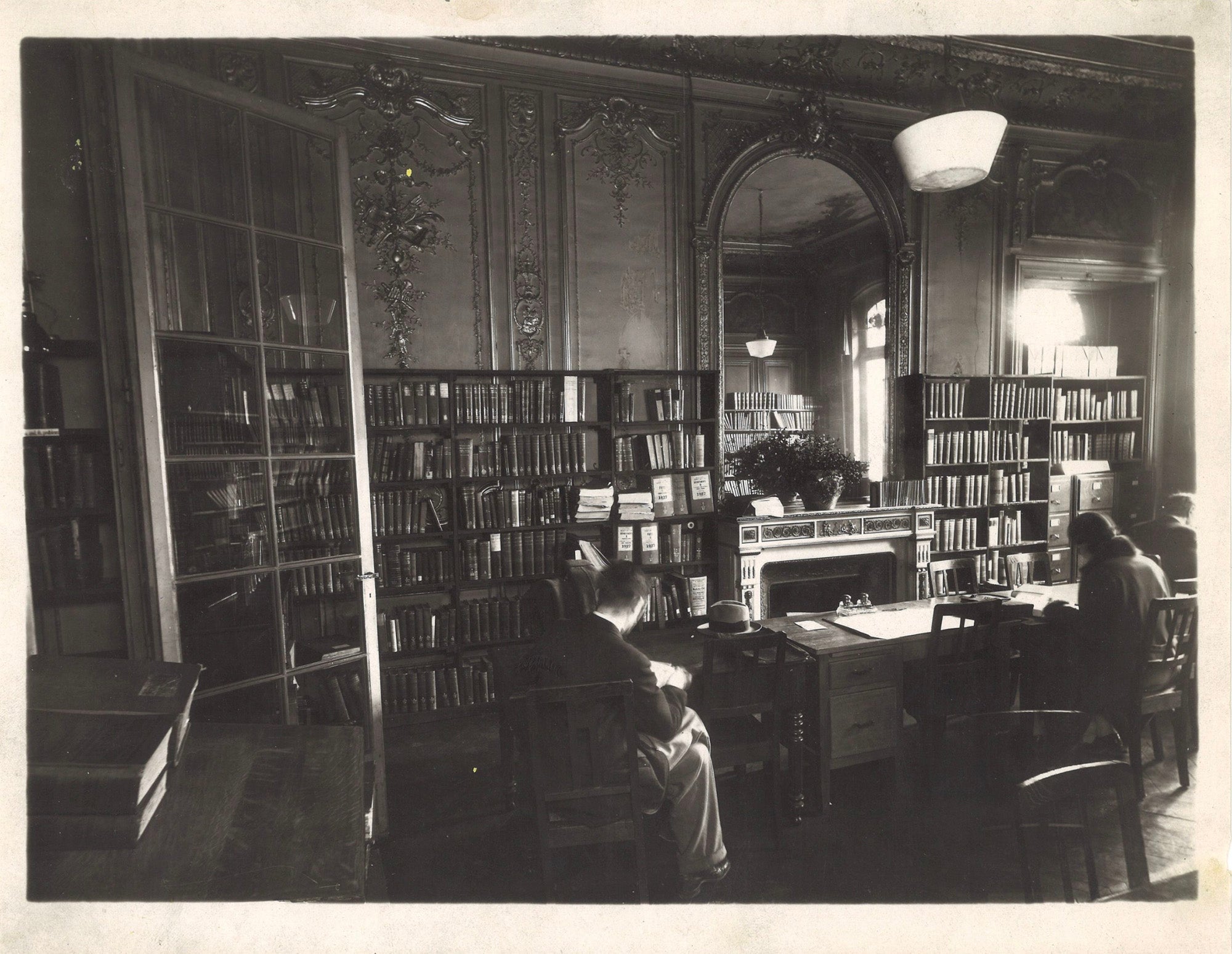
Booth was quickly sent off on new missions. First, she organized the library of the new US military intelligence section (“several thousand books, English, French, Italian, German, especially strong in history, economics and military affairs”) and then, after the November 1918 armistice, she traveled through France sending books from the front back to Paris. “After the signing of the Armistice,” she later wrote, “the need of books was greater than ever; thousands of Americans in a strange land, all wanting to get home with nothing to do.”
Weekly Newsletter
"*" indicates required fields
Before returning to the library at Eastern Illinois Normal School (now Eastern Illinois University) in the summer of 1919, Booth’s last act was handing out magazines from the ALA to departing soldiers. She would go on to serve as a librarian at Eastern Illinois for another twenty-five years—and the American Library in Paris she helped to establish still exists today.