On her first, long-awaited visit to an ancestral homeland, a poet imagines running barefoot in a verdant field. The scene “recalls the romantic archetype of the Jewish chalutz (pioneer) in the pre-statehood period,” writes Adriana X. Jacobs.


But this is not a story about aliyah, or Jewish return to the State of Israel.
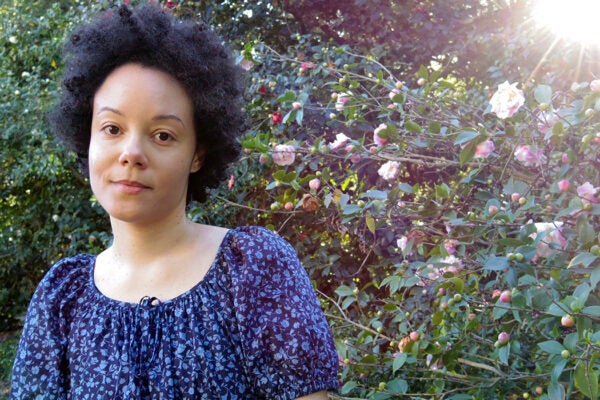
It’s true that the Hebrew poet Vaan Nguyen is an Israeli citizen. She was born in Ashkelon in 1982, raised in Jaffa, and served in the military. However, she was not born into a Jewish family. Rather, her parents are among the 300-odd Vietnamese refugees who came to Israel in the late 1970s.
“[A]s the daughter of Vietnamese refugees who have settled in Israel, Vaan also engages and challenges—through the double position of the insider/outsider—the discourse of exile and return and the politics of memory in Israeli culture,” Jacobs explains.
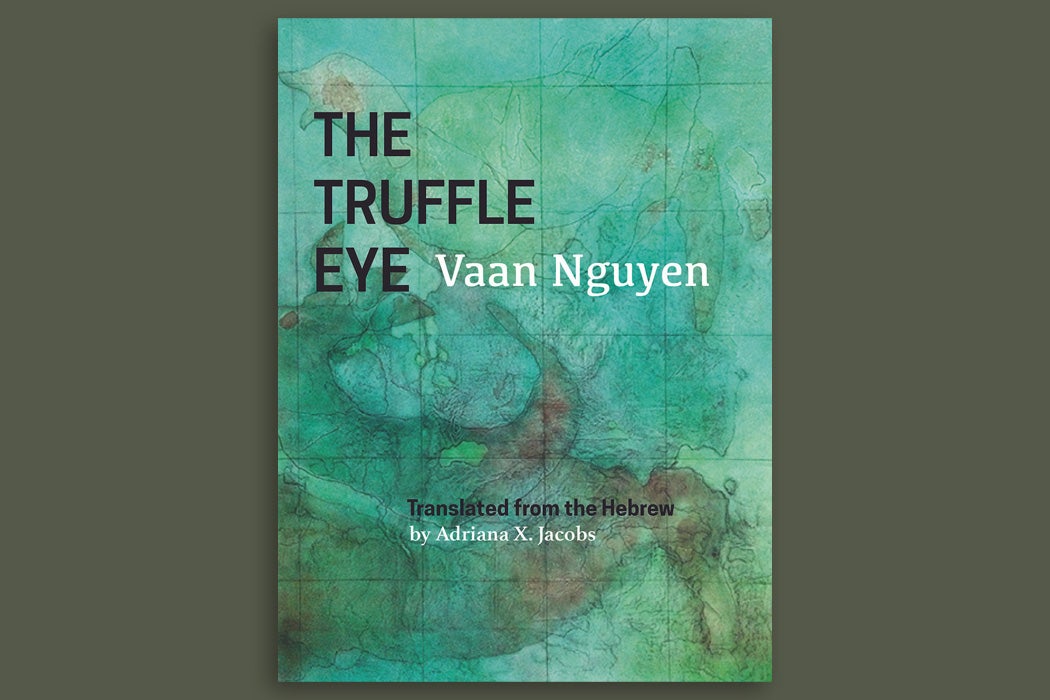
Nguyen’s debut poetry collection, Ein ha-kemehin (The Truffle Eye), was originally published in 2008 and begins with a poem called “Nehar Mekong” or “Mekong River.”
While the title seems to point to the poet’s Southeast Asian background, Jacobs argues “the rest of the poem plays with and even undermines this relation,” such as when Nguyen juxtaposes a reference to the Mekong with mentions of the Tigris and Euphrates rivers.
“[B]y invoking the Tigris and Euphrates, which form a river system in Western Asia, alongside the Mekong River, the speaker of the poem brings two distinct and otherwise separate (cultural) systems into relation,” writes Jacobs.
At the same time, these images of geographically distant Asian rivers are compared, in the poem, with the speaker’s travel “between three beds” in a single night.
“[T]alking about a lover while you are in bed with another may be an indication that you have placed your affections elsewhere,” Jacobs muses. “In the context of reconciling Vietnamese and Israeli identities, this possibility is particularly suggestive.”
The Vietnamese-Israeli population has its origins in the fateful encounter between an Israeli freighter and a boatload of refugees in the South China Sea in mid-1977. The captain took the crew on board, but was not allowed to dock in Hong Kong, Taiwan, or Japan.
The refugees’ plight recalled that of MS St Louis, which carried hundreds of Jews fleeing the Nazis in 1939. They were all sent back to Europe, with many later killed in the Holocaust.
As such, newly elected Israeli Prime Minister Menachem Begin agreed to grant asylum to the Vietnamese “Boat People.” Though most moved on to third countries like the United States, a sizable number decided to accept Israeli residency and build new lives there.
More to Explore
A “Genre-Bending” Poetic Journey through Modern Korean History
Yet, even after decades abroad, Nguyen’s parents “remain ambivalent about the lives they have fashioned in Israel,” according to Jacobs, and dream of returning to Vietnam.
In fact, her mother laments in Hebrew that she “[has] nothing to do here” (ein li mah la‘asot) and—knowing that her daughters cannot write in Vietnamese—asks rhetorically, “Who will write to my family [in Vietnam] to tell them that I’m dead?”
For Jacobs, this plaintive question has an Israeli doppelganger, as it evokes the opening line of Hebrew-language poet Avot Yeshurun’s 1964 magnum opus: “yom yavo ve-ish lo yikra mikhtavei imi,” or “the day will come / and no one will read my mother’s letters.”
Despite the poetic parallel, it is unclear where Nguyen fits into the Hebrew literary tradition.
Nguyen has commented on how, as an Israeli, she “identif[ies] with the forced exile so familiar to the Jewish people.” Still, Jacobs notes, “[E]ven though Jewish Israelis were asked to identify with the plight of Vietnamese refugees on similar grounds, this identification did not extend beyond arrival, and remains neither reciprocal nor inclusive in Israeli society.”
In one review, critic Menachem Ben declares Nguyen “a poet whose first book positions her at the center of Israeli poetry” and hails her in the same breath as Hebrew-language women poets like the radical feminist Yona Wallach, who was prominent in the 1970s.
Weekly Newsletter
Ben also offers a favorable comparison with poet Elisheva Bikhovsky, who was born in Russia to Christian parents in 1889 and emigrated to what was then Palestine in 1925.
But the comparison between the two women is “misleading,” argues Jacobs—not least because Nguyen, unlike Bikhovsky, was born in Israel.
Analysing Ben’s focus on Nguyen’s background, Jacobs writes that his “enthusiastic reception is problematic in that it casts these affiliations as exceptional and exotic.”
Still, Jacobs finds that Nguyen is well aware of “the ways in which she is misread within a national culture that she, on the contrary, intimately knows.”
She concludes, “[F]or a literary culture that takes its Jewish identity for granted, it is no small matter that a poet from Nguyen’s background has created and claimed a place in contemporary Israeli letters for her point of traffic, the roots she releases and the baggage that she carries as she travels both within Israel and outside of it.”