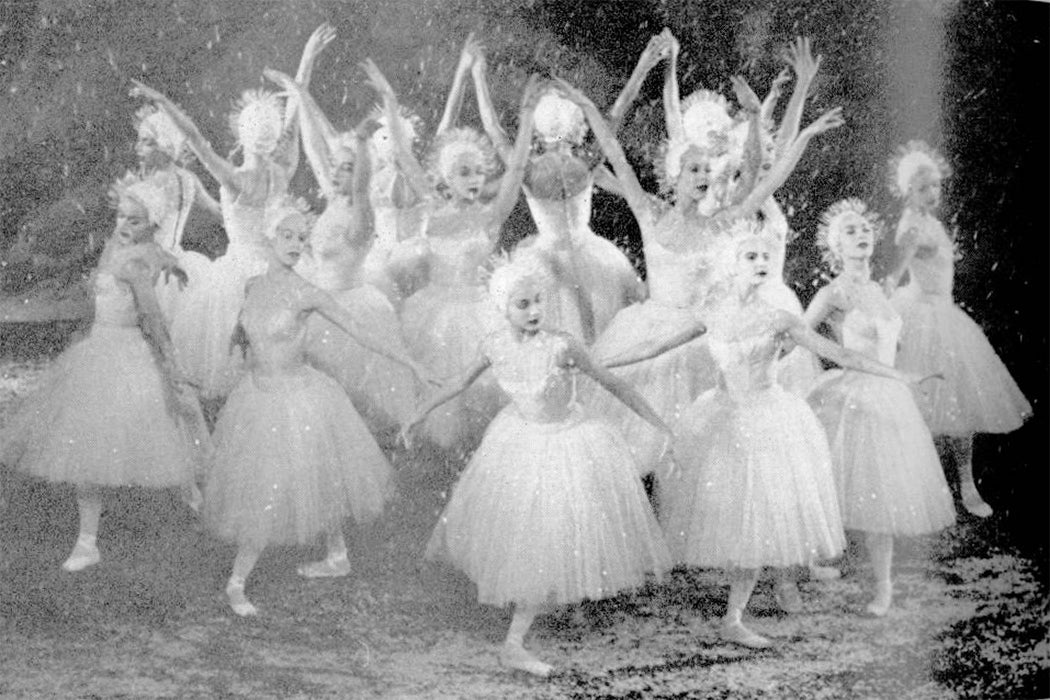
With scenes such as the Battle of the Mice and the Waltz of the Snowflakes in Act I, and the Waltz of the Flowers, the Variation of the Sugar Plum Fairy, and the character dances featuring Spain, Arabia, China, and Russia, The Nutcracker has cemented itself as one of the most visually and musically remarkable ballets.


And while it was successful among audiences upon its premiere in 1892, critics were less impressed. As Damien Mahiet writes in 19th Century Music,
they praised one scene (the Waltz of the Snowflakes, for example) and damned another (the “turmoil,” bustling, and “running about” of the battle of the mice and toys). But they also found flaws in the very conception of the ballet. Some protested that it qualified neither as “mimed drama” nor as “classical choreography”—in short, that this new ballet-féerie was no ballet.
Other issues included the lack of balance between narration and choreography, the childishness of the subject matter, and the contrast between the fantastic elements of the story and the more somber and solemn musical score.
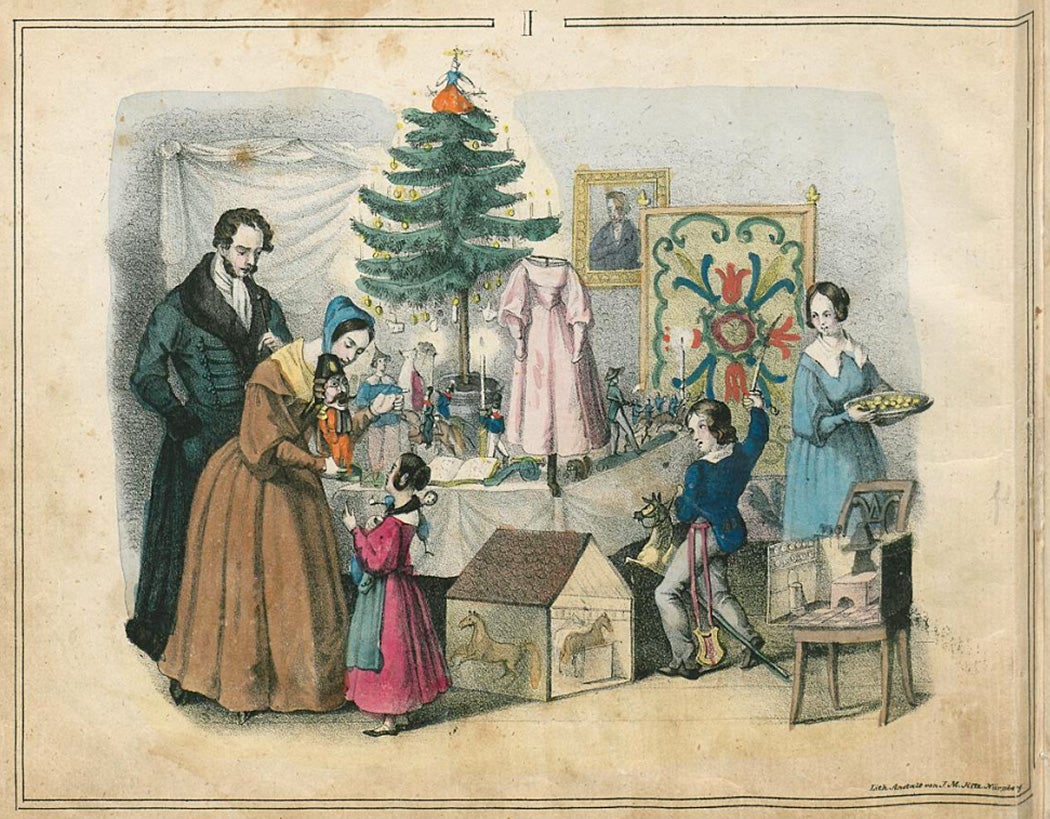
Based on a tale by E. T. A. Hoffmann titled “The Nutcracker and The Mouse King,” The Nutcracker’s plot revolves around a girl named Clara, who receives a nutcracker doll on Christmas Eve. That night, the doll comes to life and battles the evil Mouse King, who is defeated when the girl throws a slipper at him. The nutcracker then transforms into a prince who takes her on a magical journey to the Land of Sweets. The first act takes place between Clara’s residence and a wintry landscape, while the second act unfolds entirely in the Land of Sweets.
One can reckon with the inconsistencies by placing The Nutcracker in the context of the ballet-féerie, “a hybrid genre that, by the last decade of the nineteenth century, combined artistic aspirations with spectacular effects and physical prowess,” writes Mahiet. The genre encompassed ballet productions with fairy tale-like settings, characters, and events. “The genre proved crucial to Romantic ballet, with such innovations as the ballet blanc choreographed for ensembles of dancers in white. It also promised visual entertainment of broad appeal through a series of loosely tied choreographic numbers,” Mahiet explains.
Its success and popularity were not only due to the dancers’ abilities and the score, but also to the décor and the machinery. In Russia, the development of the imperial ballet-féerie occurred in a context of institutional transition that combined court culture with commercial venture. It simultaneously referenced the court spectacles of the seventeenth and eighteenth centuries, the grand spectacles of Romantic operas and ballets, and the growing taste for the spectacular virtuosity of the féerie. Romantic operas and ballets combined realistic settings (think of Giselle, set in a village on the Rhine during the Middle Ages) and fairy-tale-like elements, while court dances refer to those diegetic divertissements in which the characters of the ballet themselves watch a dance spectacle as part of the plot. Examples include the wedding celebration in Sleeping Beauty and the character dances at Prince Siegfried’s ball in Act III of Swan Lake. The result is a product that combines artistry and commercial viability.
Weekly Newsletter
The first portion of Act I takes its cue from Romantic ballet’s juxtaposition of realistic settings and fairy-tale-like elements—namely Clara’s residence and the nutcracker besting the Mouse King. Additionally, the Waltz of the Snowflakes ties The Nutcracker to elements of Romantic ballet, particularly the ballet blanc trope. “The waltz was the first instance, in The Nutcracker, of a fully developed choreography for the corps,” writes Mahiet. “Up until then, the audience had been offered pantomime, social dance, and comic relief.”
The whole Land of Sweets sequence in The Nutcracker consists of diegetic character dances made for the sake of Clara’s entertainment. As Mahiet writes,
The divertissement itself proceeds by juxtaposition, highlighting differences among the various character dances, the first four featuring Spain (Chocolate), Arabia (Coffee), China (Tea), and Russia (the Trepak). Each dance takes shape for a moment, almost gratuitously, before receding from the stage.
To further differentiate these dances, beyond choreography, Tchaikovsky borrowed from preexisting melodies. The sensual Arabian dance derives from a Georgian lullaby; the comic-relief sequence with Mother Ginger and the clowns draws from French folk and children’s songs, “Giroflé, Girofla” and “Cadet Rousselle.” “Tchaikovsky underscores contrast and prompts comparison by beginning most dances with a distinct rhythmical accompaniment that marks differences in meter, tempo, timbre, and texture even before the main melody has been heard,” explains Mahiet. The “Coffee” sequence is introduced with a drone-like opening performed by muted violas and cellos, while four horns marking the downbeat introduce the Spanish-tinged “Chocolate” melody. The Trepak, or Russian dance, stands out in that it’s introduced in medias res to distinguish Russia among all other traditions and nations represented. “It emphasized, through physical prowess and unique energy, qualities that Alexander III might have wanted associated with the national character,” explains Mahiet.
More to Explore
Tchaikovsky’s Patroness
The Sugar Plum Fairy offers a way to interpret the seemingly disjointed second act. “The Nutcracker, like The Sleeping Beauty, projected the ceremonies of court culture onto a marvellous canvas that conflated historical, fantastic, and allegorical representations to highlight the central place and beneficent power of the sovereign—in this instance a female monarch represented by the Sugar Plum Fairy,” elaborates Mahiet. The Sugar Plum Fairy intentionally fostered the representation of an idealized female ruler, conflating traditional representations of the absolutist monarch as a force for good and of the female sovereign as an agent of civilization. “Wonderment, as a way to apprehend the sovereign and the court, cast the imperial subject in a position of reverence.”
Technology is also an element of wonder. Striking visual effects included the lighting of a Christmas tree onstage and the projection of electric lights onto the snowflakes. The Sugar Plum Fairy herself also embodied the technological progress of the late nineteenth century: illuminated fountains, following the trend of the fontaines lumineuses of the time, were a fixture of the Land of Sweets in the original production. She is introduced with the now-iconic celesta melody—the celesta itself debuting in March 1892 in a concert performance of the Nutcracker Suite.
“In this light,” Mahiet concludes, “Clara’s ultimate concern about waking up from a dream conveys perhaps less a doubt about the ‘enchanting spectacle’ she is witnessing than a conventional response, at the end of the nineteenth century, to technological marvels and the resulting interweaving of wonder with the customary fabric of life.”