She walked because her husband was injured and he couldn’t do it himself. She walked because, if she didn’t, the invading Americans would gain another foothold on British-controlled Canadian territory. She walked because she didn’t fear the hazards faced by a woman of the nineteenth century traveling on foot. Laura Secord, née Ingersoll, Canadian heroine of the War of 1812, is remembered today in Canada not because she fought in a war like Joan of Arc or because she nursed soldiers back to health like Florence Nightingale. She is remembered, and celebrated, because she walked.


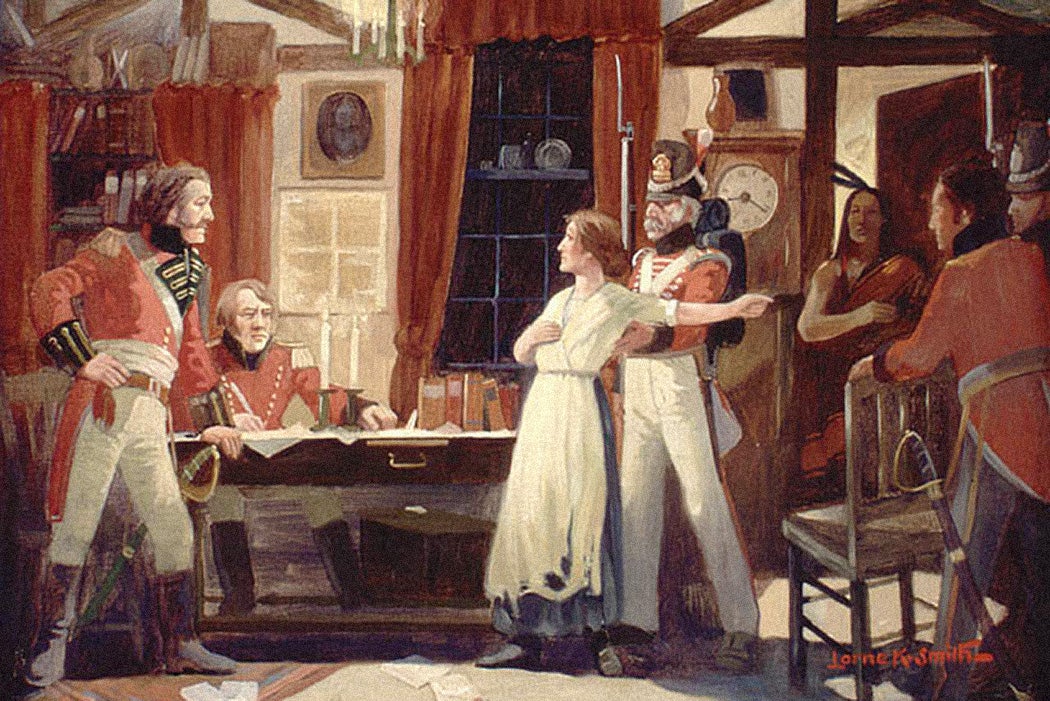
The year was 1813. Secord was involuntarily hosting American soldiers in her family home in Queenston, Ontario after the American army captured Fort George in May of that year. Now it was June, and the soldiers dining at her table had become too comfortably loose-lipped. Secord eavesdropped on their conversations and picked up vital information about an American surprise attack on the British troops at Beaver Dams. This British regiment was led by Lieutenant James FitzGibbon. The next morning, while her incapacitated husband and unwelcome guests still snoozed in their beds, she set out to warn the Lieutenant of the impending assault.
Canadian history scholar Claire Turenne Sjolander outlines Secord’s adventure in her 2014 essay for International Journal, and also analyzes the Harper government’s rendition of the events of 1812. Though Sjolander is critical of the Harper government’s radical and somewhat sexist angle of Secord’s story, she is still admiring of Secord’s heroism.
“In this War of 1812 biography [the Harper government’s official story], Laura Secord is the perfect—and perfectly—militarized wife,” Sjolander writes. “She is the Rosie the Riveter of the War of 1812—assuming a temporary duty because her husband cannot. The hierarchy of love—for god, country, and home—is revealed, as she sets out on a dangerous mission because loyalty to the (British) state is a higher calling, more important than her own safety or that of her wounded husband.”
More to Explore
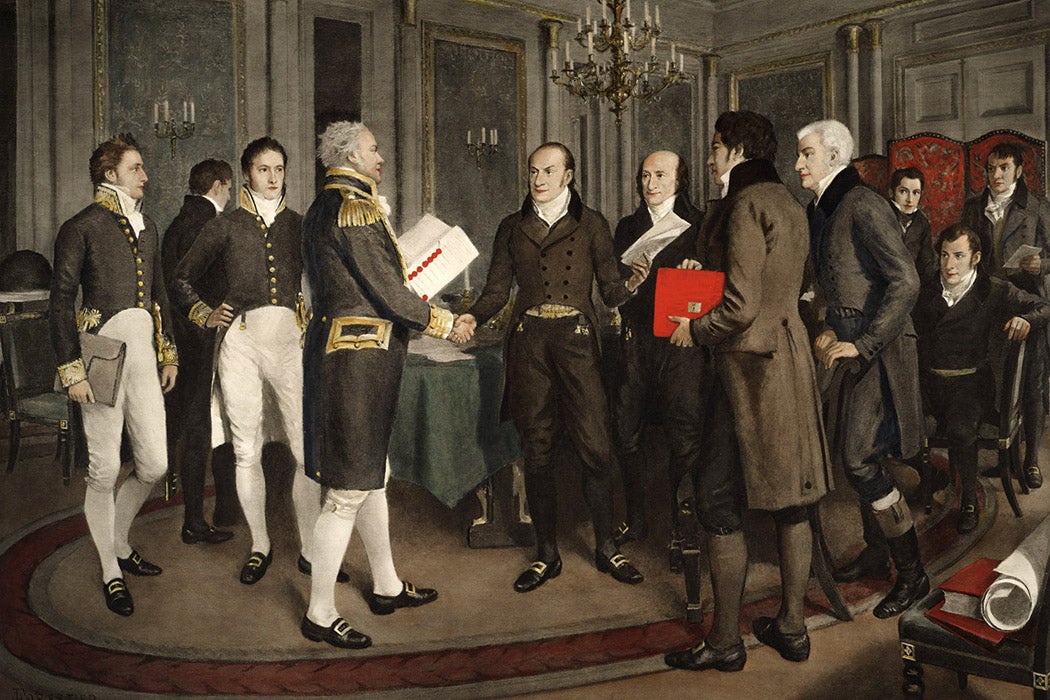
The Treaty of Ghent: Annotated
Secord is estimated to have walked twenty miles in an epic trek that spanned from Queenston, north of Niagara Falls, all the way to FitzGibbon’s headquarters at the DeCew House in Thorold Township. More than a champion act of athleticism, this was a military mission. She made it to Lieutenant James FitzGibbon, exhausted and aching. Thanks to her warning, made at painstakingly personal cost, the British won the Battle of Beaver Dams on June 24, 1813.
Weekly Newsletter
In her lifetime, Laura Secord didn’t receive an inkling of recognition for her outstanding act of bravery and patriotism until she was eighty-five years old. Even then, recognition only came in the form of a casual act of goodwill from the royal family, not the British military she’d aided. In the year 1860, the Prince of Wales (who would later become King Edward VII) heard her story and the extreme poverty she was experiencing as a widow left destitute. He arranged for her to be sent a single check for £100. Many would consider such a gesture thoughtful, but not enough to compensate for the years of perpetual hardship Secord faced after risking her life for Canada.
Laura Secord is honoured today with a statue located at the Valiants Memorial in Ottawa, to solidify her place in Canadian history and ensure students of Canadian history know her name. Her name is known to sweet-toothed Canadians as well, as the company Laura Secord Chocolates is named after her. Given that she is best known for a famous walk, it might one day be fitting for Canada to name a brand of sneakers after her as well.