Theatrical performance implicitly asks a lot of important social questions, many of which we may not realize or have at front of mind when we sit down with a prosecco or a box of popcorn. When is performance worthy of esteem? What is high art and what is lowbrow? What’s funny, and why? What social norms do we agree on, and should art reinforce them?


This dynamic of social questioning is true now, but it was especially pronounced in the nineteenth century. As theater entered the mass-media age, it reckoned with expanding concepts of class and legitimacy. One place this shift is particularly evident is in theatrical gender play—specifically, in the significant number of women who played men’s roles on the nineteenth-century stage.
American theater experienced dramatic (pun intended?) growth during the nineteenth century. In the decades before the Civil War, public theater was not generally considered respectable. This was as much about environment as subject matter. In the 1830s, for example, thirty-four percent of brothels were within three blocks of a theater. By the 1860s, that number had risen to fifty percent.
Sociologist Richard Butsch explains that a certain “re-gendering of theater” helped make it appealing to the middle and upper classes that emerged from urban industry and immigration. Respectable “pleasure gardens,” moral venues like P.T. Barnum’s American Museum, and increasingly publicized ideas of feminine propriety gradually reshaped the mainstream public theater into a safe place for women and families. Saucier and more lowbrow venues, including burlesque houses, continued to exist, as did the elite “high-art” theaters. But as audiences broadened and media coverage expanded, attending a show became a shared cultural experience in which one could encounter an exposition of and referendum on the social issues of the day. Within this context, women began to appear more often in cross-gender roles.
Part of this is just theater being theater, where gender play has always been common. Men in drag had long been staples especially in comedic works. Consider “Mr Liston as Moll Flaggon” in an 1820s production of Lord of the Manor, as well as traditions of commedia dell’arte, clowning, and pantomime, where gendered exaggeration was common. Theater could likewise be a display of and referendum on American masculinity, as New York patrons saw in the “Shakespeare wars” and ensuing Astor Place Riot of 1849.
In the nineteenth century, though, a new posture gained prominence: women increasingly played traditionally male roles. In a study of women as tragic heroes, Anne Russell writes that although cross dressing had long appeared in other forms of genre entertainment like comedy, dance, and melodrama, and though women had eagerly embraced boy roles in Elizabethan performance, the nineteenth century saw a dramatic rise in onstage gender play. “The most popular Shakespearean roles for women in the tragic repertoire,” Russell writes, “were Romeo and Hamlet, but women also played Macbeth, Cardinal Wolsey, Shylock, Richard III, and Iago as well as heroes of nineteenth-century works such as Thomas Noon Talfourd’s tragedy Ion and Edward Bulwer Lytton’s melodrama The Lady of Lyons.”
Weekly Newsletter
Among the hundreds of women who played classic theatrical roles on the nineteenth-century stage, perhaps the three most well-known are Adah Isaacs Menken, Charlotte Cushman, and Sarah Bernhardt. All three demonstrate a strong combination of personality, drive, acting acumen, and a willingness to push at Victorian-era social concepts of idealized womanhood.
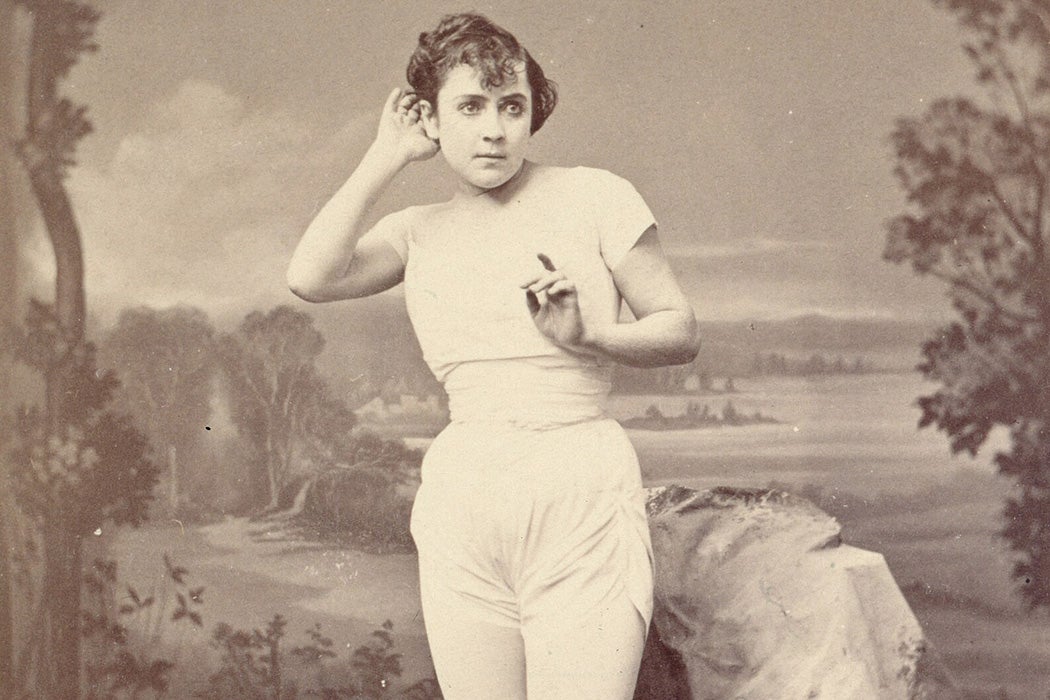
Menken, a firebrand actor and poet, is perhaps best remembered for her performance as the traditionally male lead in the Byronic hippodrama Mazeppa. In the play’s climax, the hero is stripped naked and lashed to a horse, which is sent galloping across the stage. Menken not only played the lead, she did so in a tight nude garment leaving little of her form to the imagination by nineteenth-century standards.
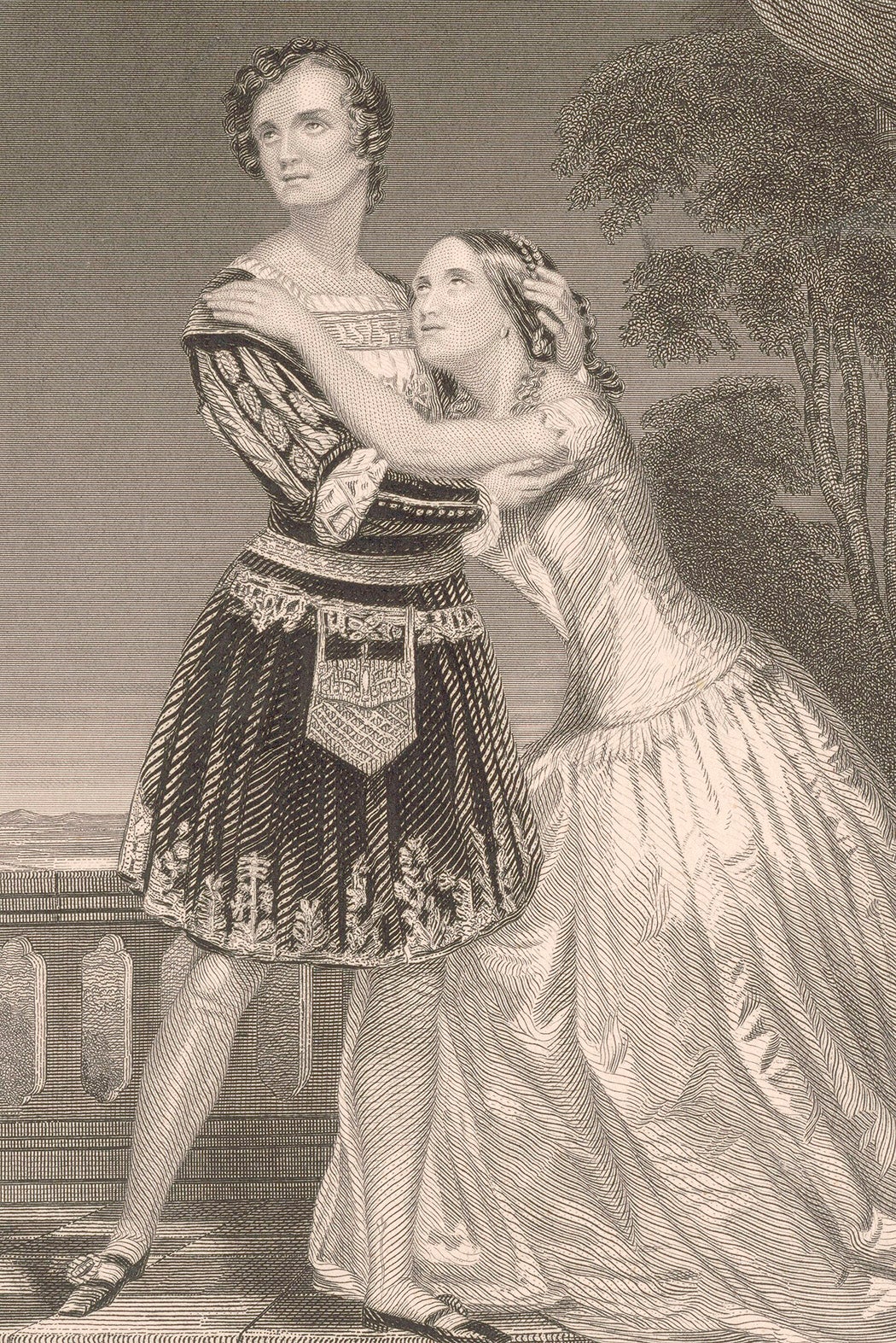
Cushman was known for her Shakespearean work, particularly her performance as Romeo opposite her sister Susan in the role of Juliet. Writers routinely described her with terms like “strong-willed,” “dangerous,” “large-brained,” and “selfish” for her devotion to her work and her personal intensity.
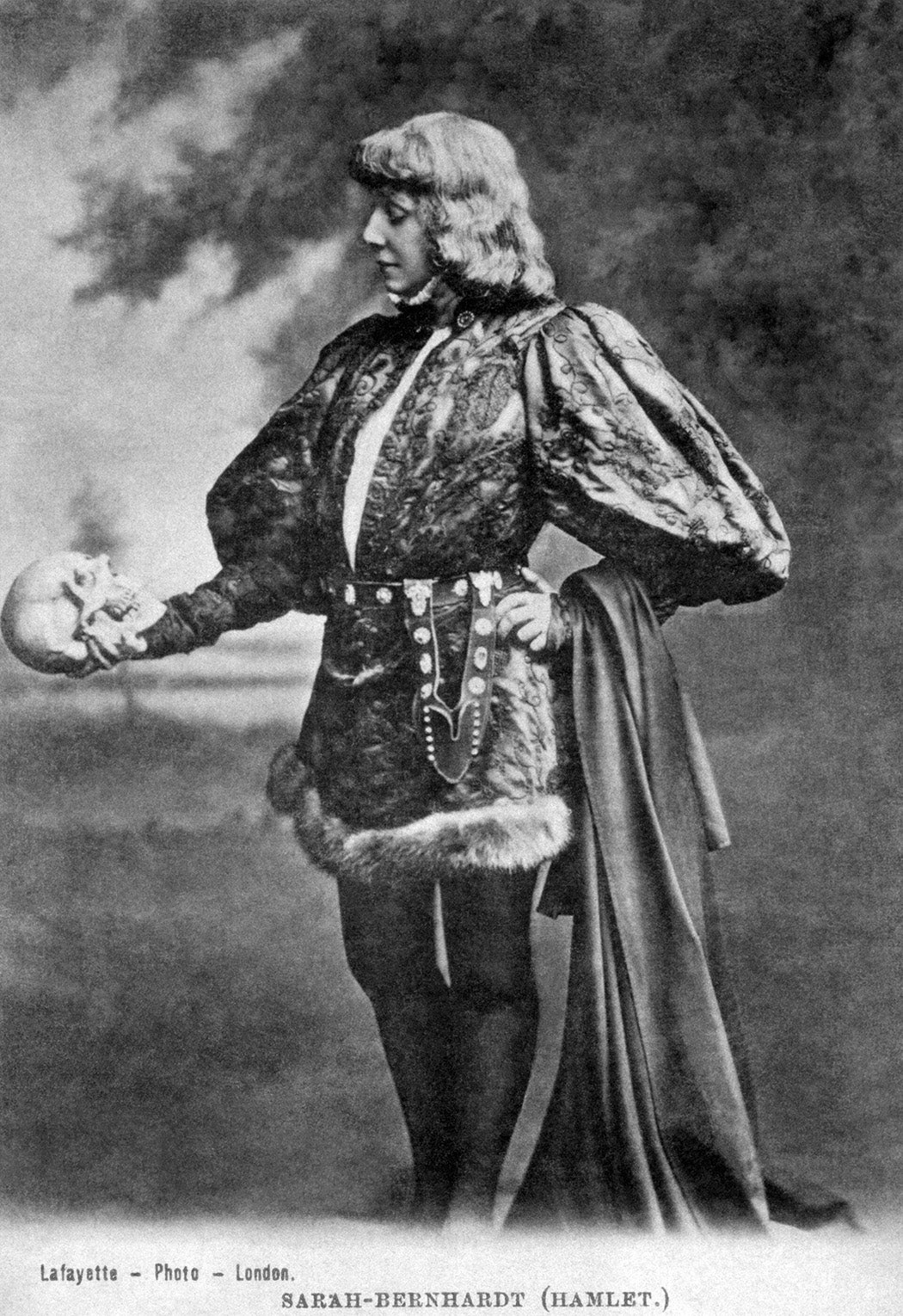
Bernhardt, renowned for her unapologetic appetites and media savvy, embraced male roles with relish. For a run as Hamlet in 1899, Bernhardt used a genuine human skull gifted to her by the novelist Victor Hugo. (Such practices are not entirely unusual; in 2008, the Royal Shakespeare Company fulfilled pianist André Tchaikovsky’s dying wish that his skull be used in a production).
These performers demonstrate not only how women routinely played gender-swapped roles in nineteenth-century theater, but also how such performances could not escape the era’s common ideas about gender and power. Critics and audiences came to the shows for different reasons, and celebrated or criticized them accordingly. No era is a monolith, and since media voices vary in opinion and strength, we need to sift through evidence of both praise and confusion.
Some folks loved it. An 1882 book about Cushman cites “unanimous and lavish” praise by London press, and admits that critic James Sheridan Knowles “was not prepared for such a triumph of pure genius.” Mark Twain is said to have considered Bernhardt an actress in her own category of skill and magnetism.
Exploring the boundaries between binary gender norms was not easy going, though. As for Menken, her performance was “less publicized than her body suit, rendering any potentially transformative or symbolic transgendering ineffective by framing her instead as “a woman who has prostituted herself and would expose body parts to satiate male desires for a price.”
All three women were known to have same-sex partners—Central Park’s Bethesda Fountain, sculpted by Cushman’s partner, is said to be in the actress’s likeness—and recorded responses generally obscure or downplay queer identity and desire. The 1920s critic Gamaliel Bradford, in a classic example of “they were just roommates” history, wrote: “There is no sign of any later thought of marriage in Miss Cushman’s career, or even of any distinct approach to attachment, so far as men were concerned. Her life was full, however, of ardent devotion to women friends, who worshiped her and were worshiped by her.”
Cultural scholar Theresa Saxon explains that, for actors like Cushman, even positive reviews often reflected gendered expectations. She may have been lauded as Romeo, for example, because she was playing a character that was broadly understood to be young and effeminate, something that a woman could naturally emulate. Likewise, prevailing concepts of Hamlet at the time cast the prince as a wan and melancholic, leading critics to bristle at Bernhardt’s energy. One review considered that even the best woman actor could not appear as more than “a high-spirited, somewhat malicious, boy.”
Bernhardt responded with a quote from Act One in which Hamlet vows to speak to his father’s ghost “though hell itself should gape,” saying that “Some wish to see in Hamlet a womanish, hesitating, flighty mind. To me he seems a manly, resolute, but thoughtful being.”



.jpg)
