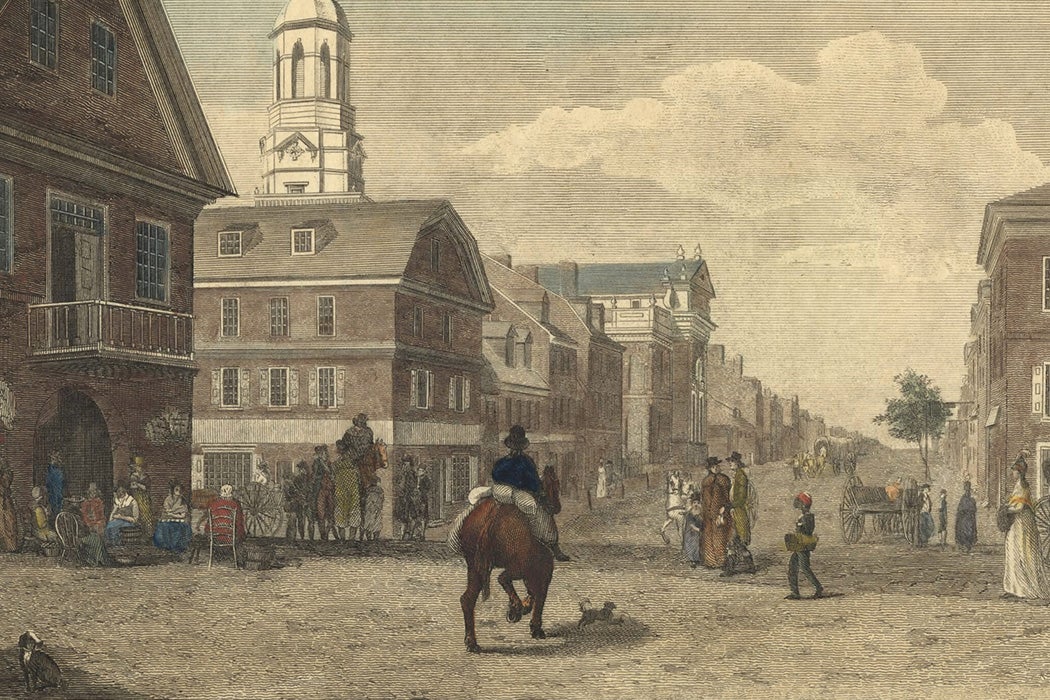
A street fight between two French-born men in Philadelphia in May, 1784 sparked a nation-wide debate over the meaning of American citizenship. Historian Connie Thomas explores how the debate revealed a gap between legal definitions of citizenship and the nascent national sense of belonging to a community.


This Philadelphia story began when French migrant and Revolutionary War veteran Charles Julien de Longchamps attacked the French Consul to the US, Francois Barbe-Marbois. In response, the government of France requested that Longchamps, who they claimed as a French citizen, be extradited back to France to stand trial.
Longchamps, however, claimed he had become a naturalized citizen of Pennsylvania only the day before the fight. Pennsylvania and national officials disputed the validity of his claim of naturalization and argued that, as a “foreigner,” he had no rights in the US and was subject to French law.
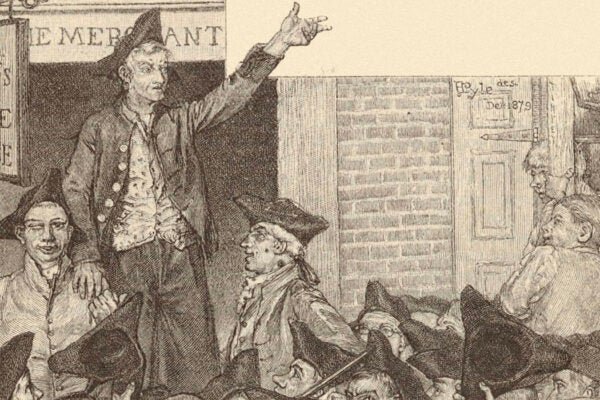
“These claims were met with outrage in newspaper coverage across the United States,” writes Thomas. “Invoking a broader national community, public commentators argue that Longchamps showed a commitment to the shared values of the Revolution.” This was, they argued, “more important than abstract legal terms of membership and proved Longchamps’ status as an American citizen, regardless of his claim to state citizenship.”
The Longchamps Affair, as it became known, has generally been considered as a case-study in the development of US foreign policy during the Confederation period. Thomas looks at it through the lens of the “contested nature of citizenship”—a contest still very much going on more than two centuries later.
“American citizenship was understood not only as a state-centric legal membership […] but also as a national sense of belonging framed by republican characteristics inherited from the Revolution, such as civil participation, volitional allegiance, and universalism.” These two ways of looking at citizenship, Thomas continues, “did not exist harmoniously.”
The Articles of Confederation, the law of the land between 1781 and 1789, had a comity clause that stated “the citizens of each state shall be entitled to all privileges and immunities of citizens in the serval states.” This didn’t actually do much to arbitrate the confusions of the “legal inconsistencies of state citizenship laws.” As in other aspects of the confederated states, “the law” was actually many laws. The idea, legal and otherwise, of “American” was still developing.
Longchamps, after all, claimed he had become a citizen of Pennsylvania, not the US. The idea of “natural-born” citizens was less than a decade old, ambiguous, precarious, and untested. Was Longchamps a test? His fate was seen “as fundamentally tied” to even natural-born citizens. As one of these declared, “if they send him off, I think I shall not long be safe myself.”
Perhaps appropriately enough, Longchamps was no paragon of citizenship any way you sliced it. A hothead, more than once accused of theft and fraud, he was locally notorious because the parents of his wealthy Quaker bride considered him a fortune-hunter and had sponsored articles challenging his claims of French nobility.
Weekly Newsletter
After attacking the French Consul, who wouldn’t confirm a noble birth for him, Longchamps was charged with being a public menace and assault and battery. (Those who argued against Longchamps’ Pennsylvania citizenship said he definitely did not meet the “good character” qualification in the state constitution.)
Nonetheless, mass protests blocked an effort to put him aboard a France-bound ship. In September, 1784, he was found guilty and sentenced to two years imprisonment in a Philadelphia court. With Pennsylvania not providing satisfaction, the French took the matter of his extradition to the Continental Congress and John Jay. They didn’t help much. The Marquis de Lafayette, America’s favorite Frenchman, even got involved while calling Longchamps a “despicable wretch.”
More to Explore
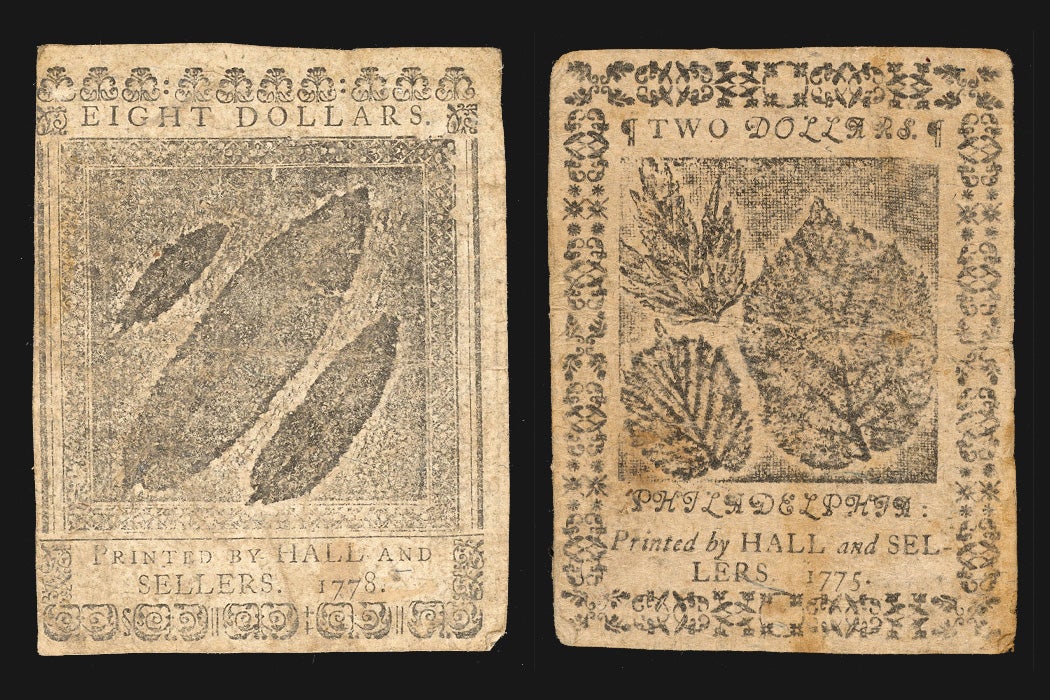
The First Green Money: Nature-Printed Currency
Though Longchamps might have been a scalawag, the revolutionary ideals of America included him “in a national community that was forged upon shared values and rights, transcending state borders.” Simply by joining the fight for independence, Longchamps had become an American citizen in the eyes of many citizens—and they saw the official attempt to delegitimize his claim to citizenship as an attack on their citizenship. “The public adopted a shared language of American identity to defend an expansive interpretation of their own rights and protections.”
Against the best efforts of the state-centric, legalistic forces, Longchamps managed to avoid extradition. His two-year jail sentence didn’t seem to reform him, though; he got into another fight with another Frenchman that led to his being killed in a duel in 1787. Citizenship was not just a question of law or character, but of belonging.