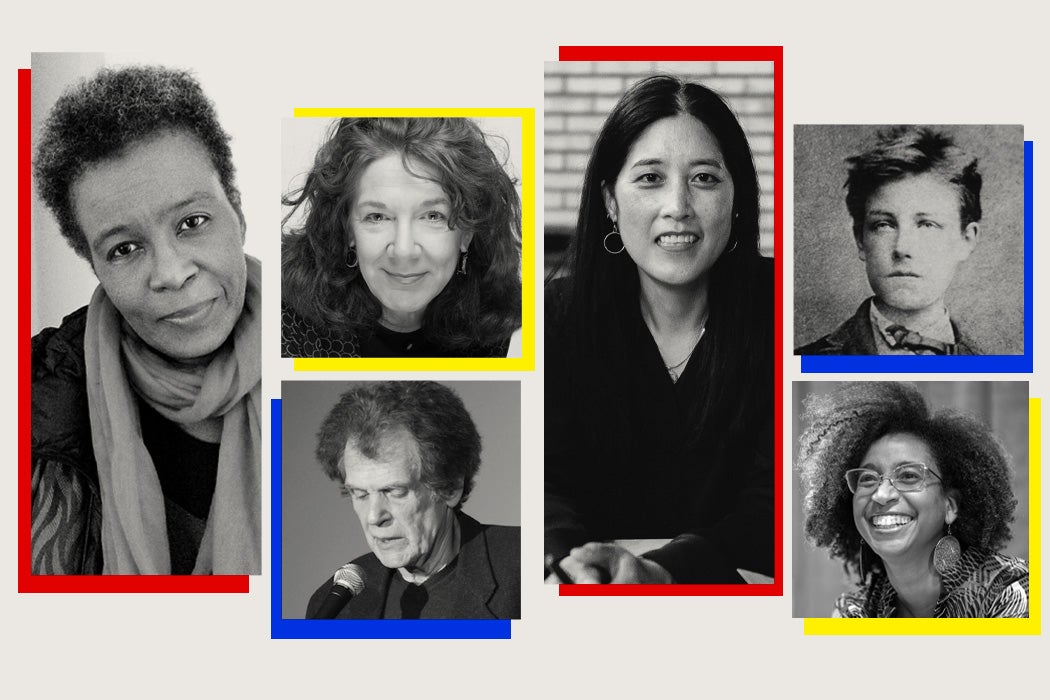
When most people think of poetry, they think of one of its most defining traits: the line break. But what happens when a poet abandons this essential tool? Enter the prose poem, a genre-defying form that emerged from the nineteenth–century French Symbolists. Today’s writers use it to wildly different ends, from political invectives to plainspoken diaries to surreal dreamscapes. Here are ten prose poems that showcase the exciting diversity of the genre. As always, all are free to download.


from Citizen, Claudia Rankine
In her touchstone genre-defying book, Citizen, Claudia Rankine uses poetry, prose, image, and essay to interrogate racism in contemporary American life and media. In this excerpt, she draws the reader into deeply unsettling microaggressions with diaristic prose, blurring the lines between reader and speaker with her use of the second person.
“A Foreshortened Journey,” Louise Glück
Nobel Prize–winning poet Louise Glück uses the narrative power of prose to weave an allegorical tale of a man suspended in the middle of his life—an eerie and unsettling exploration of paralysis, fatigue, and the looming specter of death.
“Weave of Motives,” Alexis Pauline Gumbs
Gumbs describes herself as a “Queer Black Troublemaker” and a “Black Feminist Love Evangelist,”and here she uses visceral imagery, heightened lyricism and the incantatory power of language to dive into the body, memory, spirituality, history and nature.
“Genie,” Arthur Rimbaud, tr. John Ashbery
Rimbaud wasn’t yet twenty years old when he wrote Illuminations, a cornerstone in the canon of prose poetry, and it possesses all the wild exuberance of youth. It’s a hallucinatory explosion of imagery, emotion, and dream, brought to life in English in this translation by John Ashbery.
from Whereas, Layli Long Soldier
In 2009, President Obama signed the Congressional Resolution of Apology to Native Americans in a closed ceremony without any tribal leaders present. Layli Long Soldier, a citizen of the Oglala Lakota Nation, directly confronts the resolution’s coercive language in her long poem “Whereas,” interrogating the lines between languages and cultures, and between the personal and the political.
from Obit, Victoria Chang
We’re all familiar with the slender obituaries we find in the back of the newspaper. Victoria Chang uses this formal tool in her book Obit, a collection of poems written in the wake of her mother’s death. Each poem is its own obituary—for her mother’s lungs, for memory, for home, and in this excerpt, for herself—creating a powerful meditation on grief.
Weekly Newsletter
“Myopia,” Russell Edson
Widely hailed as the “godfather of the prose poem,” Russell Edson carved a unique space in contemporary poetry, writing comic, surreal, and fairytale-like poems that hover right on the border of fiction, poetry, and theater. In “Myopia,” he uses the humorous conceit of a belly button for an eye to create a wry examination of vision, confusion, and origin.
“My Father Talks about Not Dreaming,” Michael Burkard
In “My Father Talks about Not Dreaming,” Michael Burkard uses a conversational, diaristic style of writing to bring the reader in close to his emotional landscape. The result is a poem as funny as it is sad, exploring his relationship to his father, to dreams, and to poetry itself.
“The Flood,” Joy Harjo
In “The Flood,” Joy Harjo uses the storytelling ability of prose to blur the lines between myth and reality. The poem tells the story of the seduction of a sixteen-year-old girl by the watermonster, a mythical figure, weaving together themes of place, identity, trauma, and transformation.
“I Remember, I Remember,” Mary Ruefle
With emotional precision and humor, Mary Ruefle reflects on her path to becoming an artist in this long poem. Through the repeated refrain of “I remember,” she tunnels further and further into her childhood, her relationship to writing, to other artists, and to herself.