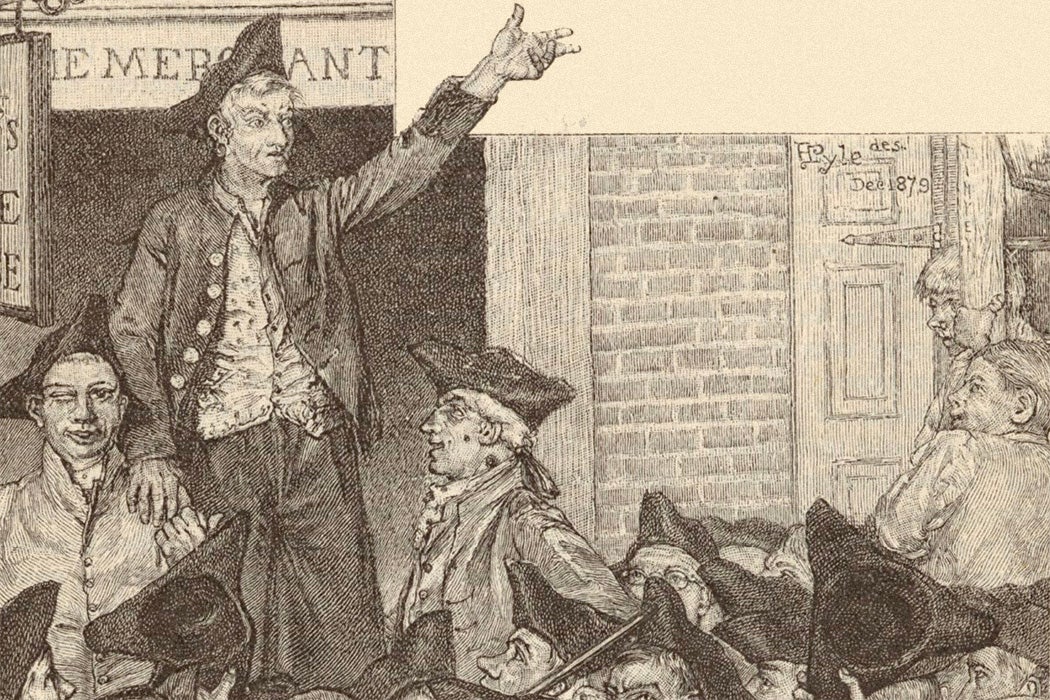
When is an oppressive regime too much to accept? What risks are worth taking to rebel against it? Those were questions that citizens of the American colonies had to answer in the decade leading up to the revolution against Britain. As historian Michael D. Hattem writes, for many in New York, the answers changed in accordance with shifts in how British rule affected their material interests. In particular, he looks at the attitudes and actions of freemen, common citizens with political rights but without wealth and power.


In the wake of the Stamp Act of 1765, Hattem writes, the interests of the freemen largely aligned with those of wealthy merchants. The new taxes represented a drain on the city—a direct expense for merchants and landlords, and an indirect one for everyone they did business with. They also meant a loss of silver currency, which was a particular problem for trade since Britain also limited the use of paper money.
Elite merchants responded by boycotting British goods, while freemen took a more aggressive stance. Privateer Captain Isaac Sears led a crowd of more than 20,000, which dragged an effigy of Lt. Gov. Cadwallader Colden through the streets and broke into his carriage house, stealing and burning his possessions.
Hattem writes that a portion of the elite balked at this lawlessness. But the freemen rewarded the factions who stood with Captain Sears, giving them increasing power in the colony’s Assembly. In 1770, after years of the boycott and additional street clashes, the Assembly won a concession from Parliament, which repealed many of the duties on products and permitted the printing of paper currency. Despite opposition from radicals who believed the boycott on British goods should continue nevertheless, a majority of both merchants and freemen were eager to get the economy back on better footing, so trade with Britain resumed.
More to Explore
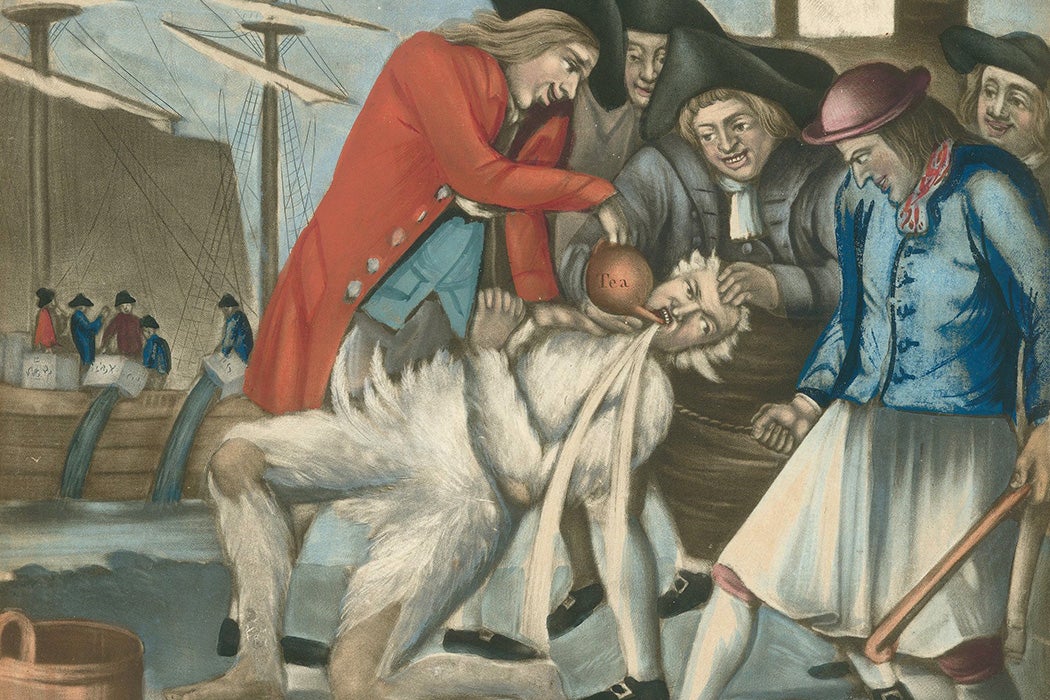
Tarring and Feathering, American Style
But, Hattem writes, things changed again after the British government’s crackdown on Boston in the wake of the 1773 Tea Party. After Britain closed its port and dissolved its elected council, Boston called for New York and others to resume the boycott.
The merchant faction resisted this call, nervous about their trading opportunities as well as the threat a potential war posed to their property interests. Freemen weren’t eager to mess up the economy either, but many of them became increasingly convinced that something had to be done to protect the colonies’ ability to participate in trade, given the Boston example.
Weekly Newsletter
They set up a new organization, the Committee of Mechanics, to represent their interests. While they didn’t clash directly with the merchants, who were becoming increasingly loyalist, they pushed for more confrontational policies with Britain, including through participation in the First Continental Congress. Like other moves New York’s freemen had made over the previous decade, Hattem writes, this was as much about material considerations as ideology.
“Republican ideology offered a grammar of resistance but did not necessarily provide the logic of resistance for the broader populace,” he writes.