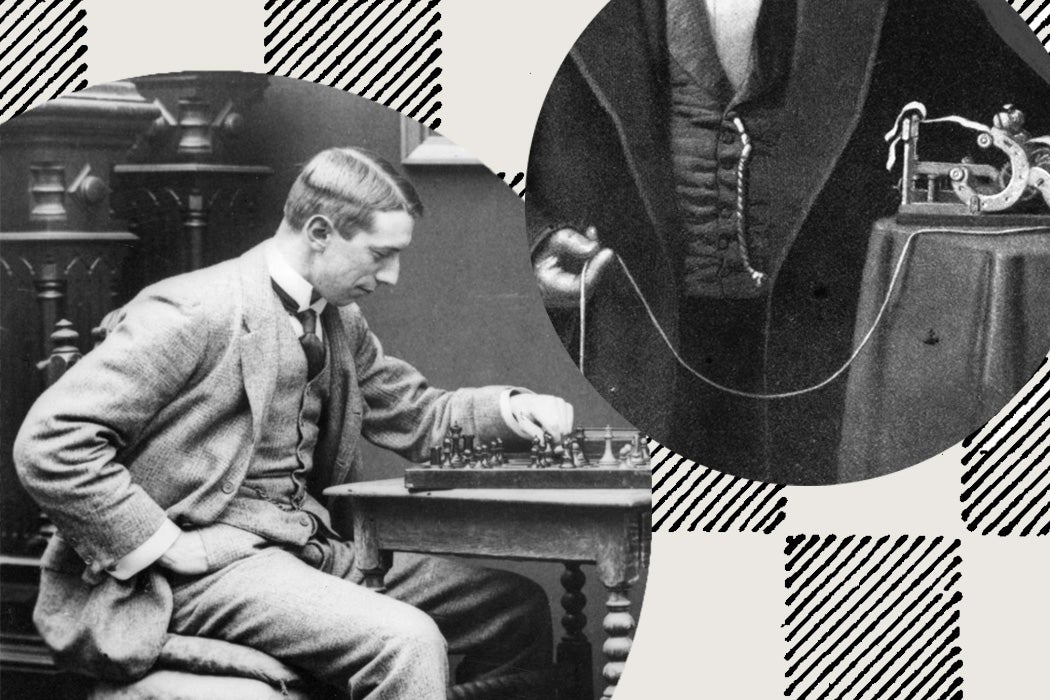
In 1897, the United States House of Representatives held a series of chess matches to find their most skilled players. The five winners were pitted against counterparts in the British House of Commons. But while the Americans sat down to play in Washington, D.C., their opponents sat in London. The players received moves by telegraph, and sent responses back over wires that crossed the Atlantic.


By this point, “cable chess” had been slowly evolving for decades. Historian Simone Müller-Pohl argues that this form of long-distance chess play offers insight into the cultural and political currents of the industrial era.
By the mid-nineteenth century, she explains, there was a growing sports culture in Europe and the US. Industrial technologies enabled more people to attend games and follow along from a distance. A growing middle class fostered this sporting culture, which came to include chess.
“Weekly,” Müller-Pohl explains, “the liberal and intellectual elites of the time assembled around chess boards in Paris, Berlin, Warsaw, Vienna, Moscow, Rome, and London.” Interest in the game spread, and chess clubs emerged. As clubs arranged tournaments and standardized chess rules, Müller-Pohl argues that chess “was gradually turned into a sport.”
Correspondence chess grew along with the game, in part thanks to cheap and efficient postal services. When the telegraph emerged on the scene, the application to chess was almost immediate.
More to Explore
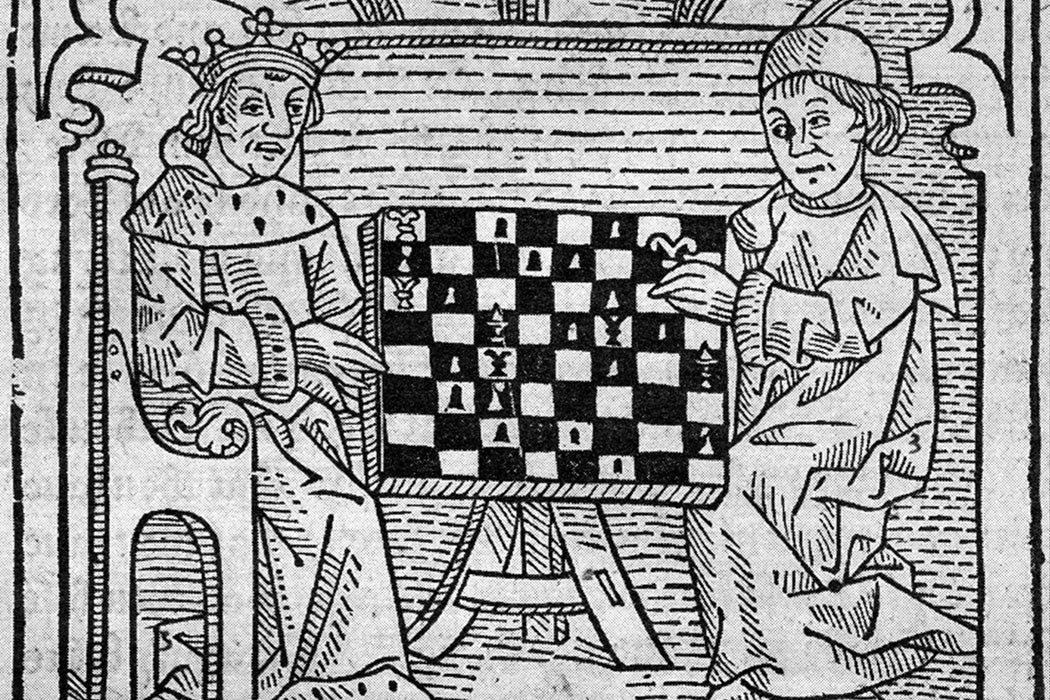
Knights and Kings: Medieval Chess as Male Bonding
“It was telegraphy’s fathers who pulled the strings behind the first schemes for cable chess,” Müller-Pohl explains. In 1844, inventor Samuel Morse arranged chess matches on a new telegraph line between Baltimore and Washington, D.C. “All of the 686 moves necessary for the seven games played were transmitted without mistake or interruption,” Müller-Pohl writes.
Not long after, in 1845, inventor Charles Wheatstone attended a demonstration in London. Chess legend Howard Staunton played against his rival George Walker over the South Western Railway line between Portsmouth and London. Müller-Pohl describes how witnesses found the match “rather tedious,” but it received a lot of press. This was partly the point—the matches demonstrated and advertised the capabilities and accuracy of the invention.
The Staunton match had another interesting aspect. Müller-Pohl points out that “the lines were still used for ordinary traffic during the games, allowing a group of chess players from Southampton to have every move telegraphed to them.” A bit like modern e-sports, spectators could observe the virtual match.
Weekly Newsletter
Clubs began organizing telegraph matches, starting with an 1865 match between Liverpool and Manchester. Club matches over cable remained infrequent, but as transatlantic connections grew, so did interest in long-distance chess.
Dozens of organized matches took place between American and British competitors between 1885 and 1911, including the competition between Congress and Parliament.
To Müller-Pohl, that match in particular reveals some of the hopes swirling around the technology. Morse and others believed that rapid communication could end wars. “Telegraphy thus turned the entire world into a chess board,” Müller-Pohl writes, “where a strategic game (of, for instance, trade wars) could be played peacefully.”