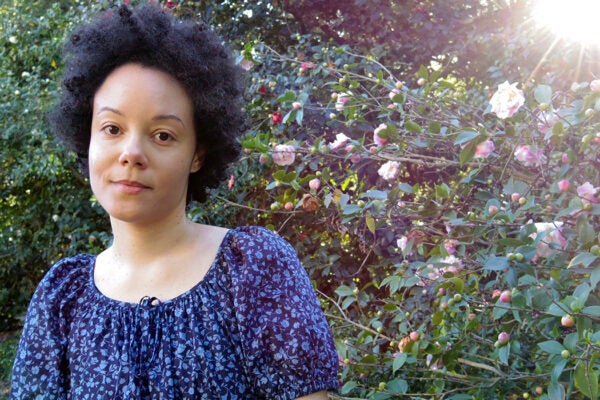
There are, you may not be surprised to learn, serious disparities in how media covers missing persons. The late PBS newscaster Gwen Ifill is credited with coming up with the term Missing White Women Syndrome (MWWS) to describe the disparate attention traditional media, internet media, and the wide world of social media give to missing white women and girls and the corresponding lack of attention given to missing Black, Latina, and Indigenous women and girls—and boys and men of all types.


Law professor Zach Sommers shows that MWWS isn’t just a social media trope; it’s a “real, empirical phenomenon,” shown by analyzing media news about abductions “across multiple sources and using multiple methods of analysis.” He grounds this in a context of media representations that gives greater weight to white people as victims of violence and greater weight to Black people as perpetrators of violence.
Overrepresented as victims, missing white women and girls are “ideal” fodder for news media, which is, essentially, another category of entertainment, striving for ratings, viewer-share, and engagement of hits and likes online. In a racialist and patriarchal sexist order, some victims are more profitable than others.
“Not only are missing blacks and missing men less likely at the outset to garner media coverage than other types of missing persons,” Sommers writes, “but they also receive a lower intensity of coverage when their stories are, in fact, picked up by news outlets.”
A telegenic or “beautiful” young white woman victim, on the other hand, is ratings gold. Sommers’s initial examples are instructive. There were only a handful of stories about a missing Chicagoan (Black, male, seventeen) three months after the “media firestorm” over a missing California cheerleader (white, female, sixteen) in 2013. Perhaps unsurprisingly, the disparity continues: no Wikipedia page exists for Aaron Hubbard, while the Wikipedia page for the kidnapping of Hannah Anderson comes complete with thirty-eight footnotes at the time of this writing. Under the header “In popular culture,” it’s noted that her story generated a Lifetime TV movie (with telegenic blonde actor) and inspired episodes of Criminal Minds and Law and Order SVU.
What about where most young people today get their news? Social media platforms serve to recreate “some of the racial biases inherent in traditional news media,” write Michelle N. Jeanis, Rachael A. Powers, Lauren N. Miley, Charlene E. Shunick, and Margaret Storms in their study of how people engage with social media about missing persons.
More to Explore
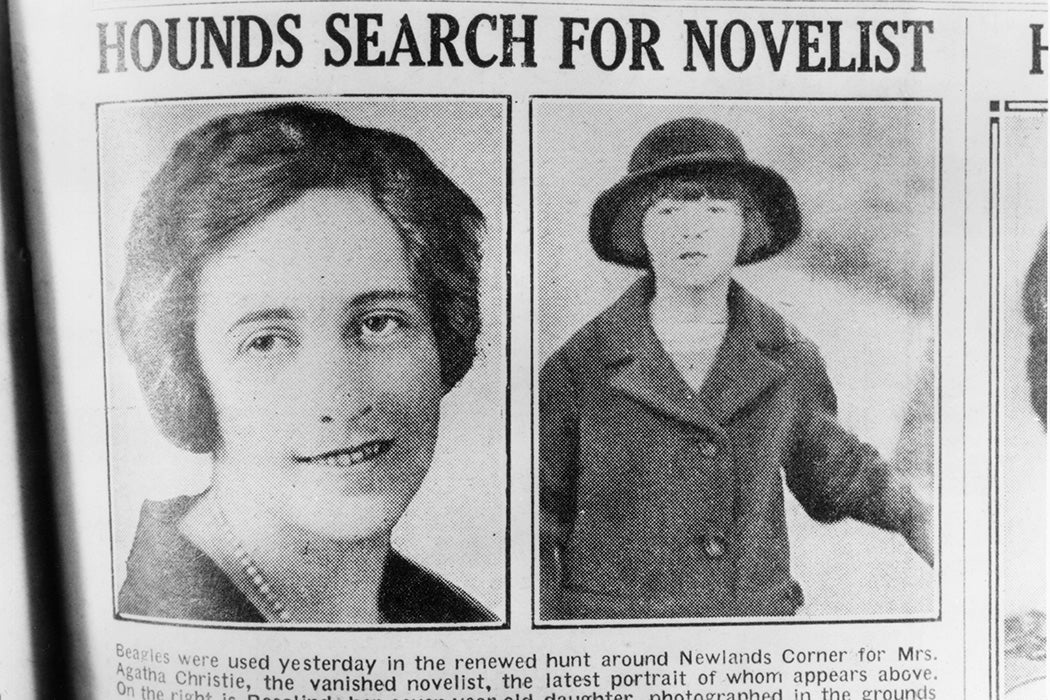
Agatha Christie’s Mysterious Disappearance
“Law enforcement, families, and nonprofit organizations” use social media to increase exposure about missing persons. Such “exposure is assumed to be related to the recovery of the missing person.” Some have called this the new “milk carton campaign” in reference to the 1980s practice of putting the pictures of (again, mostly white) missing children on milk cartons. The “stranger danger” warnings of the same period were undercut by the fact that most of those pictured on milk carton were actually taken by a noncustodial parent. The milk carton campaign, which pediatrician Benjamin Spock said terrified young children, was made obsolete by the introduction of the AMBER alert system in 1996.
In social media at least, Jeanis et al. write, “this study did not find any significant gender differences for missing persons’ case engagement.” But race did. “Missing persons’ posts related to White victims and missing children received significantly more clicks, likes, and shares when compared to minority or adult victims.”
When it comes to social platform users, Missing White Woman Syndrome “may be far more strongly related to ‘White’ than ‘woman,’ reflecting the larger issue of White privilege”—defined here as “systemic factors in a society that reproduces a privileged status for White individuals.”
Weekly Newsletter
There is also a hierarchy of ideal victimhood. “Missing” encompasses both those who are abducted and those who run away. Runaways are at serious risk, but social media alert-posts about runaways “received significantly fewer likes than nonrunawy youth.” Minority runaway cases, meanwhile, were “associated with the lowest engagement levels.” (The authors also note that the criminal justice system treats runaways differently, depending on gender and race.)
“Interactional analyses suggest that race may largely motivate engagement, supporting traditional media studies, and providing further evidence for the marginalization of minority victims,” the authors conclude.