Skip to content
Black and white headshot of author Matthew Wills

Matthew Wills

Matthew Wills has advanced degrees in library science and film studies and is lapsed in both fields. He has published in Poetry, Huffington Post, and Nature Conservancy Magazine, among other places, and blogs regularly about urban natural history at matthewwills.com.

A portrait of Cordelia Sanders, a mixed-race woman, daughter to Richard Walpole Cogdell and Sarah Martha Sanders, ca. 1860.

Race, Fertility, and the Science of Slavery in Antebellum America

Pseudoscience about mixed-race women’s fertility helped justify slavery in nineteenth-century America.
An illustration of a giant squid, 1887

How a Giant Squid Attack Became an Urban Legend

A WWII survivor’s account shifted over decades, turning a murky sea encounter into a widely repeated legend.

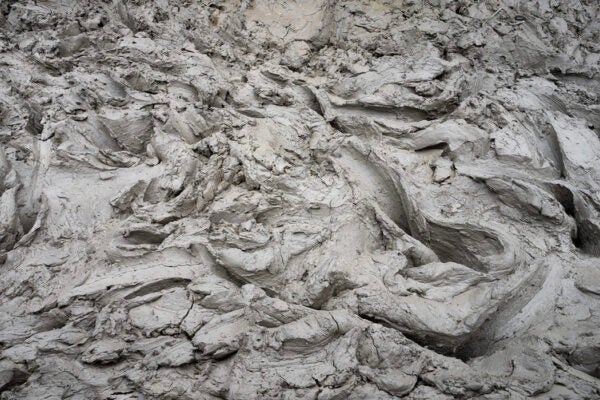
How the Rio Grande Was Engineered into a Border

Twisting waters once blurred the boundary, but twentieth-century engineering turned the Rio Grande into a fixed, policed line.
The ceremony for the driving of the golden spike at Promontory Summit, Utah on May 10, 1869

How The West Was Photographed

Railroad photography helped sell an “empty” American West—carefully framing out the people already living there.
John Steinbeck, 1935.

Returning to Steinbeck’s Sea of Cortez

A literary classic doubles as data, helping scientists trace decades of ecological change in the Gulf of California.
Diagram of the Border Patrol’s intrusion detection system.

The Long History of High-Tech Border Policing

In the 1970s, sensors and computers turned the US–Mexico border into a testing ground for automated control.
Abolitionist William Lloyd Garrison nearly being lynched in October 1835

Defying Slave Hunters in Boston’s Courts

A dramatic 1836 courtroom escape shows how Black women challenged slave hunters—and Boston’s elite.
Yarn bombed bicycle on the third street promenade in Santa Monica, presumably by artist OLEK

Knit One, Bomb Two: A Primer on Yarn Bombing

Soft fiber meets hard infrastructure in a global movement that tests the bounds of public art.
A herd of Buffalo in Western Kansas, 1860s

Drought and Indigenous Migration in the American Midwest

In the seventeenth century, life at the prairie–forest edge was dynamic, unstable, and deeply shaped by climate.
A Chelsea Pensioner, wearing a sprig of orange blossom [?] in his buttonhole, sipping a dish of tea. Engraving by J. Jenkins after M. W. Sharp, 1840

Consuming the Empire

Sugar, tea, and tobacco tied British daily life to empire, turning global exploitation into ordinary habits of consumption.
Protestors picket behind a security barrier outside the 15th United Nations General Assembly at the United Nations complex in New York City, 1961.

The Congo Crisis and the Rise of a Pan-African Musical Politics

How Patrice Lumumba’s assassination reshaped Black internationalism—and pushed musicians toward a new kind of activism.
Basque sheep herder in Adams County, Idaho, photographed by Dorothea Lange, 1939

The Racial Myth of the Basque Sheepherder

How ideas of ancient tradition shaped labor and immigration in the American West.
The Bostonians Paying the Excise-man, or Tarring and Feathering, 1774

Tarring and Feathering, American Style

What began as a European folk practice became a distinctly American ritual of public punishment.
Second Street north from Market St. with Christ Church, Philadelphia, 1800

Contesting American Citizenship… in 1784

The Longchamps Affair shows how early Americans struggled to define citizenship amid conflicting laws and revolutionary values.
Japanese Embassy, Navy Yard, Washington, DC, 1860

Samurai and Guerrillas: The First Official Japanese Visit

The first Japanese delegation to the US captivated crowds and confounded expectations, as the press cast its samurai as “effeminate.”
A cairn commemorating Angus McMillan in Stratford, Victoria, Australia

Founding Murderers vs. Founding Fathers in Australia

Eighteen stone cairns were set up in 1926 to mark the route purportedly taken by Angus McMillan into Gunaikurnai Country in 1840. Should they remain?
Francis Gary Powers holding a model of a U-2 during the Senate Armed Services Select Committee hearing on the 1960 U-2 incident.

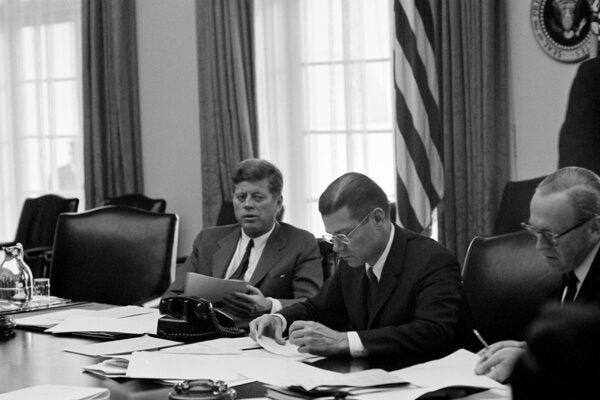
Unforgettable Fire: The U-2 Incident 

Reports on the May 1960 downing of an American U-2 spy plane over the Soviet Union offer a case study in Cold War posturing and misdirection.
The public sitting area of IBM Building on 56th and Madison in Manhattan, 2009

POPS Goes the City: Privately Owned Public Space and Its Discontents

Why is so much of the “public space” in cities actually private, and who benefits from it being that way?
Cross-section illustration of the Baths of Diocletian by French architect Edmond Paulin, 1880

Bread, Circuses, Baths: Bathing in Rome, the Public Way

By the fourth century CE, Rome had some 856 privately owned public baths, the grounds of which served as civic gardens adorned with sculptures.
People silhouettes outlined with a dotted line and amongst them a woman with a question mark on her face

Ideal Missing Persons

Overrepresented as victims, missing white women and girls drive ratings and clicks for traditional and internet media.
A table with many dishes of food

Potluck Nation

Food in America is a living archive of exchange and adaptation, where “ethnic” cuisines blend and redefine what national identity tastes like.
Whale shark (Rhincodon typus), Isla Mujeres, Cancun, Mexico

A Whale of a Shark

The largest fish, Rhincodon typus, is obviously not a whale, but it’s also unusual for a shark.
King Edward VIII and Mrs Simpson on holiday in Yugoslavia, 1936

Topless King in Pedal Canoe!

By exposing his skin on a sunny day, King Edward VIII offered a reminder that a monarch is, after all, nothing but a person.
A view of Main Street in Moose Jaw, Saskatchewan, Canada

Under Moose Jaw: Tourism Or History?

Moose Javians’ confidence and reputation are rooted in a unique, if fanciful, story, developed after the economic downturn of the 1980s and 1990s.
An old Lego character from the 80s on a green Lego surface.

LEGO: Brick by Ideological Brick

Toys, even ones marketed as tools for the imagination, are never value neutral.