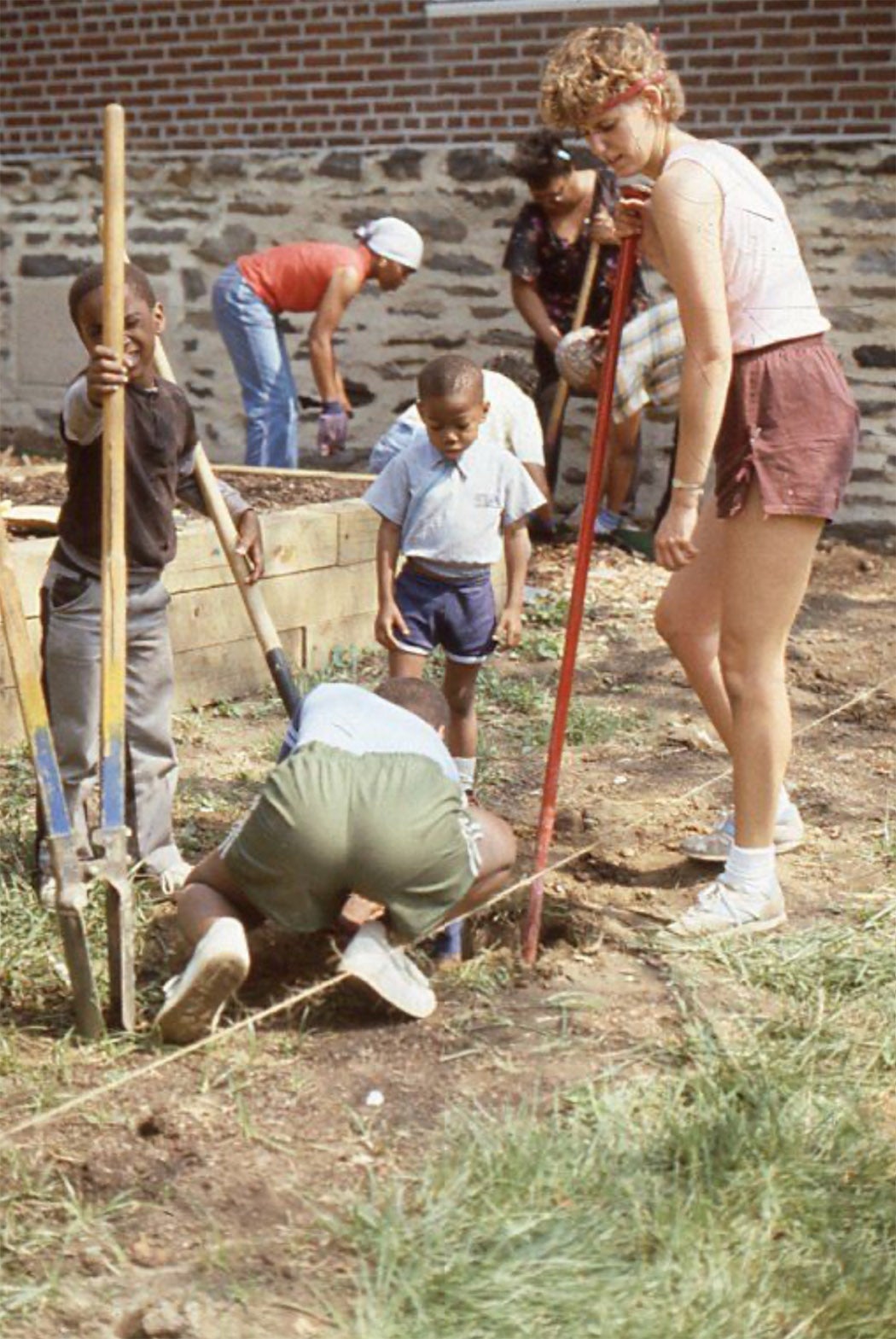
On a spring day, a couple of families gathered in an empty lot in the Philadelphia neighborhood of Mill Creek. Their West Philly community had been struggling for decades. In the 1940s and 1950s, enormous sinkholes created by collapsing sewer pipes had swallowed automobiles, displaced residents, and shaken the very foundations of the neighborhood. The 1960s had brought the dubious promise of urban renewal to the poor and primarily Black community. But on this day in 1974, something beautiful took root: a garden. The tomatoes, zucchini, and beans the families planted in a newly cleaned lot on the 4900 block of Parrish Street would be the seeds for Philadelphia Green, a groundbreaking city beautification program.


Working alongside the Mill Creek neighbors in that spring were two employees of the Pennsylvania Horticultural Society (PHS). Low-income urban communities were not traditionally the purview of such organizations. Most of the country’s horticultural societies had their nineteenth-century origins in higher-income communities, where gardening was a collector’s pursuit. The PHS had been founded in 1827 as a way for enthusiasts to share rare seeds and grafts and experiment with new technologies, and its renowned flower show became known for introducing exotic plants to the American public. (The first Philadelphia Flower Show in 1829 featured a poinsettia imported from Mexico, helping to launch a two-century-long American Christmas tradition.) Through the first half of the twentieth century, the Philadelphia Flower Show was so successful it operated as its own business, but in 1966, the PHS resumed management of the event—a decision that left the organization with unexpected profits, Daniel Jost writes in Landscape Architecture Magazine. Those dollars, PHS decided, would be reinvested into Philadelphia’s neglected neighborhoods.
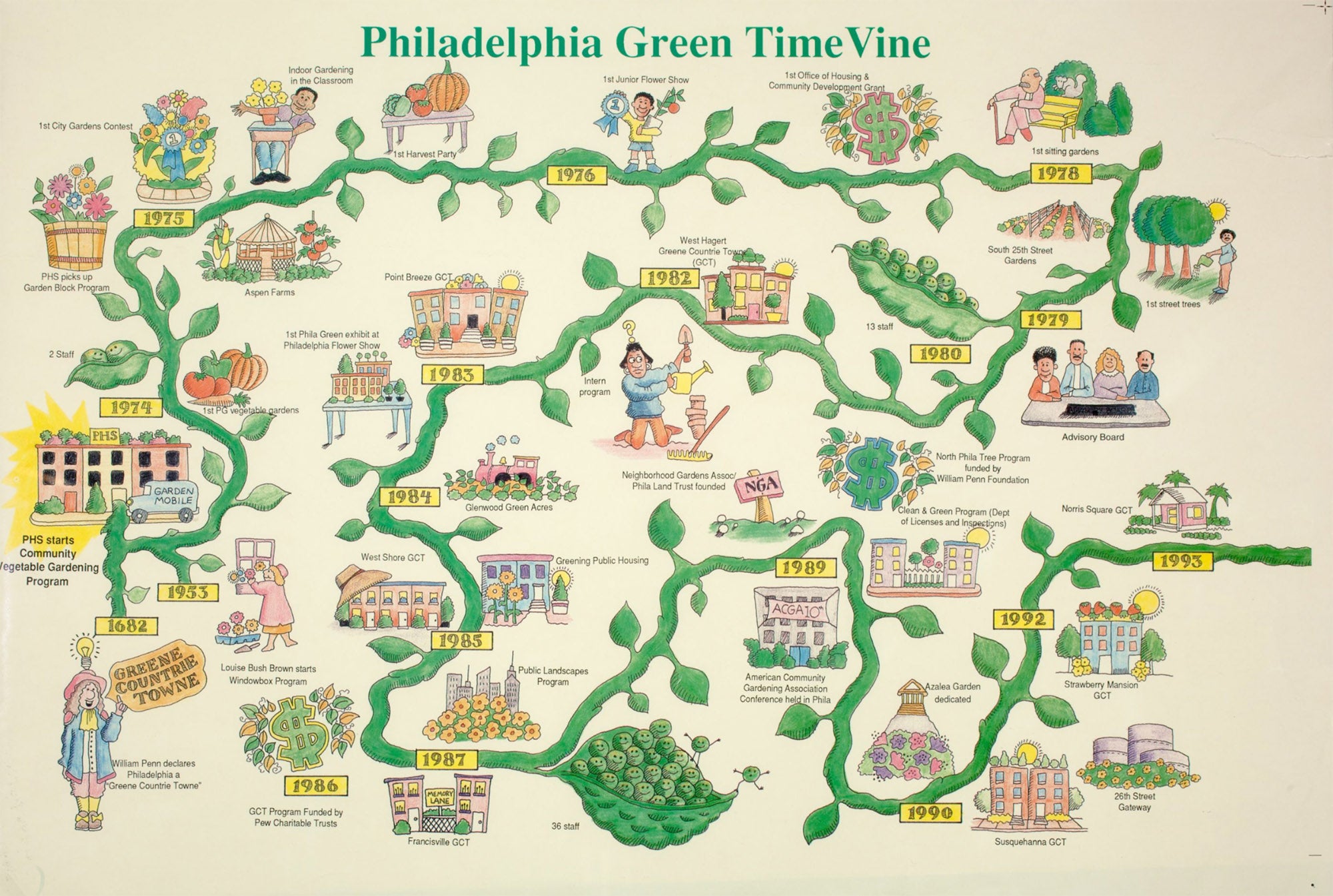
The effort that began in Mill Creek grew quickly. First there were gardens full of vegetables, and then flowers bloomed along city sidewalks. Soon, PHS started teaching gardening in Philadelphia classrooms and debuted a citywide garden contest. For more than fifty years, in partnership with government and philanthropic organizations, the ethos that drove Philadelphia Green’s earliest days has flourished in the city (the name was retired in the 2010s, but PHS still undertakes neighborhood beautification efforts) and thanks to the PHS, that long history has been preserved in images shared via JSTOR.
Weekly Newsletter
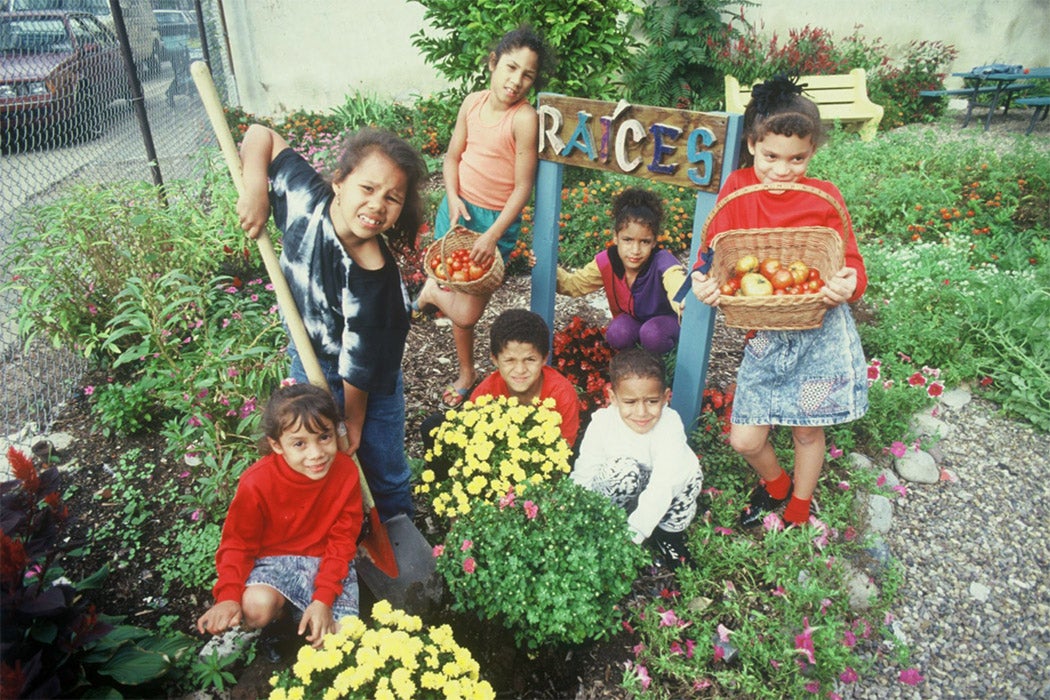
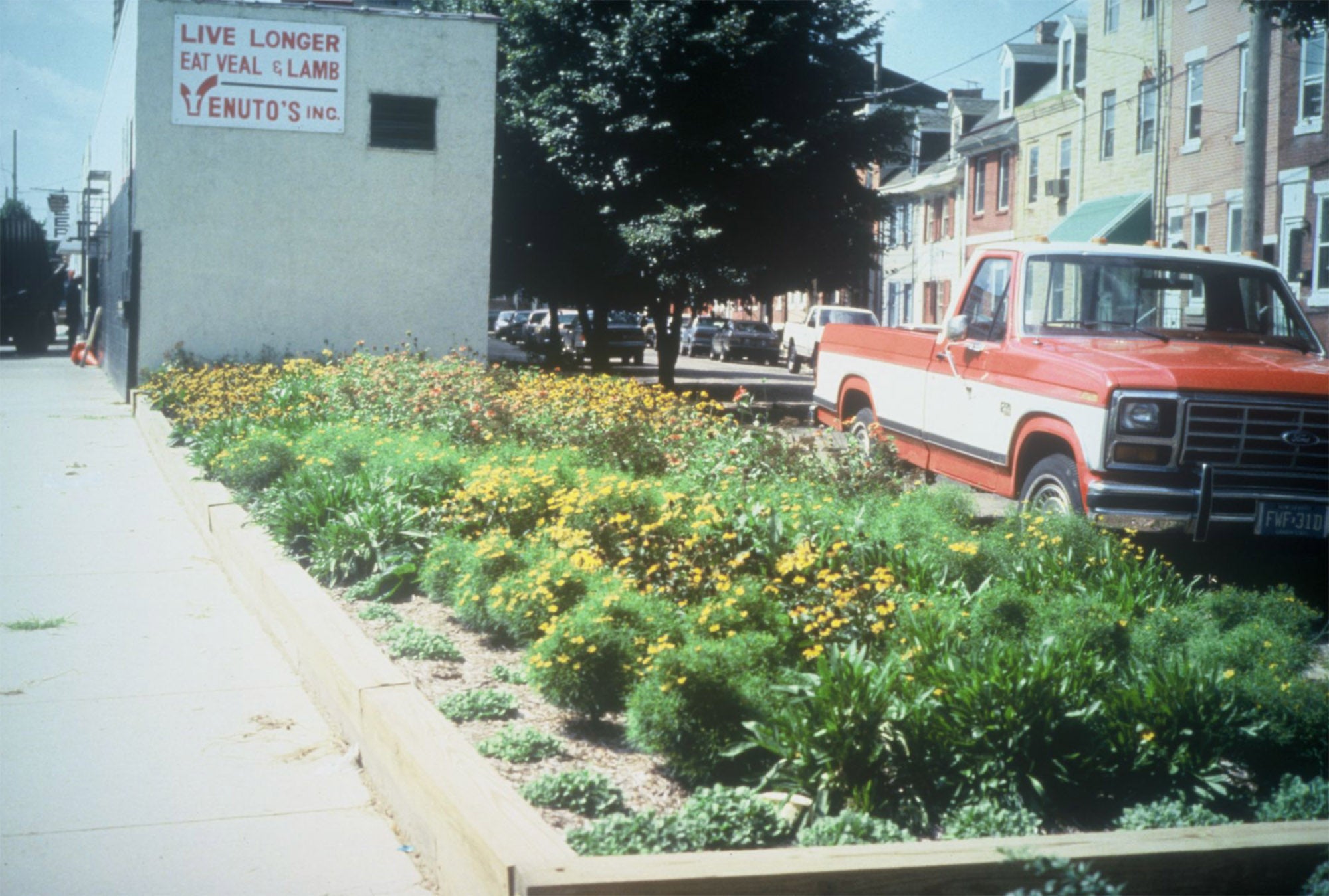
The photos are a tour of Philadelphia in the 1970s, ‘80s, and ’90s from Norris Square in the north of the city to the Delaware River neighborhood of Queen Village to Bartram’s Village to the southwest. Before images depict overgrown lots, barbed-wire-topped fences, and crumbling buildings. The after photos are filled with greenery and, often, murals. (The iconic Mural Arts Philadelphia program, founded in 1984, shared Philadelphia Green’s dedication to revitalizing public spaces.)
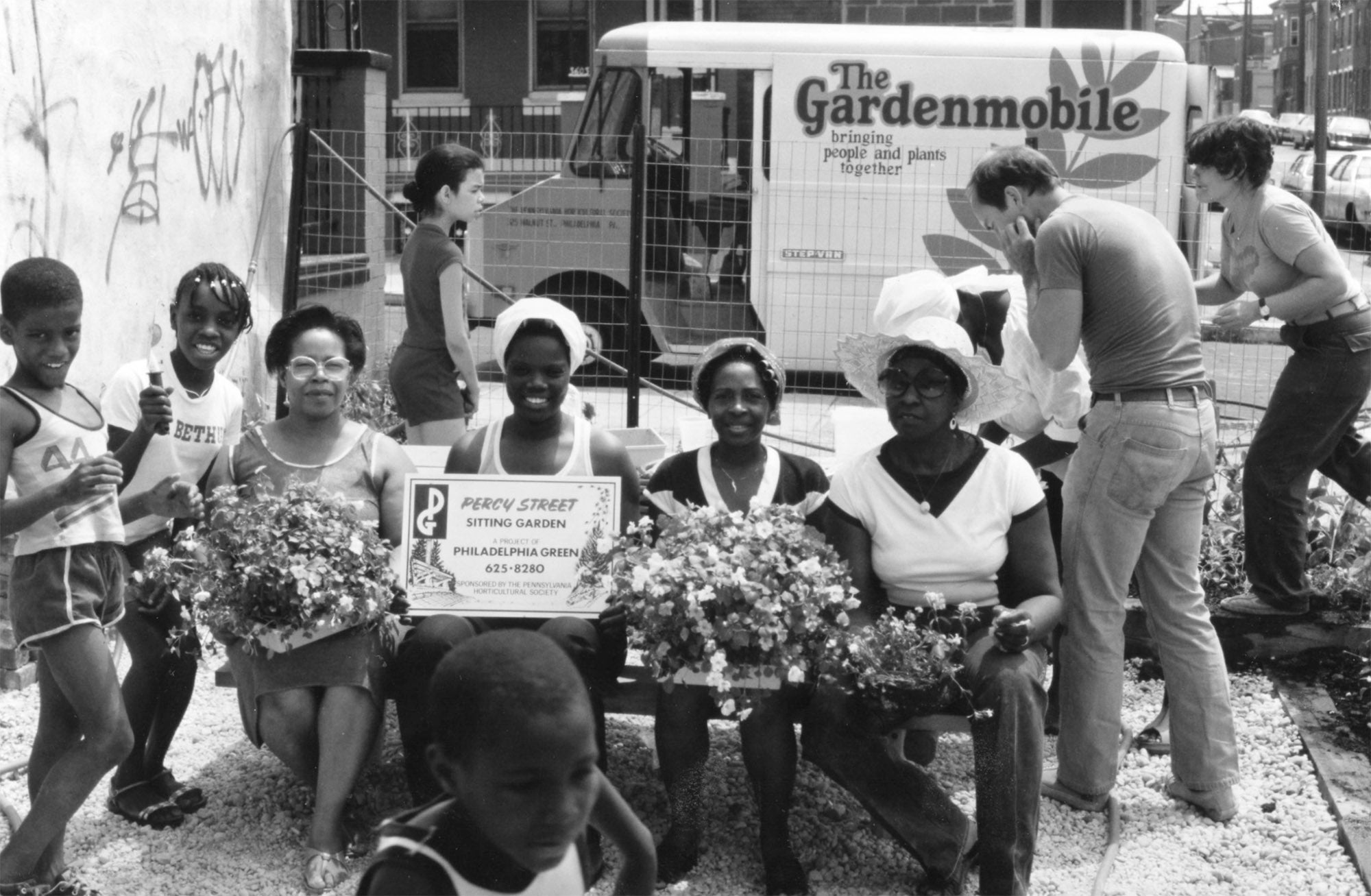
The crumbling buildings featured in the before images remain in the after photos, but there are also smiling people using the previously empty spaces. In that way, the program transformed the city. By its twentieth anniversary in 1993, Philadelphia Green had worked with neighbors and other partners on nearly 2,000 greening projects. Another seventeen years on, in 2010, the total area beautified by PHS was estimated to exceed seven million square feet.
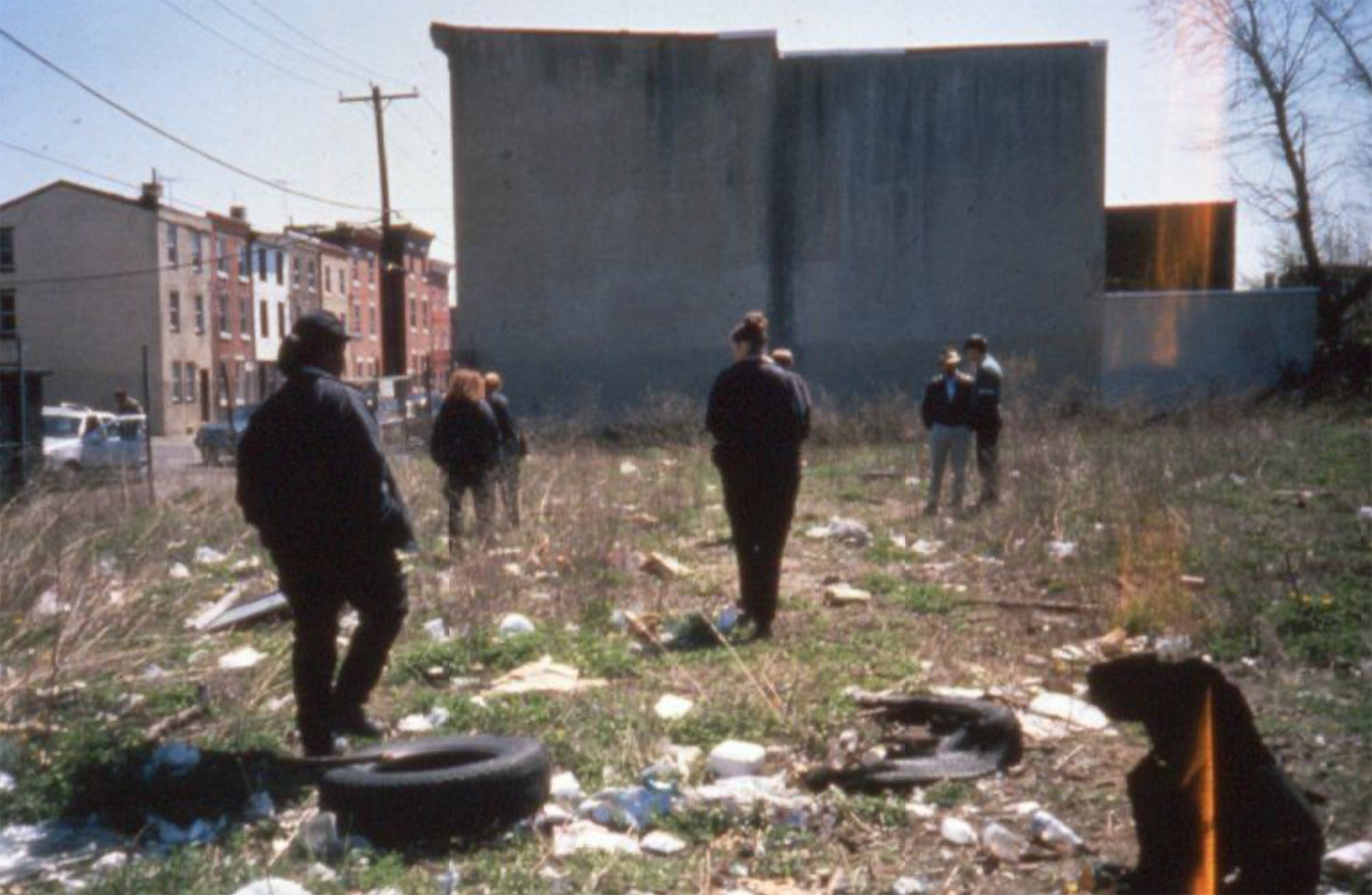
PHS began working to help Philadelphia’s River Wards flourish, foot by foot, in 1995. The communities of Kensington, Port Richmond, and Fishtown had once been industrial areas, but disinvestment in the 1960s had left the neighborhoods dotted with abandoned lots. In partnership with the New Kensington Community Development Corporation, PHS developed a plan to address this blight, lining streets with trees and turning neglected parcels of land into community gardens, side yards, urban agriculture businesses, and “clean & green” lots, frequently mowed open spaces ringed with leafy trees, a scene more familiar in a suburban setting. The community became a test of transformative power—and limitations—of the Philadelphia Green model.
In a 2005 study, Susan Wachter, a professor at the University of Pennsylvania’s Wharton School, found the greening projects had significant impact on the community. PHS’s street trees raised nearby housing values by approximately 10 percent; those vacant land improvements produced increases of up to 30 percent. The plantings were never designed to address all the neighborhoods’ needs—some parts of the River Wards struggle today with gentrification, others with the drug trade—but they did, the study found, improve the quality of life and increase investment in the neighborhood.
Replicating Philadelphia Green would be a challenge for other communities, especially those without well-funded horticultural societies, Jost concluded in Landscape Architecture Magazine. But there’s a lot other places can learn from PHS. Philadelphia Green showed “the value of small incremental actions within the community,” he writes. “Cities tend to focus on a few big showpiece projects meant to draw tourists or suburbanites, but such projects will not bring people back to live and work in cities with deteriorating neighborhoods.” The takeaway is the importance of “not only thinking big, but thinking small.”
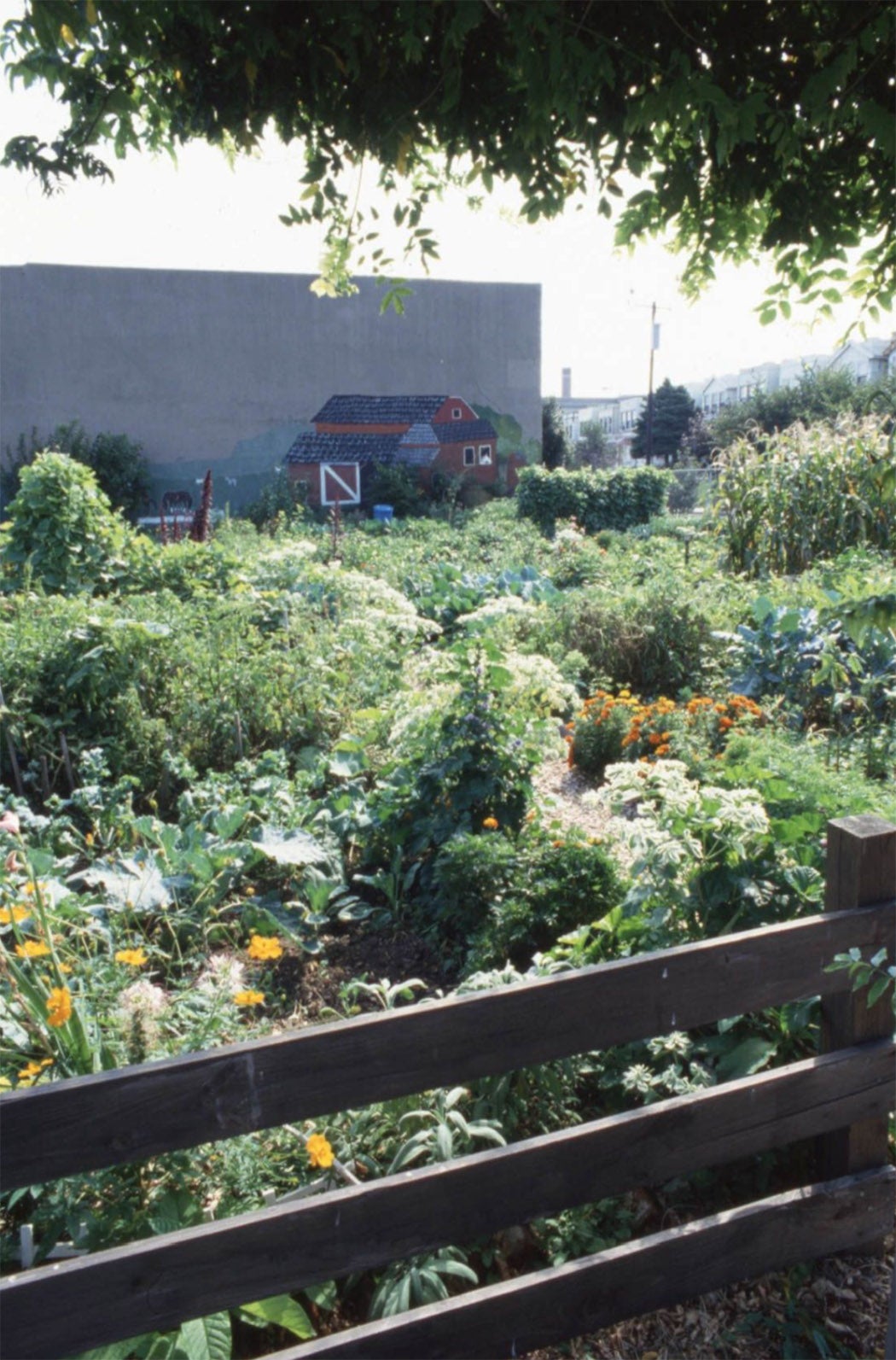
The evidence is in Mill Creek today, where the idea for one small neighborhood vegetable plot blossomed into the nearby Aspen Farms. Founded in 1975 by Mill Creek resident Esther Williams, one vacant lot grew into several with assistance from Philadelphia Green, and fifty years later, the garden fills nearly half a city block, a vibrant, green space for the neighborhood.