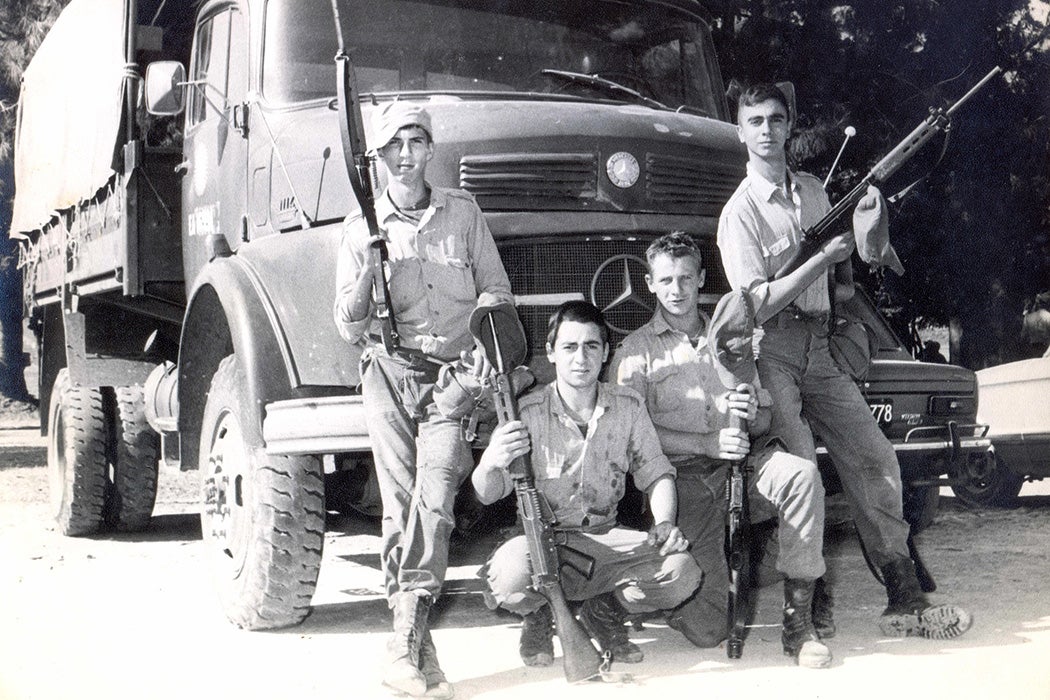
When are military forces willing to carry out atrocities against a civilian population? Looking at Argentina’s Dirty War (1975–1981), in which government forces may have disappeared or murdered as many as 30,000 people, political scientist Adam Scharpf argues that a significant factor is officers who share the ideology of the regime.


Scharpf writes that, while governments use tactics like drills, hazing, and political indoctrination to mold obedient officers, these may have mixed effectiveness depending on how the military’s goals relate to the recruits’ prior ethical beliefs and life experiences. The people most willing to torture and disappear regime opponents are likely to be the ones who were already true believers.
In Argentina’s case, deep ideological divisions had already existed for decades both in the country at large and within the military. Even before the army seized control of the government in 1976, officers were torn over how to respond to leftist insurgents, generally falling into either liberal or nationalist camps.
Nationalists, including the army officers among them, viewed themselves as being in an existential conflict with Marxist insurrectionists. They sought a total overhaul of Argentinian society to create an ultra-conservative, anti-modern nation dominated by the Catholic Church. Liberals, on the other hand, saw leftist violence as the result of guerrillas exploiting real grievances among the populace. They favored a strategy of targeting specific enemies rather than trying to dramatically transform the country through violence, and they ultimately wanted to push the government toward representative democracy.
In looking at how these different opinions may have affected the violence carried out during the Dirty War, Scharpf takes advantage of a quirk in this way the Argentinian army was organized. Liberals, who were mostly from the upper class, were concentrated in the cavalry, while nationalists, mainly from poorer social classes, dominated the infantry and other branches.
More to Explore
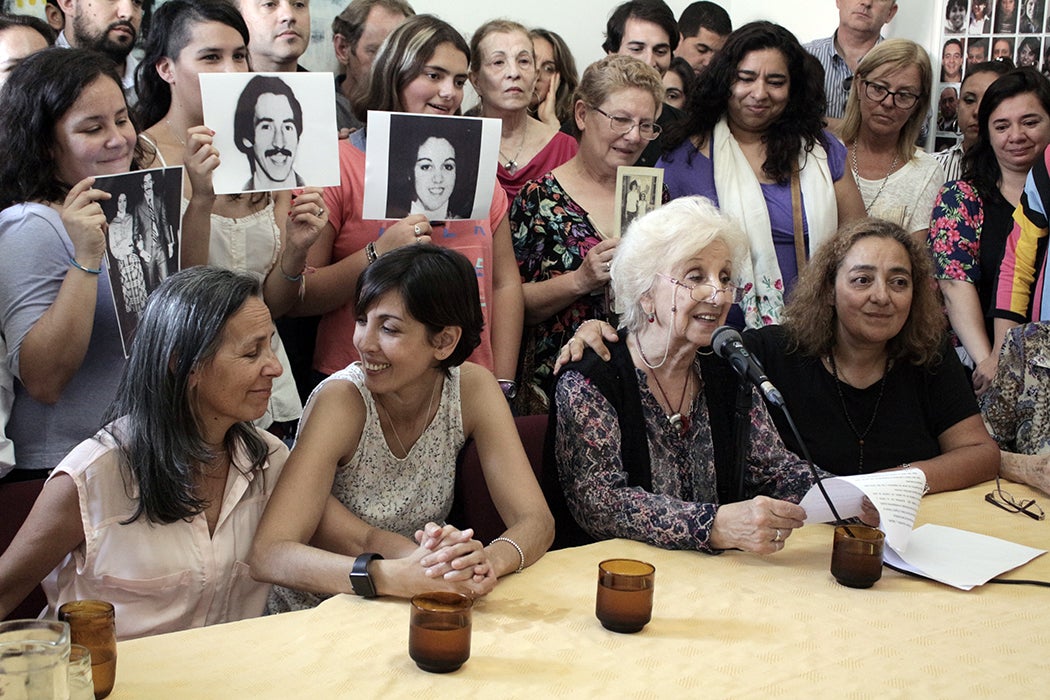
The Stolen Children of Argentina
When the junta began its campaign against leftists, it placed mid-level army officers in charge of geographical “cells,” giving them broad authority to capture and kill local “subversives” (largely trade unionists and students) using ad-hoc task forces made up of military, police, criminals, and intelligence officials.
Weekly Newsletter
Analyzing information about the regime’s victims, much of it uncovered only decades later, Scharpf finds that the number of disappearances and killings were much lower in areas controlled by cavalry officers than those run by infantry. In addition, high-ranking and long-serving officers were responsible for more violence, presumably because they identified more closely with the junta’s ideology. This was true even after controlling for the level of rebel activity in each area.
Scharpf concludes that the execution of on-the-ground violence was closely correlated with a mindset among officers in which “teachers, students, unionists, and everybody holding a liberal, Marxist, or anti-Catholic values became a viable target” and “only through violent transformation…would Argentina be able to resist a communist infiltration.”